Die Fischerdörfer rund um Hội An: Walverehrung, Rudergesänge und das Cầu-Ngư-Fest
Die Küstengemeinden rund um Hội An und Đà Nẵng verehren den Wal als Meeresgott und bestatten gestrandete Wale mit den Riten, die einem Dorfältesten gebühren. Ihr Frühlingsfest, das Lễ hội Cầu Ngư (die Zeremonie des Walgottes, Lễ tế Cá Ông), ist nationales immaterielles Kulturerbe und wird im Englischen dennoch kaum behandelt. Wir übertragen den Glauben, die Riten und den Rudergesang hát bả trạo aus vietnamesischen Quellen, mit Notizen aus den Fischerquartieren nahe unserem Hotel am Fluss Thu Bồn.
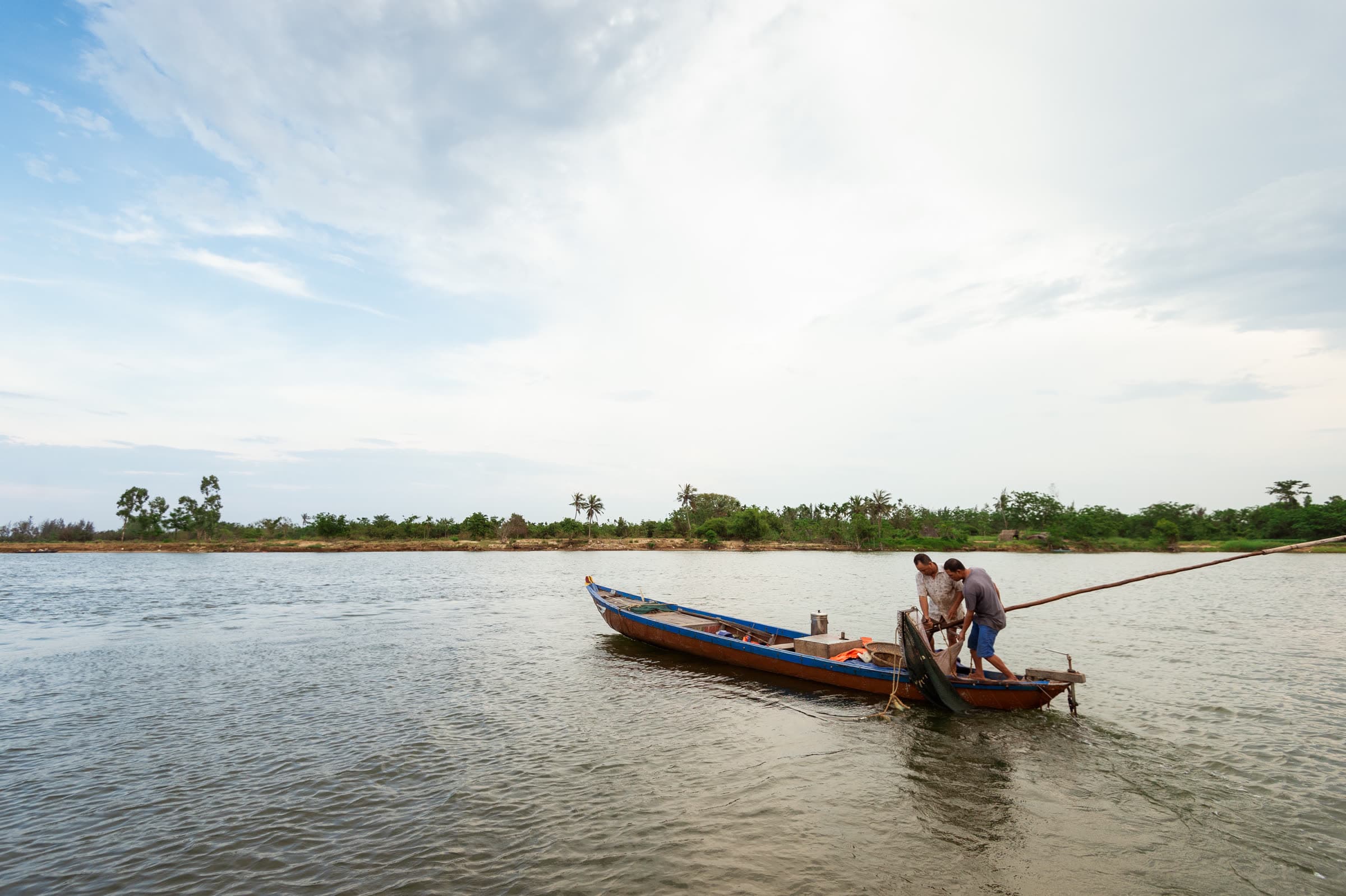
Entlang der zentralvietnamesischen Küste — den Stränden und Flussmündungen rund um Hội An und Đà Nẵng — ist der Wal kein wildes Tier. Er ist ein Gott. Die Fischergemeinden verehren hier Cá Ông, „Herr Wal“, als Schutzgottheit des Meeres; wenn ein Wal stirbt und an Land gespült wird, richtet das Dorf, das ihn findet, ihm ein Begräbnis mit den Ehren eines geachteten Ältesten aus, bewahrt die Gebeine in einem Heiligtum und pflegt den Kult über Generationen hinweg. Ihr alljährliches Fest, das Lễ hội Cầu Ngư — wörtlich „das Fest des Bittens um Fisch“, auch Lễ tế Cá Ông, die Zeremonie des Walgottes, genannt — wurde 2016 als nationales immaterielles Kulturerbe anerkannt und ist im Englischen dennoch kaum beschrieben. Dieser Beitrag überträgt den Glauben und seine Riten aus vietnamesischen Quellen, darunter das Stadtportal von Đà Nẵng, VietnamPlus, Tuổi Trẻ und Sài Gòn Giải Phóng.
Warum verehren die Fischer hier den Wal?
Der Glaube, den die Küstengemeinden Mittel- und Südvietnams teilen, besagt, dass Cá Ông — der Wal — ein gütiger Meeresgeist ist, der Boote und Mannschaften in Stürmen rettet, und dass seine Verehrung ruhige See und volle Netze bringt. Vietnamesische Quellen verbinden den Kult mit Thần Nam Hải, dem „Gott des Südmeers“. Für Fischerfamilien, deren Lebensunterhalt und Leben von einem launischen Ozean abhängen, ist der Wal, der den Fisch zu den Booten treibt und der Legende nach sinkende Schiffe in Sicherheit hebt, die natürlichste aller Schutzgottheiten. Diese Verehrung ist ebenso praktisch wie spirituell: Sie verankert das Seefahrtswissen und die gegenseitige Hilfe vieler Generationen in einer Religion des Meeres.
Wenn ein Wal strandet und an der Küste stirbt, ist die Gemeinde, die ihn entdeckt, verpflichtet, ihm ein vollständiges Begräbnis zu bereiten. Der Kadaver wird betrauert und bestattet, und nachdem das Fleisch verwest ist, werden die Gebeine ausgegraben und in einem lăng Ông — einem Walheiligtum — verehrt, wo sie zum Mittelpunkt des Dorfkults werden. Diese Heiligtümer und das Fest, das sie belebt, sind das institutionelle Herz des Lebens in den Küstendörfern hier.
The Cầu Ngư festival belongs to the fishing communities (vạn chài) of the central coast. / Lễ hội Cầu Ngư là của các vạn chài ven biển miền Trung.
Was ist das Cầu-Ngư-Fest?
Das Lễ hội Cầu Ngư ist das Frühlingsfest der küstennahen Fischergemeinden (vạn chài). Es eröffnet das Fischereijahr: eine Zeremonie, um die Ahnen und den Walgott zu ehren, um ruhiges Wetter und eine sichere, reiche Saison zu erbitten und die Mannschaften zu vereinen, bevor sie wieder hinausfahren. Es wird im frühen Frühling begangen, meist um die Mitte des ersten Mondmonats herum, und setzt sich durch den ersten und zweiten Mondmonat fort, da jedes Fischerquartier der Reihe nach an die Reihe kommt — das Fest ist also kein einzelner Tag, sondern eine ganze Festzeit entlang der Küste. 2026 berichtete die Zeitung Tuổi Trẻ, dass die Feierlichkeiten in Đà Nẵng Anfang März im Gange waren.
Am 10. März 2016 unterzeichnete das Ministerium für Kultur, Sport und Tourismus den Beschluss 829/QĐ-BVHTTDL, der das Cầu-Ngư-Fest von Đà Nẵng als nationales immaterielles Kulturerbe anerkennt — die offizielle Bestätigung, dass diese Tradition der Walverehrung ein Kulturschatz der zentralvietnamesischen Küste ist.
Was beim Fest geschieht — die Riten
Im Zentrum des Festes steht das förmliche Opfer. Ein chánh bái — der Hauptzelebrant, ein von der Gemeinde gewählter Ältester — bringt die Opfergaben im Namen des Dorfes dar und liest den văn tế, einen zeremoniellen Text, der den Dank der Fischer für den Schutz des Walgottes und ihre Wünsche für eine reiche, sichere Saison zum Ausdruck bringt. Die Riten werden im lăng Ông vor den verehrten Walgebeinen vollzogen, mit Räucherwerk, Musik und in Anwesenheit der gesamten Fischergemeinde.
Der vom chánh bái gelesene văn tế dankt Cá Ông für seinen Schutz und erbittet eine neue Saison mit vollen Netzen, ruhiger See und Booten, die ausfahren und wohlbehalten zurückkehren — die gesamte moralische Ökonomie eines Fischerdorfes verdichtet in einem einzigen Gebet.
The chief celebrant (chánh bái) reads the văn tế before the enshrined whale bones at the lăng Ông. / Vị chánh bái đọc văn tế trước hài cốt Cá Ông tại lăng Ông.
Hát bả trạo: der Rudergesang
Die kennzeichnende Darbietung des Cầu-Ngư-Festes ist das hát bả trạo — eine gesungene und getanzte Nachstellung einer Mannschaft, die aufs Meer hinausrudert. Eine Reihe von Darstellern, die Ruder in der Hand, singen und bewegen sich im Gleichklang nach dem Rhythmus einer eingebildeten Fahrt durch die Wellen, angeführt von Figuren, die den Steuermann und die Mannschaft verkörpern. Vietnamesische Quellen beschreiben es als die eigentümlichste Kunstform des Festes, und seine Bedeutung ist eindeutig: Es führt die Verbundenheit von Männern vor Augen, die ein Boot teilen — die Vorstellung, dass auf hoher See eine Mannschaft nur überlebt, wenn sie gemeinsam vorankommt. Neben dem bả trạo bringt das Fest tuồng und hát bội (Formen der klassischen zentralvietnamesischen Oper) sowie ein Programm volkstümlicher Strandspiele: Korbboot-Drehen, Schwimm- und Ruderwettbewerbe, Tauziehen und mehr.
Planen Sie Ihre Reise? Prüfen Sie die Verfügbarkeit in unserem ruhigen Hotel am Thu-Bồn-Fluss. Verfügbarkeit prüfen →
Wo man es nahe Hội An findet
Die uns nächstgelegenen Fischerquartiere säumen die Küste und die Flussmündung östlich von Hội An — die Strandgemeinden An Bàng und Cửa Đại sowie die Fischerhaushalte von Cẩm An und Cẩm Thanh —, während die größten und am besten dokumentierten Cầu-Ngư-Feiern entlang der Küste von Đà Nẵng stattfinden, von Mân Thái und Thọ Quang auf der Sơn-Trà-Seite bis zur Gemeinde Nam Ô am nördlichen Ende der Bucht. Von unserem Hotel am Fluss Thu Bồn sind die Küstenheiligtümer von Đà Nẵng rund 30 bis 45 Minuten mit dem Auto entfernt; die näher gelegenen Fischerquartiere von Hội An liegen nur eine kurze Fahrt Richtung Meer. Da jedes Quartier innerhalb der Saison seine eigene Feier an seinem eigenen Tag abhält, besteht das praktische Vorgehen darin, vor Ort nachzufragen — am lăng Ông oder über das Hotel —, welche Gemeinde während Ihres Aufenthalts feiert.
Fishing wards from Cửa Đại to the Đà Nẵng coast each hold their own Cầu Ngư observance within the spring season. / Các vạn chài từ Cửa Đại đến ven biển Đà Nẵng tổ chức lễ Cầu Ngư riêng trong mùa xuân.
Warum es von Bedeutung ist
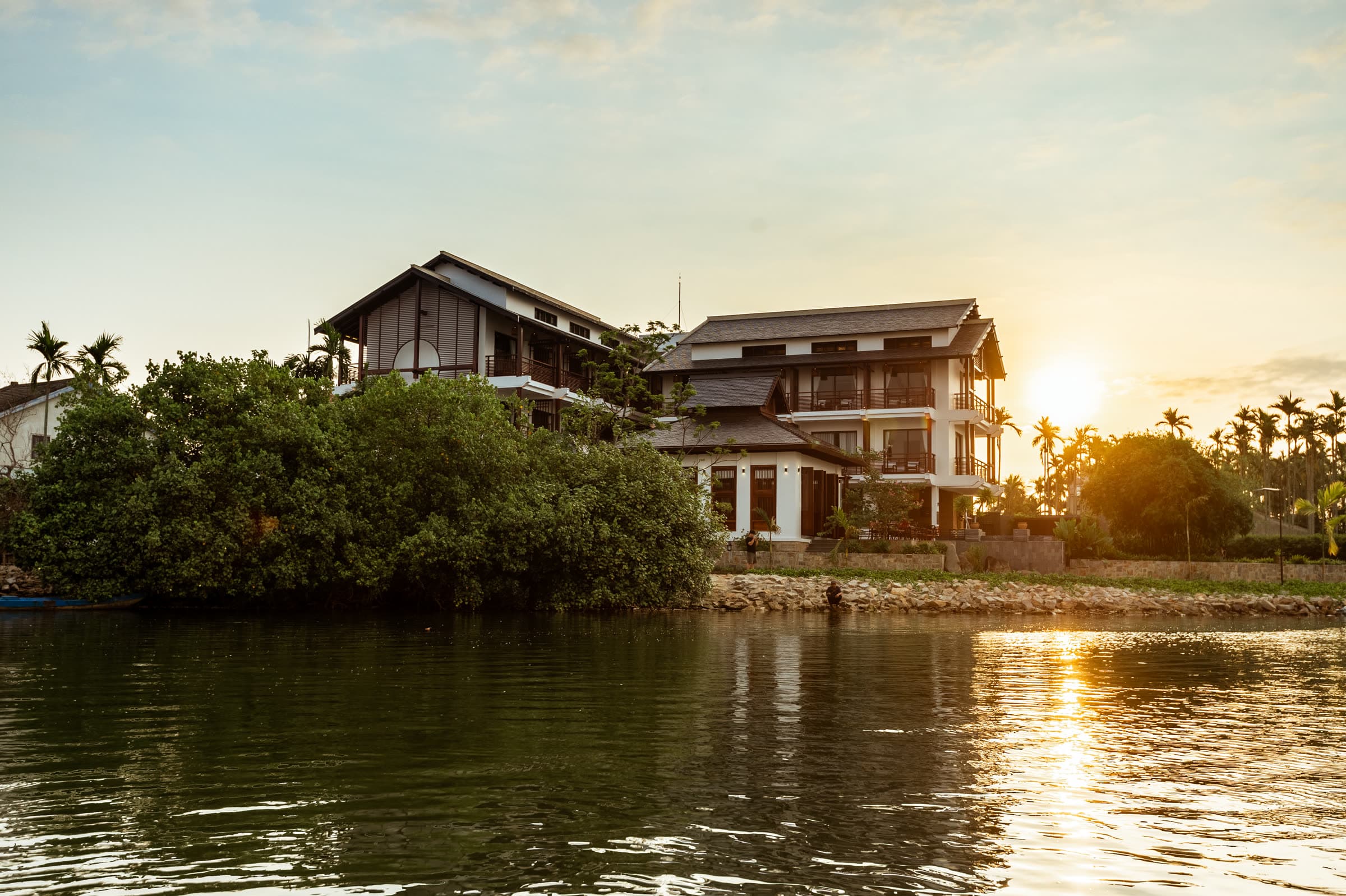
Der Thu Bồn, der vor unseren Fenstern vorbeifließt, erreicht das Meer bei Cửa Đại, und die Menschen, die diese Flussmündung und die offene Küste dahinter befischen, tragen den Walkult als ihre älteste Institution. Das Cầu-Ngư-Fest ist der Punkt, an dem Hội Ans Erbe nicht mehr von Kaufmannshäusern und Laternen handelt, sondern vom arbeitenden Meer — jenem Teil der zentralvietnamesischen Kultur, der die Stadt überhaupt erst hervorgebracht hat. Wie das Fest der Flussgöttin Bà Thu Bồn flussaufwärts ist es eine lebendige Tradition, die vietnamesische Institutionen sorgfältig dokumentiert haben und die die englischsprachige Reiseliteratur fast vollständig übersehen hat. Für Besucher, die diese Küste verstehen wollen, statt sie nur zu fotografieren, ist ein Morgen im frühen Frühling an einem lăng Ông, mit den bả-trạo-Sängern und dem Duft von Räucherwerk vom Meer her, das Echte.
Wie man respektvoll teilnimmt
Dies ist ein echtes religiöses Fest einer Fischergemeinde, keine für Besucher inszenierte Vorstellung. Kleiden Sie sich zurückhaltend, halten Sie während der Riten Abstand zum Altar und zu den Zelebranten und fragen Sie, bevor Sie das Opfer fotografieren. Die Volksspiele und die bả-trạo-Darbietung sind öffentlich und einladend; der förmliche văn tế ist kein Schauspiel. Wie beim Fest der Flussgöttin flussaufwärts ist die richtige Haltung jene, die man zu jedem Gottesdienst mitbringen würde: still, aufmerksam und geleitet von der Gemeinschaft, deren Fest es ist. Wenn Sie in Hội An wohnen und Küste und Fluss verbinden möchten, kombinieren Sie einen Cầu-Ngư-Morgen mit einem gemächlichen Tag rund um die Wasserwege von Cẩm Thanh und die Flussmündung bei Cửa Đại.
Über diesen Artikel
Dieser Beitrag fasst die vietnamesischsprachige Berichterstattung über das Lễ hội Cầu Ngư / Lễ tế Cá Ông zusammen — das Stadtportal von Đà Nẵng und VietnamPlus zur Anerkennung als nationales Kulturerbe 2016 (Beschluss 829/QĐ-BVHTTDL), Tuổi Trẻ zu den Feierlichkeiten 2026 sowie Sài Gòn Giải Phóng und das Tourismusportal von Đà Nẵng zu den Riten und zur hát-bả-trạo-Darbietung — verbunden mit aus erster Hand gewonnener Vertrautheit mit den Fischerquartieren nahe Cửa Đại von unserem Hotel am Fluss Thu Bồn aus. Die Festtermine variieren je nach Quartier innerhalb der Frühlingssaison; erkundigen Sie sich während Ihres Aufenthalts vor Ort.
Cổng thông tin điện tử thành phố Đà Nẵng (2016). Lễ hội cầu ngư Đà Nẵng được công nhận di sản văn hóa phi vật thể quốc gia. Da Nang City Portal (danang.gov.vn). View source
VietnamPlus (TTXVN) (2024). Lễ hội Cầu ngư ở Đà Nẵng: Nét đẹp văn hóa, tín ngưỡng của cư dân vùng biển. VietnamPlus. View source
Tuổi Trẻ (2026). Độc đáo lễ hội cầu mưa thuận gió hòa của ngư dân Đà Nẵng. Báo Tuổi Trẻ. View source
Sài Gòn Giải Phóng (2024). Độc đáo lễ hội Cầu ngư ở Quảng Nam và Đà Nẵng. Báo Sài Gòn Giải Phóng. View source
Báo Nhân Dân (2024). Lễ hội Cầu ngư - nơi kết nối truyền thống và dấu ấn văn hóa biển Đà Nẵng. Báo Nhân Dân. View source
Cổng thông tin du lịch thành phố Đà Nẵng (2024). Lễ hội Cầu Ngư Đà Nẵng. Danang Fantasticity (official tourism portal). View source
VietnamPlus (TTXVN) (2025). Bảo tồn và phát huy giá trị Di sản Lễ hội Cầu ngư tại Đà Nẵng. VietnamPlus. View source
Bộ Văn hóa, Thể thao và Du lịch (2016). Quyết định số 829/QĐ-BVHTTDL công nhận Lễ hội Cầu ngư là di sản văn hóa phi vật thể quốc gia. Ministry of Culture, Sports and Tourism decree.
Every room at Nghê Prana is designed around the science of sleep. Blackout curtains, nightly aromatherapy turndown, and riverside quiet — experience what real rest feels like.
Zimmer am Fluss, zehn Fahrradminuten von der Altstadt. Ob eine Nacht zwischen Hué und Da Nang oder eine ganze Woche ohne Plan — Ihr Zimmer bleibt ruhig.
Kostenlose Stornierung · Direkt bei der Familie, die das Haus gebaut hat


 WhatsApp
 Zalo
Zalo