Hoi An in der Regenzeit: Ein ehrlicher Hochwasser-Guide (2026)
Wird Hoi An überschwemmt? Ja, kurz, in den meisten Oktobern und Novembern. Ein ehrlicher Guide von einem Hotel am Thu Bồn in Cẩm Nam: wann das Hochwasser kommt, wie lange es bleibt, ob sich ein Besuch im Regen lohnt und was man am besten unternimmt, wenn der Himmel aufreißt.
Wenn Sie das hier lesen, haben Sie wahrscheinlich ein Foto der Altstadt von Hội An gesehen, auf dem Wasser über den Gehweg schwappt, oder eine Warnung, dass die Stadt im Herbst überflutet wird — und fragen sich, ob Sie überhaupt buchen sollen. Hier die ehrliche Antwort von Menschen, die am Fluss leben und arbeiten: Ja, Hội An wird überschwemmt — meist kurz, meist im Oktober und November — und nein, das muss Ihre Reise nicht verderben. Die Stadt lebt seit vier Jahrhunderten mit dem Rhythmus des Thu Bồn (sông Thu Bồn), und wir auch.
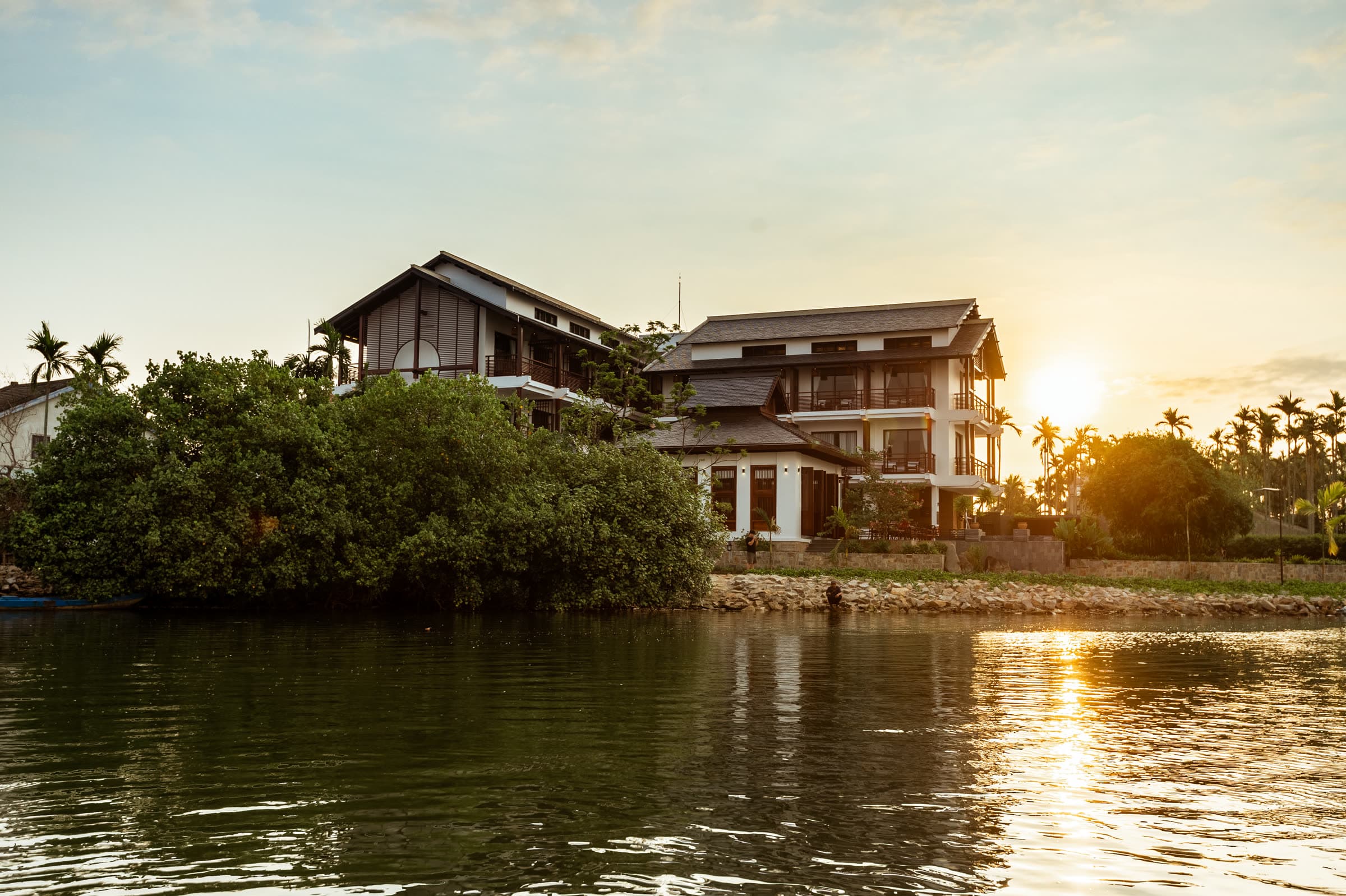
Wir schreiben dies als kleines Hotel am Fluss am Südufer von Cẩm Nam am Thu Bồn, etwa zehn Radminuten von der Altstadt entfernt. Cẩm Nam ist eines der tief gelegenen Uferviertel, das als Erstes Wasser bekommt, wenn der Fluss steigt — das wollen wir nicht verschweigen. Stattdessen sagen wir Ihnen genau, wann das Hochwasser meist kommt, wie lange es bleibt, wie ein Aufenthalt mit Flussblick darum herum geplant wird und was es in Hội An wirklich Schönes zu tun gibt, wenn der Himmel aufreißt. Zur gesamten Geografie und Hochwassergeschichte des Flusses führen wir eine ausführliche Referenz im Thu-Bồn-Fluss-Guide.
Kurz gefasst: Die Regenzeit von Hội An in einer Minute
Regenreichste Monate: September bis November, mit Oktober und November als Hochwasser-Höhepunkt.
Die meisten Überschwemmungen sind flach und kurz — das Wasser steigt und läuft oft innerhalb von ein bis drei Tagen wieder ab.
Die am tiefsten gelegenen Uferbereiche, darunter Teile der Altstadt an der Bạch-Đằng-Straße und die Inseln am Südufer wie Cẩm Nam, bekommen zuerst Wasser.
Große Hochwasserjahre in lebendiger Erinnerung: 1964, 1999, 2007, 2017 und 2020 — das sind die Ausnahmen, nicht die Regel.
Ein Besuch lohnt sich dennoch sehr: Spa, Teehäuser, Koch- und Laternenkurse sowie Tagesausflüge nach Đà Nẵng laufen weiter. Buchen Sie ein Zimmer in einem oberen Stockwerk mit Flussblick und einen flexiblen Tarif, dann sind Sie in jedem Fall abgesichert.
Luftaufnahme von Hội An während eines saisonalen Hochwassers, wenn die Thu Bồn in die tief gelegenen Straßen tritt.
Wann wird Hội An überschwemmt, und für wie lange?
Hội An liegt in einer flachen Küstenebene, wo der Thu Bồn auf die Sông Hoài trifft und wenige Kilometer weiter ins Meer mündet. Die Regenzeit in Zentralvietnam dauert etwa von September bis November, angetrieben vom Nordostmonsun und gelegentlich von einem tropischen Sturm, der vom Ostmeer heranzieht. Wenn mehrere Tage starker Regen im Oberlauf mit einer hohen Meeresflut zusammenfallen, stauen sich die Flüsse und die tiefsten Straßen laufen voll. Deshalb ist das Hochwasser hier sehr kleinräumig und gezeitenabhängig: Eine Gasse kann knöcheltief unter Wasser stehen, während eine Straße wenige hundert Meter höher völlig trocken bleibt.
Beruhigend ist die Dauer. Ein typisches Hochwasser in Hội An misst man in Stunden bis wenigen Tagen, nicht in Wochen — das Wasser steigt, erreicht seinen Höhepunkt und läuft den Thu Bồn wieder hinab, sobald der Regen nachlässt und die Flut fällt. Das Leben passt sich an, statt stillzustehen. Händler stellen ihre Ware auf höhere Regale, kleine Boote tauchen auf den Straßen auf, und ein bis zwei Tage später werden die Gehwege wieder sauber gefegt.
Erwähnenswert sind die denkwürdigen Jahre, denn sie sind die Ausnahmen und nicht der gewöhnliche Herbst:
1964 — ein historisches Hochwasser, an das sich ältere Bewohner in ganz Quảng Nam noch erinnern.
1999 — die große Flut Zentralvietnams, eine der schwersten des 20. Jahrhunderts.
2007, 2017 und 2020 — die bedeutendsten jüngeren Hochwasserjahre in und um Hội An.
In den meisten Jahren hingegen steigt der Fluss zwischen Oktober und November nur einige Male mäßig an und beruhigt sich rasch wieder. Die dramatischen Fotos, die online kursieren, stammen fast immer von diesen wenigen Ausnahmeereignissen, nicht von einer durchschnittlichen Woche der Saison.
Eine überflutete Altstadtstraße — das Wasser ist meist flach und nach wenigen Tagen wieder weg.
Lohnt sich ein Besuch in Hội An bei Regen?
Ehrlich gesagt: ja — mit offenen Augen. Die Regenmonate haben ihre eigene stille Schönheit: Die Menschenmengen lichten sich, die Reisfelder leuchten sattgrün, Laternenlicht spiegelt sich auf nassen Straßen, und die Zimmerpreise sind so sanft wie nie im Jahr. Wenn Sie zu den Reisenden gehören, die garantiertes Strandwetter gegen Atmosphäre eintauschen, ist Hội An in der Nebensaison eine der schönsten Zeiten für einen Besuch.
Das Einzige, was Sie einplanen sollten, ist Flexibilität. Regen in Zentralvietnam kommt eher in Schüben als ganztägig, sodass Vormittage hell und Nachmittage nass sein können — oder umgekehrt. Planen Sie Ihre Tage im Freien locker, halten Sie einen Plan für drinnen bereit, und Sie verlieren selten einen ganzen Tag. Wir führen eine Live-Ansicht des Sonnenuntergangs und des Flusswetters des Tages, damit Sie den Himmel lesen können, bevor Sie sich festlegen.
Wie geht ein Aufenthalt am Fluss mit einem Hochwasser um?
Das ist der Teil, den die meisten Guides auslassen, also sagen wir es direkt. Am Fluss zu sein ist den größten Teil des Jahres der eigentliche Sinn eines Aufenthalts wie unserem — der Blick aufs Wasser, die Boote, das Licht auf dem Thu Bồn. An den wenigen Tagen im Jahr, an denen der Fluss hoch steht, wird genau diese Uferlage gemanagt statt gefürchtet, und alles kommt auf eine einfache Sache an: die Höhe.
Unsere Zimmer liegen zum Fluss und in den oberen Stockwerken — genau dort, wo man sein möchte, wenn das Wasser kurz Bodenhöhe erreicht. Ein Hochwasser in Hội An ist ein eingeplanter lokaler Rhythmus, kein Notfall: Das Team beobachtet Fluss und Vorhersagen, bringt alles im Erdgeschoss rechtzeitig in Sicherheit, hält Küche und Spa in Betrieb und hilft den Gästen, ihre Pläne anzupassen. Wenn die Gassen kurz unter Wasser stehen, wird das ehrlich gesagt Teil des Erlebnisses — Sie beobachten den Fluss vom Balkon, Nachbarn paddeln in Holzbooten vorbei, und einen Tag später trocknet die Stadt und macht weiter, als wäre nichts gewesen.
Der Fluss ist hier nicht das Risiko — er ist der Grund zu kommen. An wenigen Tagen im Jahr bittet er Sie einfach, ein Stockwerk höher und in Ruhe zu sein.
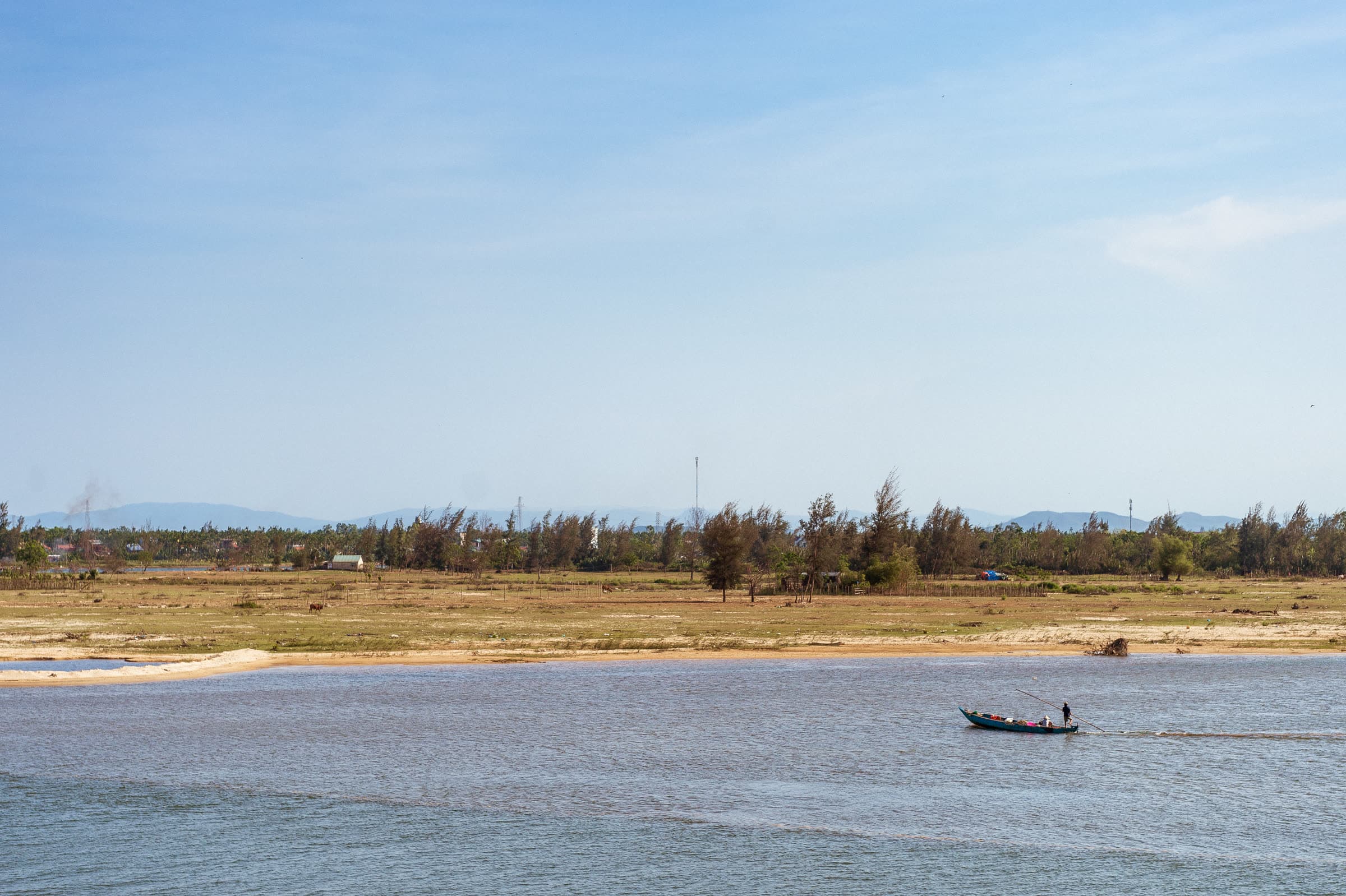
Zwischen den Regengüssen schenkt die Regenzeit Hội An seine klarsten Spiegelungen.
Die besten Dinge, die man in Hội An bei Regen unternehmen kann
Ein Regen- oder Hochwassertag in Hội An ist kein verlorener Tag — er verlagert sich einfach nach drinnen und wird langsamer. Das bleibt wirklich geöffnet und lohnt sich:
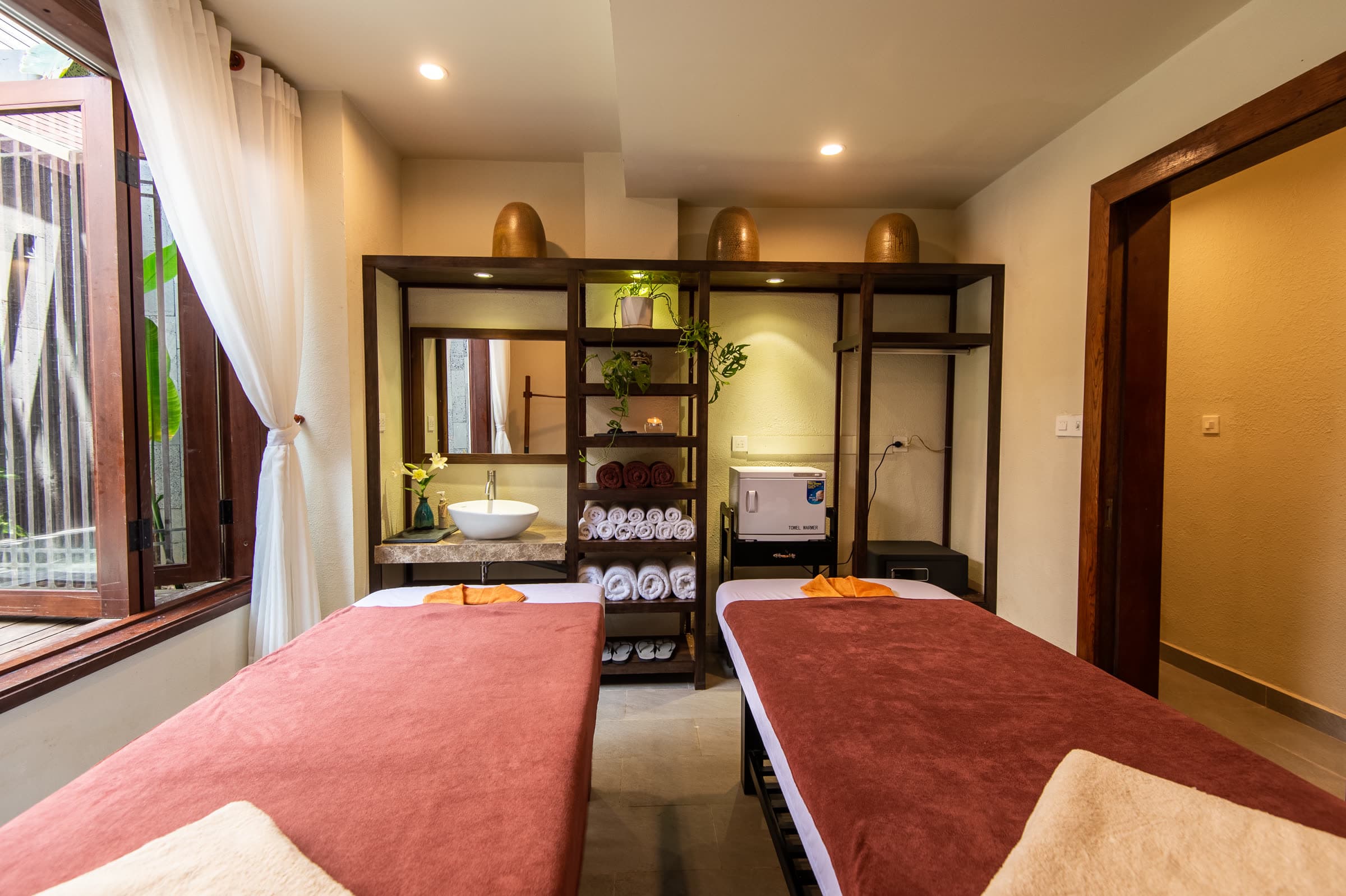
Ein vietnamesisches Kräuterbad und eine Spa-Behandlung — ein warmes Kräuterdampfbad (xông hơi), eine Massage, Sauna und Whirlpool sind genau das Richtige für einen grauen Tag. Unseres liegt direkt am Fluss; siehe das Kräuterbad in Hội An und das weitere Wellness-Angebot.
Gemächliches Essen am Fluss — ein langes Mittagessen, während der Regen aufs Wasser fällt. Wir tun das im The Corn, unserem Restaurant am Fluss, aber jeder überdachte Tisch am Wasser in der Stadt hat in der Regenzeit denselben stillen Zauber.
Laternenbastel- und Kochkurse — praktisch, drinnen und unter den schönsten Souvenirs einer Hội-An-Reise. Die Werkstätten der Stadt laufen die ganze Nebensaison hindurch.
Teehäuser, Kaffee und Schneider — die Café- und Schneiderkultur von Hội An ist wie gemacht für einen regnerischen Nachmittag; eine Anprobe oder eine Kanne Tee ist eine schöne Art, einen Schauer abzuwarten.
Ein Tagesausflug nach Đà Nẵng — wenn Hội An selbst kurz unter Wasser steht, bleibt das höher gelegene Đà Nẵng zugänglich. Die Marmorberge (Ngũ Hành Sơn) und die Bà-Nà-Hügel sind beide leichte Halb- oder Ganztagesausflüge, etwa 40 Minuten entfernt.
Wie man seinen Aufenthalt um die Hochwassersaison von Hội An plant
Planen Sie Ihre Reise? Prüfen Sie die Verfügbarkeit in unserem ruhigen Hotel am Thu-Bồn-Fluss. Verfügbarkeit prüfen →
Kommen Sie früher oder später, wenn Strandwetter am wichtigsten ist. Februar bis Mai ist die trockenste, sonnigste Zeit; Dezember bis Januar ist kühler und ruhiger mit nur gelegentlichem Regen.
Wenn Sie im Oktober oder November kommen, buchen Sie einen flexiblen oder kostenlos stornierbaren Tarif, um einen Tag oder zwei stressfrei nach der Vorhersage verschieben zu können.
Bitten Sie um ein Zimmer in einem oberen Stockwerk mit Flussblick — die beste Aussicht an trockenen Tagen und die sichere Höhe am seltenen nassen.
Packen Sie passend: eine leichte Regenjacke, Sandalen, die nass werden dürfen, und einen wasserdichten Beutel für Handy und Kamera.
Behalten Sie die Vorhersage in den 48 Stunden vor Fahrten zwischen Orten im Blick und halten Sie Ihre Route locker statt auf die Stunde festgelegt.
Bei all dem geht es nicht darum, Hội An im Herbst zu meiden — einige unserer schönsten Gäste-Aufenthalte finden im Regen statt. Es geht darum, mit den richtigen Erwartungen und einem Zimmer am richtigen Ort anzureisen, damit ein vorüberziehendes Hochwasser zu einer Geschichte wird, die Sie erzählen, statt zu einer Reise, die Sie bereuen.
Häufige Fragen zur Regenzeit von Hội An
Wann ist die Hochwassersaison von Hội An?
Überschwemmungen konzentrieren sich auf Oktober und November, innerhalb einer breiteren Regenzeit von September bis November. Die stärksten Ereignisse folgen meist auf mehrere Tage Regen im Oberlauf in Kombination mit einer hohen Meeresflut, die zusammen den Thu Bồn und die Sông Hoài über die Ufer treten lassen.
Wie lange dauert ein Hochwasser in Hội An?
Die meisten Überschwemmungen sind kurz — das Wasser steigt, erreicht seinen Höhepunkt und läuft in der Regel innerhalb von ein bis drei Tagen ab, sobald der Regen nachlässt und die Flut fällt. Langanhaltende, schwere Überschwemmungen sind selten und auf Ausnahmejahre wie 1999, 2017 und 2020 beschränkt.
Wird Cẩm Nam überschwemmt?
Ja. Cẩm Nam ist eines der tief gelegenen Uferviertel am Südufer, das als Erstes Wasser bekommt, wenn der Thu Bồn steigt — zusammen mit den tiefsten Altstadtstraßen an der Bạch Đằng. Bei einem Aufenthalt am Fluss wird das mit Zimmern in oberen Stockwerken mit Flussblick gemanagt, und das Hochwasser ist hier meist flach und kurzlebig.
Lohnt sich ein Besuch in Hội An im Oktober oder November?
Für viele Reisende: ja. Die Preise sind am niedrigsten, die Menschenmengen dünn, und die Stadt ist am stimmungsvollsten. Der Kompromiss ist unbeständiges Wetter und die geringe Chance auf ein kurzes Hochwasser — beides lässt sich mit einem flexiblen Tarif und einem Plan für drinnen leicht einkalkulieren.
Was kann man in Hội An bei Regen unternehmen?
Eine ganze Menge: Kräuterbäder und Spa-Behandlungen, lange Mittagessen am Fluss, Laternenbastel- und Kochkurse, Teehäuser und Schneider sowie Tagesausflüge ins höher gelegene Đà Nẵng, einschließlich der Marmorberge (Ngũ Hành Sơn) und der Bà-Nà-Hügel.
Über diesen Guide
Dieser Guide entsteht in einem kleinen, inhabergeführten Hotel am Fluss am Südufer von Cẩm Nam am Thu Bồn in Hội An und stützt sich auf die Hochwassergeschichte der Stadt und unsere eigenen Saisons am Wasser. Wir erzählen Ihnen lieber den ehrlichen Rhythmus des Flusses, als Ihnen eine Version von Hội An zu verkaufen, in der es nie regnet. Wenn Sie einen Herbstaufenthalt planen und ein Zimmer in einem oberen Stockwerk mit Flussblick möchten, sehen Sie sich unsere Zimmer an oder schreiben Sie uns — wir sprechen gern mit Ihnen über Termine und die Vorhersage.
Every room at Nghê Prana is designed around the science of sleep. Blackout curtains, nightly aromatherapy turndown, and riverside quiet — experience what real rest feels like.
Zimmer am Fluss, zehn Fahrradminuten von der Altstadt. Ob eine Nacht zwischen Hué und Da Nang oder eine ganze Woche ohne Plan — Ihr Zimmer bleibt ruhig.
Kostenlose Stornierung · Direkt bei der Familie, die das Haus gebaut hat



 WhatsApp
 Zalo
Zalo