Le Kerala est la patrie de l'Ayurveda — et nous ne le sommes pas
L'Ayurveda est une tradition du sud de l'Inde avec une lignée continue de cinq mille ans. Le Kerala détient spécifiquement l'appareil étatique qui l'entoure — le système de praticiens certifiés par le gouvernement, les textes sanskrits classiques en usage quotidien, le système de formation gurukula, les protocoles karkidakam de mousson. Soyons parfaitement clairs d'emblée : Nghê Prana ne propose pas d'Ayurveda. Nous ne sommes pas formés au Kerala, nous ne pratiquons ni le Shirodhara, ni l'Abhyanga, ni le Nasya, ni le panchakarma, et nous ne revendiquons en rien ce lignage. Ce que nous proposons est une tradition différente — la tradition herbale vietnamienne, thuốc nam, au bord du fleuve Thu Bồn. Cette page existe parce que les voyageurs hésitent réellement entre les deux, et une comparaison honnête vous aide à choisir la bonne.
À qui le Kerala convient
Choisissez le Kerala si vous voulez l'Ayurveda authentique. Il n'existe aucun substitut, et nous ne prétendrons jamais en être un. Choisissez le Kerala si vous pouvez lui consacrer vingt et un à trente jours consécutifs — le panchakarma traditionnel, la cure en sept étapes autour de laquelle l'Ayurveda classique a été bâti, exige cette durée et ne peut être compressé. Choisissez le Kerala si vous voulez spécifiquement le karkidakam, le protocole de mousson qui court grosso modo de juin à août. Choisissez le Kerala si l'Ayurveda est tout l'objet du voyage et que vous voulez la profondeur, le lignage et la structure institutionnelle que seule la source peut offrir.
À qui Hội An convient
Choisissez Hội An si vous voulez une parenthèse herbale plus tranquille et plus légère plutôt qu'un programme ayurvédique clinique — et si vous acceptez qu'il s'agisse d'une tradition vietnamienne, et non indienne. Choisissez Hội An si l'attrait réside dans le massage aux compresses chaudes et à l'huile chaude, un soin aux pierres chaudes de l'Himalaya, et une vapeur et un bain d'herbes vietnamiens, tissés dans des journées qui comprennent aussi une ville UNESCO arpentable à pied, une chambre tranquille au bord du fleuve, et une plage à vingt-cinq minutes à vélo. Choisissez Hội An si vous venez d'Asie de l'Est, d'Australie ou d'Europe occidentale et voulez un transfert aéroport-spa en moins d'une heure. La tradition herbale vietnamienne est un lignage profond et distinct à part entière — ce n'est pas de l'Ayurveda en plus petit.
À quoi ressemble vraiment la tradition herbale vietnamienne dans notre spa
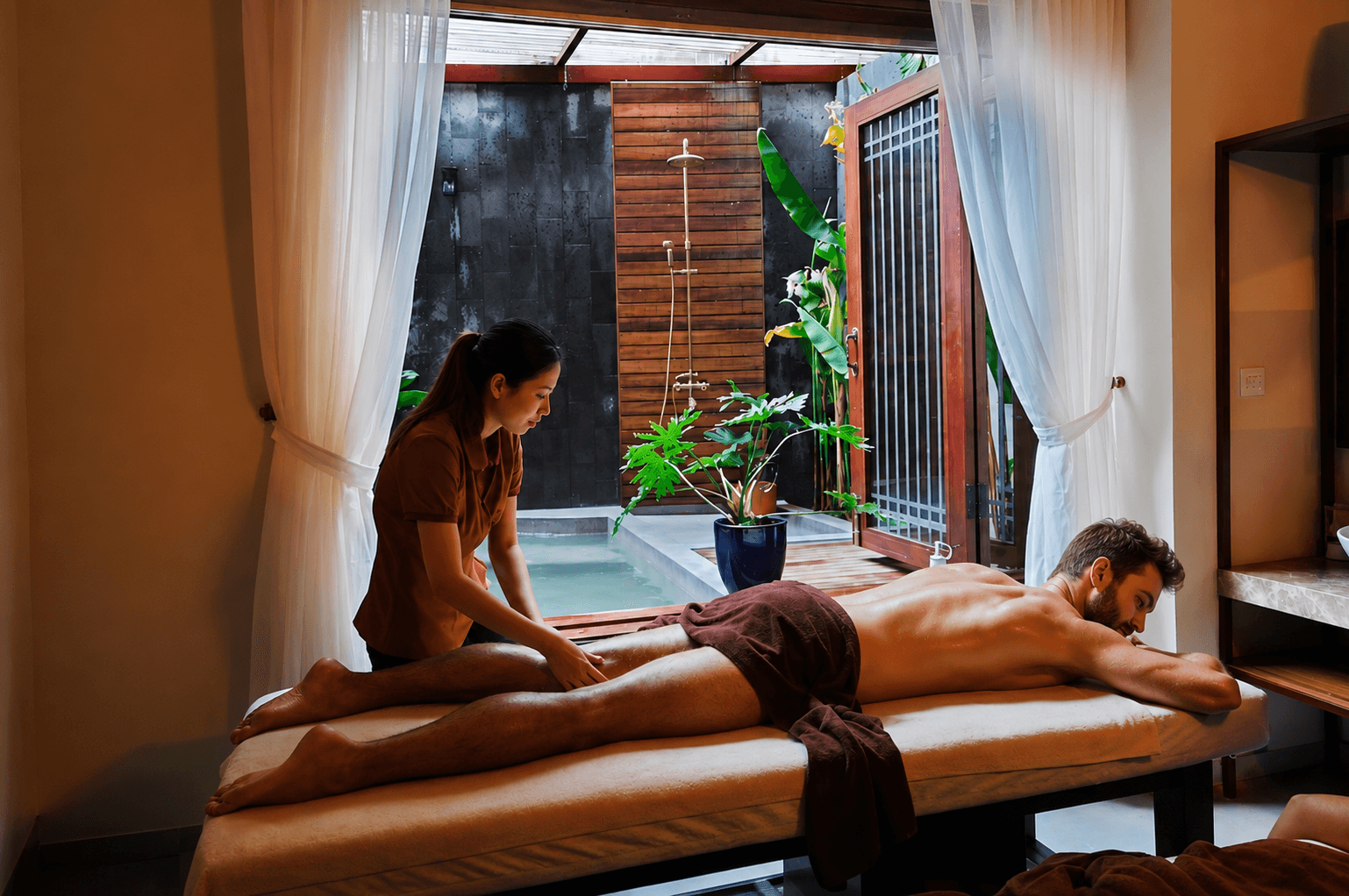
Notre spa travaille dans la tradition herbale du Centre-Vietnam (thuốc nam), et non dans celle de l'Ayurveda. La signature, c'est la compresse chaude túi chườm — citronnelle, gingembre, curcuma et feuille de pomelo réunis dans un tissu, passés à la vapeur, puis pressés le long du corps — utilisée seule ou intégrée à un massage à l'huile chaude. À côté, nous proposons un travail aux pierres chaudes de l'Himalaya, une vapeur d'herbes vietnamienne (xông hơi) et un bain d'herbes puisé dans les herbes du village de Trà Quế, de la réflexologie, des gommages corporels et des soins du visage. Les soins durent environ une à deux heures et se réservent sur rendez-vous, plutôt que d'être enchaînés en un arc clinique de plusieurs semaines — c'est un spa au bord du fleuve, pas un centre de panchakarma.
Deux lignages différents, et non deux versions d'un seul
Il serait facile, et malhonnête, d'habiller la tradition herbale vietnamienne en une sorte d'Ayurveda. Nous ne le ferons pas. L'Ayurveda a son cadre dosha, son canon sanskrit, sa séquence de panchakarma ; le thuốc nam a sa propre matière médicale, ses méthodes de compresses chaudes et de vapeur d'herbes, ses racines dans la médecine villageoise vietnamienne. Les deux sont légitimement profonds. Ils sont simplement différents. La conclusion est donc claire : pour l'Ayurveda authentique, allez au Kerala. Pour la tradition herbale vietnamienne au bord d'un fleuve tranquille — compresses chaudes, huile chaude, pierres chaudes, vapeur d'herbes — venez à Hội An.