Laternenfest Hoi An 2027: Alle Termine (geprüfter Vollmond-Kalender)
Das Laternenfest von Hội An findet in jeder Nacht des 14. Mondtages statt — also am Abend vor jedem Vollmond —, weshalb im Kalenderjahr 2027 genau zwölf bestimmte Termine liegen. An jedem dieser Abende schaltet die Altstadt zwischen etwa 18 und 22 Uhr ihr elektrisches Licht aus, hängt Seidenlaternen als einzige Beleuchtung auf und füllt den Thu Bồn mit treibenden Kerzenlichtern. Dies ist der geprüfte Kalender 2027 — exakte gregorianische Daten mit der bereits für Sie erledigten Mondkalender-Umrechnung, abgeglichen mit Tết (6. Februar) und dem Mittherbstfest (15. September) — dazu, was tatsächlich passiert, das Zeitfenster der Lichtabschaltung und wie Sie das Fest von der ruhigen Seite des Flusses aus erleben.
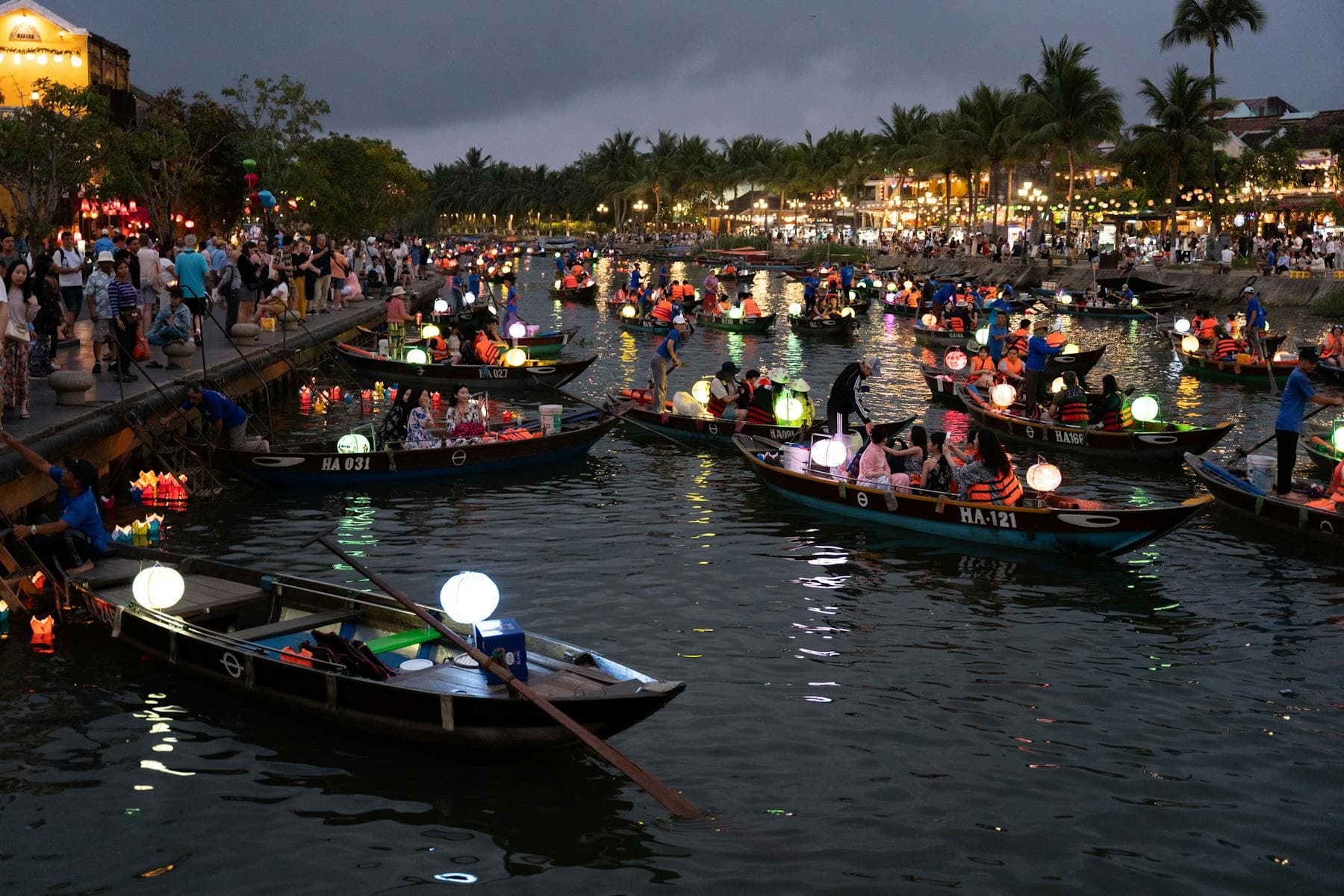
An zwölf Abenden des Jahres 2027 wird das elektrische Licht entlang der Altstadt von Hội An bewusst ausgeschaltet, und die Gassen kehren zurück zu Kerzenschein und Mondlicht. Seidenlaternen werden zur einzigen echten Lichtquelle, der Sông Hoài (der durch Hội An fließende Arm des Thu Bồn) füllt sich mit Tausenden treibenden Kerzenlichtern, die flussabwärts ziehen, und für etwa zwanzig Minuten rund um die Dämmerung sieht die Stadt fast genauso aus wie vor drei Jahrhunderten. Kommen Sie in der falschen Nacht, erleben Sie nichts davon — nur einen ganz normalen Abend in einer geschäftigen Stadt. Das Nützlichste, was Ihnen dieser Leitfaden also gibt, sind die richtigen Termine.
Das Laternenfest von Hội An — Lễ hội đèn lồng, vor Ort bekannt als Đêm Rằm Phố Cổ („Vollmondnacht der Altstadt“) — fällt auf den 14. Tag jedes Mondmonats, den Abend vor jedem Vollmond. Genau dieses Detail bekommen fast alle englischsprachigen Verzeichnisse falsch: Es ist die 14. Nacht, nicht die 15., und auch nicht „irgendwann in diesem Monat“. Stimmt das Datum, ergibt sich alles Übrige von selbst.
Ein Hinweis zur Genauigkeit: Die folgenden Daten sind aus dem Mondkalender berechnet und gegen zwei feste Ankerpunkte für 2027 abgeglichen. Tết 2027 — der erste Tag des Mondneujahrs (Mùng 1 Tết) — fällt auf Samstag, den 6. Februar 2027 und eröffnet das Jahr der Ziege (Đinh Mùi). 2027 hat keinen Schaltmonat, sodass die zwölf Mondmonate gerade durch das gregorianische Jahr laufen. Und das *Mittherbstfest (Tết Trung Thu), der Vollmond des 8. Mondmonats, fällt auf Mittwoch, den 15. September 2027* — wodurch der Festvorabend auf Dienstag, den 14. September festgelegt ist. Jedes Datum in diesem Leitfaden ist gegen diese Ankerpunkte geprüft.
Wann findet das Laternenfest von Hoi An 2027 statt?
Das Fest wird ganzjährig in der 14. Nacht jedes Mondmonats begangen. Da Mond- und Sonnenkalender gegeneinander verschieben, ändern sich die Daten jedes Jahr. Hier sind alle zwölf Festnächte, die in das Kalenderjahr 2027 fallen — die Umrechnung vom Mond- in den Sonnenkalender ist für Sie bereits erledigt.
#
Festnacht (2027)
Mondkalenderdatum
Anmerkungen
1
Do., 21. Jan. 2027
14. des 12. Mondmonats (Jahr Bính Ngọ)
Kühl, trocken; ruhig, die letzte Laternennacht vor der Tết-Zeit
2
Fr., 19. Feb. 2027
14. des 1. Mondmonats — Nguyên Tiêu / Rằm tháng Giêng
Erster Vollmond des Mondjahres; die größte, stimmungsvollste Nacht
3
So., 21. März 2027
14. des 2. Mondmonats
Frühling; angenehm, meist trocken
4
Mo., 19. Apr. 2027
14. des 3. Mondmonats
Frühling; Trockenzeit
5
Mi., 19. Mai 2027
14. des 4. Mondmonats
Warm, trocken
6
Do., 17. Juni 2027
14. des 5. Mondmonats
Höhepunkt der Trockenzeit; heiße Abende (über 32 °C)
7
Sa., 17. Juli 2027
14. des 6. Mondmonats
Inländische Sommer-Hochsaison; ein Samstag, daher voller
8
So., 15. Aug. 2027
14. des 7. Mondmonats
Rund um Lễ Vu Lan (rằm tháng 7); lokal bedeutsam
9
Di., 14. Sept. 2027
14. des 8. Mondmonats
Der Abend vor dem Mittherbstfest (Tết Trung Thu, Vollmond am Mi., 15. Sept.) — der festlichste des Jahres
10
Mi., 13. Okt. 2027
14. des 9. Mondmonats
Beginn der Regenzeit; Hochwasserprognose beachten
11
Do., 11. Nov. 2027
14. des 10. Mondmonats
Kühlere Abende, oft das fotogenste Licht des Jahres
12
Sa., 11. Dez. 2027
14. des 11. Mondmonats
Kühl und trocken; ruhige Nacht zum Jahresende
Die nächste Festnacht nach dem obigen Kalender fällt auf Anfang Januar 2028 (den 14. des 12. Mondmonats), etwa auf den 9.–10. Januar 2028.
Wenn Sie nur eine Nacht erleben, dann machen Sie es zu Freitag, dem 19. Februar 2027 (Nguyên Tiêu, der erste Vollmond des Mondjahres) oder zu Dienstag, dem 14. September 2027 (dem Vorabend des Mittherbstfests). Diese beiden tragen die meiste Zeremonie — und 2027 fallen beide auf günstige Abende, wobei der Mittherbst-Vorabend auf einen Dienstag vor dem Vollmond am Mittwoch trifft. Wenn Sie das Fest ohne die größten Menschenmengen wollen, bieten Ihnen die Nächte der Nebensaison — 21. Januar, 11. November, 11. Dezember — dieselbe Altstadt mit ausgeschaltetem Licht, nur mit mehr Raum zum Atmen.
Was passiert in der Festnacht wirklich?
Ab etwa 17:30 Uhr werden Motorräder aus dem Kern der Altstadt herausgehalten. Dann tut die Stadt das, was dieses Fest planungswürdig macht: Sie schaltet den Großteil der elektrischen Beleuchtung aus, und von ungefähr 18:00 bis 22:00 Uhr werden die Tausenden Seiden- und Papierlaternen, die quer über die Gassen gespannt sind, zur einzigen nennenswerten Lichtquelle. Dieses Protokoll der Lichtabschaltung ist das Herz von Đêm Rằm Phố Cổ — es ist eine lokale Kulturerbe-Politik, kein touristischer Gag.
Der Fluss wird zur zweiten Lichtquelle. Einheimische und Besucher entzünden kleine Schwimmlichter — hoa đăng, Papierlaternen mit einer Kerze darin — und lassen sie von der Fußgängerbrücke An Hội und von kleinen Holzbooten, die vom Kai Bạch Đằng ablegen, auf den Sông Hoài hinaus. Jedes Lichtlein trägt einen Wunsch. Zwischen etwa 19:00 und 21:00 Uhr füllt sich das Wasser mit ihnen, während sie flussabwärts zum Hauptlauf des Thu Bồn treiben. Daneben laufen kulturelle Darbietungen: bài chòi-Volksgesang auf dem Platz von An Hội, traditionelle Musik auf der Bühne von Bạch Đằng, Kalligrafie in den Versammlungshallen. Bis 22:00 Uhr kehren reguläre Beleuchtung und Verkehr zurück.
Die Idee der Lichtabschaltung hat einen dokumentierten Ursprung. Das Trung tâm Quản lý Bảo tồn Di sản Văn hóa Hội An (Zentrum für die Verwaltung und Bewahrung des Kulturerbes von Hội An) führt das monatliche tắt đèn điện — „das elektrische Licht ausschalten“ — auf einen städtischen Beschluss von 1998 zurück, eine Idee, die mit dem polnischen Architekten Kazimierz Kwiatkowski verbunden ist, der ab 1982 begann, die volkstümliche Architektur von Hội An zu dokumentieren. Seit Mitte 2025, nach der Verwaltungsreform, die Hội An und Mỹ Sơn unter Đà Nẵng stellte, arbeitet dasselbe Zentrum unter der Kulturbehörde von Đà Nẵng — der Festkalender 2027 wird also, wie schon der von 2026, auf Ebene von Đà Nẵng verwaltet.
Wo findet es statt, und wie erleben Sie es von der ruhigen Seite aus?
Das Geschehen konzentriert sich auf den Sông Hoài zwischen der Fußgängerbrücke An Hội und der Brücke von Cẩm Nam, wobei die Uferpromenade Bạch Đằng am Nordufer (Altstadtseite) der dichteste Punkt ist. Gegen 19:15 Uhr stehen die An-Hội-Brücke und der Kai Bạch Đằng an einem Höhepunktabend Schulter an Schulter. Sie müssen sich da nicht hineinstellen.
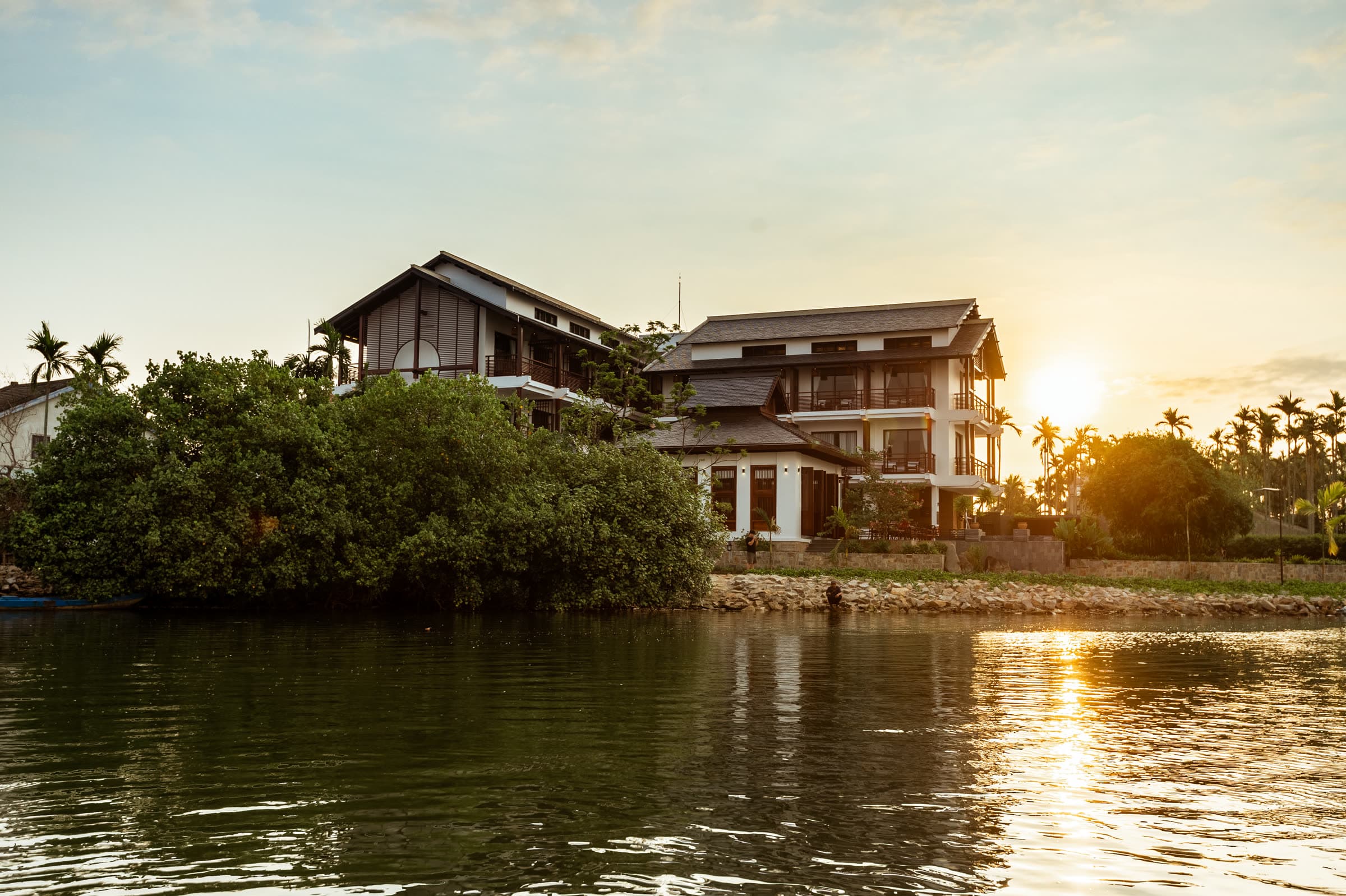
Das Wasser selbst ist das Fest, was bedeutet, dass der ruhigste Platz auf dem Wasser oder jenseits davon liegt. Von unserem eigenen Aussichtspunkt am Ufer des Thu Bồn aus ist das bewährte Muster simpel: früh für das Zeitfenster der blauen Stunde kommen oder vom gegenüberliegenden Ufer aus zuschauen. Fünf Ansätze:
Erstens — das Zeitfenster der blauen Stunde. Erreichen Sie die Uferpromenade Bạch Đằng bis 17:00 Uhr und nehmen Sie einen Platz auf den Stufen mit Blick aufs Wasser ein. Die Laternen leuchten gegen einen kobaltblauen Dämmerungshimmel auf, bevor die Menge anschwillt. Das beste Licht liegt etwa zwischen 17:45 und 18:20 Uhr.
Zweitens — vom Boot aus. Ein kleines Ruderboot (etwa 120.000–200.000 VND für 45 Minuten) bringt Sie mitten auf den Fluss zwischen die Schwimmlichter. Buchen Sie bis 17:00 Uhr; an Festnächten ist die Verfügbarkeit knapp.
Drittens — das Südufer bei Cẩm Nam. Gehen Sie fünf Minuten am Nachtmarkt von An Hội vorbei zu einer beliebigen Uferterrasse in Cẩm Nam und schauen Sie hinüber zur Altstadt. Die Spiegelungen der Laternen sind aus diesem Winkel oft schöner als vom überfüllten Nordufer, und Sie haben einen Tisch.
Viertens — drinnen statt auf dem Fluss. Der Hof des Quan-Công-Tempels und das Innere des alten Hauses Tấn Ký füllen sich an Festnächten mit Kerzenschein und erleben nur einen Bruchteil des Andrangs. Ruhig, stimmungsvoll und eine ganz andere Art von Foto.
Fünftens — die Insel Cẩm Kim. Eine kurze Fährfahrt über den Thu Bồn führt nach Cẩm Kim, wo einheimische Familien ihr eigenes, kleineres Lichterlassen mit einem Bruchteil der Touristendichte begehen. Weniger Laternen auf dem Wasser, dafür mehr von der echten Gemeinschaft.
Planen Sie Ihre Reise? Prüfen Sie die Verfügbarkeit in unserem ruhigen Hotel am Thu-Bồn-Fluss. Verfügbarkeit prüfen →
Ein praktischer Faden, der alles zusammenhält: Wo Sie schlafen, entscheidet darüber, wie viel von dem Abend Sie tatsächlich genießen. Am Thu Bồn zu nächtigen statt mitten im Fußgängerkern bedeutet, dass Sie zu Fuß oder mit einer kurzen Bootsfahrt zum Lichterlassen gelangen und sich dann, wenn die Menge ihren Höhepunkt erreicht, ans ruhige Wasser zurückziehen können — statt sich durch den Nachtmarkt zurück zu einem Hotel tief in der Altstadt zu kämpfen. (Wir sind selbst ein Hotel am Ufer des Thu Bồn, und genau deshalb gestalten wir den Abend so: Das Fest ist etwas, das man besucht und von dem man dann nach Hause kommt.)
Was mitbringen und wie sich kleiden
Das Fest lädt zum Mitmachen ein — jeder darf ein hoa đăng entzünden und aufs Wasser setzen. Schwimmlichter werden am Bạch Đằng und an der An-Hội-Brücke für etwa 20.000–40.000 VND verkauft; bringen Sie Kleingeld mit, da die meisten Verkäufer an Festnächten keine Karten annehmen. Tragen Sie geschlossene, bequeme Schuhe — Kopfsteinpflaster plus Kerzenwachs machen Flip-Flops zur schlechten Wahl. Ab Oktober empfiehlt sich eine leichte Jacke für die kühleren Abende. Ein áo dài (traditionelles Gewand) zu mieten passt gut zu diesem Abend; die Verleihläden entlang der Trần Phú haben am 14. des Mondmonats verlängerte Öffnungszeiten.
Häufig gestellte Fragen
Wann findet das Laternenfest von Hoi An 2027 statt?
Es wird in der 14. Nacht jedes Mondmonats begangen. 2027 fällt das auf: 21. Jan., 19. Feb., 21. März, 19. Apr., 19. Mai, 17. Juni, 17. Juli, 15. Aug., 14. Sept., 13. Okt., 11. Nov. und 11. Dez. Am stimmungsvollsten sind der 19. Februar (erster Vollmond des Mondjahres, Nguyên Tiêu) und der 14. September (Vorabend des Mittherbstfests).
Um welche Uhrzeit beginnt und endet das Laternenfest von Hoi An?
Motorräder werden gegen 17:30 Uhr aus dem Kern entfernt, das elektrische Licht ist von etwa 18:00 bis 22:00 Uhr aus, und das Lichterlassen auf dem Fluss erreicht seinen Höhepunkt zwischen ungefähr 19:00 und 21:00 Uhr.
Wann ist die größte Laternennacht in Hoi An 2027?
Die beiden größten sind Freitag, der 19. Februar 2027 (Nguyên Tiêu, der erste Vollmond des Mondjahres, der Vorabend von Rằm tháng Giêng) und Dienstag, der 14. September 2027 (der Abend vor dem Mittherbstfest / Tết Trung Thu).
Wann ist das Mittherbstfest (Tết Trung Thu) in Hoi An 2027?
Der Mittherbst-Vollmond fällt auf Mittwoch, den 15. September 2027. Da das Fest von Hội An in der 14. Nacht des Mondmonats begangen wird — dem Vorabend des Vollmonds —, ist die große Mittherbst-Laternennacht in der Altstadt Dienstag, der 14. September 2027. Laternenumzüge der Kinder und múa lân (Löwentanz) ziehen sich oft bis in den folgenden Abend hinein.
Ist in Hoi An jede Nacht Laternenfest?
Nein. Seidenlaternen leuchten in der Altstadt ganzjährig an den meisten Abenden, aber das vollständige Đêm Rằm Phố Cổ — Licht aus, Verkehr gesperrt, Lichterlassen auf dem Fluss — findet nur in der 14. Nacht jedes Mondmonats statt.
Muss man für das Laternenfest von Hoi An Eintritt zahlen?
Durch das Fest selbst zu schlendern ist kostenlos. Für den Besuch von Kulturerbe-Häusern und Versammlungshallen brauchen Sie ein Eintrittsticket für die Altstadt, und ein Schwimmlicht (hoa đăng) kostet etwa 20.000–40.000 VND, wenn Sie eines aufs Wasser setzen möchten. Eine kurze Bootsfahrt liegt bei rund 120.000–200.000 VND.
Kann man selbst eine Laterne auf dem Fluss aussetzen?
Ja. Kaufen Sie ein hoa đăng bei einem Verkäufer am Ufer und setzen Sie es von der An-Hội-Brücke, dem Kai Bạch Đằng oder einem kleinen Boot aus aufs Wasser. Nach lokalem Brauch wünscht man sich etwas, während man es auf das Wasser setzt.
Lohnt sich das Laternenfest während der Regenzeit (Okt.–Nov.)?
Es kann sich lohnen, aber behalten Sie die Wettervorhersage im Auge. Oktober und November sind die regenreichsten Monate von Hội An, und die Altstadt kann in schlechten Jahren überschwemmt werden; die Nächte des 13. Oktober und 11. November sind in Trockenphasen wunderschön, können aber bei Hochwasser abgesagt oder verkürzt werden. Fällt Ihre Reise in dieses Zeitfenster, halten Sie eine Ausweichnacht bereit und beobachten Sie den Pegel des Thu Bồn.
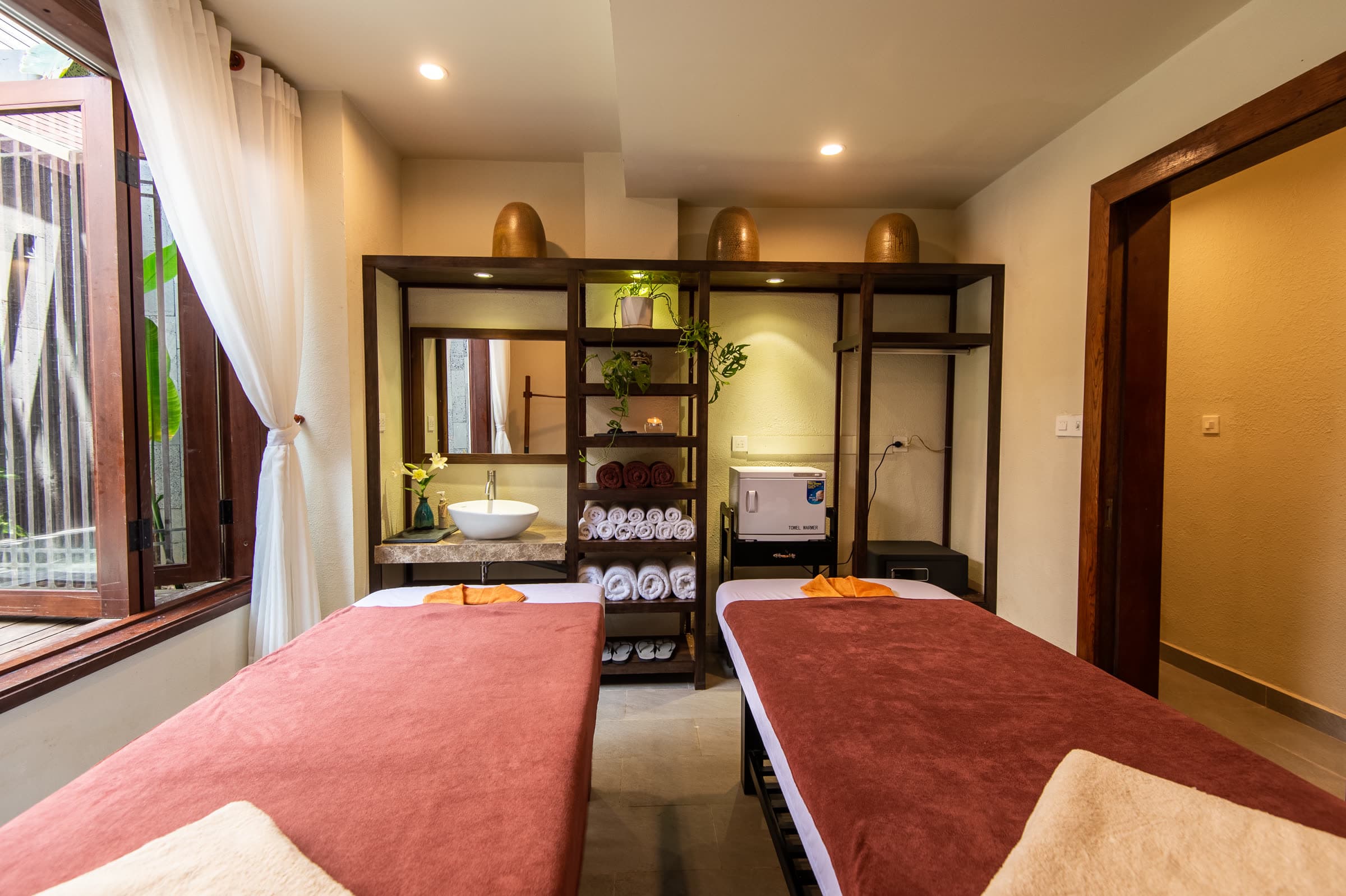
Machen Sie aus einer Laternennacht eine Auszeit. Ein Laternenabend bei Vollmond ist der natürliche Mittelpunkt einer romantischen Reise nach Hội An — Paare planen oft einen Jubiläumsaufenthalt oder eine Paarmassage und ein Spa zu zweit am Fluss rund um diese Termine und buchen für den Nachmittag davor ein privates Paar-Spa. Legen Sie sich noch nicht aufs Jahr fest? Die Laternentermine 2026 sind ebenfalls bestätigt. Wir erleben jeden rằm von der ruhigen Seite des Thu Bồn aus, wenige Minuten flussaufwärts der Altstadt. Bleiben Sie für eine Laternennacht? Buchen Sie ein Zimmer am Fluss, wenige Gehminuten vom Lampionlassen entfernt.
Dieser Kalender fasst die offiziellen Aufzeichnungen des Trung tâm Quản lý Bảo tồn Di sản Văn hóa Hội An zum Protokoll der Lichtabschaltung in der 14. Nacht des Đêm Rằm Phố Cổ zusammen, die Berichterstattung von 2025 über die Übertragung der Kulturerbe-Verwaltung von Hội An an Đà Nẵng sowie die festen Mondkalender-Ankerpunkte für 2027 — Tết am 6. Februar, kein Schaltmonat und der Mittherbst-Vollmond am 15. September. Der Beitrag des Hotels ist die geprüfte Umrechnungstabelle vom Mond- in den Sonnenkalender für 2027 sowie der Beobachtungsplan, abgestimmt auf das Zeitfenster des Lichterlassens auf dem Sông Hoài zwischen den Brücken von An Hội und Cẩm Nam, aus erster Hand vom Ufer des Thu Bồn beobachtet.
Every room at Nghê Prana is designed around the science of sleep. Blackout curtains, nightly aromatherapy turndown, and riverside quiet — experience what real rest feels like.
Zimmer am Fluss, zehn Fahrradminuten von der Altstadt. Ob eine Nacht zwischen Hué und Da Nang oder eine ganze Woche ohne Plan — Ihr Zimmer bleibt ruhig.
Kostenlose Stornierung · Direkt bei der Familie, die das Haus gebaut hat

 WhatsApp
 Zalo
Zalo