Hoi An Laternenfest 2026: Alle Termine (geprüfter Vollmond-Kalender)
Das Hoi An Laternenfest findet in der 14. Nacht jedes Mondmonats statt — am Abend vor jedem Vollmond —, sodass dreizehn konkrete Termine in das Kalenderjahr 2026 fallen. An jedem dieser Abende schaltet die Altstadt von etwa 18 bis 22 Uhr das elektrische Licht ab, lässt Seidenlaternen als einzige Beleuchtung leuchten und bedeckt den Fluss Thu Bồn mit treibenden Kerzenlampions. Dies ist der korrigierte, geprüfte Kalender für 2026 — exakte gregorianische Daten samt fertiger Mondkalender-Umrechnung — dazu, was wirklich passiert, das Zeitfenster der Lichtabschaltung und wie man das Fest ohne Gedränge erlebt.
An dreizehn Abenden im Jahr 2026 wird das elektrische Licht entlang der Altstadt von Hội An bewusst gelöscht, und die Gassen kehren zu Kerzen- und Mondlicht zurück. Seidenlaternen werden zur einzigen echten Lichtquelle, der Sông Hoài (der Hội-An-Arm des Thu Bồn) füllt sich mit Tausenden treibender Kerzenlampions, die flussabwärts gleiten, und für etwa zwanzig Minuten in der Dämmerung sieht die Stadt fast genauso aus wie vor drei Jahrhunderten. Kommt man in der falschen Nacht, bekommt man nichts davon — nur einen gewöhnlichen Abend in einer belebten Stadt. Das Nützlichste, was dieser Leitfaden bietet, sind daher die richtigen Termine.
Das Hoi An Laternenfest — Lễ hội đèn lồng, vor Ort Đêm Rằm Phố Cổ ("Vollmondnacht der Altstadt") genannt — fällt auf den 14. Tag jedes Mondmonats, den Abend vor jedem Vollmond. Dieses Detail bekommen fast alle englischsprachigen Verzeichnisse falsch: Es ist die 14. Nacht, nicht die 15., und nicht "irgendwann in diesem Monat". Stimmt das Datum, folgt alles Weitere von selbst.
Ein Hinweis zur Genauigkeit: Die Termine unten sind aus dem Mondkalender berechnet und mit vietnamesischen Quellen abgeglichen. Tết 2026 fällt auf Dienstag, den 17. Februar, und Rằm tháng Giêng — der erste Vollmond des Mondjahres — auf Dienstag, den 3. März 2026 (laut Đời sống & Pháp luật und Người Lao Động). Damit liegt die erste Festnacht des Mondjahres auf Montag, den 2. März 2026. Jedes Datum in diesem Leitfaden ist anhand dieser Ankerpunkte geprüft.
Die letzten vier Laternennächte des Jahres 2026
Vier Festnächte bleiben im Kalender 2026: Donnerstag, 24. September (14. des 8. Mondmonats, der Vorabend des Mittherbstfests und die festlichste Nacht des Jahres), Freitag, 23. Oktober (14. des 9. Monats), Sonntag, 22. November (14. des 10. Monats) und Dienstag, 22. Dezember (14. des 11. Monats). Danach geht die Reihe weiter mit Donnerstag, 21. Januar 2027 und Freitag, 19. Februar 2027 — dem Vorabend von Nguyên Tiêu, dem ersten Vollmond des Jahres Đinh Mùi; der vollständige Kalender 2027 ist auf dieselbe Weise geprüft. Erneut geprüft am 21. September 2026 mit zwei unabhängigen Umrechnungen: dem Mondkalender-Algorithmus von Hồ Ngọc Đức und dem veröffentlichten vietnamesischen Kalender (lichngaytot.com führt den 22. Dezember 2026 als 14/11 Bính Ngọ).
Wann findet das Hoi An Laternenfest 2026 statt?
Das Fest wird das ganze Jahr über in der 14. Nacht jedes Mondmonats begangen. Da Mond- und gregorianischer Kalender auseinanderdriften, verschieben sich die Termine jedes Jahr. Hier sind alle dreizehn Festnächte, die in das Kalenderjahr 2026 fallen, mit bereits erledigter Umrechnung von Mond- zu Gregorianischem Datum.
#
Festnacht (2026)
Monddatum
Hinweise
1
Fr, 2. Jan. 2026
14. des 11. Mondmonats
Kühl, trocken; ruhige erste Nacht des Jahres
2
So, 1. Feb. 2026
14. des 12. Mondmonats
Vor Tết; Stadt mit Neujahrsvorbereitungen beschäftigt
3
Mo, 2. März 2026
14. des 1. Mondmonats — Nguyên Tiêu
Erster Vollmond des Mondjahres; die größte, stimmungsvollste Nacht
4
Mi, 1. Apr. 2026
14. des 2. Mondmonats
Frühling; angenehm, meist trocken
5
Do, 30. Apr. 2026
14. des 3. Mondmonats
Liegt im Feiertag 30. Apr.–1. Mai; mit inländischen Menschenmengen rechnen
6
Sa, 30. Mai 2026
14. des 4. Mondmonats
Warm, trocken; ein Samstag, daher voller
7
So, 28. Juni 2026
14. des 5. Mondmonats
Höhepunkt der Trockenzeit; heiße Abende (über 32 °C)
8
Mo, 27. Juli 2026
14. des 6. Mondmonats
Inländische Sommerhochsaison
9
Mi, 26. Aug. 2026
14. des 7. Mondmonats
Um Lễ Vu Lan; vor Ort bedeutsam
10
Do, 24. Sep. 2026
14. des 8. Mondmonats
Die Nacht vor dem Mittherbstfest (Tết Trung Thu, Vollmond 25. Sep.) — die festlichste des Jahres
11
Fr, 23. Okt. 2026
14. des 9. Mondmonats
Beginnende Regenzeit; Hochwasservorhersage prüfen
12
So, 22. Nov. 2026
14. des 10. Mondmonats
Kühlere Abende, oft das fotogenste Licht des Jahres
13
Di, 22. Dez. 2026
14. des 11. Mondmonats
Kühl und trocken; ruhige Nacht zum Jahresende
Die nächste Festnacht nach dem obigen Kalender ist Donnerstag, der 21. Januar 2027 (14. des 12. Mondmonats). Tết 2027 fällt auf Samstag, den 6. Februar 2027.
Wenn Sie nur eine Nacht erleben, dann Montag, den 2. März 2026 (Nguyên Tiêu, der erste Vollmond des Mondjahres) oder Donnerstag, den 24. September 2026 (den Vorabend des Mittherbstfests). Diese beiden tragen die meiste Zeremonie. Möchten Sie das Fest ohne das stärkste Gedränge, bieten die Nächte der Nebensaison — 2. Januar, 22. November, 22. Dezember — dieselbe verdunkelte Altstadt mit mehr Raum zum Durchatmen.
Zwei verschiedene „Laternenfeste“ in Hội An 2026 — welches meinen Sie?
Alles oben Beschriebene ist das monatliche Đêm Rằm Phố Cổ — der Abend der 14. Mondnacht mit abgeschaltetem Licht, der seit 1998 stattfindet und keine Eintrittskarte braucht. 2026 hat Hội An zum ersten Mal zusätzlich eine eigene, einmalige Veranstaltung mit verwirrend ähnlichem Namen: das Internationale Laternenfest Hội An 2026 (Lễ hội Đèn lồng Quốc tế Hội An 2026) unter dem Motto „Hội An – Sắc màu di sản“ („Hội An – Farben des Erbes“), geplant von Donnerstag, 3. bis Sonntag, 6. Dezember 2026. Den Plan hat das Volkskomitee der Stadt Đà Nẵng erlassen; Thanh Niên und Tuổi Trẻ berichteten am 31. Juli 2026 darüber.
Was der Plan vorsieht: eine Eröffnung mit Darbietungen am Ufer und auf dem Wasser; rund 15 großformatige Laternen-Installationen am Sông-Hoài-Platz, im Skulpturengarten An Hội, entlang des Flusses und in den Gassen der Altstadt; Werkstätten zum Laternenbau; eine Ausstellung von Laternen und Kunst aus wiederverwerteten Materialien; ein Kunstprogramm „Sắc màu di sản“; einen nächtlichen Laternenspaziergang (minh đăng dạ hành); Gespräche über die Handwerksberufe Hội Ans sowie Wettbewerbe für Fotografie und Laternenmuster. Die Installationen sollen bis Tết Nguyên Tiêu 2027 (Samstag, 20. Februar 2027) stehen bleiben — sie sind also auch in den Laternennächten vom 21. Januar und 19. Februar noch zu sehen.
Zwei Dinge, bevor Sie danach planen. Erstens: Der 3. bis 6. Dezember entspricht dem 25. bis 28. Tag des zehnten Mondmonats, also keiner Vollmondnacht — die nächstgelegenen monatlichen Lichtaus-Abende sind der 22. November und der 22. Dezember. Zweitens: Die Termine stammen aus dem Plan und wurden als dự kiến (vorgesehen) veröffentlicht; ändert sich das Programm, korrigieren wir diesen Abschnitt. Zu Eintrittskarten sagt der Plan nichts, deshalb behaupten wir auch nichts — wir ergänzen es, sobald eine offizielle Ankündigung vorliegt.
Was passiert in der Festnacht wirklich?
Ab etwa 17:30 Uhr werden Motorräder aus dem Kern der Altstadt ferngehalten. Dann tut die Stadt das, was dieses Fest planenswert macht: Sie schaltet den Großteil des elektrischen Lichts ab, und von etwa 18:00 bis 22:00 Uhr werden die Tausenden Seiden- und Papierlaternen über den Gassen zur einzigen nennenswerten Lichtquelle. Dieses Abschalt-Protokoll ist das Herz von Đêm Rằm Phố Cổ — es ist eine lokale Kulturerbe-Politik, kein touristischer Gag.
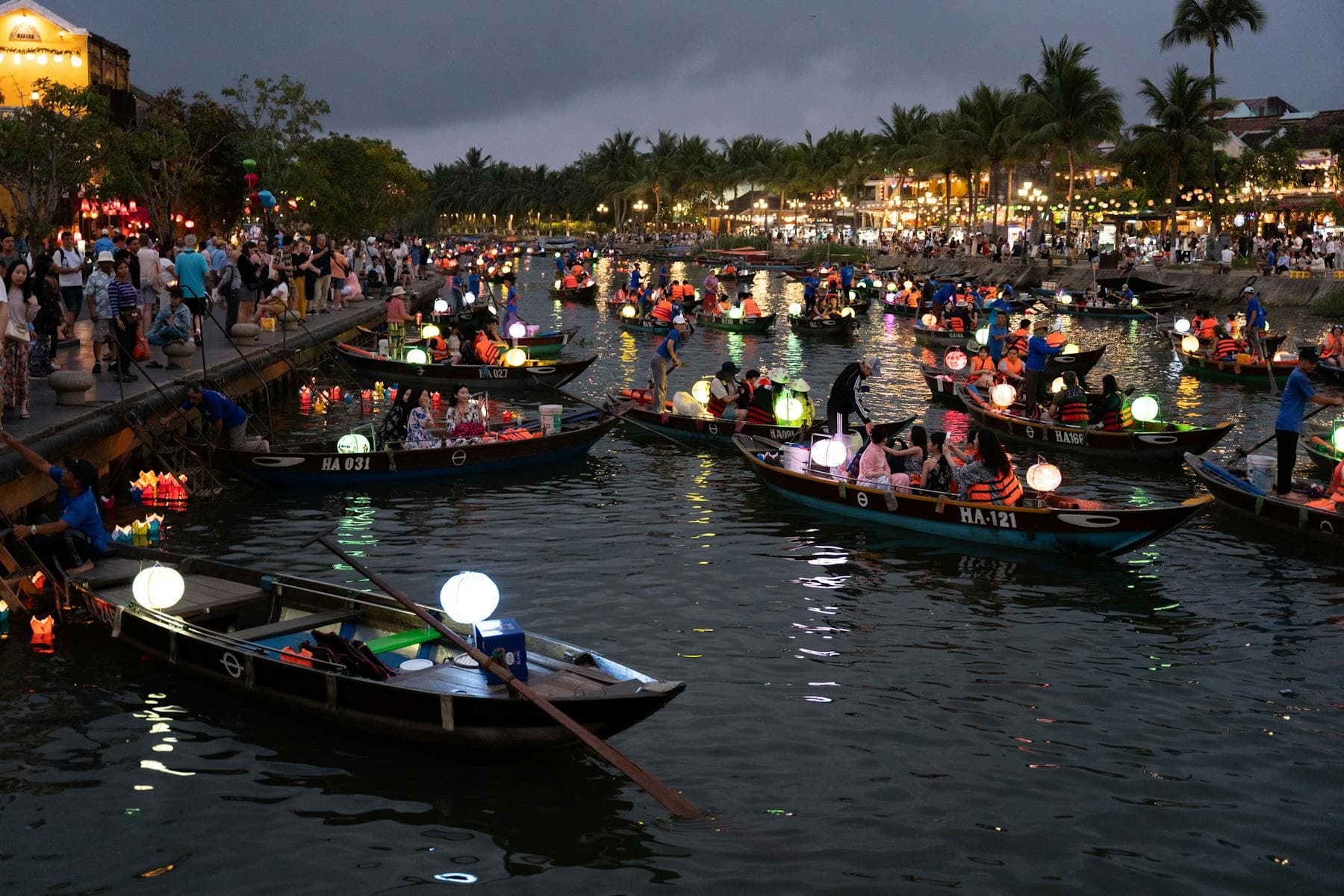
Der Fluss wird zur zweiten Lichtquelle. Einheimische und Besucher entzünden kleine Kerzenlampions — hoa đăng, Papierlaternen mit einer Kerze darin — und lassen sie von der Fußgängerbrücke An Hội und von kleinen Holzbooten am Kai Bạch Đằng auf den Sông Hoài hinab. Jeder Lampion trägt einen Wunsch. Zwischen etwa 19:00 und 21:00 Uhr füllt sich das Wasser mit ihnen, die flussabwärts zum Hauptlauf des Thu Bồn treiben. Kulturdarbietungen begleiten das Fest: bài chòi-Volksgesang auf dem Platz An Hội, traditionelle Musik auf der Bühne Bạch Đằng, Kalligrafie in den Versammlungshäusern. Um 22:00 Uhr kehren normale Beleuchtung und Verkehr zurück.
Die Idee der Lichtabschaltung hat einen belegten Ursprung. Das Trung tâm Quản lý Bảo tồn Di sản Văn hóa Hội An (Zentrum für die Bewahrung des Kulturerbes von Hội An) führt das monatliche tắt đèn điện — "das elektrische Licht abschalten" — auf einen städtischen Beschluss von 1998 zurück, eine Idee, die mit dem polnischen Architekten Kazimierz Kwiatkowski verbunden ist, der 1982 begann, die einheimische Architektur von Hội An zu dokumentieren. Seit Mitte 2025, nach der Verwaltungsreform, die Hội An und Mỹ Sơn Đà Nẵng unterstellte, arbeitet dasselbe Zentrum unter der Kulturbehörde von Đà Nẵng — das Fest 2026 wird also erstmals auf Ebene von Đà Nẵng verwaltet.
Wo findet es statt, und wie erlebt man es von der ruhigen Seite?
Das Geschehen konzentriert sich auf den Sông Hoài zwischen der Fußgängerbrücke An Hội und der Brücke Cẩm Nam, wobei die Uferpromenade Bạch Đằng am nördlichen Ufer (Altstadtseite) der dichteste Punkt ist. Gegen 19:15 Uhr in einer Spitzennacht stehen die Brücke An Hội und der Kai Bạch Đằng Schulter an Schulter. Da müssen Sie nicht hinein.
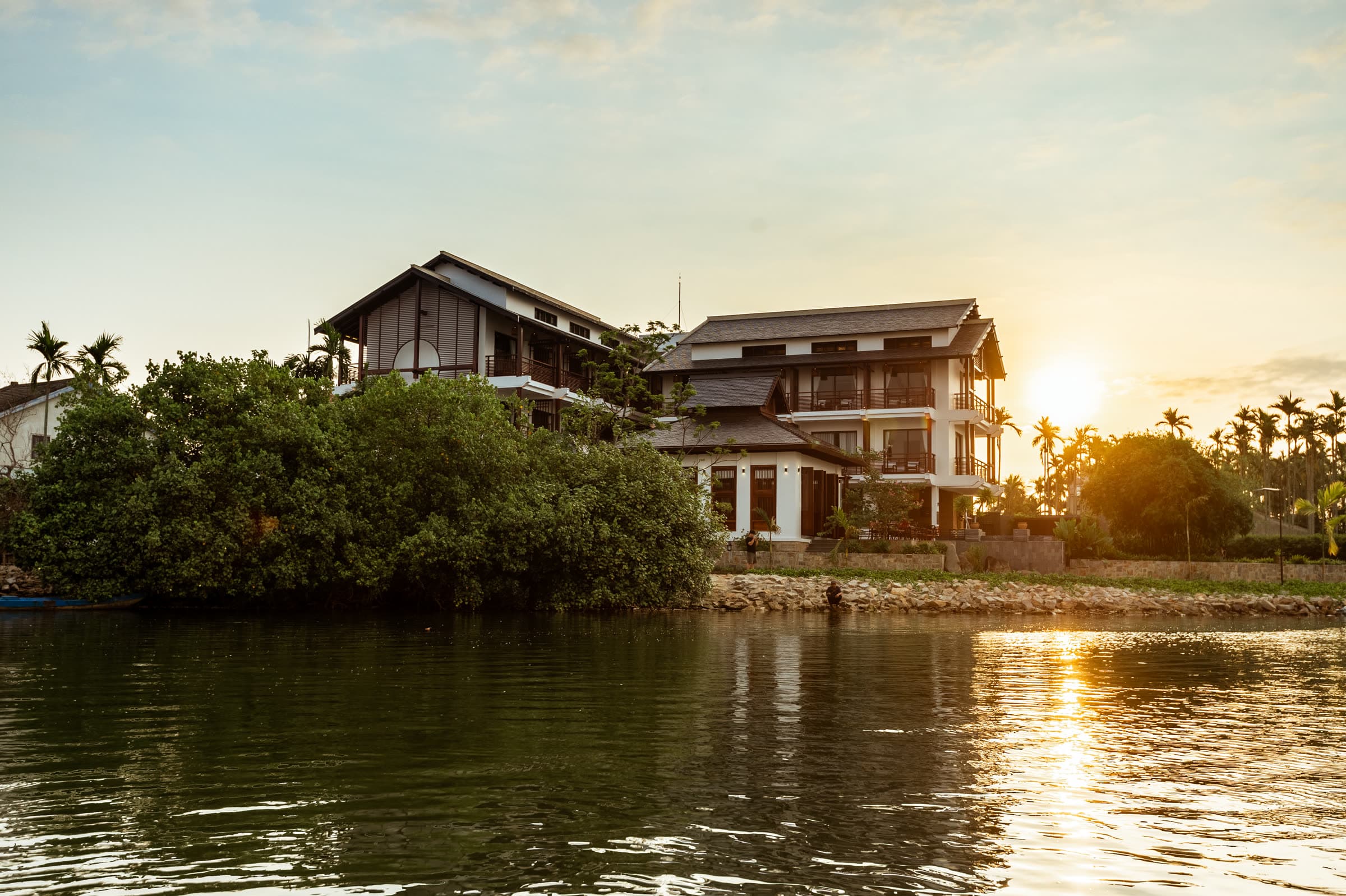
Das Wasser selbst ist das Fest, weshalb der ruhigste Platz darauf oder gegenüber liegt. Aus der Erfahrung unserer eigenen Gäste, die vom Hotel zehn Radminuten flussabwärts hineinfahren (vom Hotel selbst ist das Aussetzen der Laternen nicht zu sehen), ist das bewährte Muster einfach: früh für das Zeitfenster der blauen Stunde kommen oder vom gegenüberliegenden Ufer aus zusehen. Fünf Ansätze:
Erstens — das Zeitfenster der blauen Stunde. Erreichen Sie die Uferpromenade Bạch Đằng bis 17:00 Uhr und nehmen Sie einen Platz auf den Stufen zum Wasser hin. Die Laternen leuchten vor einem kobaltblauen Dämmerhimmel auf, bevor sich die Menge bildet. Das beste Licht ist etwa von 17:45 bis 18:20 Uhr.
Zweitens — vom Boot aus. Ein kleines Ruderboot (der veröffentlichte Tarif der Bootsgilde von Minh An: 150.000 VND pro Boot für 1–3 Personen, 200.000 VND für 4–5, etwa 20 Minuten) bringt Sie mitten auf den Fluss zwischen die Lampions. Buchen Sie bis 17:00 Uhr; in Festnächten ist die Verfügbarkeit knapp.
Drittens — das Südufer bei Cẩm Nam. Gehen Sie fünf Minuten am Nachtmarkt von An Hội vorbei zu einer beliebigen Uferterrasse in Cẩm Nam und blicken Sie hinüber zur Altstadt. Die Laternenspiegelungen sind aus diesem Winkel oft schöner als vom überfüllten Nordufer, und Sie haben einen Tisch.
Planen Sie Ihre Reise? Prüfen Sie die Verfügbarkeit in unserem ruhigen Hotel am Thu-Bồn-Fluss. Verfügbarkeit prüfen →
Viertens — drinnen, nicht auf dem Fluss. Der Hof des Quan-Công-Tempels und das Innere des alten Hauses Tấn Ký füllen sich in Festnächten mit Kerzenschein und sehen nur einen Bruchteil der Menge. Ruhig, stimmungsvoll und eine andere Art von Foto.
Fünftens — die Insel Cẩm Kim. Eine kurze Fähre über den Thu Bồn erreicht Cẩm Kim, wo einheimische Familien ihre eigene, kleinere Lampion-Zeremonie mit einem Bruchteil der touristischen Dichte abhalten. Weniger Lampions auf dem Wasser, mehr von der echten Gemeinschaft.
Ein praktischer roter Faden verbindet alles: Wo Sie schlafen, entscheidet, wie viel des Abends Sie tatsächlich genießen. Am Thu Bồn statt im Fußgängerkern zu wohnen bedeutet, dass Sie zu Fuß oder mit einem kurzen Boot zur Lampion-Zeremonie gelangen und sich dann auf ruhiges Wasser zurückziehen können, wenn die Menge ihren Höhepunkt erreicht — statt sich durch den Nachtmarkt zurück zu einem Hotel tief in der Altstadt zu kämpfen. (Wir sind selbst ein Hotel am Ufer des Thu Bồn, und genau deshalb gestalten wir den Abend so: Das Fest ist etwas, das man besucht und von dem man dann heimkehrt.)
Was mitnehmen und wie sich kleiden
Das Fest ist zum Mitmachen — jeder darf einen hoa đăng entzünden und aussetzen. Lampions werden auf der Bạch Đằng und an der Brücke An Hội je nach Verkäufer für etwa 5.000–40.000 VND verkauft; bringen Sie kleine Scheine mit, da die meisten Verkäufer in Festnächten keine Karten nehmen. Tragen Sie geschlossene, bequeme Schuhe — Kopfsteinpflaster und Kerzenwachs machen Flip-Flops zur schlechten Wahl. Ab Oktober bringen Sie eine leichte Schicht für die kühleren Abende mit. Das Mieten eines áo dài (traditionelle Tracht) passt gut zum Abend; die Verleihläden entlang der Trần Phú haben am 14. des Mondmonats verlängerte Öffnungszeiten.
Häufig gestellte Fragen
Wann ist das Hoi An Laternenfest 2026?
Es findet in der 14. Nacht jedes Mondmonats statt. 2026 fällt das auf: 2. Jan., 1. Feb., 2. März, 1. Apr., 30. Apr., 30. Mai, 28. Juni, 27. Juli, 26. Aug., 24. Sep., 23. Okt., 22. Nov. und 22. Dez. Am stimmungsvollsten sind der 2. März (erster Vollmond des Mondjahres) und der 24. September (Vorabend des Mittherbstfests).
Wann beginnt und endet das Hoi An Laternenfest?
Motorräder werden gegen 17:30 Uhr aus dem Kern entfernt, das elektrische Licht ist von etwa 18:00 bis 22:00 Uhr aus, und das Aussetzen der Kerzenlampions auf dem Fluss erreicht seinen Höhepunkt zwischen etwa 19:00 und 21:00 Uhr.
Findet das Laternenfest in Hoi An jede Nacht statt?
Nein. Seidenlaternen leuchten das ganze Jahr über an den meisten Abenden in der Altstadt, aber das vollständige Đêm Rằm Phố Cổ — Licht aus, Verkehr gesperrt, Lampions auf dem Fluss — geschieht nur in der 14. Nacht jedes Mondmonats.
Muss man für das Hoi An Laternenfest bezahlen?
Durch das Fest selbst kann man kostenlos spazieren; ein eigenes Laternenfest-Ticket gibt es nicht. Die Altstadt-Eintrittskarte — 120.000 VND für internationale Gäste, 80.000 VND für vietnamesische Gäste (Preisliste von Quảng Nam Tourism, aktualisiert am 20. Januar 2026) — gilt für die alten Häuser, Versammlungshallen und Museen. Ein Kerzenlampion (hoa đăng) kostet je nach Verkäufer etwa 5.000–40.000 VND, wenn Sie selbst einen aussetzen möchten, ein Gildeboot 150.000–200.000 VND pro Boot für etwa 20 Minuten.
Wann ist die größte Laternennacht in Hoi An 2026?
Die beiden größten sind Montag, der 2. März 2026 (Nguyên Tiêu, der erste Vollmond des Mondjahres) und Donnerstag, der 24. September 2026 (die Nacht vor dem Mittherbstfest / Tết Trung Thu).
Kann man selbst einen Lampion auf dem Fluss aussetzen?
Ja. Kaufen Sie einen hoa đăng bei einem Uferverkäufer und lassen Sie ihn von der Brücke An Hội, dem Kai Bạch Đằng oder einem kleinen Boot zu Wasser. Lokaler Brauch ist es, sich beim Aussetzen etwas zu wünschen.
Lohnt sich das Laternenfest in der Regenzeit (Okt.–Nov.)?
Es kann sich lohnen, aber behalten Sie die Vorhersage im Auge. Oktober und November sind die regenreichsten Monate in Hội An, und die Altstadt kann in schlechten Jahren überschwemmt werden; die Nächte des 23. Oktober und 22. November sind in Trockenphasen wunderschön, können aber bei Hochwasser abgesagt oder verkürzt werden.
Ist das Internationale Laternenfest Hội An 2026 dasselbe Fest?
Nein. Das monatliche Laternenfest (Đêm Rằm Phố Cổ) ist der Abend der 14. Mondnacht mit abgeschaltetem Licht aus dem Kalender oben und findet das ganze Jahr über statt. Das Internationale Laternenfest Hội An 2026 ist eine eigene, erstmals ausgerichtete Veranstaltung, die vom 3. bis 6. Dezember 2026 in denselben Altstadträumen geplant ist — mit rund 15 großen Laternen-Installationen, Werkstätten und Darbietungen; seine Termine sind keine Vollmondnächte. Die nächstgelegenen monatlichen Laternennächte sind der 22. November und der 22. Dezember 2026.
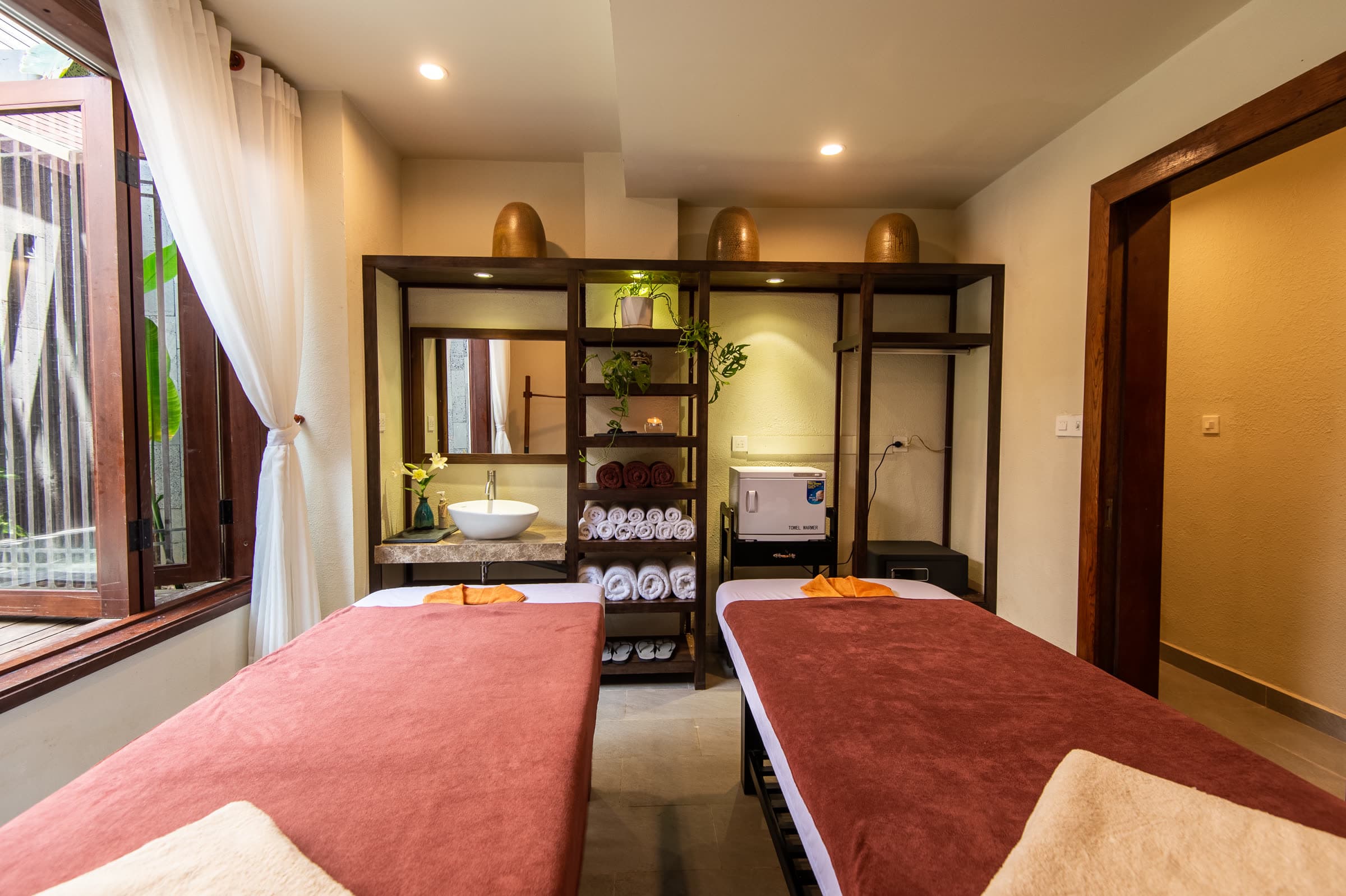
Machen Sie aus einer Laternennacht eine Auszeit. Ein Laternenabend bei Vollmond ist der natürliche Mittelpunkt einer romantischen Reise nach Hội An — Paare planen oft einen Jubiläumsaufenthalt oder eine Paarmassage und ein Spa zu zweit am Fluss rund um diese Termine und buchen für den Nachmittag davor ein privates Paar-Spa. Planen Sie weiter im Voraus? Die Laternentermine 2027 sind ebenfalls bestätigt. Wir liegen auf der ruhigen Seite des Thu Bồn, 3,2 km flussabwärts der Altstadt, wo die Laternen außer Sicht sind und der Vollmond über offenem Wasser aufgeht. Bleiben Sie für eine Laternennacht? Buchen Sie ein Zimmer am Fluss, zehn Fahrradminuten vom Lampionlassen entfernt.
Dieser Kalender fasst die offiziellen Aufzeichnungen des Trung tâm Quản lý Bảo tồn Di sản Văn hóa Hội An zum Lichtabschalt-Protokoll der 14. Nacht des Đêm Rằm Phố Cổ zusammen, die Berichterstattung von 2025 über die Unterstellung des Kulturerbe-Managements von Hội An unter Đà Nẵng sowie die Bestätigung der Mondkalender-Ankerpunkte 2026 durch die vietnamesische Presse. Der Beitrag des Hotels ist die geprüfte Mond-zu-Gregorianisch-Umrechnungstabelle 2026 und der Besuchsplan, abgestimmt auf das Zeitfenster der Lampion-Zeremonie auf dem Sông Hoài zwischen den Brücken An Hội und Cẩm Nam, aus erster Hand vom Ufer des Thu Bồn beobachtet.
Trung tâm QLBT Di sản Văn hóa Hội An (2020). Kiến trúc sư Ba Lan Kazimierz Kwiatkowski với Hội An. hoianheritage.net. View source
TTXVN / Tuổi Trẻ (2025). Di sản thế giới Hội An và Mỹ Sơn chính thức trực thuộc Đà Nẵng, công bố bộ máy mới. Tuổi Trẻ. View source
Đời sống & Pháp luật (2026). Rằm tháng Giêng 2026 là ngày nào Dương lịch?. doisongphapluat.com.vn. View source
Báo Người Lao Động (2026). Ngày đẹp, giờ lành cúng Rằm tháng Giêng 2026. Người Lao Động. View source
Trung tâm Quản lý Bảo tồn Di sản Văn hóa Hội An (2024). Đêm phố cổ Hội An (Đêm Rằm Phố Cổ). hoianworldheritage.org.vn. View source
Mạnh Cường (2026). Lần đầu Hội An tổ chức Lễ hội đèn lồng quốc tế (31 Jul 2026 09:48) — UBND TP Đà Nẵng plan: 3–6 Dec 2026, theme "Hội An – Sắc màu di sản". Báo Thanh Niên. View source
Lê Trung (2026). Hội An lần đầu tiên tổ chức Lễ hội đèn lồng quốc tế (31 Jul 2026 08:58) — installations kept until Tết Nguyên tiêu 2027. Tuổi Trẻ Online. View source
Quảng Nam Tourism (2026). Bảng giá vé Phố cổ Hội An 2026 — 120.000₫ khách quốc tế / 80.000₫ khách Việt Nam (updated 20 Jan 2026). quangnamtourism.com.vn. View source
Lịch Ngày Tốt (2026). Xem ngày tốt xấu ngày 22/12 — Lịch âm 14-11-2026 (Bính Ngọ); second conversion for the last 2026 lantern night. lichngaytot.com. View source
Every room at Nghê Prana is designed around the science of sleep. Blackout curtains, nightly aromatherapy turndown, and riverside quiet — experience what real rest feels like.
Zimmer am Fluss, zehn Fahrradminuten von der Altstadt. Ob eine Nacht zwischen Hué und Da Nang oder eine ganze Woche ohne Plan — Ihr Zimmer bleibt ruhig.
Kostenlose Stornierung · Direkt bei der Familie, die das Haus gebaut hat

 WhatsApp
 Zalo
Zalo