The Thu Bon River: A Living History Flowing Past Your Window
For centuries, the Thu Bon River has shaped Hoi An — carrying silk traders, Cham kingdoms, and quiet morning fishermen past these very banks. Here is the story of the water that still whispers outside your room.
Long before Hoi An became a UNESCO World Heritage Site, before the Japanese Bridge was built or the first lantern was lit, the Thu Bon River was already ancient. Rising in the Truong Son Mountains near the Laotian border, it winds 200 kilometres through Quang Nam Province before emptying into the East Sea at Cua Dai Beach — the same stretch of coast visible from Nghê Prana.
To understand Hoi An, you must first understand this river. It is the reason the town exists at all.
The Cham Kingdom and Maritime Trade
Between the 2nd and 15th centuries, the Champa Kingdom controlled much of central Vietnam, and the Thu Bon River was its commercial artery. Cham merchants sailed upriver carrying cinnamon, eaglewood, and ivory from the highlands to the port of Dai Chiem (modern-day Hoi An), where they traded with seafarers from India, Persia, and China.
Archaeological sites along the riverbanks — particularly the My Son temple complex, 40 kilometres upstream — reveal just how vital this waterway was. The Cham carved their Hindu temples within reach of the river not by accident but by design: the Thu Bon connected their spiritual capital to the trading world.
The Golden Age of Hoi An
By the 16th century, Hoi An had become one of Southeast Asia's most important international ports. Japanese, Chinese, Dutch, and Portuguese traders anchored their ships where the Thu Bon widens near the Ancient Town. Warehouses lined the riverfront. Silk, ceramics, and spices changed hands in the same streets tourists walk today.
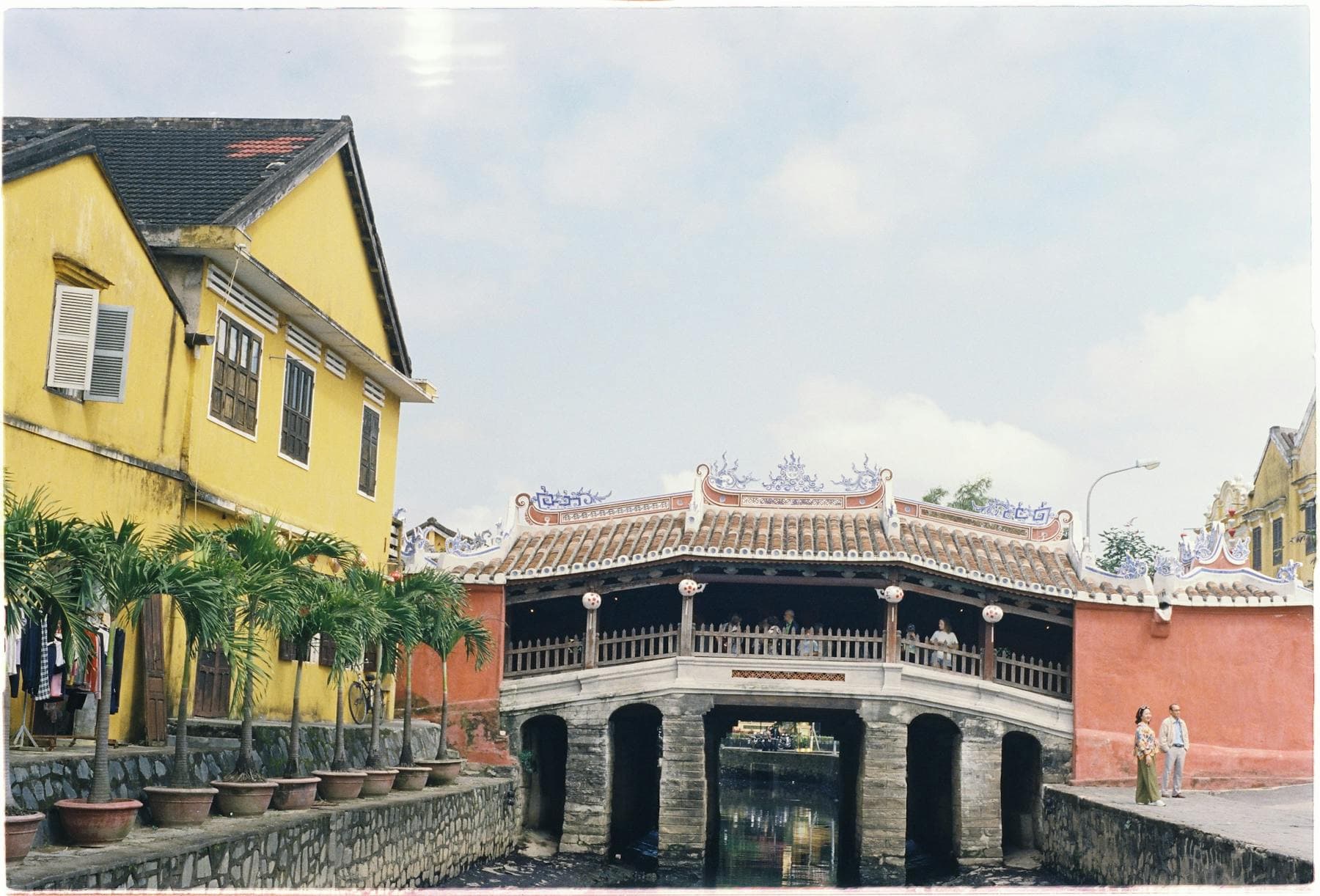
The Japanese Bridge — Hoi An's most photographed landmark — was built around 1593 to connect the Japanese and Chinese merchant quarters, both of which grew along the river's banks. The Thu Bon was not just a route for goods; it was the social geography of the town.
"Hoi An was built by the river, for the river. Every street, every market, every temple faces the water." — UNESCO Cultural Heritage Assessment
When the River Changed Course
In the late 18th century, the Thu Bon began to silt up. Larger trading vessels could no longer navigate its shallows, and international commerce shifted north to Da Nang's deeper harbour. Hoi An's decline as a trading port was, paradoxically, its salvation: without the pressure of modernisation, the Ancient Town was preserved almost exactly as it stood 200 years ago.
Planning a trip around this? See dates at our quiet riverside hotel on the Thu Bồn. Check availability →
The silting also created the fertile flood plains that today produce Quang Nam's famous vegetables, herbs, and rice — the same ingredients that make Hoi An one of Vietnam's greatest food destinations.
Life on the River Today
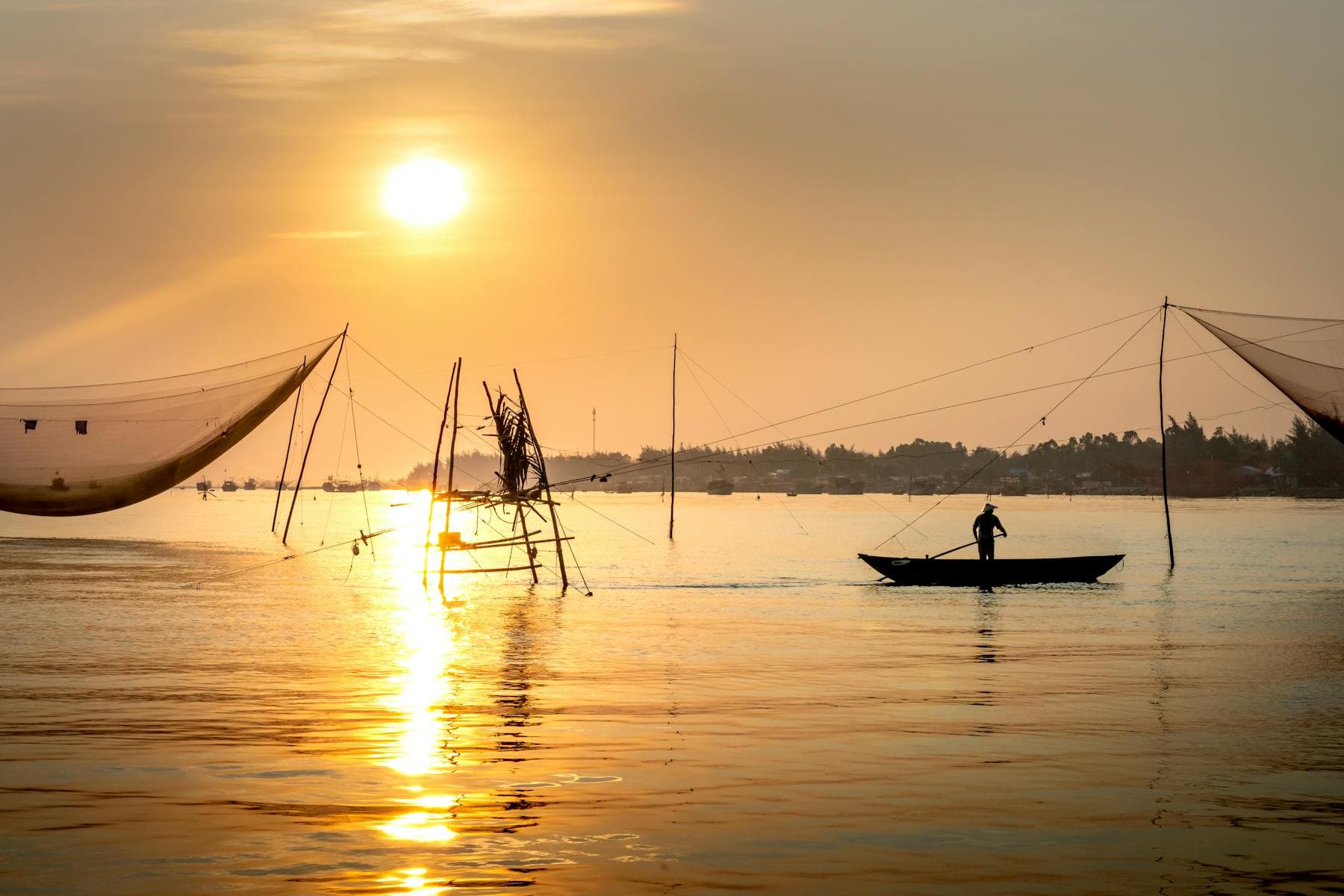
Wake early at Nghê Prana and you will see the Thu Bon as locals know it. Before dawn, fishermen in circular basket boats (thuyền thúng) cast their nets in the same currents their grandfathers worked. Women paddle flat-bottomed sampans to the morning markets with baskets of water spinach and river herbs. Buffalo wade at the shallows near Cam Kim Island.
By mid-morning, the river becomes a mirror — still and golden in the Vietnamese sun. This is the hour for kayaking or stand-up paddleboarding from our riverside dock, gliding past coconut palms and water coconut forests (rừng dừa nước) that shelter kingfishers, herons, and the occasional monitor lizard.
In the evening, the river transforms again. From the Ancient Town, 4 kilometres downstream, hundreds of paper lanterns float on the water during the monthly full-moon festival. But here at Nghê Prana, on the quiet stretch upriver, sunset turns the Thu Bon into liquid copper — a private show that never gets old.
The River and Wellness
There is a reason civilisations have always settled beside rivers, and it is not only practical. Research in environmental psychology confirms what the Cham builders and Japanese merchants intuited: proximity to flowing water reduces cortisol, lowers blood pressure, and improves sleep quality. The Japanese concept of "suikinkutsu" — the healing sound of water — finds its Vietnamese equivalent in the gentle current outside your window.
At Nghê Prana, the Thu Bon is not scenery. It is therapy. Our spa treatments are timed to the river's rhythms. The warm-oil massage and herbal steam unwind to it. The infinity pool dissolves into it. Even the architecture channels river breezes through open corridors, so the sound of water is never far away.
UNESCO World Heritage Centre (1999). Hoi An Ancient Town. UNESCO World Heritage List. View source
Hardy, A. (2009). The Temple Ruins of My Son. Journal of Southeast Asian Architecture.
Wheeler, C. & Li, T. (2017). Maritime Trade in Early Modern Southeast Asia. Cambridge University Press.
Quang Nam Provincial Government (2021). Thu Bon River Basin Management Plan. Provincial Environmental Report.
Nichols, W.J. (2014). Blue Mind: The Surprising Science That Shows How Being Near Water Makes You Happier. Little, Brown and Company.
White, M.P. et al. (2020). Blue space, health and well-being: A narrative overview and synthesis of potential benefits. Environmental Research, 191. View source
Viet Nam National Administration of Tourism (2023). Hoi An Cultural Heritage and Sustainable Tourism. VNAT Report.
Every room at Nghê Prana is designed around the science of sleep. Blackout curtains, nightly aromatherapy turndown, and riverside quiet — experience what real rest feels like.
Riverside hotel rooms on the Thu Bồn, ten minutes by bicycle from the Ancient Town. Whether it's one night between Hue and Da Nang or a full week of doing nothing — we kept your room quiet.
Free cancellation · Direct from the family who built the hotel

 WhatsApp
 Zalo
Zalo