Hội An Altstadt vs. Flussufer: Wo schläft man besser?
Das Flussufer schlägt die Altstadt auf jeder messbaren Schlafvariablen — Restlicht, Nachtgeräusch, Wärmestaueffekt und melatoninhemmende Lichtspektren. Wenn Schlaf der Grund Ihres Aufenthalts ist, ist die Wahl keine Vorliebe; sie ist eine Physiologiefrage mit klarer Antwort.
Wer in Hội An eine Unterkunft wählt, fragt nicht „welcher Bezirk ist am schönsten", sondern „in welchem kann ich schlafen". Andere Frage, andere Antwort. Die Altstadt ist auffallend schön und kaum zum Ausruhen geeignet. Die Flussufer-Dörfer 2 bis 4 km draußen sind ruhiger, dunkler, kühler — nach jeder messbaren Größe besser für den Körper. Hier der Vergleich auf vier Variablen, die Schlafqualität bestimmen: Restlicht, Nachtgeräusch, thermisches Umfeld und spätabendliche Aktivität. Die Belege sind eindeutig.
Erste Variable: Restlicht in der Nacht
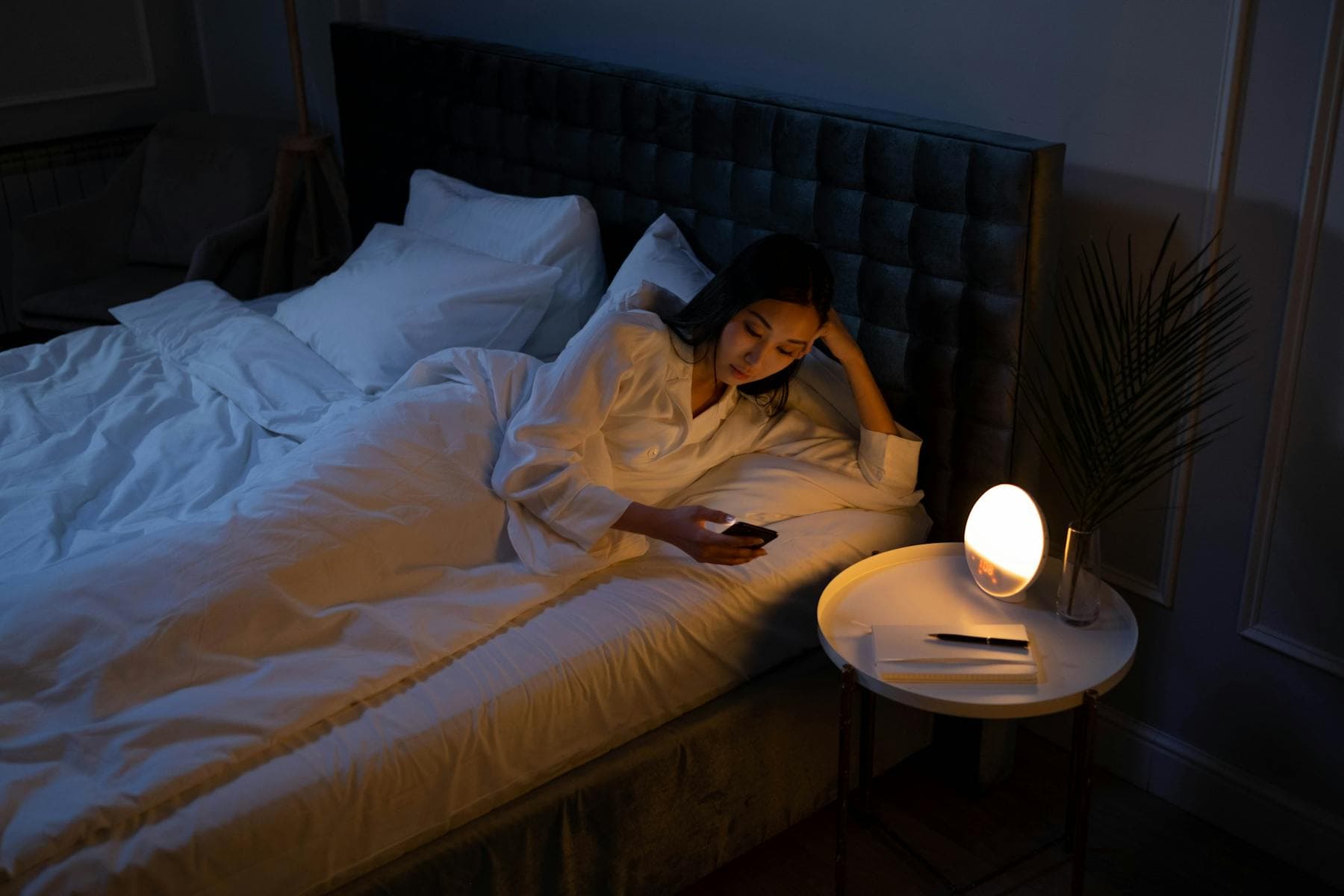
Hội Ans Altstadt ist berühmt für ihre Lampions — tausende Seiden- und Papierschirme werfen warmes Licht auf gelbe Steinfassaden. Tagsüber Dekoration. Nachts werden sie zur Lichtquelle, dicht genug, dass die Altstadt eine etwa sechsmal höhere Himmelhelligkeit zeigt als ländliche Gegenden 3 km entfernt (Light Pollution Map). In den meisten Altstadt-Pensionen liegt die Beleuchtungsstärke im Schlafzimmer um 22 Uhr bei 5 bis 15 Lux — genug, um die Melatoninproduktion messbar zu mindern, selbst durch dünne Vorhänge.
Das ist relevanter, als es klingt. Eine Studie 2018 im Journal of Clinical Endocrinology and Metabolism: schon 5 Lux Restlicht im Schlaf erhöhten die Insulinresistenz am Folgetag um 19 % und korrelierten über fünf Jahre mit 1,9 kg Gewichtszunahme. Melatonin, Hormon für Schlaftiefe und nächtliche Reparatur, wird durch erstaunlich wenig Licht unterdrückt. Das Flussufer wird im Gegensatz dazu wirklich dunkel. Schlafzimmer-Beleuchtungsstärke an Adressen am Cẩm-Nam- oder Cẩm-Thanh-Ufer liegt mit gezogenen Vorhängen unter 1 Lux, weil schlicht weniger äußeres Licht abgeschirmt werden muss.
Eine Harvard-Studie 2017: Schlafzimmer-Licht über 5 Lux war mit 33 % höherem Diabetesrisiko und 22 % höherem Depressionsrisiko verknüpft, unabhängig von der Schlafdauer.
Zweite Variable: Nachtgeräusch
Den akustischen Fall lernen die meisten auf die harte Tour. Hội Ans Altstadt läuft bis etwa 23 Uhr bei 55 bis 65 dB(A) — Lokale, Nachtmarkt, Mopeds. Die WHO-Schlafstörgrenze liegt bei 40 dB(A). Die Flussdörfer sitzen abends bei 38 bis 42 dB(A) und fallen nach 22 Uhr unter 35 dB(A) — bequem unter der Schwelle, an der der Thalamus Mikroaufweckungen auslöst. Die volle Lärmanalyse haben wir im Beitrag zu den ruhigsten Hotels in Hội An; kurz: Altstadt überschreitet die Schwelle, das Flussufer nicht.
Dritte Variable: Die städtische Wärmeinsel
Weniger besprochen, vielleicht wichtiger. Die dichten Steinhäuser der Altstadt speichern tagsüber Wärme und geben sie noch Stunden nach Sonnenuntergang ab. Die Lufttemperatur in der Altstadt bleibt bis Mitternacht oft 2 bis 4 °C wärmer als im umliegenden Freiland — der klassische Heat-Island-Effekt. Ihr Körper senkt im Schlaf seine Kerntemperatur um etwa 1 °C — nicht optional; das ist der Mechanismus, der den Tiefschlaf einleitet. Bleibt das Zimmer zu warm, wird der Abfall verzögert oder abgeflacht, der Tiefschlaf ist das erste Opfer.
Eine Übersicht 2019 in Sleep Medicine Reviews über 22 Studien: Schlafzimmer über etwa 24 °C verkürzen Slow-Wave und REM zuverlässig. Tropisches Hội An startet ohnehin warm; der Heat-Island-Effekt drückt die Schlafzimmer noch 2 bis 4 °C höher und unterdrückt den Tiefschlaf weiter. Das Flussufer ist im Mittel um 2 bis 3 °C kühler — und das zeigt sich in jedem Tracker.
Wasser und offene Vegetation kühlen die Umgebung über Verdunstung. Eine Studie 2020: Häuser im Umkreis von 200 m zum Fluss hatten in tropischen Sommernächten eine mittlere Temperatur 2,7 °C unter dem urbanen Kern.
Vierte Variable: Aktivitätsrhythmus
Geräusch und Licht sind offensichtlich. Subtiler ist „Social Jetlag" — die Diskrepanz zwischen Ihrer biologischen Uhr und dem Aktivitätsrhythmus rundherum. Die Altstadt läuft auf Touristenuhr: Abendessen 21 Uhr, Märkte bis 22, Bars bis Mitternacht. Selbst wenn Sie schlafen, registriert Ihr Körper den Rhythmus durch Fenster, dünne Wände, Schritte im Flur. Das sympathische Nervensystem bleibt leicht aktiviert. Das Flussufer läuft auf Bauernuhr — Lichter aus 21 Uhr, Stille 22 Uhr, Tag startet 5 Uhr mit Hähnen und Bootmotoren. Ihr Körper kann sich darauf einsynchronisieren. Auf einen Nachtmarkt nicht.
Planen Sie Ihre Reise? Prüfen Sie die Verfügbarkeit in unserem ruhigen Hotel am Thu-Bồn-Fluss. Verfügbarkeit prüfen →
Eine Übersicht 2022 in Nature Reviews Neuroscience: das zirkadiane System rastet auf das Umgebungs-Aktivitätssignal ähnlich stark ein wie auf Licht — eine Stadt, die an Ihrer biologischen Schlafenszeit „on" bleibt, hält Ihr Gehirn teilerregt, auch wenn Sie es nicht bemerken. Deshalb können Sie Vorhänge schließen, Stöpsel einsetzen — und in einer Altstadt-Pension dennoch unausgeruht aufwachen. Die Umgebung zieht gegen den Schlaf.
Praktischer Vergleich
Kurz: Die Altstadt gewinnt beim Geh-Zugang zu Lokalen, Lampions und Schneidern. Sie verliert bei allen vier Schlafvariablen. Das Flussufer gewinnt bei Dunkelheit, Stille, Temperatur, Rhythmus. Es verliert beim Geh-Zugang, doch die meisten Häuser bieten Shuttle oder Räder, mit denen die 3 km zur trivialen Strecke werden.
Die richtige Wahl hängt vom Reisezweck ab. Drei Nächte Foto und Essen: zentral und Schlafkosten akzeptieren. Längerer Aufenthalt, Erholungsstation, Hochzeitsreise oder Wellness — jedes Szenario, in dem Ruhe trägt — ist das Flussufer nicht nur die schönere, sondern die biologisch richtige Wahl.
Wie man am Fluss wählt, ohne Komfort zu verlieren
Zwei häufige Einwände — Distanz und Zugang — sind beide lösbar. Die meisten Häuser am Fluss, auch Nghê Prana, fahren stündlich oder zweistündlich Shuttle in die Altstadt zwischen 9 und 22 Uhr. Taxis vom Hauptplatz kosten 60.000 bis 100.000 VND (etwa 2,5–4 USD), 8 bis 10 Minuten. Räder sind oft kostenlos; flache, sichere Strecke, 15 Minuten am Ufer.
Sie gewinnen die Möglichkeit, die Altstadt zu Ihren Bedingungen zu besuchen — am frühen Abend, wenn das Licht am besten ist, vor dem 21-Uhr-Dinnergedränge zurück, und in ein wirklich dunkles, stilles, kühles Zimmer, in dem der Körper seine Nachtarbeit tut. Viele Gäste merken, dass sie die Altstadt vom Flussufer aus mehr genießen als von innen.
Was die Wissenschaft empfiehlt
Wenn Schlaf irgendwo auf Ihrer Prioritätenliste steht — für Gesundheit, Jetlag-Erholung, Genuss der Reise — zeigt die Evidenz in eine Richtung. Wohnen, wo das Restlicht unter 1 Lux liegt, der Geräuschpegel unter 40 dB(A), die Temperatur 2 bis 3 °C kühler ist, und der Aktivitätsrhythmus zur eigenen Biologie passt. Das ist nicht die Altstadt. Es ist 10 Minuten entfernt, am anderen Flussufer.
Obayashi, K., Saeki, K., Kurumatani, N. (2018). Bedroom light exposure at night and the incidence of depressive symptoms. American Journal of Epidemiology. View source
Cho, Y., Ryu, S-H., Lee, B. R., et al. (2015). Effects of artificial light at night on human health. Chronobiology International. View source
Xu, X., Lian, Z., Shen, J., et al. (2019). Effects of ambient temperature on sleep quality. Sleep Medicine Reviews. View source
Roenneberg, T., Merrow, M. (2022). The circadian clock and human health. Nature Reviews Neuroscience. View source
World Health Organization (2018). Environmental Noise Guidelines for the European Region. WHO Regional Office for Europe. View source
Every room at Nghê Prana is designed around the science of sleep. Blackout curtains, nightly aromatherapy turndown, and riverside quiet — experience what real rest feels like.
Zimmer am Fluss, zehn Fahrradminuten von der Altstadt. Ob eine Nacht zwischen Hué und Da Nang oder eine ganze Woche ohne Plan — Ihr Zimmer bleibt ruhig.
Kostenlose Stornierung · Direkt bei der Familie, die das Haus gebaut hat

 WhatsApp
 Zalo
Zalo