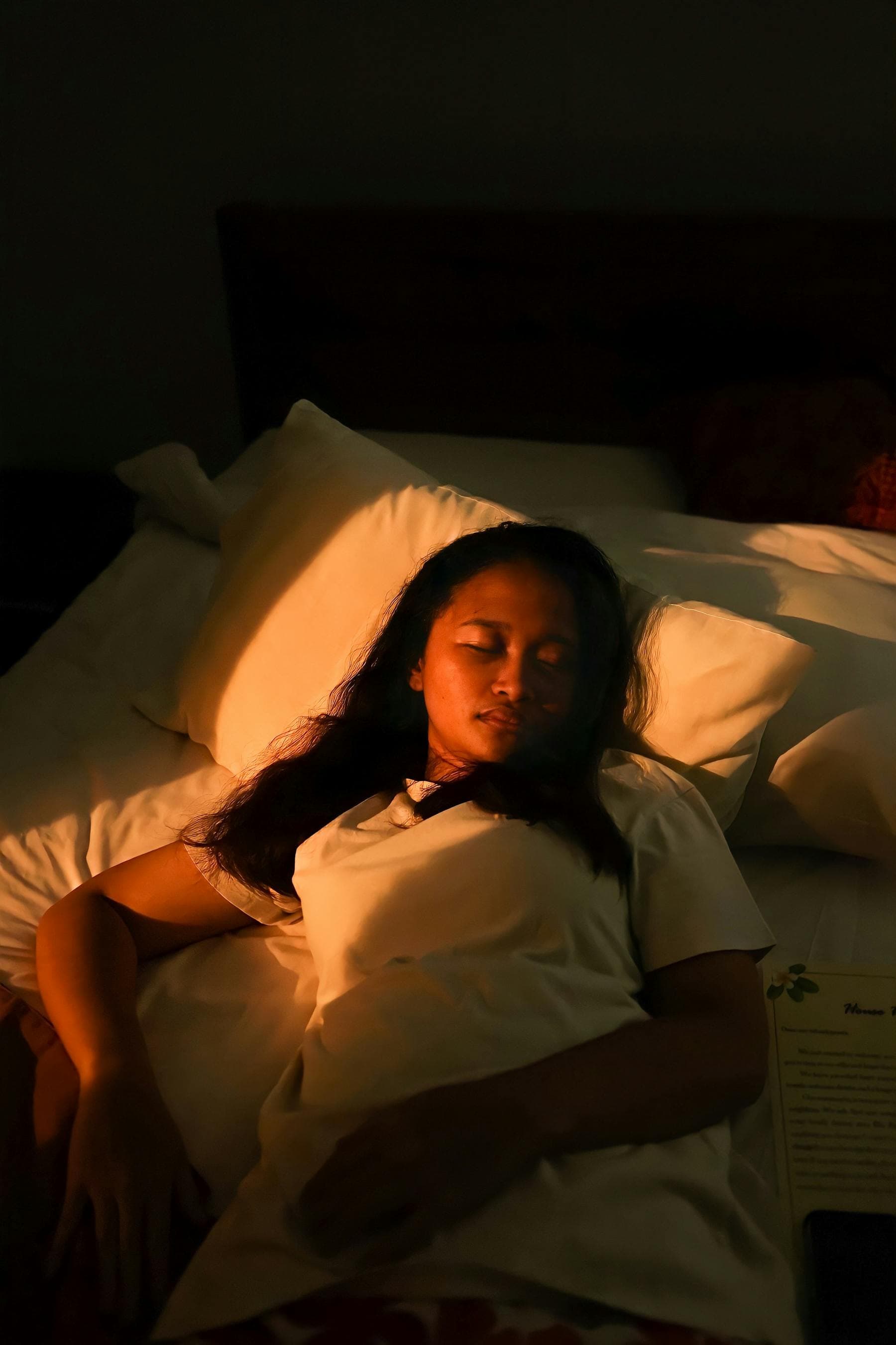
Es gibt einen Grund, warum „Schönheitsschlaf" durch Kulturen und Jahrhunderte trägt. Kein Mythos, kein Werbespruch — eine biologische Realität. Während Sie schlafen, tritt der Körper in einen Reparaturzustand, den kein Serum, keine Creme, keine Klinik nachbilden kann. Wer das versteht, ändert den Blick auf Hautpflege — und auf Ruhe selbst.
Wachstumshormon und Kollagensynthese
In den tiefen Phasen des Non-REM-Schlafs setzt die Hypophyse einen Schub Wachstumshormon (HGH) frei. Eine Studie 1991 im Journal of Clinical Investigation: bis zu 75 % der täglichen HGH-Ausschüttung im Slow-Wave-Schlaf. HGH ist das Master-Signal für Zellreparatur: es regt Fibroblasten in der Dermis an, Kollagen zu bilden — das Strukturprotein, das Haut fest, prall und elastisch hält. Ohne ausreichend Tiefschlaf bricht die Synthese ein.
Cortisol, Feuchtigkeitsverlust und Hautbarriere
Cortisol — das Stresshormon — folgt dem umgekehrten Muster. Es fällt in der ersten Nachthälfte auf den Tiefpunkt, die Entzündungsantwort der Haut beruhigt sich.
Sleep 2015: Wer fünf Nächte unter sechs Stunden schlief, zeigte deutlich höheren transepidermalen Wasserverlust und schwächere Barrierefunktion. Schlechter Schlaf lässt die Haut buchstäblich Feuchtigkeit verlieren.
Die Hautdurchblutung steigt im Schlaf, liefert Sauerstoff und Nährstoffe und entsorgt Stoffwechselabfall. Daher der natürliche Glow nach guter Nacht — und der fahle Teint nach Schlafmangel. British Medical Journal 2010: Beobachter beurteilten Bilder Schlaf-deprivierter Personen konstant als weniger gesund und attraktiv.
Schlaf und Akne: die Cortisol-Verbindung
Planen Sie Ihre Reise? Prüfen Sie die Verfügbarkeit in unserem ruhigen Hotel am Thu-Bồn-Fluss. Verfügbarkeit prüfen →
Bleibt Cortisol durch Schlafverlust hoch, produzieren Talgdrüsen mehr Öl, das Immunsystem schwächt seine Kontrolle über Cutibacterium acnes. Sleep Medicine 2023: unter sieben Stunden Schlaf — 23 % mehr moderate bis schwere Akne.
Was das für Ihre Routine heißt
Im Nghê Prana ist jedes Zimmer um diese Prinzipien gebaut. Verdunkelungsvorhänge beseitigen Lichtverschmutzung — schon kleine Restbeleuchtung dämpft Melatonin und kürzt den Tiefschlaf. Der nächtliche Kräuterkissensack mit Zitronengras und Lavendel knüpft an Chronobiology International 2012, wonach Lavendelinhalation den Slow-Wave-Schlaf um 20 % erhöhte.
Bevor Sie eine teure Nachtcreme wählen, beachten Sie: die wirksamste Pflege ist gratis und nächtlich verfügbar. Der Haken: Sie müssen sie zulassen — Licht aus, Telefon weg, sieben bis neun Stunden ungestört.
Schönheit, in ihrem wahren Sinn, ist Wiederherstellung. Wiederherstellung in ihrer Tiefe ist Schlaf.
Van Cauter E, Plat L (1991). Physiology of growth hormone secretion during sleep. Journal of Clinical Investigation.
Oyetakin-White P, Suggs A, Keri B, et al. (2015). Does poor sleep quality affect skin ageing?. Clinical and Experimental Dermatology.
Axelsson J, Sundelin T, Ingre M, et al. (2010). Beauty sleep: experimental study on the perceived health and attractiveness of sleep deprived people. BMJ. View source
Schrom KP, Ahsanuddin S, Baeez M, et al. (2023). Sleep duration and acne severity: a cross-sectional study. Sleep Medicine.
Goel N, Kim H, Lao RP (2012). An olfactory stimulus modifies nighttime sleep in young men and women. Chronobiology International.
Every room at Nghê Prana is designed around the science of sleep. Blackout curtains, nightly aromatherapy turndown, and riverside quiet — experience what real rest feels like.
Zimmer am Fluss, zehn Fahrradminuten von der Altstadt. Ob eine Nacht zwischen Hué und Da Nang oder eine ganze Woche ohne Plan — Ihr Zimmer bleibt ruhig.
Kostenlose Stornierung · Direkt bei der Familie, die das Haus gebaut hat

 WhatsApp
 Zalo
Zalo