beauty
How Sleep Repairs Your Skin Overnight
Your body's most powerful beauty treatment happens between midnight and 3 a.m. Here's the science behind sleep and skin regeneration.
Jan 15, 20257 minRead Article
Vietnam's thuốc nam tradition and South Indian Ayurveda are separated by 3,000 km and 2,000 years — yet they share a remarkable overlap in how they classify bodies, diagnose imbalance, and treat with plants. An honest side-by-side comparison of the two traditions, written from a Hội An riverside spa that practises the Vietnamese one (thuốc nam), not Ayurveda.
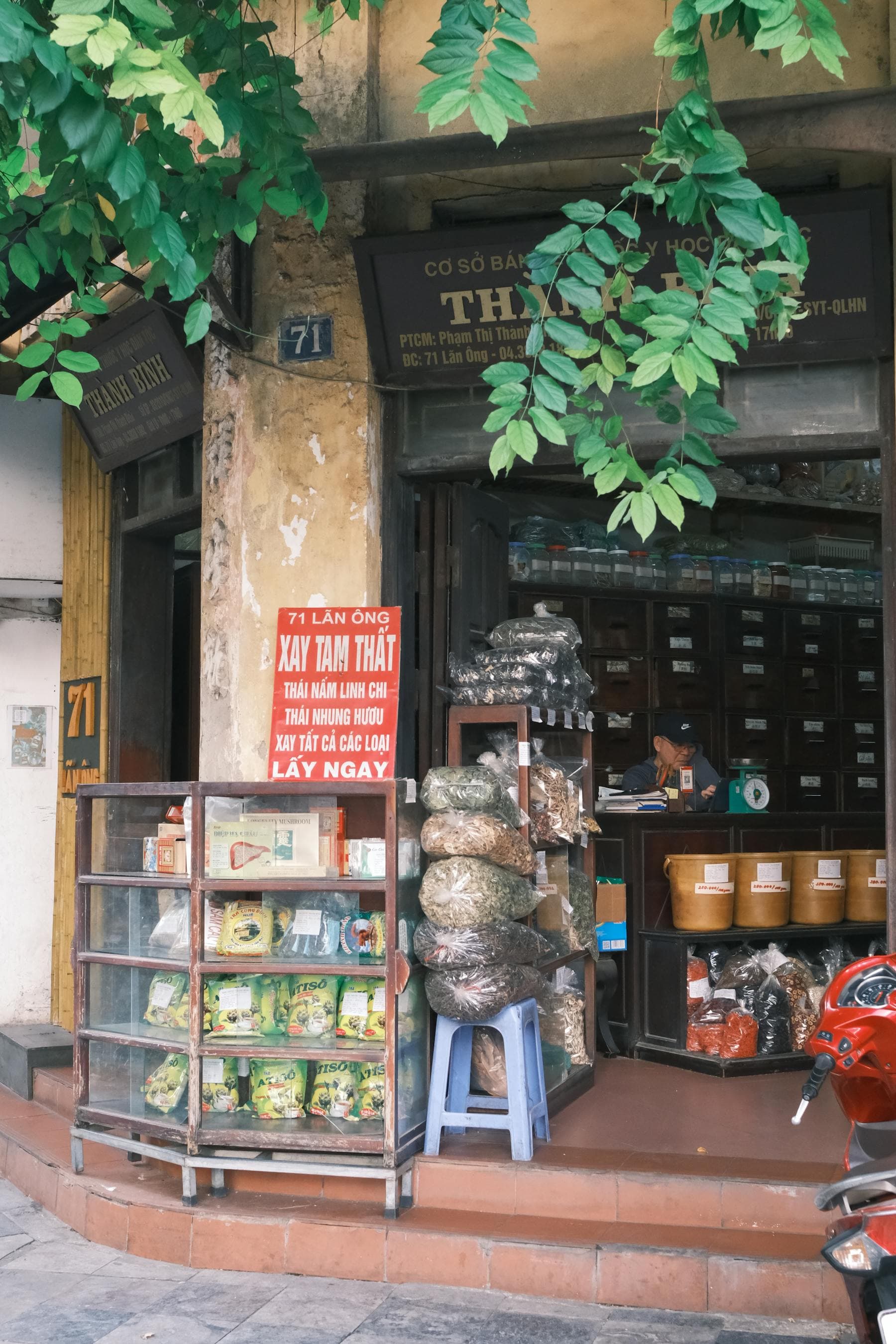
Lay a Vietnamese herbalist's tray beside an Ayurvedic one and the same roots keep turning up: turmeric, ginger, lemongrass, holy basil, cinnamon, black pepper — the same molecules doing the same jobs under different names. Yet Ayurveda in South India and thuốc nam in Vietnam grew up in total isolation, separated by the Himalayas, three thousand kilometres of ocean, and two millennia of parallel evolution. On paper they should be unrelated. In practice the overlap is uncanny — and it is the reason Vietnam's own herbal tradition is so often described as the regional counterpart to Ayurveda, even though the two remain entirely distinct systems. To be clear from the outset: Nghe Prana does not offer Ayurveda. We practise the Vietnamese herbal tradition, thuốc nam, and this article uses the better-known Ayurvedic vocabulary only as a lens to explain what that tradition does.
Both systems classify bodies by energetic constitution rather than lab values, diagnose through pulse, tongue, and observation, and treat primarily through plants, oils, heat, and touch. Many of the same medicinal plants — turmeric, ginger, lemongrass, holy basil, cinnamon — appear in both pharmacopeias with broadly overlapping uses. Where Ayurveda is known for structured multi-day program arcs, the Vietnamese tradition brings an extraordinarily rich local herbal pharmacy and an unusually developed herbal-bath practice — which is why the two are so often compared, even though they grew up independently and remain entirely separate systems.
By the end you'll see exactly where the two systems converge — the parallel diagnostic logic, the shared pharmacy plant by plant, and the treatments that echo each other, from Ayurveda's abhyanga oil massage to the Vietnamese lá xông herbal steam — and why the Thu Bồn riverside in Hội An is such a fitting home for a Vietnamese herbal wellness stay. To be clear, the treatments we offer are Vietnamese, not Ayurvedic; Ayurveda appears here only as a familiar point of comparison. First, the logic underneath both traditions.
The Vietnamese side of this convergence is not folklore — it is a documented pharmacopeia. The canonical reference is Những cây thuốc và vị thuốc Việt Nam by GS.TS. Đỗ Tất Lợi, the 1996 Hồ Chí Minh Prize laureate whose 700-entry compendium was named one of seven "precious gems" at the 1983 Moscow International Book Fair. It sits alongside *Danh lục cây thuốc Việt Nam — the formal plant inventory issued by the Viện Dược liệu of the Bộ Y tế — and active pharmacological work in Tạp chí Y học Việt Nam and the Học viện Y Dược học cổ truyền's Tạp chí Y Dược cổ truyền Việt Nam* (ISSN 2354-1334), including recent papers isolating curcumin from Curcuma longa and demonstrating α-glucosidase inhibition. *Báo Sức khỏe & Đời sống, the Bộ Y tế's official organ, anchors the lineage back to Tuệ Tĩnh, the 14th-century monk-physician credited as ông tổ of thuốc nam*. See the References below for the full set.
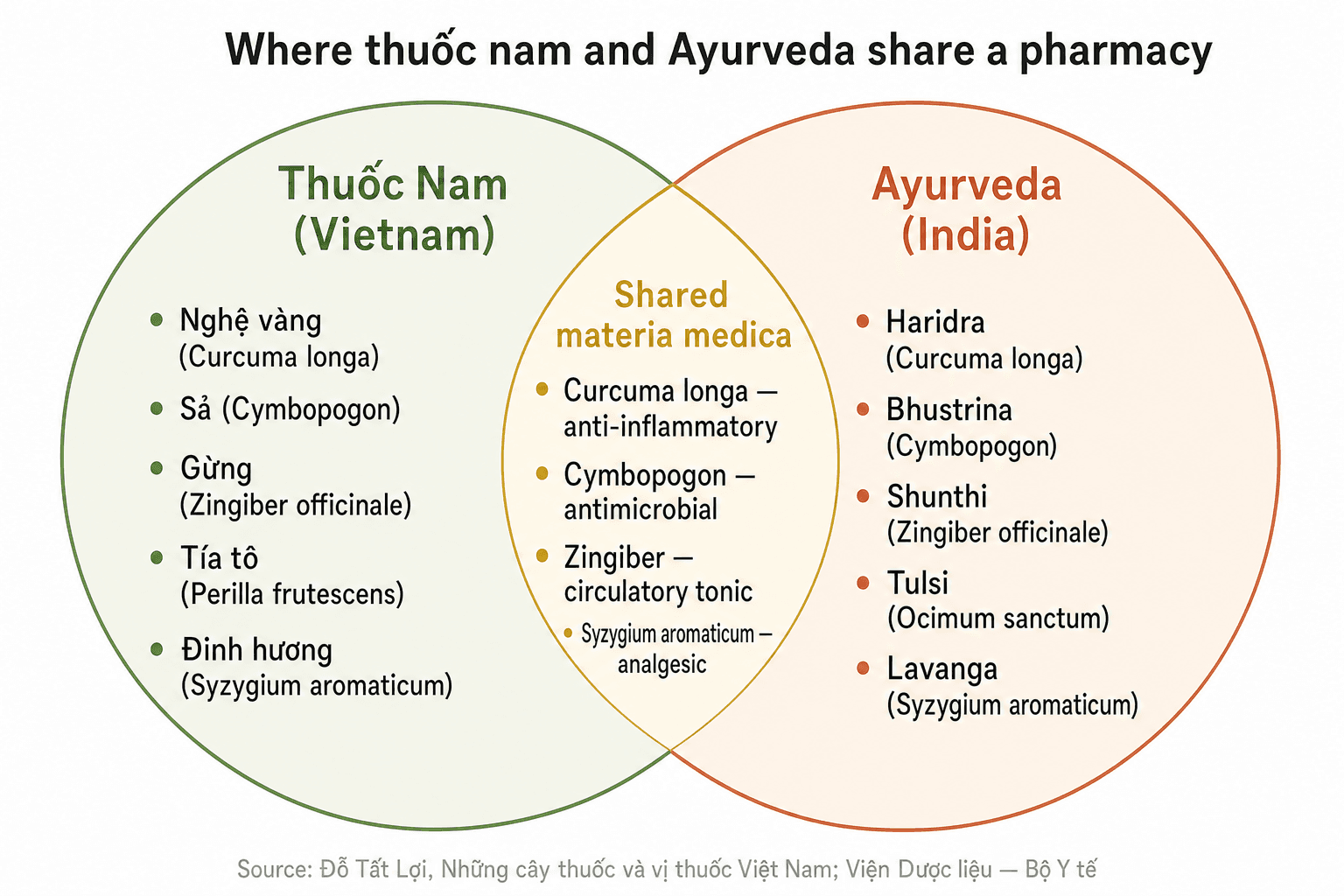
Illustration: Nghe Prana editorial
Ayurveda organizes the human body around three energetic principles — vata (air and movement), pitta (fire and transformation), and kapha (earth and structure) — with health defined as the dynamic balance between them. Vietnamese traditional medicine organizes the body around yin and yang, hot and cold, and the five elements (ngũ hành) of wood, fire, earth, metal, and water. The vocabularies are different; the underlying intuition is the same: that illness is an imbalance between opposing forces, not a localized mechanical failure, and that restoring balance means adjusting inputs — food, environment, rest, movement, plants — rather than overriding the body with a single chemical intervention.
Both systems diagnose by examining what Western medicine would consider indirect evidence: the coating of the tongue, the quality of the pulse at three positions, the color and temperature of the hands, the specific patterns of sleep disturbance, the timing of hunger. Both would recognize the same patient across their vocabularies — an ayurvedic vata imbalance and a Vietnamese "cold-dry" pattern describe very similar symptom clusters and are treated with analogous warming, oily, grounding interventions. The convergence is striking enough that modern researchers have begun to argue, plausibly, that the two traditions may share ancestral diagnostic logic going back to prehistoric trade routes that linked the Indian subcontinent to mainland Southeast Asia.
Comparative ethnobotanical surveys have noted dozens of medicinal plants used in both Ayurveda and Vietnamese traditional medicine with overlapping indications — from turmeric and ginger to lemongrass, tamarind, and holy basil.
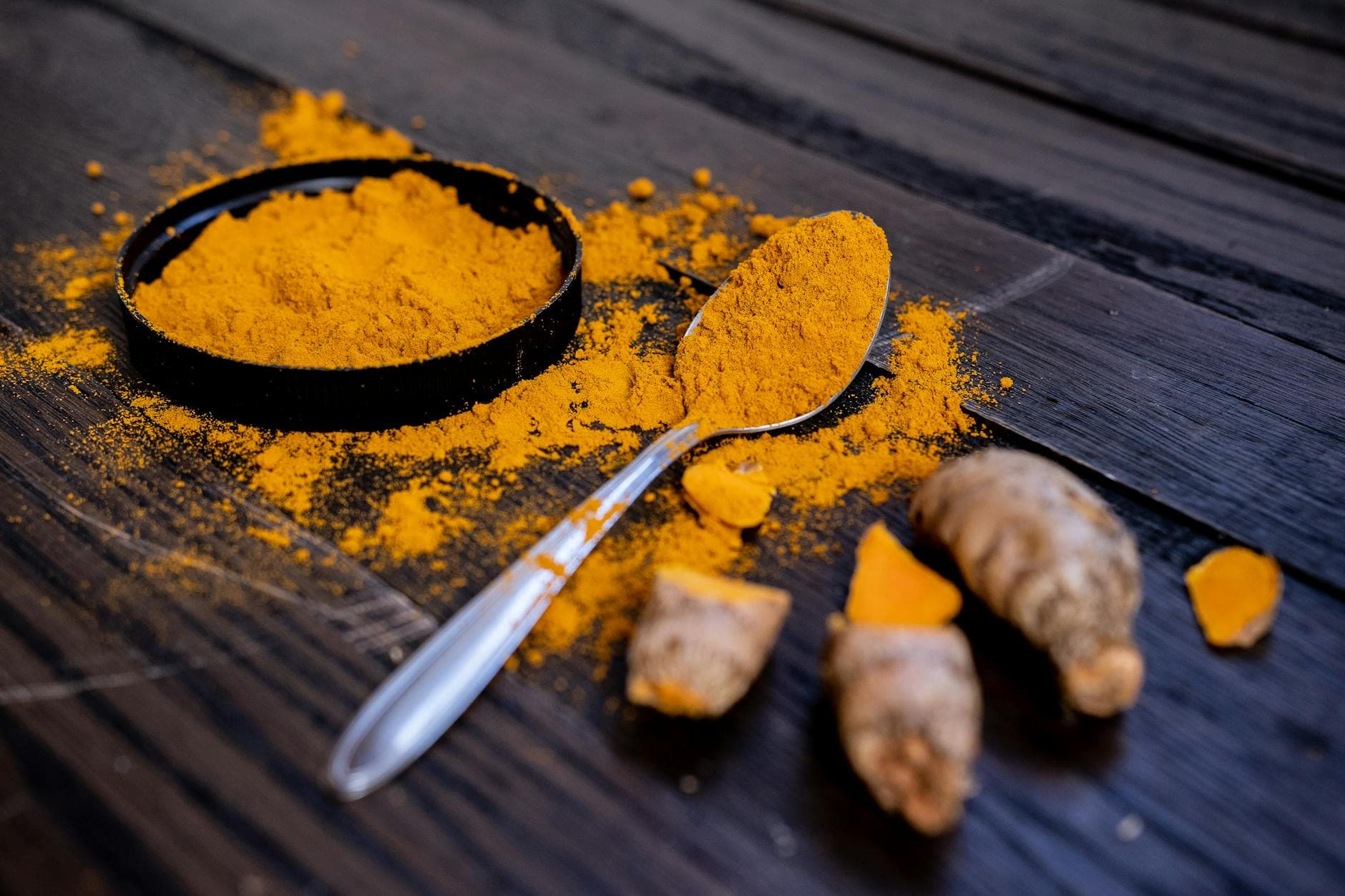
Photo: Karl Solano / Pexels
Turn to the plants themselves and the overlap becomes specific. Turmeric (củ nghệ in Vietnamese, haridra in Sanskrit) is used in both systems for inflammation, digestion, and post-surgical healing. The active compound, curcumin, has been characterized in modern research as a potent anti-inflammatory and has been used in both traditions for essentially the same indications for thousands of years. Ginger (gừng / ardraka) is used in both for digestive stagnation, nausea, and cold conditions. Lemongrass (sả / bhutika) is used in both for fever, anxiety, and as a topical for muscle pain.
Holy basil — the sacred tulsi of Ayurveda — has a Vietnamese cousin, húng quế, used in similar anxiety-reducing and immune-supporting ways. Tamarind (me / amla-vetasa), pandan leaf, cinnamon, cardamom, and black pepper all appear in both pharmacopoeias with overlapping indications. Where the systems differ is mostly in the specific humid-tropical plants available in each region — Vietnam has a richer pharmacy of aquatic and riverside herbs (water hyacinth, lotus, river mint), while Ayurveda draws more heavily on dryland and high-altitude species (ashwagandha, shatavari, brahmi). The treatment logic across both is the same: specific plants correspond to specific imbalances, and the art is matching them to the individual.
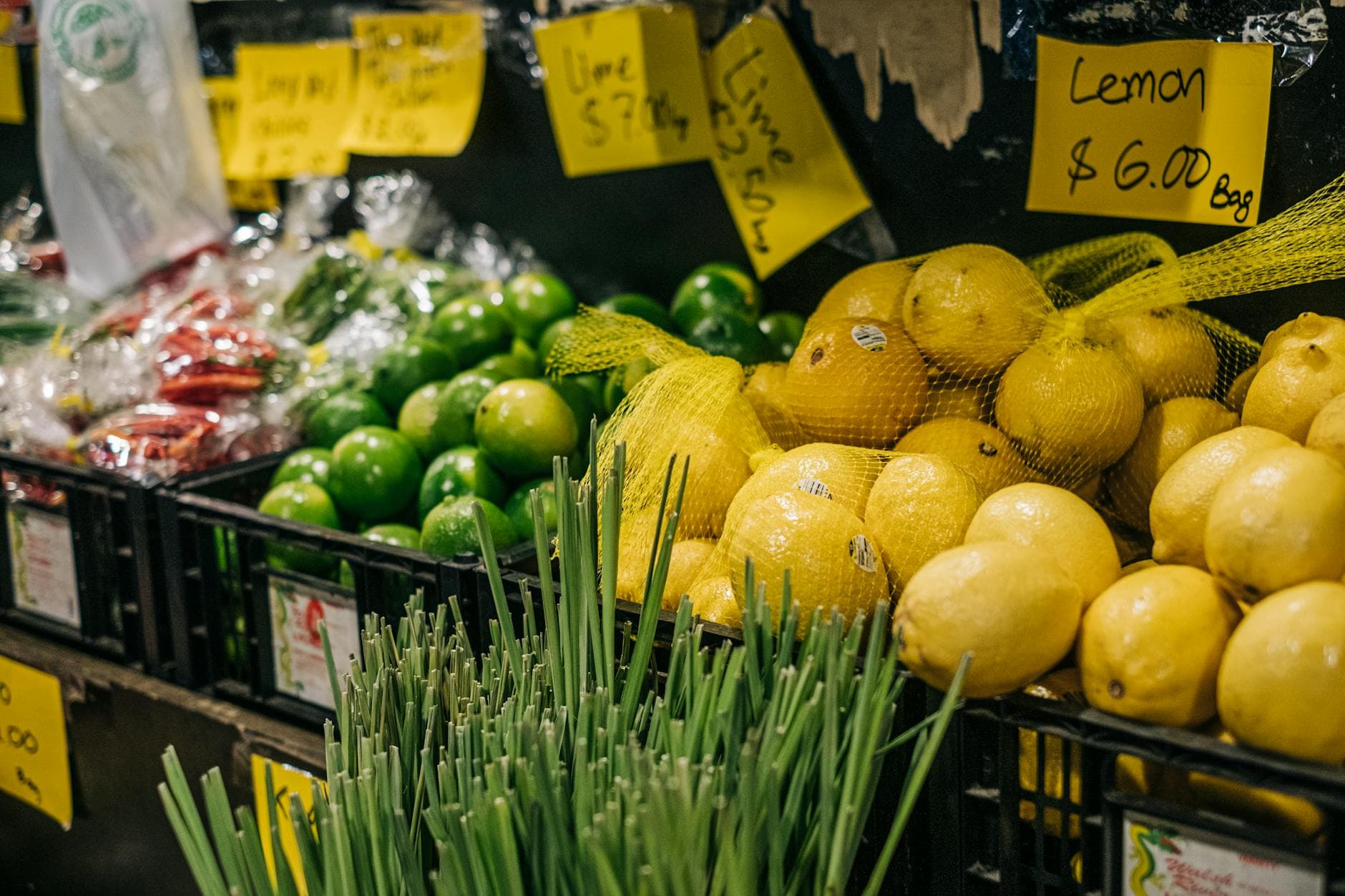
Photo: Matt Webster / Pexels
If the diagnostic frameworks overlap and the pharmacies overlap, the physical treatments overlap perhaps most clearly of all. Ayurveda's signature Abhyanga — a warm oil massage typically done with sesame or coconut oil infused with specific herbs — has a very close Vietnamese analog in the warm herbal-oil massages of the central coast, which use coconut oil infused with lemongrass, turmeric, and ginger. Ayurvedic Shirodhara, the slow pouring of warm oil over the forehead to calm the nervous system, has no direct Vietnamese equivalent, though traditional Vietnamese head-and-face massage targets similar pressure points.
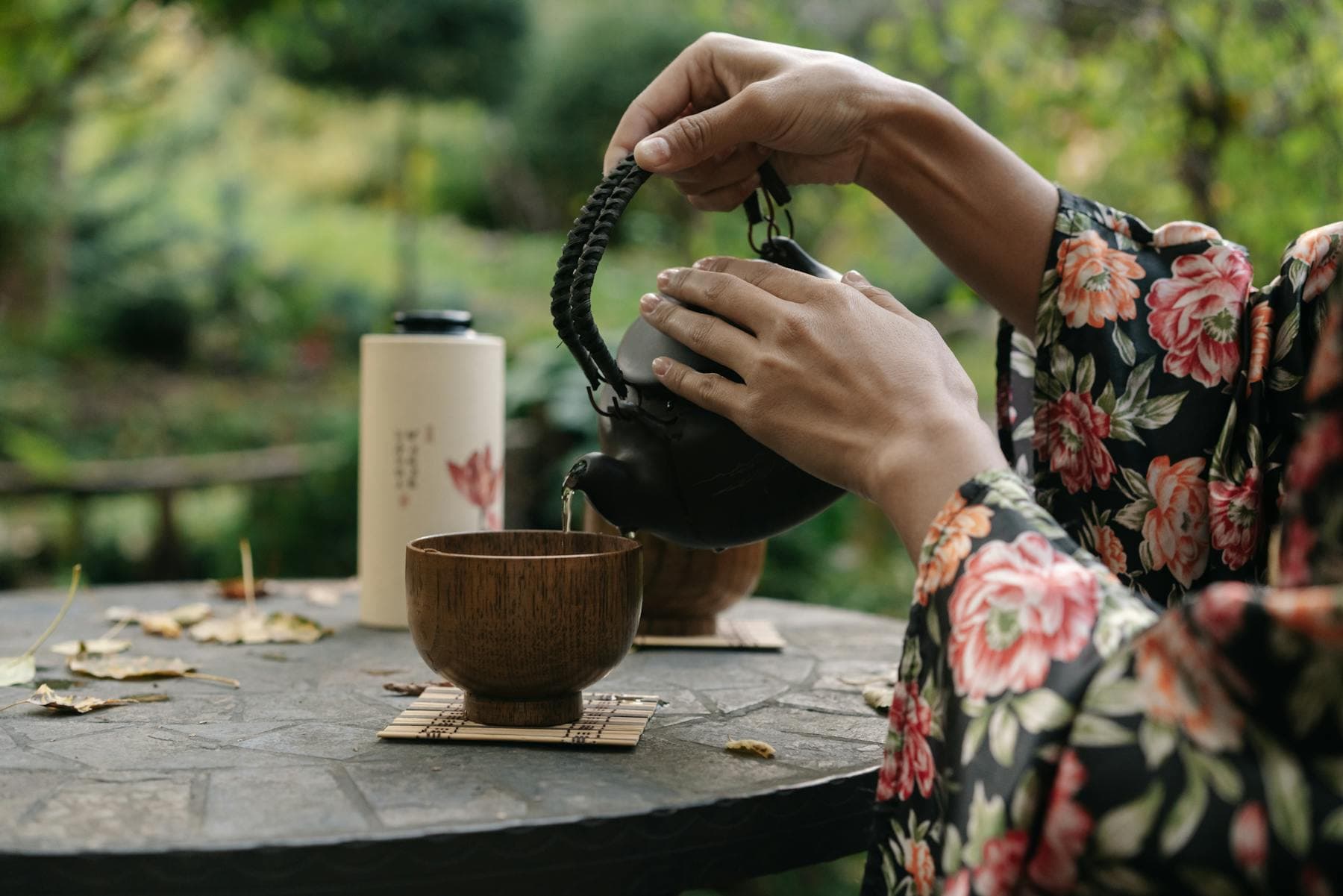
The most interesting overlap may be in bathing. Ayurveda prescribes herbal baths for specific imbalances. Vietnam's herbal bath tradition is older and in some ways more sophisticated: a lá xông bath typically combines 10 to 20 herbs including lemongrass, pomelo leaf, lotus, and medicinal ginger, each chosen for the specific condition being treated. Both traditions use bathing not as hygiene but as medicine — and at Nghe Prana the version we offer is the Vietnamese one: a warm-oil herbal massage with lemongrass, turmeric and ginger, our thuốc nam herbal-compress massage, and the lá xông herbal steam and herbal bath. We do not perform Abhyanga, Shirodhara or any Ayurvedic treatment.
Small clinical studies have linked warm-oil massage and herbal-steam therapies to short-term reductions in stress hormones and improvements in sleep quality and relaxation, though the evidence base remains limited and is still developing.
Planning a trip around this? See dates at our quiet riverside hotel on the Thu Bồn. Check availability →
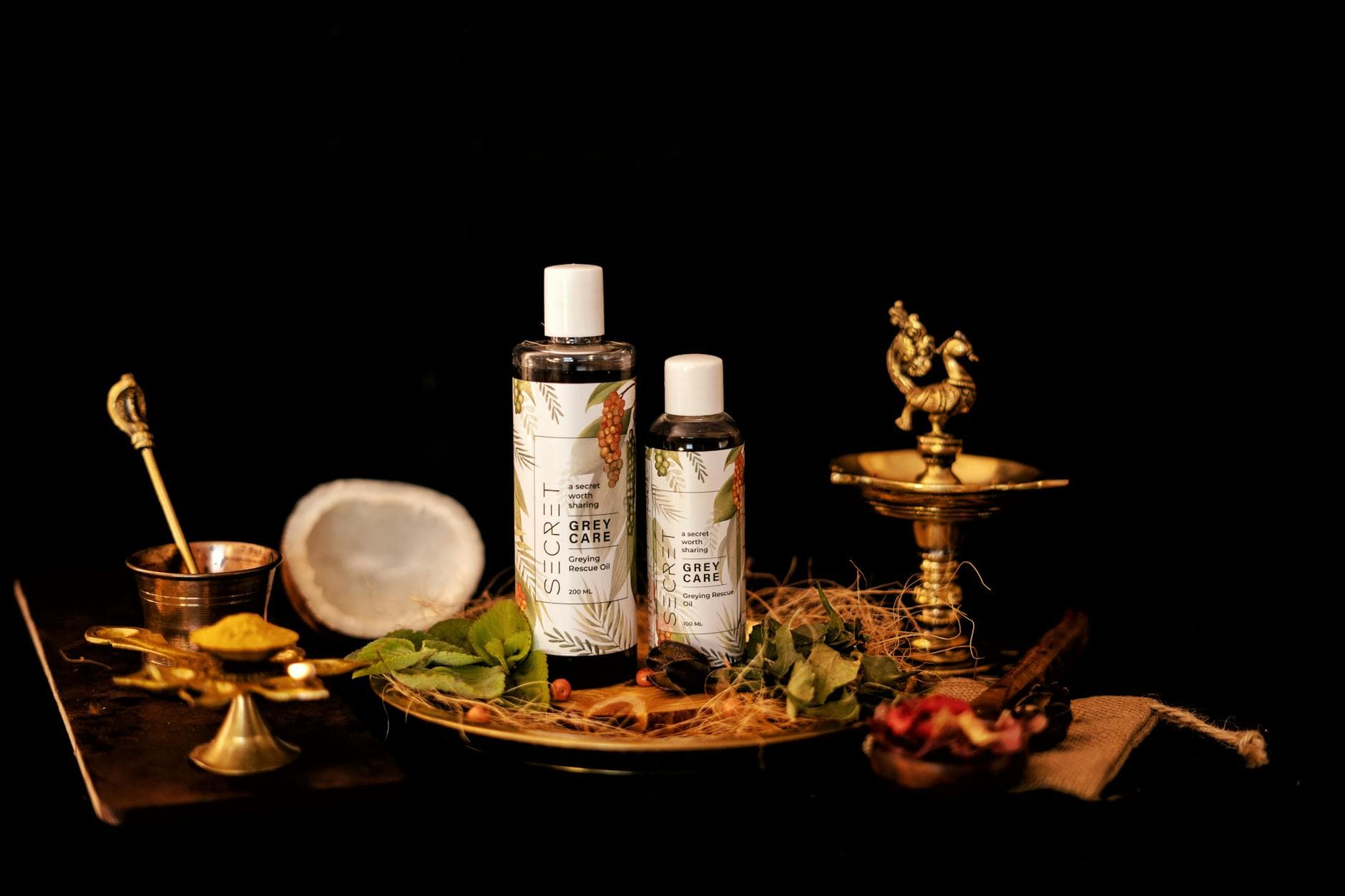
Photo: Souranshi Fashion and Lifestyle Magazine / Pexels
At Nghe Prana, the wellness program is grounded in the Vietnamese herbal tradition — we do not offer Ayurveda, dosha analysis, Abhyanga or Shirodhara. A guest's stay is built around thuốc nam treatments and a few simple questions about how you sleep, digest and handle the heat. From there, the plan draws on our spa menu: a warm-oil full-body massage to begin, a Vietnamese herbal-compress massage with lemongrass, ginger and turmeric, a lá xông herbal steam and herbal bath, and hot-stone, bamboo or foot reflexology as needed — with meals cooked by Vietnamese kitchens using fresh local ingredients.
A multi-day stay — whether a few days or a fortnight — moves through a gentle arc of its own: settling in, daily herbal treatments, and rest. We do not run an Ayurvedic panchakarma; the whole programme is built on the Vietnamese herbal pharmacy and central-Vietnamese cooking. If Ayurveda is the tradition people associate with long, structured retreat programmes, what Vietnam brings is the extraordinary richness of locally available herbs and an unusually developed herbal-steam and herbal-bath practice — and that is what your days here are made of.
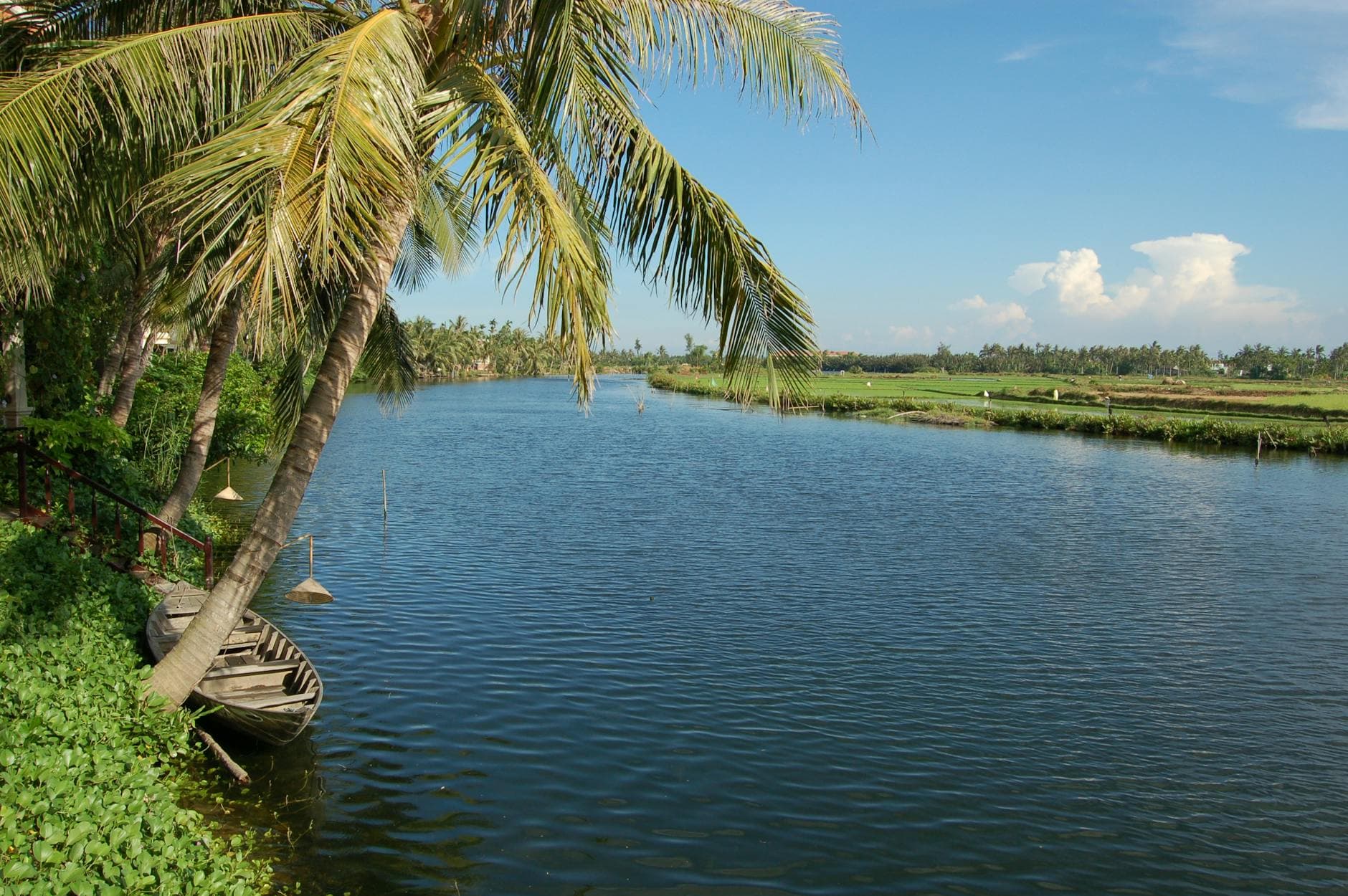
Photo: Mike Tyurin / Pexels
The Thu Bồn River basin has been a center of Vietnamese traditional medicine for centuries — the humidity, the river ecosystem, and the proximity to the Trường Sơn mountain range produce an unusually diverse local herbal pharmacy. Our spa sources herbs from the same market gardens that supply local practitioners, many of which grow plants that are hard to find elsewhere in Vietnam. The warm, humid climate also suits warm-oil and herbal-steam therapies, which work better here than in dry, cold conditions — one reason this stretch of central Vietnam is so often likened to Kerala. We do not run Ayurvedic retreats; rather, those same conditions are what make our Vietnamese herbal treatments feel so at home on the Thu Bồn.
The combination also matches the pace of the region. Hoi An moves slowly. The river moves slowly. Treatment arcs that would feel rushed in a city operate at the right cadence here — which is itself part of the therapy. Ayurveda and Vietnamese medicine both consider environmental rhythm to be as important as any individual treatment, and the rhythm of the Thu Bồn, the rhythm of the evening turndown, the quiet of the riverside nights — all of it is part of what the retreat is actually offering.
There is a temptation to treat ancient medical systems as relics — interesting history but superseded by modern medicine. The more accurate framing is that they are pattern-recognition systems refined over thousands of years of clinical observation, with useful pharmacological tools and useful diagnostic heuristics that modern research is still validating one compound at a time. That two such systems, developed in isolation, converged on such similar frameworks and such similar plants is not a coincidence; it is evidence that both were tracking real features of human biology. Understanding one tradition through the lens of the other — as this article has tried to do — makes each easier to appreciate. The premise of the wellness program here is narrower and simpler: to practise the Vietnamese herbal tradition well, on the Thu Bồn riverside, for guests who want it. We do not offer Ayurveda — but we think the appetite for unhurried, plant-based, place-rooted wellness is the direction the next decade of travel will move.
About this article. This article integrates Vietnamese primary references — Đỗ Tất Lợi's Những cây thuốc và vị thuốc Việt Nam, the Viện Dược liệu's Danh lục cây thuốc Việt Nam, Tạp chí Y học Việt Nam curcumin and α-glucosidase studies, and Báo Sức khỏe & Đời sống (the Bộ Y tế organ) on Tuệ Tĩnh — with the existing English Ayurveda pharmacology literature, which appears here purely as a point of comparison. Nghe Prana does not offer Ayurveda; the hotel-side contribution is the practical structure of a Vietnamese herbal stay — how thuốc nam consultation, warm-oil massage, herbal-compress massage, and the lá xông herbal steam and bath are sequenced on the Thu Bồn riverside for a multi-day stay.
23 rooms on the quiet south bank of the Thu Bồn River, ten minutes by bicycle from the Ancient Town and a world from its noise.
Book your stayContinue at Nghê Prana
Ready to Sleep Better?
Every room at Nghê Prana is designed around the science of sleep. Blackout curtains, nightly aromatherapy turndown, and riverside quiet — experience what real rest feels like.
View Our RoomsYour Stay Awaits
Riverside hotel rooms on the Thu Bồn, ten minutes by bicycle from the Ancient Town. Whether it's one night between Hue and Da Nang or a full week of doing nothing — we kept your room quiet.
Free cancellation · Direct from the family who built the hotel
Save 15% booking directly via our website
 WhatsApp
 Zalo
Zalo