Mì Quảng: Die wahre Ursprungsgeschichte der 400 Jahre alten Nudel aus Quảng Nam (und warum Phú Chiêm die Quelle ist)
Mì Quảng gilt heute als nationales Kulturerbe-Gericht — per Dekret im August 2024 anerkannt — und doch ist sein Ursprung in der vietnamesischen Forschung nach wie vor ernsthaft umstritten. Wir führen das Cham-Assimilationsargument des Forschers Tôn Thất Hướng und das Đàng-Trong-Handelsargument des 17. Jahrhunderts von Phùng Tấn Đông zusammen, geschöpft aus Báo Đà Nẵng und Sài Gòn Giải Phóng, und erklären, warum das Dorf Phú Chiêm, zwanzig Minuten flussaufwärts von unserem Hotel am Ufer des Thu Bồn, als die orthodoxe Quelle gilt.
Mì Quảng ist die Alltagsnudel Zentralvietnams — kurkumagelbe Reisnudeln, in eine flache Schale gelegt, kaum bedeckt von einer intensiven Knochen-Garnelen-Brühe, vollendet mit Erdnüssen, einem Sesam-Reiscracker und einer Handvoll roher Kräuter. Am 9. August 2024 unterzeichnete das Ministerium für Kultur, Sport und Tourismus den Beschluss 2327/QĐ-BVHTTDL und nahm das „volkstümliche Wissen über mì Quảng" in Vietnams Liste des immateriellen nationalen Kulturerbes auf. Doch hier ist, was Ihnen fast keine englischsprachige Seite verrät: Unter vietnamesischen Esskultur-Historikern wird der Ursprung des Gerichts noch immer offen diskutiert. Dieser Beitrag führt diese Debatte aus ihren vietnamesischen Quellen zusammen — vor allem aus einer Untersuchung von 2022 in Báo Đà Nẵng und aus Kulinarik-Beiträgen in Sài Gòn Giải Phóng — und erklärt, warum ein Dorf, Phú Chiêm, als die orthodoxe Quelle gilt.
Was genau ist mì Quảng?
Mì Quảng (wörtlich „Quảng-Nudeln", nach der Provinz Quảng Nam) baut auf einer breiten Reisnudel auf, die in Blättern gedämpft, mit Öl bestrichen und in Bänder geschnitten wird. Anders als phở oder bún ist es keine Suppe: Die Brühe, nước nhưn (oder nước nhưng) genannt, wird so sparsam aufgeschöpft, dass sie sich am Boden sammelt, statt die Nudeln zu überfluten. Die traditionelle Phú-Chiêm-Variante dreht sich um Garnele und Schweinefleisch (tôm thịt), wenngleich es auch Versionen mit Huhn, Fisch und sogar Frosch oder Ente gibt. Konstant bleiben das Kurkuma in der Nudel, die zerstoßenen gerösteten Erdnüsse, der bánh tráng mè (gerösteter Sesam-Reiscracker), der darüber zerbrochen wird, und ein separater Teller mit rohen Kräutern und Bananenblüte. Es ist ein Gericht, das man am Tisch zusammenstellt, kein fertig serviertes.
Mì Quảng is assembled, not submerged: rice noodles, herbs and broth come to the table separately. / Mì Quảng được trộn tại bàn, không chan ngập như bún hay phở.
Woher stammt mì Quảng — das Cham-Argument
Die meistzitierte Ursprungstheorie stammt vom Quảng-Nam-Kulturforscher Tôn Thất Hướng. In der Untersuchung von Báo Đà Nẵng „Đi tìm nguồn gốc mỳ Quảng" („Auf der Suche nach den Ursprüngen des mì Quảng") datiert er die Entstehung des Gerichts auf die Mitte des 16. Jahrhunderts und knüpft sie an die Aufnahme der Cham-Esskultur durch vietnamesische Siedler, die nach Süden in das ehemalige Champa-Gebiet zogen. Nach dieser Lesart entlehnten und adaptierten die Quảng-Bewohner Elemente der Cham-Küche — und die Vorlage aus Reisnudel und Kurkuma, die zu mì Quảng wurde, wurde aus diesem Austausch über Jahrhunderte der Rodung und Besiedlung herausgewählt und verfeinert.
Wie es der Forscher Tôn Thất Hướng formuliert, haben die Menschen von Quảng Elemente der Cham-Küche „tiếp nhận và chọn lọc" — aufgenommen und ausgewählt —, um ein Gericht mit eigenem Charakter zu schaffen: bescheiden, volkstümlich, unprätentiös und seit Hunderten von Jahren in diesem Landstrich verwurzelt.
Das Cham-Argument ist bedeutsam, weil es mì Quảng älter macht als Hội Ans berühmten Handelshafen und erklärt, warum sich das Gericht so sehr von den chinesisch geprägten Nudeln des Nordens unterscheidet. Das Kurkuma, die Verwendung von Reis statt Weizen und das trockene, am Tisch zusammengestellte Format weisen allesamt nach Süden und ins Landesinnere, nicht in die sino-vietnamesische Nudeltradition.
Das Gegenargument: Handel im 17. Jahrhundert und die Nguyễn-Fürsten
Die zweite große Sichtweise, verbunden mit dem in Hội An ansässigen Forscher Phùng Tấn Đông, datiert mì Quảng später — in die Zeit, als die Nguyễn-Fürsten ab dem frühen 17. Jahrhundert das Đàng Trong (das südliche Herrschaftsgebiet) konsolidierten. Dieser Darstellung zufolge kristallisierte sich das Gericht heraus, als Quảng Nam, verankert im internationalen Hafen von Hội An (Faifo), lebhaften Handel mit dem übrigen Asien und dem Westen trieb. Das Argument stützt sich auf Zutaten und Technik: Eine geschichtete, wandelbare Schale, die neue Proteine und Würzungen aufnehmen kann, ist genau das, was man von einer wohlhabenden, weltoffenen Handelsregion erwarten würde — und nicht von einer abgeschlossenen Agrargesellschaft.
Die beiden Theorien liegen weniger weit auseinander, als es zunächst scheint. Beide verorten das Gericht fest in Quảng Nam; beide betrachten es als Produkt kultureller Überlagerung statt einer einzigen Erfindung; beide sind sich einig, dass es rund vier Jahrhunderte alt ist — weshalb die vietnamesische Berichterstattung es regelmäßig „món 400 năm" nennt, das 400-Jahre-Gericht. Der Unterschied liegt in der Gewichtung: Tôn Thất Hướng stellt das Cham-Substrat in den Vordergrund, Phùng Tấn Đông den Handelsboom des Đàng Trong. Für einen Besucher lautet die ehrliche Zusammenfassung: Mì Quảng ist ein Original aus Quảng Nam, über vier Jahrhunderte aus einem Cham-Fundament und einer Handelshafen-Ökonomie zusammengefügt.
Warum gilt Phú Chiêm als die Quelle?
Wenn es eine orthodoxe Schale gibt, dann kommt sie aus Phú Chiêm — einem Uferweiler im ehemaligen Gebiet von Điện Bàn, am Nordufer des Thu Bồn zwischen Hội An und Đà Nẵng. „Mì Quảng Phú Chiêm" ist eine Wendung, die in ganz Zentralvietnam Gewicht trägt, so wie andernorts eine geschützte Herkunftsbezeichnung. Der Phú-Chiêm-Stil definiert sich durch seine Zurückhaltung: eine Garnelen-Schweine-Brühe, eingekocht, bis sie fast eine Sauce ist, Nudeln, die nicht aggressiv gelb gefärbt sind, und das Beharren darauf, dass die Schale in dem Moment gegessen wird, in dem der Cracker hineinkommt. Sowohl die Kulinarik-Berichterstattung von Sài Gòn Giải Phóng als auch VnExpress heben Phú Chiêm als Bezugspunkt hervor, und Hobbyköche in ganz Vietnam verzeichnen ihre Versuche als „mì Quảng Phú Chiêm", wenn sie Orthodoxie signalisieren wollen.
Das Kulturerbe-Dekret selbst beschreibt das geschützte Wissen als die gesamte Kette — vom Anbau und der Auswahl des Reises über die Herstellung der Nudelblätter bis hin zu den Würzungen und der Brühe. Diese Rahmung ist bewusst gewählt: Sie schützt ein Verfahren und ein regionales Wissenssystem, nicht das Rezept eines einzelnen Restaurants. Auch deshalb finden Sie über 145 lokale Varianten in ganz Quảng Nam — Huhn in der einen Gemeinde, Fisch in einem Fischerdorf, Frosch im Landesinneren — und doch sind alle erkennbar mì Quảng.
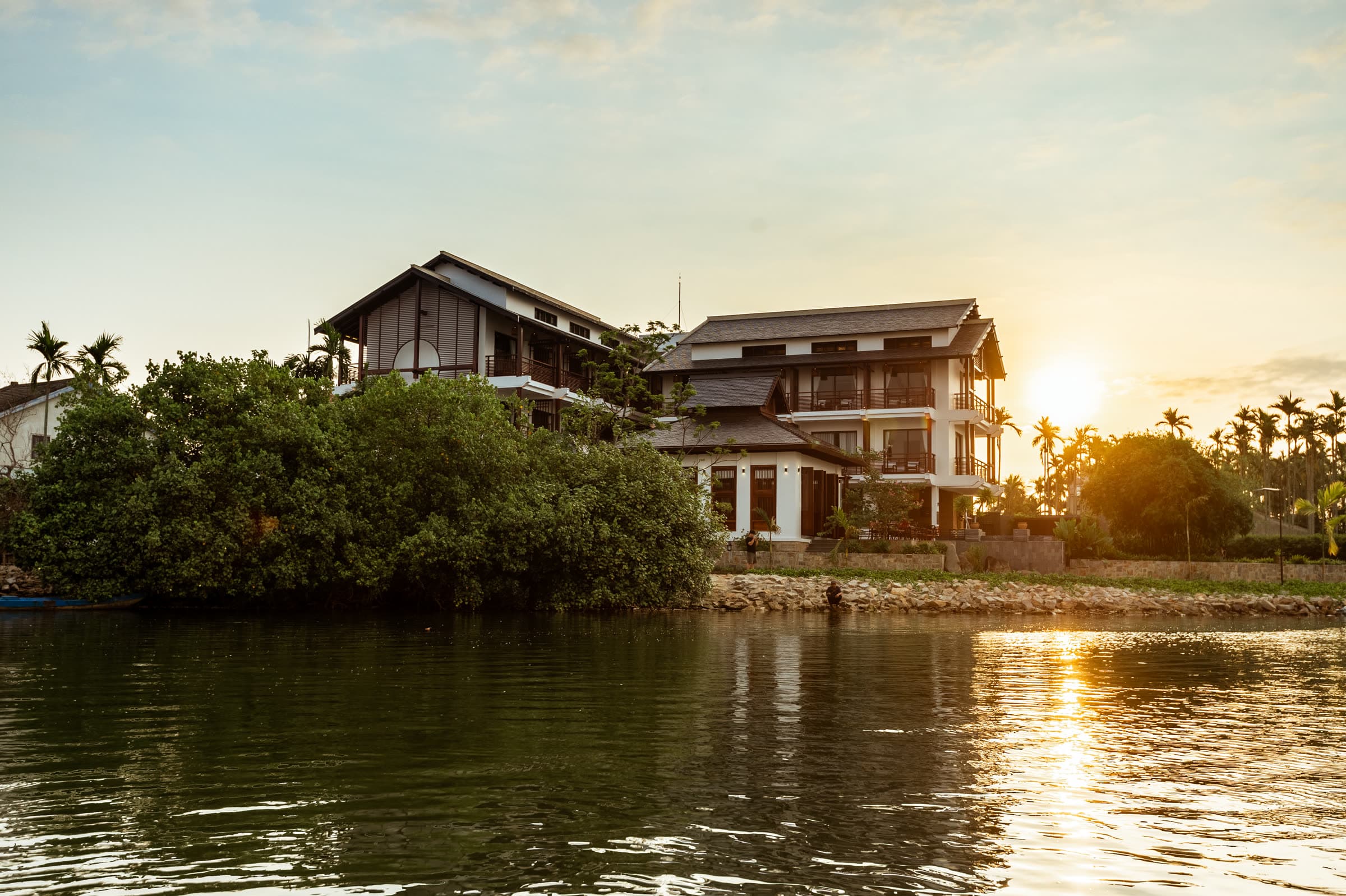
Planen Sie Ihre Reise? Prüfen Sie die Verfügbarkeit in unserem ruhigen Hotel am Thu-Bồn-Fluss. Verfügbarkeit prüfen →
Mì Quảng is field and market food — eaten at breakfast and lunch, rarely at night. / Mì Quảng là món ăn sáng và trưa của người Quảng, hiếm khi ăn vào buổi tối.
Wie man das echte Gericht bei Hội An isst
Von unserem Hotel am Ufer des Thu Bồn ist die orthodoxe Schale nah. Phú Chiêm liegt etwa zwanzig Minuten flussaufwärts in Richtung Đà Nẵng; das morgendliche mì Quảng, das man dort aus Körben und an kleinen Tischen vor den Häusern verkauft, ist die Version, an der alles andere gemessen wird. In Hội An selbst halten Sie nach Ständen Ausschau, die die Schale zusammengestellt und nur kaum feucht servieren, nicht als Suppe — das ist das erste Anzeichen für einen Koch, der die Quảng-Art gelernt hat. Ein paar Merkmale, die es zu kennen lohnt: Die Brühe sollte nach Garnele und Knochen schmecken, nicht nach Brühwürfel; die Erdnüsse sollten frisch zerstoßen und hörbar knackig sein; und der Sesamcracker sollte von Ihnen, am Tisch, hineingebrochen werden, damit er knusprig bleibt.
Für Reisende, die das Gericht im Kontext erleben wollen, passt mì Quảng natürlich zu einem gemächlichen Morgen am Fluss, bevor sich die Altstadt füllt. In Quảng Nam ist es eine Frühstücks- und Mittagsspeise, selten am Abend gegessen, und am besten mit einem kräftigen vietnamesischen Kaffee hinterhergetrunken. Wenn Sie die Schale lieber selbst aufbauen lernen möchten, sind die Kurkuma-Nudel und die Technik des Zusammenstellens-statt-Übergießens genau das, was ein guter Kochkurs in Hội An lehren sollte — und ein nützlicher Test, ob der Kurs echte regionale Küche vermittelt oder ein touristisches Mischgericht.
Phú Chiêm sits about twenty minutes upriver from Hội An on the Thu Bồn. / Phú Chiêm cách Hội An khoảng hai mươi phút ngược dòng Thu Bồn.
Eine Anmerkung zur APEC-Schale
Ein Detail, das vietnamesische Quellen mit stillem Stolz erwähnen: Beim APEC-Gipfel 2017 in Đà Nẵng gehörte mì Quảng zu den Gerichten, die den anreisenden Staatsoberhäuptern serviert wurden. Für eine Nudel, die als Feldkost begann — billig, schnell, aus Körben am Straßenrand gegessen —, ist das ein bemerkenswerter Werdegang, und das ist mit ein Grund, warum die Kulturerbe-Aufnahme von 2024 in der regionalen Presse so einschlug, wie sie es tat. Das Gericht war nie prunkvoll. Seine Autorität rührt aus seiner Ununterbrochenheit: vier Jahrhunderte dieselbe Schale, im selben Tal, in Phú Chiêm noch immer auf dieselbe Weise zubereitet.
Über diesen Artikel
Dieser Beitrag führt die vietnamesischsprachige Ursprungsdebatte um mì Quảng zusammen — vor allem die Untersuchung von Báo Đà Nẵng aus dem Jahr 2022, die die Forscher Tôn Thất Hướng und Phùng Tấn Đông zitiert, die Kulinarik-Berichterstattung von Sài Gòn Giải Phóng sowie das nationale Kulturerbe-Dekret von 2024, wie es von Tuổi Trẻ, Báo Chính phủ und dem Provinzportal von Quảng Nam berichtet wurde. Die praktischen Esshinweise beruhen auf Besuchen aus erster Hand in Phú Chiêm und Hội An, von unserem Hotel am Ufer des Thu Bồn aus.
Sài Gòn Giải Phóng (2023). Nét văn hóa ẩm thực đặc sắc của Quảng Nam qua tô mì Quảng. Báo Sài Gòn Giải Phóng. View source
VnExpress Du lịch (2025). Mì Quảng - món 400 năm mang đậm tình quê. VnExpress. View source
Báo Chính phủ (2024). Mì Quảng được công nhận là di sản văn hóa phi vật thể quốc gia. Báo Điện tử Chính phủ. View source
Tuổi Trẻ (2024). Mì Quảng là di sản văn hóa phi vật thể quốc gia. Báo Tuổi Trẻ. View source
Cổng thông tin điện tử tỉnh Quảng Nam (2024). Mì Quảng được công nhận là di sản văn hóa phi vật thể quốc gia. Quảng Nam Provincial Portal (quangnam.gov.vn). View source
Bộ Văn hóa, Thể thao và Du lịch (2024). Quyết định số 2327/QĐ-BVHTTDL công bố Danh mục di sản văn hóa phi vật thể quốc gia (Tri thức dân gian Mì Quảng tỉnh Quảng Nam). Ministry of Culture, Sports and Tourism decree.
VietnamNet (2024). Phở Nam Định và mì Quảng trở thành Di sản văn hóa phi vật thể quốc gia. VietnamNet. View source
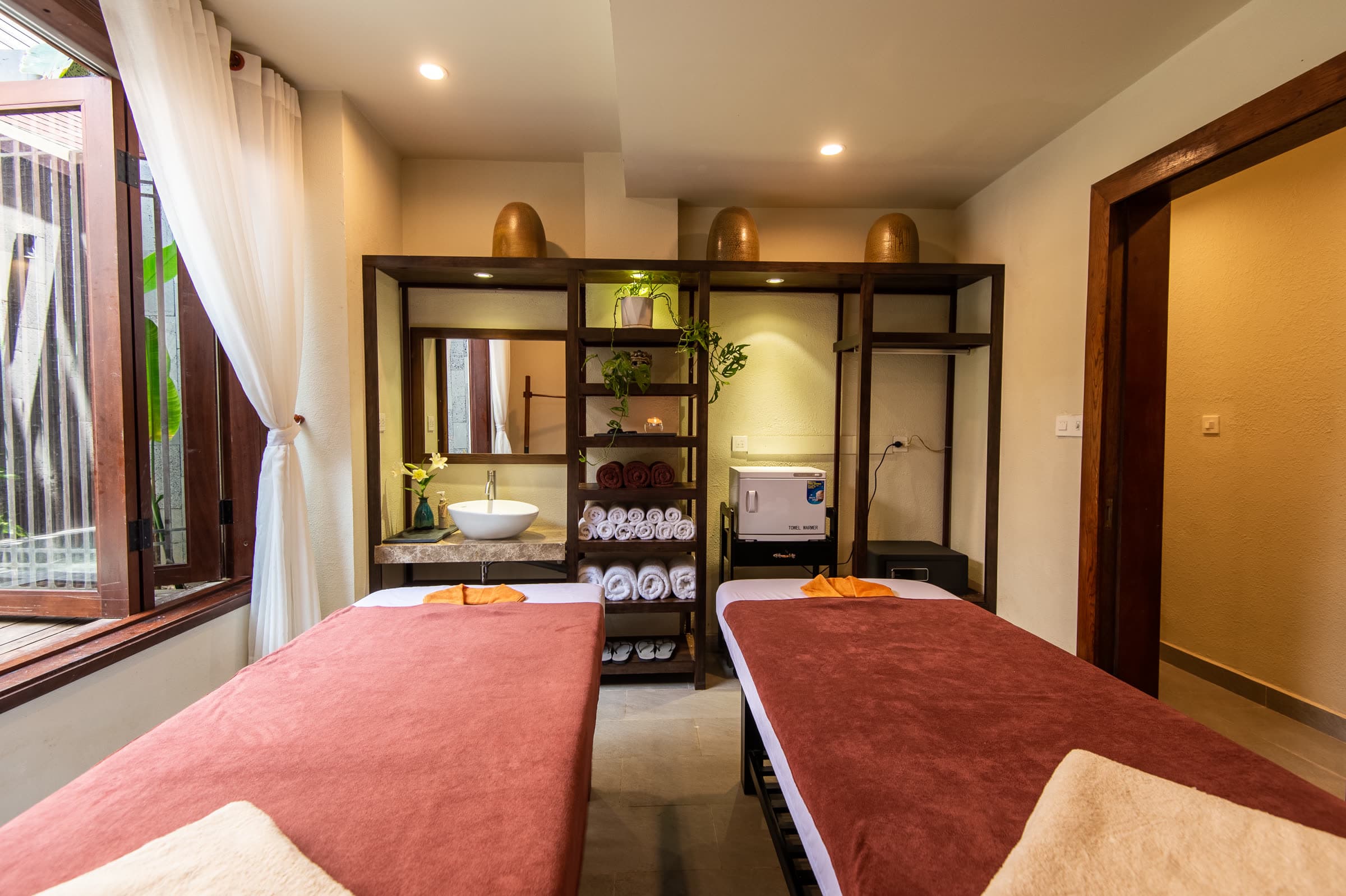
Every room at Nghê Prana is designed around the science of sleep. Blackout curtains, nightly aromatherapy turndown, and riverside quiet — experience what real rest feels like.
Zimmer am Fluss, zehn Fahrradminuten von der Altstadt. Ob eine Nacht zwischen Hué und Da Nang oder eine ganze Woche ohne Plan — Ihr Zimmer bleibt ruhig.
Kostenlose Stornierung · Direkt bei der Familie, die das Haus gebaut hat


 WhatsApp
 Zalo
Zalo