Noctourism ist Reisetrend 2026. Hội An macht das seit 400 Jahren.
Reisemedien nennen Noctourism — Reisen um dunkle Himmel, Nachtspaziergänge und Phänomene nach Mitternacht — den prägenden Trend des Jahres. HomeToGo veröffentlichte einen Astrotourismus-Bericht. Beispiele: lampionerleuchtete Spaziergänge, mondhelle Wildbeobachtungen, Sternenbetten unter freiem Himmel. Der ganze Kanon existiert in Hội An — kontinuierlich, seit vier Jahrhunderten.
Die Reisebranche taufte 2026 den Trend „Noctourism". Artful Living Magazine nannte Dark-Sky-Reisen „den hellsten Trend der Branche". HomeToGo veröffentlichte einen Astrotourismus-Bericht 2026. Mehrere Medien — Sanford Herald, Branson Tri-Lakes News, AP — fuhren dieselbe Schlagzeile: „Der heißeste Reisetrend 2026 spielt nach Mitternacht." Die These: Reisende strukturieren ihre Reisen zunehmend um Erlebnisse, die zu Hause nicht zu haben sind, allen voran ein klarer Nachthimmel. Dark-Sky-Reservate werden zu Reisekategorien. Jackson Hole erhielt 2026 die offizielle Dark-Sky-Auszeichnung. Der „Hoback Club" eröffnete im Januar mit Panorama-Nachthimmelfenstern. Spezialveranstalter in Chiles Atacama, Neuseelands akkreditierten DSR und Südafrikas Nordkap rollen Eklipsenrouten und Teleskop-Camps aus.
Die immer wieder zitierten Beispiele — „geführte Nachtwanderungen, mondhelle Wildbeobachtung, lampionerleuchtete historische Spaziergänge, Sternenbetten" — beschreiben einen Cluster, den die Branche als Produktlinie erfindet. Hier ein kurzes Argument, warum das Lampionfest in Hội An die älteste, am kontinuierlichsten praktizierte und fotografisch einzigartigste dieser Erfahrungen weltweit ist und Zentralvietnam zu den besten Noctourism-Zielen 2026 gehört, über die noch zu wenig gesprochen wird.
Warum Noctourism gerade jetzt
Zwei Strukturverschiebungen erklären den Trend. Erstens: 99 % der Amerikaner und Europäer leben unter lichtverschmutztem Himmel (Science Advances 2016, in der Astrotourismus-Presse meistzitiert). Echte dunkle Himmel sind selten genug, um die Reise zu lohnen. Zweitens: das solare Maximum 2024–2028 erzeugt das aktivste Polarlicht-Jahrzehnt seit den 1980ern, und im August 2026 zog eine totale Sonnenfinsternis über Nordspanien und Portugal. Beides — das Ende des erreichbaren Heimatnachthimmels und ein seltener Höhepunkt himmlischer Aktivität — kollidierte im selben Fenster. Die Reisenden bemerkten es. Der Trend folgte.
Die Hội-An-Relevanz liegt in der Mitte: Nicht jede Noctourism-Reise ist Astrophysik. Viele sind das kulturelle Nachterlebnis selbst — Städte um Mitternacht, kerzenerleuchtete Tempel, lampionerleuchtete Häfen. Hội An gehört eindeutig in die zweite Kategorie.
Das Lampionfest als Noctourism
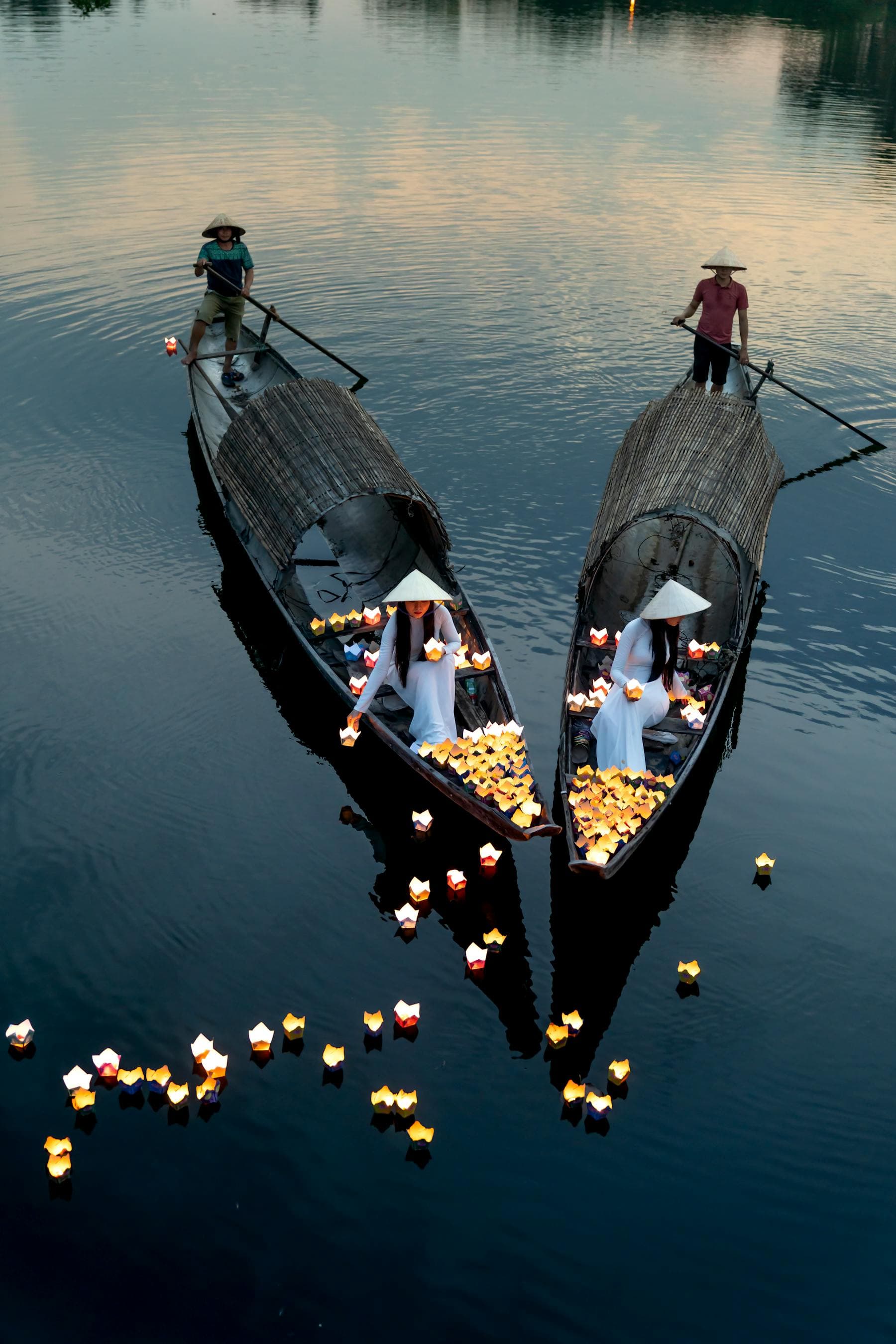
Das Hội-An-Lampionfest, Lễ Hội Đèn Lồng — kontinuierlich seit dem späten 16. Jahrhundert — ist ein monatliches Kulturereignis um den Vollmond. Am 14. Tag jedes Mondmonats schaltet die Altstadt zwischen 18 und 22 Uhr alle elektrische Beleuchtung ab. Tausende Papier- und Seidenlampions übernehmen die Straßen. Kerzenpapierboote (hoa đăng) werden vom An-Hội-Steg und von kleinen Booten an der Bạch-Đằng-Kai auf den Thu Bồn ausgesetzt. Jedes trägt einen Wunsch. Jedes ist ein bewegtes Licht auf dem Wasser.
Was die Noctourism-Presse 2026 als „lampionerleuchtete historische Spaziergänge", „mondhelle Wassererlebnisse" und „Dark-Sky-Kulturveranstaltungen" beschreibt — Hội An macht es, alle drei, im selben Vierstundenfenster, jeden Mondmonat, seit vier Jahrhunderten. Älter als die Fotografie. Älter als das Wort „Tourismus". Und weil es nach Mondkalender läuft, eines der wenigen großen Kulturereignisse, das noch an einen astronomischen Zyklus gebunden ist.
Im HomeToGo-Astrotourismus-Bericht 2026: 78 % der Reisenden würden eine Reise gezielt zu einem Nachthimmel-Ereignis planen. Das monatliche Hội-An-Lampionfest erfüllt diesen Wunsch so direkt wie kein anderes Vollmondereignis weltweit: alle 29,5 Tage wird der Thu Bồn zur Tausend-Lampion-Nacht, zwölf Monate im Voraus planbar.
Der konkrete Dark-Sky-Fall für Hội An
Hội An ist kein formell akkreditiertes Dark-Sky-Reservat — das nächste DSR liegt rund 4.000 km entfernt. Doch das Lichtverschmutzungs-Profil ist günstiger, als die Presse asiatischen Zielen üblicherweise zugesteht. Zentralvietnam liegt an Flussufern überwiegend unter Bortle-Klasse 4 — bedeutet: die Milchstraße ist an klaren Nächten in Cẩm Nam, Cẩm Thanh oder an der An-Bàng-Küste mit bloßem Auge sichtbar. In der Altstadt steigt die Lichtverschmutzung während der Lampionstunden bewusst (das ist die Show), fällt nach 22 Uhr aber zurück auf Bortle 4–5. Wer am stillen Ufer wohnt und um 23 Uhr aus dem Zimmer tritt, sieht regelmäßig Sterne, die zu Hause unsichtbar sind.
Planen Sie Ihre Reise? Prüfen Sie die Verfügbarkeit in unserem ruhigen Hotel am Thu-Bồn-Fluss. Verfügbarkeit prüfen →
Mit dem Mondkalender ergibt sich Hội Ans Noctourism-Profil: helle Lampion-Kulturnächte am Tag 14 des Mondmonats, sternklare Nächte an den anderen. Wenige Orte verbinden beides.
Der Vier-Nächte-Noctourism-Aufenthalt
Wir veröffentlichen zwei kostenlose Werkzeuge dafür. Der Nghê-Prana-Mondphasen-Kalender (https://www.nghevilla.com/de/moon) markiert jede kommende Lampionfest-Nacht bis 2027. Der Nghê-Prana-Sonnenuntergangs-Timer (https://www.nghevilla.com/de/sunset) zeigt Sonnenuntergang, Blue Hour und astronomische Dämmerung jedes Datums. Damit lässt sich ein Vier-Nächte-Aufenthalt planen, der eine Lampionnacht, zwei sternendunkle Nächte und einen Mondaufgang am stillen Ufer einschließt.
Der für Erstreisende stimmigste Plan läuft Tag 13 bis 16 eines Mondmonats. Tag 13 — Vorabend (stille Altstadt vor der Spitze). Tag 14 — Lampionfest (Kerzenboote, elektrisches Licht aus). Tag 15 — astronomischer Vollmond, von jeder Uferterrasse. Tag 16 — erste abnehmende Nacht, noch beleuchtet, doch zurückkehrende Dunkelheit, sichtbare Sterne. Vier aufeinanderfolgende Nächte mit jeweils eigenem Charakter.
Der größere Punkt
Der Trend 2026 ist reale Nachfrage als Antwort auf eine reale Verschwunden-heit — die meisten Reisenden sehen zu Hause weder echten Nachthimmel noch eine natürlich erleuchtete kulturelle Nacht. Die Branche erfindet Produkte, um beides zurückzuverkaufen. Erwähnenswert: in Hội An ist es kein Produkt. Es ist Dienstag. Oder Mittwoch. Oder der 14. des Mondmonats. Es läuft, ob Reisende kommen oder nicht — seit vierhundert Jahren.
Wer Noctourism-Berichte liest und eine chilenische Wüste oder eine isländische Dark-Sky-Hütte bucht, wählt vernünftig. Eine weitere Option: Zentralvietnam am richtigen Mondtag. Die Lampions brennen seit vier Jahrhunderten. Der Fluss tut weiter seinen nächtlichen Dienst. Die Milchstraße ist nach den Lampions immer noch da. Sie buchen keinen Trend; Sie buchen eine Praxis.
Every room at Nghê Prana is designed around the science of sleep. Blackout curtains, nightly aromatherapy turndown, and riverside quiet — experience what real rest feels like.
Zimmer am Fluss, zehn Fahrradminuten von der Altstadt. Ob eine Nacht zwischen Hué und Da Nang oder eine ganze Woche ohne Plan — Ihr Zimmer bleibt ruhig.
Kostenlose Stornierung · Direkt bei der Familie, die das Haus gebaut hat
 WhatsApp
 Zalo
Zalo