Fête des lanternes de Hoi An 2027 : toutes les dates (calendrier des pleines lunes vérifié)
La Fête des lanternes de Hoi An a lieu le 14e soir de chaque mois lunaire — la veille de chaque pleine lune — ce qui fait tomber douze dates précises dans l'année civile 2027. À chacune d'elles, la Vieille Ville éteint son éclairage électrique de 18 h à 22 h environ, n'accroche que des lanternes de soie comme unique source de lumière et couvre le Thu Bồn de petites lanternes flottantes à bougie. Voici le calendrier 2027 vérifié — dates grégoriennes exactes avec la conversion lunaire déjà faite pour vous, recoupées avec le Tết (6 fév.) et la mi-automne (15 sept.) — ainsi que le déroulé réel de la soirée, la plage horaire d'extinction des lumières et comment en profiter depuis la rive tranquille du fleuve.
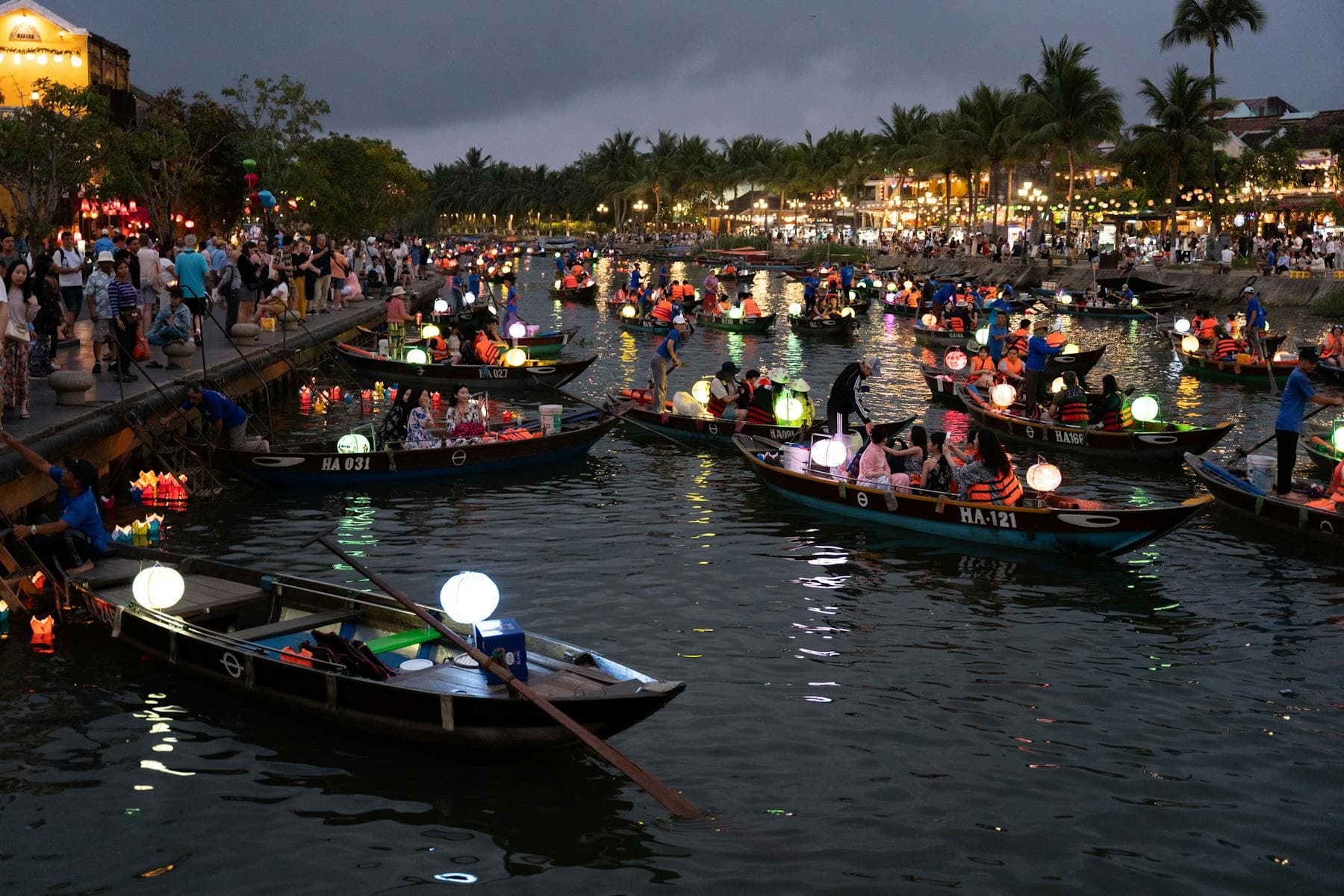
Lors de douze soirées en 2027, l'éclairage électrique le long de la Vieille Ville de Hội An s'éteint volontairement et les rues retrouvent la lueur des bougies et de la lune. Les lanternes de soie deviennent l'unique vraie source de lumière, la Sông Hoài (le bras de Hội An du Thu Bồn) se couvre de milliers de petites lanternes flottantes qui dérivent au fil de l'eau, et pendant une vingtaine de minutes au crépuscule, la ville ressemble presque exactement à ce qu'elle était il y a trois siècles. Venez le mauvais soir et vous ne verrez rien de tout cela — juste une soirée ordinaire dans une ville animée. La chose la plus utile que ce guide vous apporte est donc tout simplement les bonnes dates.
La Fête des lanternes de Hoi An — Lễ hội đèn lồng, que les habitants appellent Đêm Rằm Phố Cổ (« la nuit de pleine lune de la Vieille Ville ») — tombe le 14e jour de chaque mois lunaire, le soir qui précède chaque pleine lune. C'est le détail que presque toutes les fiches en anglais se trompent : c'est bien le 14e soir, pas le 15e, et pas « un soir quelconque du mois ». Trouvez la bonne date et tout le reste suit.
Une note sur l'exactitude : les dates ci-dessous sont calculées à partir du calendrier lunaire et recoupées avec deux repères fixes pour 2027. Le Tết 2027 — le premier jour du nouvel an lunaire (Mùng 1 Tết) — tombe le samedi 6 février 2027, ouvrant l'année de la Chèvre (Đinh Mùi). 2027 ne comporte pas de mois intercalaire, si bien que les douze mois lunaires se succèdent d'un bout à l'autre de l'année grégorienne. Et *la mi-automne (Tết Trung Thu), la pleine lune du 8e mois lunaire, tombe le mercredi 15 septembre 2027* — ce qui fixe la veille de la fête au mardi 14 septembre. Chaque date de ce guide est vérifiée par rapport à ces repères.
Quand a lieu la Fête des lanternes de Hoi An en 2027 ?
La fête se tient le 14e soir de chaque mois lunaire, toute l'année. Comme les calendriers lunaire et grégorien dérivent l'un par rapport à l'autre, les dates changent chaque année. Voici les douze soirs de fête qui tombent dans l'année civile 2027, avec la conversion du lunaire au grégorien déjà faite pour vous.
#
Soir de fête (2027)
Date lunaire
Remarques
1
jeu. 21 janv. 2027
14 du 12e mois lunaire (année Bính Ngọ)
Frais, sec ; calme, dernier soir de lanternes avant la saison du Tết
2
ven. 19 févr. 2027
14 du 1er mois lunaire — Nguyên Tiêu / Rằm tháng Giêng
Première pleine lune de l'année lunaire ; le soir le plus grand et le plus chargé d'atmosphère
3
dim. 21 mars 2027
14 du 2e mois lunaire
Printemps ; agréable, généralement sec
4
lun. 19 avr. 2027
14 du 3e mois lunaire
Printemps ; saison sèche
5
mer. 19 mai 2027
14 du 4e mois lunaire
Chaud, sec
6
jeu. 17 juin 2027
14 du 5e mois lunaire
Cœur de la saison sèche ; soirées chaudes (plus de 32 °C)
7
sam. 17 juill. 2027
14 du 6e mois lunaire
Haute saison touristique nationale d'été ; un samedi, donc plus fréquenté
8
dim. 15 août 2027
14 du 7e mois lunaire
Autour de Lễ Vu Lan (rằm tháng 7) ; significatif pour les habitants
9
mar. 14 sept. 2027
14 du 8e mois lunaire
La veille de la mi-automne (Tết Trung Thu, pleine lune le mer. 15 sept.) — le soir le plus festif de l'année
10
mer. 13 oct. 2027
14 du 9e mois lunaire
Début de la saison des pluies ; surveillez les prévisions de crue
11
jeu. 11 nov. 2027
14 du 10e mois lunaire
Soirées plus fraîches, souvent la plus belle lumière de l'année
12
sam. 11 déc. 2027
14 du 11e mois lunaire
Frais et sec ; soir calme de fin d'année
Le soir de fête suivant le tableau ci-dessus tombe début janvier 2028 (le 14 du 12e mois lunaire), autour des 9-10 janvier 2028.
Si vous ne pouvez choisir qu'un seul soir, optez pour le vendredi 19 février 2027 (Nguyên Tiêu, la première pleine lune de l'année lunaire) ou le mardi 14 septembre 2027 (la veille de la mi-automne). Ce sont les deux soirs les plus cérémoniels — et en 2027, tous deux tombent à des moments commodes, la veille de la mi-automne se plaçant un mardi juste avant la pleine lune du mercredi. Et si vous voulez la fête sans la plus grosse foule, les soirs de basse saison — 21 janvier, 11 novembre, 11 décembre — vous offrent la même Vieille Ville aux lumières éteintes, mais avec de l'espace pour respirer.
Que se passe-t-il réellement le soir de la fête ?
À partir de 17 h 30 environ, les motos ne sont plus autorisées dans le cœur de la Vieille Ville. Puis la ville accomplit ce qui rend cette fête digne d'être planifiée : elle éteint la majeure partie de l'éclairage électrique, et de 18 h à 22 h environ, les milliers de lanternes de soie et de papier tendues à travers les rues deviennent l'unique source de lumière notable. Ce protocole d'extinction des lumières est le cœur de Đêm Rằm Phố Cổ — c'est une politique patrimoniale locale, pas un artifice touristique.
Le fleuve devient une seconde source de lumière. Habitants et visiteurs allument de petites lanternes flottantes — hoa đăng, des lanternes de papier renfermant une bougie — puis les déposent sur la Sông Hoài depuis la passerelle d'An Hội et depuis de petites barques en bois qui partent du quai Bạch Đằng. Chaque lanterne porte un vœu. Entre 19 h et 21 h environ, l'eau s'en couvre, et elles dérivent vers le chenal principal du Thu Bồn. Des spectacles culturels se déroulent en parallèle : chant populaire bài chòi sur la place d'An Hội, musique traditionnelle sur la scène de Bạch Đằng, calligraphie dans les maisons communes. À 22 h, l'éclairage et la circulation normaux reprennent.
L'idée de l'extinction des lumières a une origine documentée. Le Trung tâm Quản lý Bảo tồn Di sản Văn hóa Hội An (le centre de conservation du patrimoine de Hội An) fait remonter le tắt đèn điện mensuel — « éteindre les lumières électriques » — à une décision municipale de 1998, une idée associée à l'architecte polonais Kazimierz Kwiatkowski, qui commença à documenter l'architecture vernaculaire de Hội An en 1982. Depuis la mi-2025, à la suite de la réorganisation administrative qui a placé Hội An et Mỹ Sơn sous l'autorité de Đà Nẵng, ce même centre opère sous la tutelle culturelle de Đà Nẵng — de sorte que le calendrier 2027 de la fête, comme celui de 2026, est géré à l'échelon de Đà Nẵng.
Où cela se passe-t-il, et comment en profiter depuis la rive tranquille ?
L'animation se concentre sur la Sông Hoài, entre la passerelle d'An Hội et le pont de Cẩm Nam, le front de fleuve de Bạch Đằng sur la rive nord (côté Vieille Ville) étant l'endroit le plus dense. Vers 19 h 15 un soir de pointe, le pont d'An Hội et le quai de Bạch Đằng sont noirs de monde, épaule contre épaule. Vous n'êtes pas obligé de vous tenir là.
L'eau elle-même est la fête, ce qui veut dire que la place la plus paisible est dessus ou en face. Depuis notre propre point de vue au bord du Thu Bồn, la méthode qui fonctionne est simple : venir tôt pour la fenêtre de l'heure bleue, ou regarder depuis la rive opposée. Cinq approches :
Un — la fenêtre de l'heure bleue. Rejoignez le front de fleuve de Bạch Đằng avant 17 h et installez-vous sur les marches face à l'eau. Les lanternes s'allument sur un ciel crépusculaire cobalt avant que la foule ne se forme. La plus belle lumière se situe entre 17 h 45 et 18 h 20 environ.
Deux — depuis une barque. Une petite barque à rames (environ 120 000–200 000 VND pour 45 minutes) vous place au milieu du fleuve, parmi les lanternes. Réservez avant 17 h ; les places sont rares les soirs de fête.
Trois — la rive sud à Cẩm Nam. Marchez cinq minutes au-delà du marché nocturne d'An Hội jusqu'à n'importe quelle terrasse au bord de l'eau à Cẩm Nam et regardez vers la Vieille Ville. Les reflets des lanternes sous cet angle sont souvent plus beaux que depuis la rive nord bondée, et vous aurez une table.
Quatre — à l'intérieur, pas sur le fleuve. La cour du temple Quan Công et l'intérieur de la maison ancienne Tấn Ký se remplissent de lumière de bougies les soirs de fête, avec une fraction de la foule. Calme, plein d'atmosphère, et une autre sorte de photographie.
Cinq — l'île de Cẩm Kim. Un court trajet en bac à travers le Thu Bồn mène à Cẩm Kim, où les familles locales font leur propre lâcher, plus modeste, avec une densité de touristes bien moindre. Moins de lanternes sur l'eau, mais davantage de vie communautaire authentique.
Vous organisez votre séjour ? Vérifiez les disponibilités de notre paisible hôtel au bord de la Thu Bồn. Voir les disponibilités →
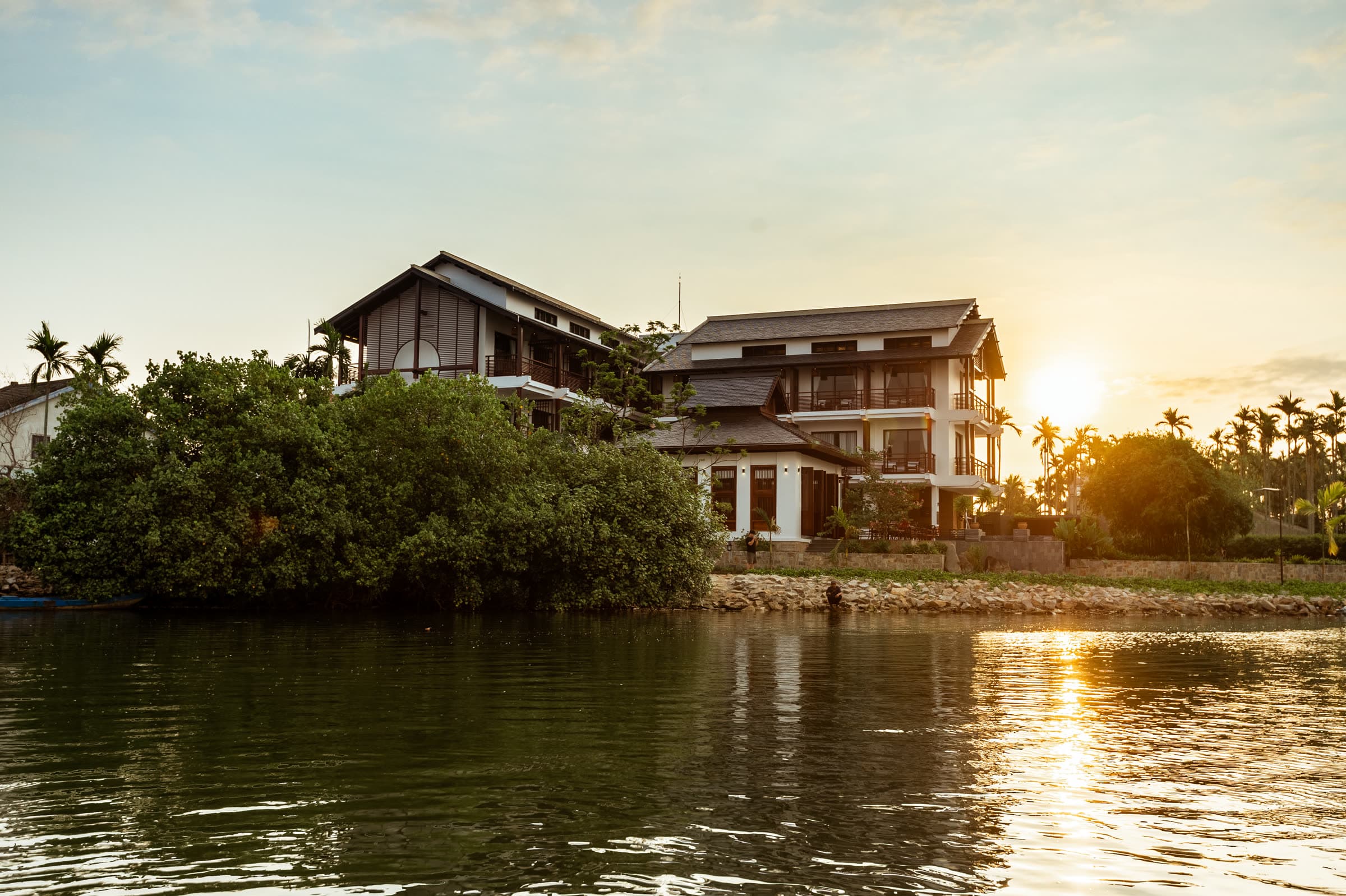
Un fil pratique relie tout cela : l'endroit où vous dormez détermine la part de la soirée dont vous profitez vraiment. Loger au bord du Thu Bồn plutôt qu'au cœur de la zone piétonne signifie que vous pouvez aller à pied ou prendre une courte barque jusqu'au lâcher, puis vous retirer vers une eau tranquille quand la foule culmine — au lieu de devoir refendre le marché nocturne pour rejoindre un hôtel enfoui dans la Vieille Ville. (Nous sommes nous-mêmes un hôtel au bord du Thu Bồn, et c'est précisément pour cela que nous concevons la soirée ainsi : la fête est une chose que l'on visite, puis dont on rentre.)
Que prévoir et comment s'habiller
La fête est participative — chacun est libre d'allumer et de lâcher un hoa đăng. Les lanternes flottantes se vendent sur Bạch Đằng et au pont d'An Hội pour environ 20 000–40 000 VND ; emportez de la petite monnaie, car la plupart des vendeurs n'acceptent pas la carte les soirs de fête. Portez des chaussures fermées et confortables — les pavés et la cire de bougie font des tongs un mauvais choix. À partir d'octobre, prévoyez une couche légère pour les soirées plus fraîches. Louer un áo dài (la tenue traditionnelle) convient bien à la soirée ; les boutiques de location le long de la rue Trần Phú prolongent leurs horaires le 14 du mois lunaire.
Foire aux questions
Quand a lieu la Fête des lanternes de Hoi An en 2027 ?
Elle se tient le 14e soir de chaque mois lunaire. En 2027, cela tombe les : 21 janv., 19 févr., 21 mars, 19 avr., 19 mai, 17 juin, 17 juill., 15 août, 14 sept., 13 oct., 11 nov. et 11 déc. Les plus chargés d'atmosphère sont le 19 février (première pleine lune de l'année lunaire, Nguyên Tiêu) et le 14 septembre (veille de la mi-automne).
À quelle heure commence et finit la Fête des lanternes de Hoi An ?
Les motos sont évacuées du cœur de la ville vers 17 h 30, l'éclairage électrique s'éteint de 18 h à 22 h environ, et le lâcher de lanternes flottantes sur le fleuve culmine entre 19 h et 21 h environ.
Quel est le plus grand soir de lanternes à Hoi An en 2027 ?
Les deux plus importants sont le vendredi 19 février 2027 (Nguyên Tiêu, la première pleine lune de l'année lunaire, la veille de Rằm tháng Giêng) et le mardi 14 septembre 2027 (la veille de la mi-automne / Tết Trung Thu).
Quand a lieu la mi-automne (Tết Trung Thu) à Hoi An en 2027 ?
La pleine lune de la mi-automne tombe le mercredi 15 septembre 2027. Comme la fête de Hội An se tient le 14 du mois lunaire — la veille de la pleine lune — le grand soir de lanternes de la mi-automne dans la Vieille Ville est le mardi 14 septembre 2027. Les processions de lanternes des enfants et la múa lân (danse du lion) se prolongent souvent jusqu'au lendemain soir.
La fête des lanternes a-t-elle lieu tous les soirs à Hoi An ?
Non. Les lanternes de soie sont allumées dans la Vieille Ville la plupart des soirs toute l'année, mais la Đêm Rằm Phố Cổ complète — lumières éteintes, circulation fermée, lâcher de lanternes sur le fleuve — n'a lieu que le 14e soir de chaque mois lunaire.
Faut-il payer pour voir la Fête des lanternes de Hoi An ?
La fête elle-même se parcourt gratuitement. Il vous faudra un billet d'entrée de la Vieille Ville pour pénétrer dans les maisons patrimoniales et les maisons communes, et une lanterne flottante (hoa đăng) coûte environ 20 000–40 000 VND si vous souhaitez en lâcher une. Un court tour en barque revient à environ 120 000–200 000 VND.
Peut-on lâcher soi-même une lanterne sur le fleuve ?
Oui. Achetez un hoa đăng auprès d'un vendeur au bord de l'eau et lâchez-le depuis le pont d'An Hội, le quai de Bạch Đằng ou une petite barque. La coutume locale veut que l'on fasse un vœu en le déposant sur l'eau.
La fête des lanternes vaut-elle le détour pendant la saison des pluies (oct.-nov.) ?
Cela peut en valoir la peine, mais surveillez les prévisions. Octobre et novembre sont les mois les plus pluvieux de Hội An et la Vieille Ville peut être inondée les mauvaises années ; les soirs des 13 octobre et 11 novembre sont superbes par temps sec, mais peuvent être annulés ou écourtés en cas de hautes eaux. Si votre voyage tombe dans cette période, gardez un soir de secours et surveillez le niveau du Thu Bồn.
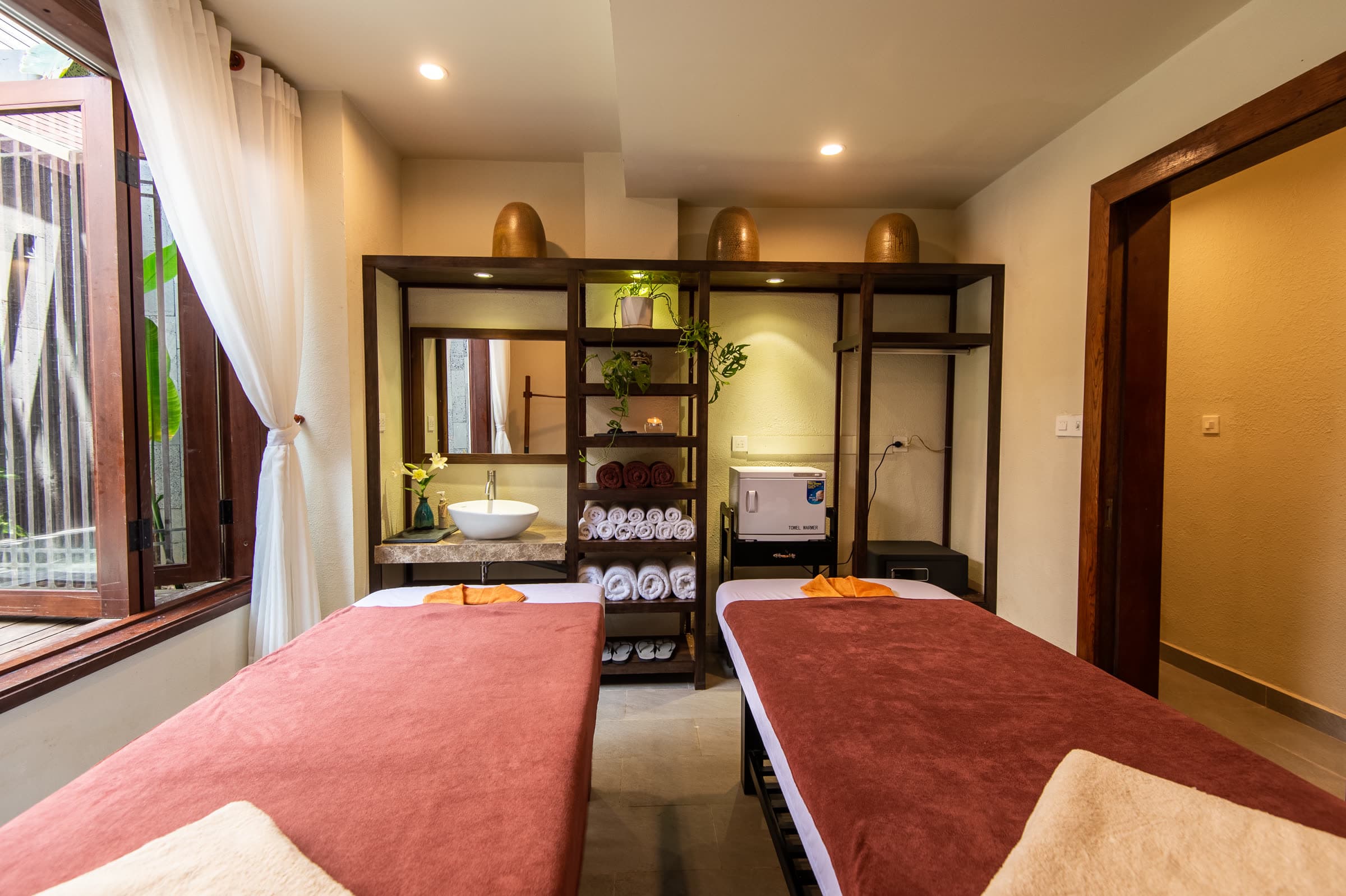
Transformez une nuit des lanternes en escapade. Une soirée de pleine lune aux lanternes est le cœur naturel d'un voyage romantique à Hội An — les couples organisent souvent un séjour anniversaire ou un massage en duo et spa pour deux au bord de la rivière autour de ces dates, et réservent un spa privé en couple pour l'après-midi qui précède. Vous hésitez encore sur l'année ? Les dates des lanternes 2026 sont également confirmées. Nous contemplons chaque rằm depuis le côté paisible de la rivière Thu Bồn, à quelques minutes en amont de la vieille ville. Vous restez pour une nuit des lanternes ? Réservez une chambre au bord du fleuve, à quelques minutes à pied du lâcher.
Ce calendrier fait la synthèse des archives officielles du Trung tâm Quản lý Bảo tồn Di sản Văn hóa Hội An sur le protocole d'extinction des lumières du 14e soir, la Đêm Rằm Phố Cổ, de la couverture médiatique du transfert, en 2025, de la gestion patrimoniale de Hội An sous l'autorité de Đà Nẵng, et des repères lunaires fixes de 2027 — le Tết le 6 février, l'absence de mois intercalaire et la pleine lune de la mi-automne le 15 septembre. La contribution de l'hôtel est le tableau vérifié de conversion lunaire-grégorienne pour 2027 et le plan d'observation calé sur la fenêtre du lâcher de lanternes de la Sông Hoài, entre les ponts d'An Hội et de Cẩm Nam, observé de première main depuis la rive du Thu Bồn.
Every room at Nghê Prana is designed around the science of sleep. Blackout curtains, nightly aromatherapy turndown, and riverside quiet — experience what real rest feels like.
Chambres au bord du fleuve, à dix minutes à vélo de la vieille ville. Une nuit entre Hué et Da Nang ou une semaine sans emploi du temps — votre chambre restera silencieuse.
Annulation gratuite · Réservation directe auprès de la famille propriétaire

 WhatsApp
 Zalo
Zalo