À quelle distance de la vieille ville se trouve votre hôtel à Hội An ? (Et est-ce que cela compte ?)
« À quelle distance de la vieille ville êtes-vous ? » est l'une des trois premières questions des primo-visiteurs. La réponse honnête est 3,2 km — 6 minutes en Grab, 10 minutes à vélo — et oui, cela compte, mais pas comme ils le croient.
Si vous êtes un primo-visiteur de Hội An et que vous cherchez un hôtel sur Booking.com ou Agoda, la variable la plus filtrée est la distance à la vieille ville. « À moins de 500 m. » « À pied. » « Moins d'1 km du Pont couvert japonais. » Ces filtres présentent la décision ainsi : plus près = mieux. Ce cadre est en partie juste, en partie faux. Plus près est mieux pour certains voyages. Pour la plupart, plus près est activement pire. Cet article est la vraie carte de la décision — distances réelles, durées de trajet, et ce que chaque tranche implique.
La géographie réelle
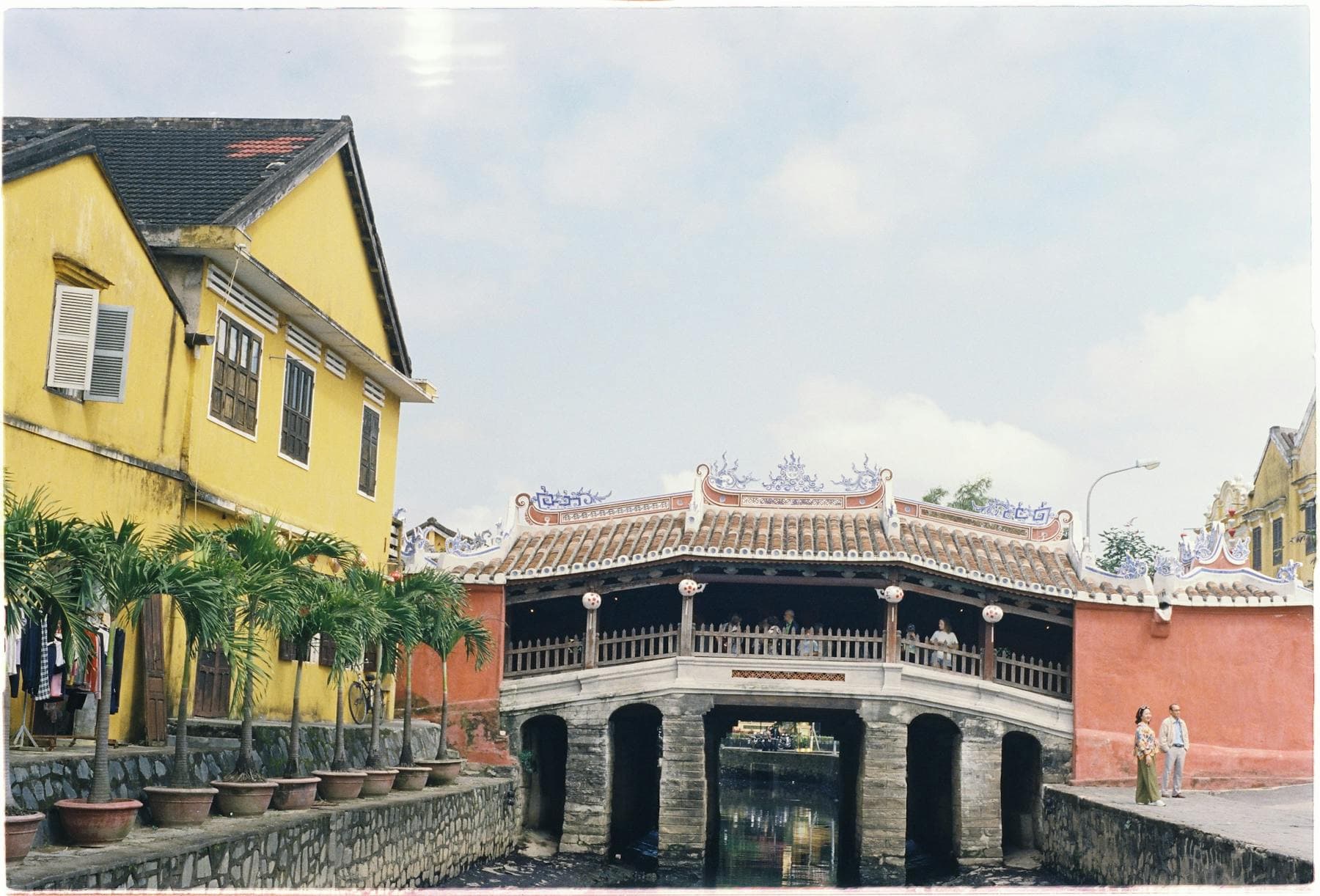
La vieille ville de Hội An — quadrillage UNESCO de 400 ans, maisons jaunes de marchands, Pont couvert japonais, rues de lanternes et promenade au bord du fleuve — fait environ 30 hectares. Autour, la commune s'étend sur environ 60 km², répartis sur plusieurs villages : Cẩm Nam (rive sud du fleuve), Cẩm Thanh (à l'est, vers l'estuaire), Cẩm Châu (au nord), Cẩm An (plus au nord-est) et An Bàng / Cửa Đại (les plages, à 4-5 km de la vieille ville).
La plupart des hôtels tombent dans l'une des cinq tranches de distance. Chacune correspond à un autre type de voyageur.
Tranche 1 : à l'intérieur de la vieille ville (0 – 500 m du Pont japonais)
Pour : tout à pied. Premier choix pour la photographie aux lanternes. Restaurants à la porte.
Contre : mesurablement plus bruyant. Le bruit ambiant nocturne sur Nguyễn Thái Học ou Bạch Đằng entre 19 h et 22 h tourne à 55 – 65 dB(A) — bien au-dessus du seuil OMS de perturbation du sommeil (40 dB(A)). Même fenêtres fermées, l'intérieur des chambres y enregistre 48 – 54 dB(A). Plus chaud aussi — les rues de pierre conservent la chaleur, et l'effet d'îlot de chaleur urbain ajoute 2 à 4 °C aux températures de chambre du soir.
Convient à : voyages de trois nuits centrés sur la photo et la table en vieille ville, lunes de miel qui veulent « être dedans », ou voyageurs prêts à échanger du sommeil contre la proximité.
Tranche 2 : juste hors de la vieille ville (500 m – 1,5 km)
Pour : 5 à 10 minutes à pied. Plus calme qu'à l'intérieur.
Contre : encore assez proche de la ceinture motos-restaurants pour des niveaux du soir à 45 – 52 dB(A). L'essentiel de cette tranche borde des routes principales ; le trafic du matin commence tôt.
Convient à : ceux qui veulent marcher mais dormir un peu mieux qu'en tranche 1. Honnêtement la moins différenciée — vous payez un prix de tranche 1 pour un confort de tranche 2.
Tranche 3 : villages au bord du fleuve (2 – 4 km — Cẩm Nam, Cẩm Thanh, Cẩm Châu)
Pour : mesurablement plus calme — 35 à 42 dB(A) le soir, sous le seuil OMS. Grab 6 minutes jusqu'à la vieille ville. La plupart des établissements offrent vélos gratuits (10 minutes) ou navettes. Accès à pied au fleuve et aux chemins ruraux. Températures nocturnes plus fraîches (2 à 3 °C de moins qu'en vieille ville). C'est notre tranche.
Contre : vous planifiez les visites de la vieille ville plutôt que d'y dériver. La densité de restaurants est plus mince — la plupart des hôtels y servent leur propre dîner ; la scène du soir, sur la rive tranquille, est petite.
Convient à : la majorité des voyageurs qui veulent l'expérience de la vieille ville mais veulent vraiment dormir. Couples. Familles. Voyages bien-être. Séjours longs. La plupart des visiteurs qui reviennent finissent dans cette tranche au deuxième séjour, après avoir testé la tranche 1 ou 2 au premier.
Tranche 4 : côté plage (4 – 5 km — An Bàng, Cửa Đại)
Pour : océan. Baignade matinale. Restauration en bord de plage. Très calme.
Contre : Grab ou navette de 10 à 12 minutes vers la vieille ville — plus loin que la tranche 3. En saison humide (octobre-décembre), la météo de plage est rude et la baignade limitée.
Convient à : voyageurs « plage avant tout ». Nageurs. Hôtes qui veulent un rythme piscine-sable. Pas idéal si la vieille ville est l'intérêt principal — vous passerez plus de temps en transit que prévu.
Tranche 5 : périphérie et corridor resort (5 km et plus)
Pour : isolement. Infrastructure de resort de luxe. Calme total.
Contre : vraie distance logistique. Chaque sortie en vieille ville est un transfert planifié de 15 à 20 minutes aller. La carte des restaurants se réduit à l'intra-resort.
Convient à : retraites bien-être pures, où la vieille ville n'est pas vraiment dans le voyage. Voyageurs piscine-et-service qui quittent rarement l'établissement.
Vous organisez votre séjour ? Vérifiez les disponibilités de notre paisible hôtel au bord de la Thu Bồn. Voir les disponibilités →
La question de la distance contre la vraie question
Voici ce que nous disons par e-mail aux primo-visiteurs qui posent la question.
La distance à la vieille ville est un proxy pour trois choses qui comptent vraiment, ce qui rend le chiffre brut trompeur. Les trois choses : (1) à quel point votre chambre est calme la nuit, (2) le coût en friction de chaque visite en vieille ville, (3) la part du séjour passée hors de la grille touristique.
Si la priorité est (1) — le sommeil — la tranche 3 ou 4 est la bonne réponse. L'effort marginal du Grab de 6 minutes est trivial, le gain de sommeil est substantiel.
Si la priorité est (2) — accès au soir sans friction — la tranche 1 est la bonne réponse, à condition d'accepter le coût en sommeil.
Si la priorité est (3) — voir le Vietnam, et non seulement la version tourisme de Hội An — la tranche 3 ou 4 à nouveau. Vous mangerez dans des restaurants locaux avec de vrais convives vietnamiens, longerez des fermes en activité, et verrez une version de la ville inaccessible au client de tranche 1.
Pour la plupart des voyageurs, la plupart du temps, la tranche 3 — les villages au bord du fleuve à 3 ou 4 km — est la bonne. La vieille ville sera toujours là — il vous faudra choisir vos fenêtres pour la visiter. Notre reportage de terrain d'avril 2026 et les hôtels les plus calmes de Hội An en donnent les chiffres précis et les données acoustiques.
Où nous sommes
Nghê Prana est à 3,2 km du Pont couvert japonais, directement sur la rive de Cẩm Nam. Durées de trajet depuis notre porte :
Vers le Pont couvert japonais (vieille ville) : 6 minutes en voiture / Grab, 10 minutes à vélo, 15 minutes en navette gratuite.
Vers la plage d'An Bàng : 10 minutes en voiture, 15 à vélo.
Vers la plage de Cửa Đại : 8 minutes en voiture, navette gratuite à horaire.
Vers l'aéroport de Đà Nẵng : 35 à 45 minutes en voiture.
Vers le sanctuaire de Mỹ Sơn : 45 minutes en voiture.
Vers les Montagnes de Marbre : 20 minutes en voiture.
Le bruit ambiant nocturne moyen sur place est de 39 dB(A), mesurablement sous le seuil OMS de 40 dB(A), et 10 à 25 dB(A) plus bas que tout hôtel de la vieille ville. C'est l'écart précis que cette distance vous achète. Que cet écart compte pour votre voyage est la vraie décision.
Every room at Nghê Prana is designed around the science of sleep. Blackout curtains, nightly aromatherapy turndown, and riverside quiet — experience what real rest feels like.
Chambres au bord du fleuve, à dix minutes à vélo de la vieille ville. Une nuit entre Hué et Da Nang ou une semaine sans emploi du temps — votre chambre restera silencieuse.
Annulation gratuite · Réservation directe auprès de la famille propriétaire


 WhatsApp
 Zalo
Zalo