Les voyageurs coréens sont désormais le premier marché international au Vietnam. Selon l'Administration nationale du tourisme, la Corée du Sud a contribué 971 000 visiteurs sur les seuls mois de janvier et février 2026, et approchait 1,3 million à fin T1 — chiffre qui dépasse les États-Unis, le Japon, la Russie et la Chine, historiquement dominante, sur la même fenêtre. Le corridor KOR-VNM est désormais le flux entrant le plus dense du Vietnam, avec plus de 180 vols directs hebdomadaires depuis Incheon, Busan, Daegu et Jeju vers Đà Nẵng. Si vous lisez ceci à Séoul en planifiant un voyage, vous faites partie de la plus grande vague sortante coréenne vers le Vietnam de l'histoire. La majorité d'entre vous réservez 5 à 7 nuits. La majorité n'allouent que 1 ou 2 nuits à Hội An. D'après les retours de centaines de voyageurs coréens accueillis en 2024-2026, c'est la plus grande erreur d'itinéraire. Voici un meilleur plan de 4 jours, calé sur la manière dont les voyageurs coréens se déplacent vraiment.
Pourquoi 4 jours, pas 2
L'itinéraire coréen typique pour 7 nuits au Vietnam alloue 1-2 nuits à la baie d'Hạ Long, 2-3 nuits à Hà Nội ou Hô-Chi-Minh, et seulement 1-2 nuits à Hội An / Đà Nẵng cumulés. Ce schéma avait du sens en 2015. En 2026, avec la poussée touristique, la vieille ville prend désormais 3 à 4 heures à traverser dans la fenêtre du soir — donc 1 nuit donne une soirée précipitée et un check-out matinal. Les 2 nuits que la plupart des groupes coréens allouent restent en mode touriste pressé.
Quatre nuits, c'est le point d'inflexion. Cela donne : un après-midi d'arrivée et récupération, une journée pleine pour la vieille ville bien faite, une journée pleine pour la campagne (Trà Quế, Cẩm Thanh, ou la plage), une journée plus lente pour spa/tailleur/cours de cuisine, et un départ tranquille. La plupart des hôtes coréens qui prévoyaient 2 nuits et ont prolongé à 4 nous disent que les deux derniers jours ont fini par être leur partie préférée du voyage Vietnam.
Le plan de 4 jours
Jour 1 — arrivée et première marche en vieille ville (arrivée d'après-midi)
La plupart des vols coréens atterrissent à Đà Nẵng (DAD) entre 15 h et 18 h. Voiture privée pré-réservée vers Hội An (35-45 minutes, 450 000 VND / 18 USD). Check-in dans un établissement au bord du fleuve, hors de la vieille ville — la décision la plus importante en 2026. Les guesthouses de la vieille ville sont désormais trop bruyantes pour bien dormir ; les établissements à 3-4 km restent sous 40 dB(A) la nuit, ce qui compte parce que le voyageur coréen depuis Incheon arrive avec un décalage horaire qui rend tout sommeil perturbé par le bruit particulièrement pénalisant. Arrivée, douche, dîner léger à l'hôtel (ne tentez pas un restaurant en vieille ville le soir d'arrivée — files et foule décourageraient). Marche tôt en vieille ville pour la photographie aux lanternes en heure bleue, entre 17 h 30 et 19 h. Retour à l'hôtel à 20 h, coucher à 22 h.
Les vols directs Incheon – Đà Nẵng durent désormais 4,5 à 5 heures. Le décalage horaire de 2 heures est modeste, mais il s'additionne pour les voyageurs coréens à la chaleur tropicale et l'humidité. Un sommeil sombre et frais dès la première nuit réduit la fatigue du lendemain de 30 à 40 % par rapport à un environnement chaud, vif et bruyant.
Jour 2 — la vieille ville, bien faite
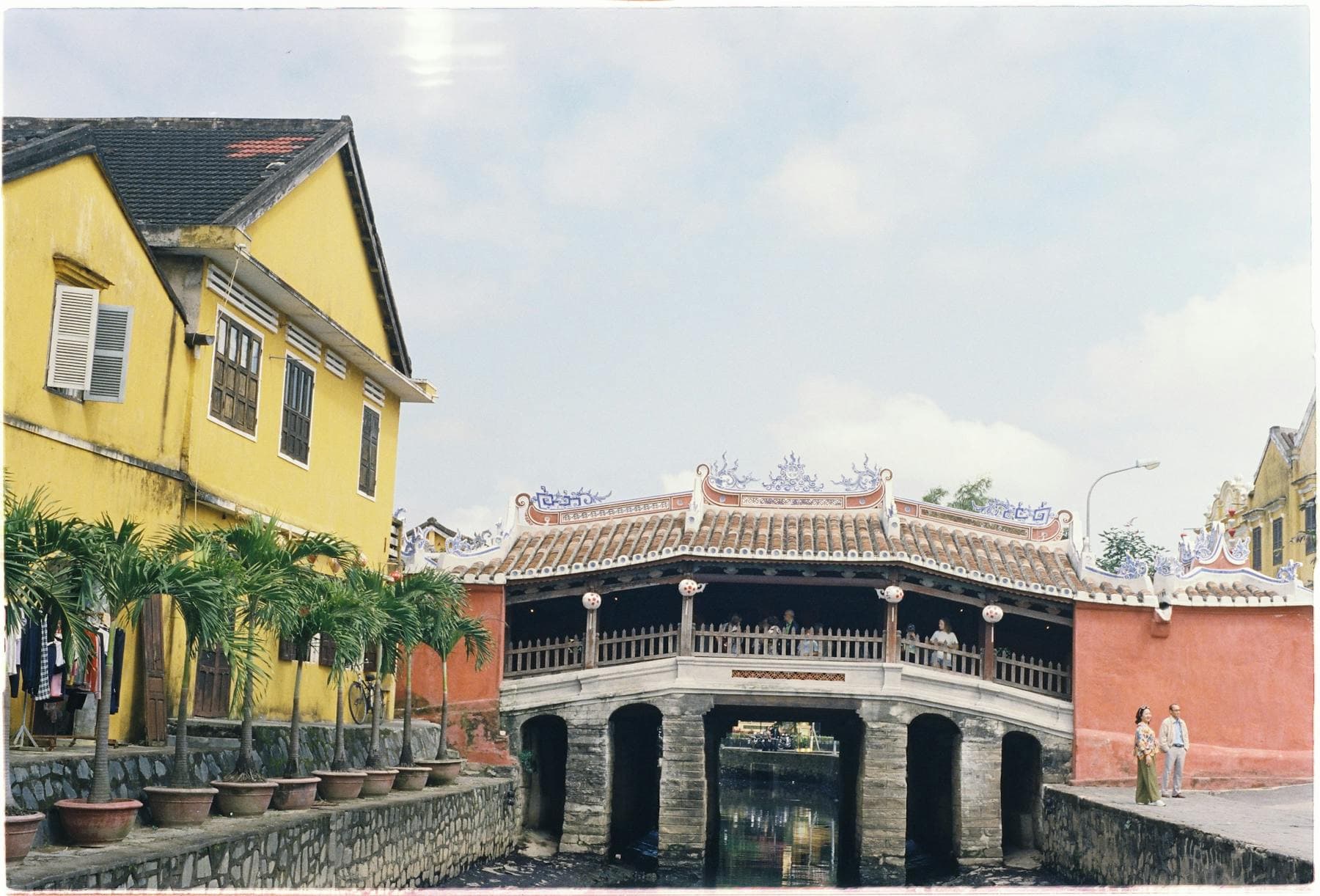
Réveil tôt. 6 h 30, c'est quand la vieille ville est la plus belle et la plus vide. Commencez au marché central pour la photographie matinale et un bol de phở bò ou de cao lầu — tous deux particulièrement adaptés au palais coréen (bouillon léger, herbes fraîches, nouilles de riz). À 8 h 30, visitez le Pont couvert japonais (Chùa Cầu), la salle du Fujian, la maison Tấn Ký — tout est inclus dans le billet à 120 000 VND. Moins de monde avant 10 h.
Vers 11 h, location d'áo dài pour la photo — les voyageurs coréens apprécient particulièrement, et la lumière de 11 h à 12 h 30 sur les murs jaunes de Trần Phú et Hai Bà Trưng est excellente pour les portraits. La plupart des boutiques sont rue Hai Bà Trưng ; comptez 100 000 – 300 000 VND pour la robe et un photographe optionnel.
Déjeuner : bánh mì Phượng rue Phan Châu Trinh (file 10-20 minutes après 12 h 30) ou Bánh Mì Madam Khánh, à proximité, file plus courte. Pour les voyageurs coréens, l'association pâté-coriandre est plus douce que le palais vietnamien typique — ces deux adresses équilibrent bien. Repos à la piscine de l'hôtel de 14 h à 16 h 30 — les après-midi à Hội An sont chauds, et les voyageurs coréens sous-budgètent régulièrement le temps repos/piscine.
Soirée : retour en vieille ville entre 17 h 30 et 19 h pour l'heure des lanternes. Si vos dates coïncident avec le 14 du mois lunaire (voir notre calendrier 2026 du Festival des Lanternes), c'est la nuit pour l'expérience festival complète. Sinon, n'importe quelle soirée fonctionne. Dîner chez Morning Glory ou The Cargo Club, qui acceptent la carte et accueillent bien les groupes coréens.
Jour 3 — la campagne
C'est le jour que la plupart des itinéraires de 2 nuits manquent entièrement. Option A : village de Trà Quế (3 km au nord, 10 minutes). Village d'herbes biologiques de cinq cents ans, fournissant la majorité des herbes du Centre. Visite guidée de 3 heures avec démonstration de tressage de paniers et cours de cuisine bánh xèo et rouleaux de printemps. Coût 800 000 – 1 500 000 VND. Très photographiée et très valorisée par les hôtes coréens.
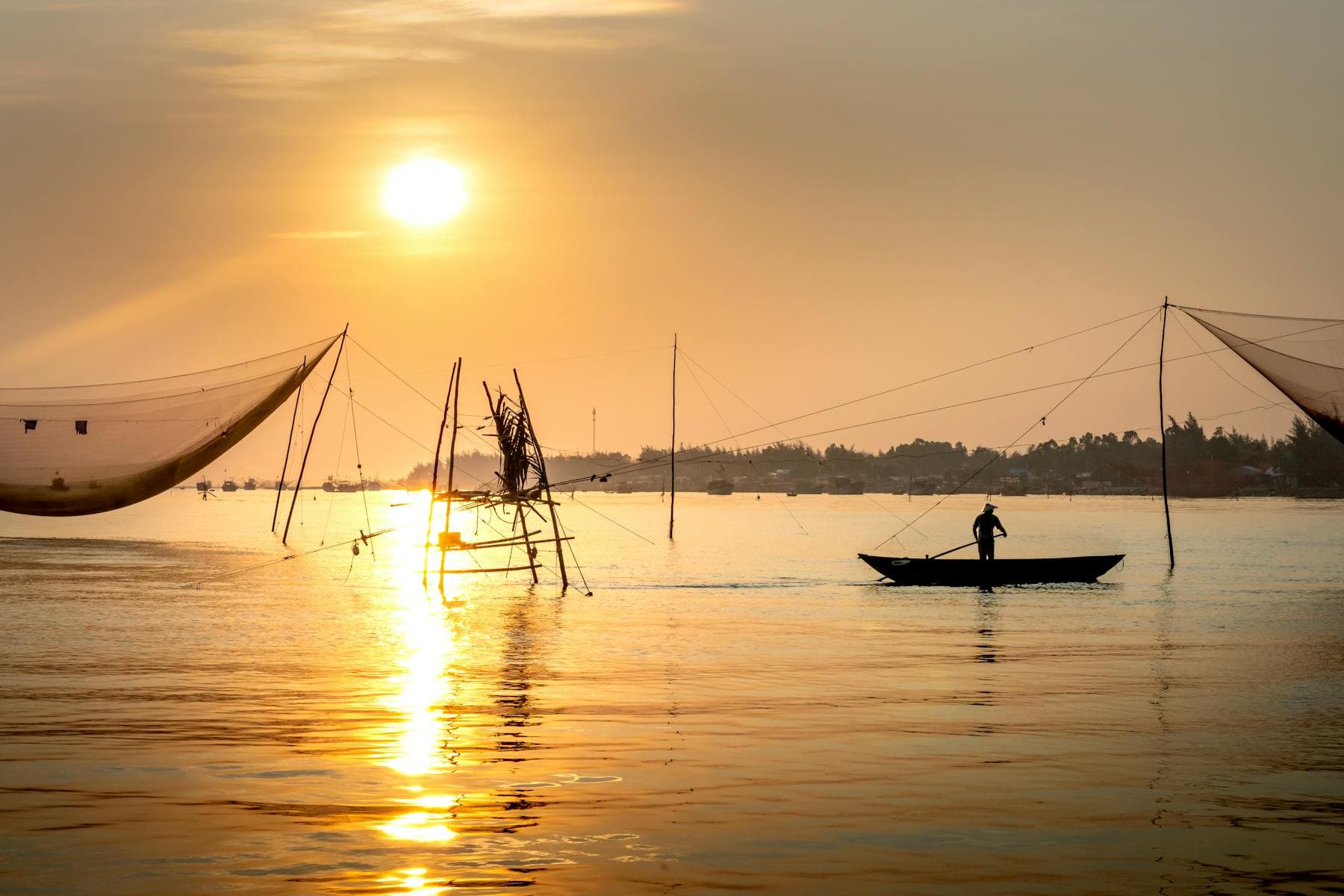
Option B : palmeraie de Cẩm Thanh avec barque-panier (thúng chai) — la vidéo TikTok que les voyageurs coréens voient. 90 minutes, 150 000 – 250 000 VND. Le matin (8 h – 10 h) est idéal pour eau calme et lumière douce.
Option C : plage d'An Bàng. À 5 km. Les voyageurs coréens qui n'ont fait que les plages de Hô-Chi-Minh ou Hà Nội sous-estiment souvent à quel point An Bàng est plus agréable. Déjeuner à The Deckhouse ou Soul Kitchen. Eau bonne pour la nage de mars à août.
La plupart de nos hôtes coréens en choisissent deux — typiquement Trà Quế le matin + An Bàng l'après-midi. Retour à l'hôtel à 16 h pour un soin spa. Dîner à l'hôtel.
Jour 4 — la journée lente
Vous organisez votre séjour ? Vérifiez les disponibilités de notre paisible hôtel au bord de la Thu Bồn. Voir les disponibilités →
Spa du matin : nous recommandons un Shirodhara (filet d'huile chaude sur le front, ayurvédique) à 10 h — soin particulièrement apprécié des voyageurs coréens qui arrivent avec des tensions cervico-scapulaires liées au travail. Durée 45 minutes, profondément apaisant. Enchaînez avec un massage Abhyanga à l'huile ou un bain aux herbes vietnamien (lá xông) pour 2 heures de spa.
Déjeuner : repas végétarien ou orienté bien-être à l'hôtel. L'approche centrée sur les herbes parle naturellement au palais coréen, familier des namul et des 무침 (légumes légèrement assaisonnés).
Après-midi : récupération du tailleur si commandé au jour 2, ou cours de cuisine si non fait au jour 3, ou balade lente à vélo le long du fleuve à Cẩm Nam. À 16 h, dernière marche en vieille ville pour les derniers achats et photos aux lanternes.
Soirée : un dîner plus calme — à ce stade, la plupart des hôtes préfèrent le restaurant de l'hôtel ou un petit café au bord du fleuve à Cẩm Nam plutôt que de retourner dans la foule. Coucher tôt, valise pour le départ.
Jour 5 — départ
Check-out à midi dans la plupart des établissements. Petit-déjeuner inclus. Voiture privée vers l'aéroport en 35-45 minutes ; partez 3-4 heures avant le vol pour absorber la densité de trafic 2026. Des chauffeurs coréanophones sont mobilisables dans la plupart des hôtels en bord de fleuve, 500 000 – 600 000 VND aller (incluant 2-3 arrêts photo aux Montagnes de Marbre ou Mỹ Khê en route, si votre vol est en fin d'après-midi).
Ce que les voyageurs coréens nous disent d'inclure
D'après les retours directs en 2024-2026, items qui montent constamment haut mais que les itinéraires anglophones manquent : profondeur de la culture café (le cà phê sữa đá vietnamien fait 2-3 fois la caféine d'un americano coréen et devient une histoire en soi — Phin Coffee ou The Espresso Station), la qualité spa compte plus que la quantité (un Shirodhara > trois petits massages), des cartes en coréen sont disponibles chez Morning Glory, The Cargo Club, et la plupart des restaurants d'hôtels (demandez à l'arrivée), et WhatsApp est le mode de contact préféré des établissements vietnamiens — KakaoTalk ne marche que pour les agences gérées en Corée.
Ce qu'il faut sauter
Items qui déçoivent régulièrement les voyageurs coréens : marches en vieille ville en plein soleil (11 h – 15 h), promenade en barque sur le fleuve principal (saturée, courte, surcoûteuse à 150 000 VND les 20 minutes), excursion combinée Montagnes de Marbre en moins de 8 heures (précipitée), bars de la vieille ville en fin de soirée (niveaux sonores élevés et scène plutôt routard, qui ne correspond pas aux préférences de la plupart des voyageurs coréens).
Note sur le timing 2026
La vague coréenne vers le Vietnam ne montre aucun signe de ralentissement. Les pics : mars-mai (vacances de printemps + chaleur) et septembre-novembre (fraîcheur post-mousson). Juin-août : voyages familiaux. Si vous pouvez ajuster, avril et octobre offrent le meilleur ratio météo/foule. Pour juillet-août, attendez-vous à une présence coréenne nettement plus dense à Hội An — appréciée par certains (communauté immédiate), évitée par d'autres.
Quatre nuits vous donnent le voyage que la plupart des voyageurs coréens regrettent de n'avoir pas planifié. La vieille ville à elle seule mérite une journée pleine ; le reste de Hội An en mérite trois autres.
Every room at Nghê Prana is designed around the science of sleep. Blackout curtains, nightly aromatherapy turndown, and riverside quiet — experience what real rest feels like.
Chambres au bord du fleuve, à dix minutes à vélo de la vieille ville. Une nuit entre Hué et Da Nang ou une semaine sans emploi du temps — votre chambre restera silencieuse.
Annulation gratuite · Réservation directe auprès de la famille propriétaire

 WhatsApp
 Zalo
Zalo