Mì Quảng : la véritable histoire des origines des nouilles de 400 ans du Quảng Nam (et pourquoi Phú Chiêm en est la source)
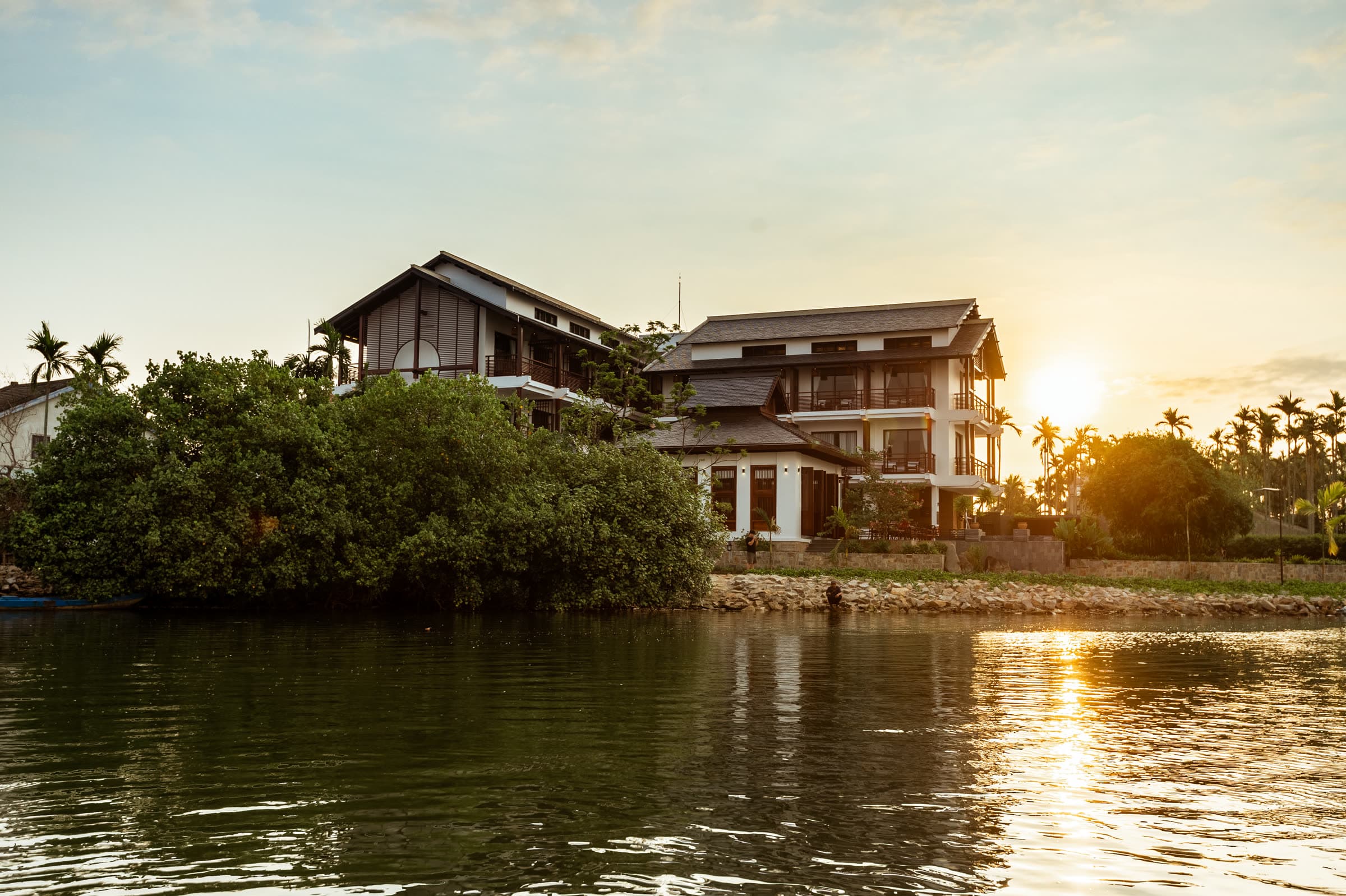
Le mì Quảng est désormais un plat classé au patrimoine national — reconnu par décret en août 2024 — et pourtant ses origines font encore l'objet d'un véritable débat parmi les chercheurs vietnamiens. Nous réunissons l'argument de l'assimilation cham défendu par le chercheur Tôn Thất Hướng et celui du commerce de l'Đàng Trong au XVIIe siècle avancé par Phùng Tấn Đông, puisés dans Báo Đà Nẵng et Sài Gòn Giải Phóng, et expliquons pourquoi le village de Phú Chiêm, à vingt minutes en amont de notre hôtel au bord de la rivière Thu Bồn, est considéré comme la source orthodoxe.
Le mì Quảng est la nouille du quotidien du centre du Vietnam — des nouilles de riz teintées de curcuma déposées dans un bol peu profond, à peine recouvertes d'un bouillon intense d'os et de crevettes, parachevées de cacahuètes, d'une galette de riz au sésame et d'une poignée d'herbes crues. Le 9 août 2024, le ministère de la Culture, des Sports et du Tourisme a signé la Décision 2327/QĐ-BVHTTDL inscrivant le « savoir populaire du mì Quảng » à la liste du patrimoine culturel immatériel national du Vietnam. Mais voici ce que presque aucune page en anglais ne vous dit : chez les historiens de la cuisine vietnamienne, l'origine du plat est encore ouvertement débattue. Cet article réunit ce débat à partir de ses sources vietnamiennes — principalement une enquête de 2022 dans Báo Đà Nẵng et des chroniques culinaires de Sài Gòn Giải Phóng — et explique pourquoi un village, Phú Chiêm, est considéré comme la source orthodoxe.
Qu'est-ce que le mì Quảng au juste ?
Le mì Quảng (littéralement « nouilles du Quảng », d'après la province de Quảng Nam) repose sur une large nouille de riz cuite à la vapeur en feuilles, badigeonnée d'huile et découpée en rubans. Contrairement au phở ou au bún, ce n'est pas une soupe : le bouillon, appelé nước nhưn (ou nước nhưng), est versé avec parcimonie de sorte qu'il s'accumule au fond plutôt que de submerger les nouilles. La version traditionnelle de Phú Chiêm s'articule autour de la crevette et du porc (tôm thịt), même s'il existe des variantes au poulet, au poisson, et même à la grenouille ou au canard. Les invariants sont le curcuma dans la nouille, les cacahuètes grillées et concassées, le bánh tráng mè (galette de riz grillée au sésame) brisé par-dessus, et une assiette à part d'herbes crues et de fleur de bananier. C'est un plat que l'on assemble à table, et non un plat qui arrive tout fait.
Mì Quảng is assembled, not submerged: rice noodles, herbs and broth come to the table separately. / Mì Quảng được trộn tại bàn, không chan ngập như bún hay phở.
D'où vient le mì Quảng — l'argument cham
La théorie des origines la plus citée revient au chercheur en culture du Quảng Nam Tôn Thất Hướng. Dans l'enquête de Báo Đà Nẵng « Đi tìm nguồn gốc mỳ Quảng » (« À la recherche des origines du mì Quảng »), il situe l'émergence du plat au milieu du XVIe siècle et la rattache à l'absorption de la culture culinaire cham par les colons vietnamiens descendant vers le sud, sur l'ancien territoire du Champa. Selon cette lecture, les habitants du Quảng ont emprunté et adapté des éléments de la cuisine cham — et le modèle nouilles-de-riz-et-curcuma qui allait devenir le mì Quảng a été sélectionné puis affiné à partir de cet échange, au fil de siècles de défrichage et de peuplement.
Comme le formule le chercheur Tôn Thất Hướng, les habitants du Quảng ont « tiếp nhận và chọn lọc » — reçu et sélectionné — des éléments de la cuisine cham pour créer un plat doté de son propre caractère : humble, populaire, sans prétention, et enraciné dans ce terroir depuis des centaines d'années.
L'argument cham importe parce qu'il rend le mì Quảng plus ancien que le célèbre port de commerce de Hội An et explique pourquoi le plat est si différent des nouilles d'influence chinoise du nord. Le curcuma, le recours au riz plutôt qu'au blé, et le format sec, assemblé à table, pointent tous vers le sud et l'intérieur des terres plutôt que vers la tradition sino-vietnamienne des nouilles.
L'argument concurrent : le commerce du XVIIe siècle et les seigneurs Nguyễn
Le second grand point de vue, associé au chercheur de Hội An Phùng Tấn Đông, date le mì Quảng plus tardivement — de l'époque où les seigneurs Nguyễn consolidaient l'Đàng Trong (le domaine méridional) à partir du début du XVIIe siècle. Selon ce récit, le plat s'est cristallisé lorsque le Quảng Nam, ancré sur le port international de Hội An (Faifo), commerçait activement avec le reste de l'Asie et l'Occident. L'argument s'appuie sur les ingrédients et la technique : un bol stratifié et modulable, capable d'absorber de nouvelles protéines et de nouveaux assaisonnements, est exactement ce que l'on attend d'une région marchande prospère et cosmopolite plutôt que d'une société agraire repliée sur elle-même.
Les deux théories sont moins éloignées qu'il n'y paraît. Toutes deux situent fermement le plat dans le Quảng Nam ; toutes deux le tiennent pour le produit d'un empilement culturel plutôt que d'une invention unique ; toutes deux s'accordent à lui reconnaître quelque quatre siècles, raison pour laquelle la presse vietnamienne l'appelle couramment « món 400 năm » — le plat de 400 ans. Là où elles diffèrent, c'est dans l'accent : Tôn Thất Hướng met en avant le substrat cham, Phùng Tấn Đông l'essor commercial de l'Đàng Trong. Pour un visiteur, le résumé honnête est que le mì Quảng est un original du Quảng Nam, assemblé sur quatre siècles à partir d'un socle cham et d'une économie de port de commerce.
Pourquoi Phú Chiêm est-il considéré comme la source ?
S'il existe un bol orthodoxe, il vient de Phú Chiêm — un hameau riverain de l'ancienne zone d'Điện Bàn, sur la rive nord de la Thu Bồn entre Hội An et Đà Nẵng. « Mì Quảng Phú Chiêm » est une expression qui fait autorité dans tout le centre du Vietnam, à la manière d'une appellation contrôlée ailleurs. Le style de Phú Chiêm se définit par sa retenue : un bouillon de crevette et de porc réduit jusqu'à devenir presque une sauce, des nouilles qui ne sont pas teintées d'un jaune agressif, et l'exigence que le bol soit mangé à l'instant même où la galette y est ajoutée. Les chroniques culinaires de Sài Gòn Giải Phóng comme de VnExpress désignent toutes deux Phú Chiêm comme référence, et des cuisiniers amateurs partout au Vietnam consignent leurs tentatives sous le nom de « mì Quảng Phú Chiêm » lorsqu'ils veulent signaler l'orthodoxie.
Le décret de classement décrit lui-même le savoir protégé comme la chaîne entière — de la culture et de la sélection du riz à la confection des feuilles de nouilles, jusqu'aux assaisonnements et au bouillon. Ce cadrage est délibéré : il protège un procédé et un système de savoirs régional, et non la recette d'un seul restaurant. C'est aussi pourquoi l'on trouve plus de 145 variantes locales à travers le Quảng Nam — le poulet dans une commune, le poisson dans un village de pêcheurs, la grenouille à l'intérieur des terres — toutes restant reconnaissables comme mì Quảng.
Vous organisez votre séjour ? Vérifiez les disponibilités de notre paisible hôtel au bord de la Thu Bồn. Voir les disponibilités →
Mì Quảng is field and market food — eaten at breakfast and lunch, rarely at night. / Mì Quảng là món ăn sáng và trưa của người Quảng, hiếm khi ăn vào buổi tối.
Comment manger le vrai mì Quảng près de Hội An
Depuis notre hôtel au bord de la Thu Bồn, le bol orthodoxe est tout proche. Phú Chiêm se trouve à environ vingt minutes en amont vers Đà Nẵng ; le mì Quảng du matin que l'on y vend depuis des paniers et de petites tables devant les maisons est la version à l'aune de laquelle tout le reste se mesure. À Hội An même, cherchez les échoppes qui servent le bol assemblé et à peine humide, et non une soupe — c'est le premier indice d'un cuisinier qui a appris à la manière du Quảng. Quelques repères utiles : le bouillon doit goûter la crevette et l'os, non le bouillon-cube ; les cacahuètes doivent être fraîchement concassées et croquer sous la dent ; et la galette de sésame doit y être brisée par vos soins, à table, afin qu'elle reste croustillante.
Pour les voyageurs qui veulent le plat dans son contexte, le mì Quảng s'accorde naturellement à une matinée tranquille au bord de la rivière avant que la vieille ville ne se remplisse. C'est un mets du petit-déjeuner et du déjeuner dans le Quảng Nam, rarement consommé le soir, et qu'il vaut mieux faire suivre d'un robuste café vietnamien. Si vous préférez apprendre à monter le bol vous-même, la nouille au curcuma et la technique de l'assemblage-plutôt-que-de-l'immersion sont exactement le genre de choses qu'un bon cours de cuisine à Hội An devrait enseigner — et un test utile pour savoir si le cours enseigne une vraie cuisine régionale ou un composite touristique.
Phú Chiêm sits about twenty minutes upriver from Hội An on the Thu Bồn. / Phú Chiêm cách Hội An khoảng hai mươi phút ngược dòng Thu Bồn.
Une note sur le bol de l'APEC
Un détail que les sources vietnamiennes évoquent avec une fierté discrète : lors du sommet de l'APEC 2017 à Đà Nẵng, le mì Quảng figurait parmi les plats servis aux chefs d'État en visite. Pour une nouille qui a commencé comme nourriture des champs — bon marché, rapide, mangée dans des paniers au bord de la route — c'est une trajectoire remarquable, et cela explique en partie pourquoi le classement au patrimoine de 2024 a résonné comme il l'a fait dans la presse régionale. Le plat n'a jamais été grandiose. Son autorité tient à sa continuité ininterrompue : quatre siècles du même bol, dans la même vallée, toujours préparé de la même façon à Phú Chiêm.
À propos de cet article
Cet article réunit le débat sur les origines du mì Quảng en langue vietnamienne — principalement l'enquête de 2022 de Báo Đà Nẵng citant les chercheurs Tôn Thất Hướng et Phùng Tấn Đông, les chroniques culinaires de Sài Gòn Giải Phóng, et le décret de classement au patrimoine national de 2024 tel que rapporté par Tuổi Trẻ, Báo Chính phủ et le portail provincial du Quảng Nam. Les notes pratiques sur la dégustation s'appuient sur des visites de première main à Phú Chiêm et Hội An, depuis notre hôtel au bord de la rivière Thu Bồn.
Sài Gòn Giải Phóng (2023). Nét văn hóa ẩm thực đặc sắc của Quảng Nam qua tô mì Quảng. Báo Sài Gòn Giải Phóng. View source
VnExpress Du lịch (2025). Mì Quảng - món 400 năm mang đậm tình quê. VnExpress. View source
Báo Chính phủ (2024). Mì Quảng được công nhận là di sản văn hóa phi vật thể quốc gia. Báo Điện tử Chính phủ. View source
Tuổi Trẻ (2024). Mì Quảng là di sản văn hóa phi vật thể quốc gia. Báo Tuổi Trẻ. View source
Cổng thông tin điện tử tỉnh Quảng Nam (2024). Mì Quảng được công nhận là di sản văn hóa phi vật thể quốc gia. Quảng Nam Provincial Portal (quangnam.gov.vn). View source
Bộ Văn hóa, Thể thao và Du lịch (2024). Quyết định số 2327/QĐ-BVHTTDL công bố Danh mục di sản văn hóa phi vật thể quốc gia (Tri thức dân gian Mì Quảng tỉnh Quảng Nam). Ministry of Culture, Sports and Tourism decree.
VietnamNet (2024). Phở Nam Định và mì Quảng trở thành Di sản văn hóa phi vật thể quốc gia. VietnamNet. View source
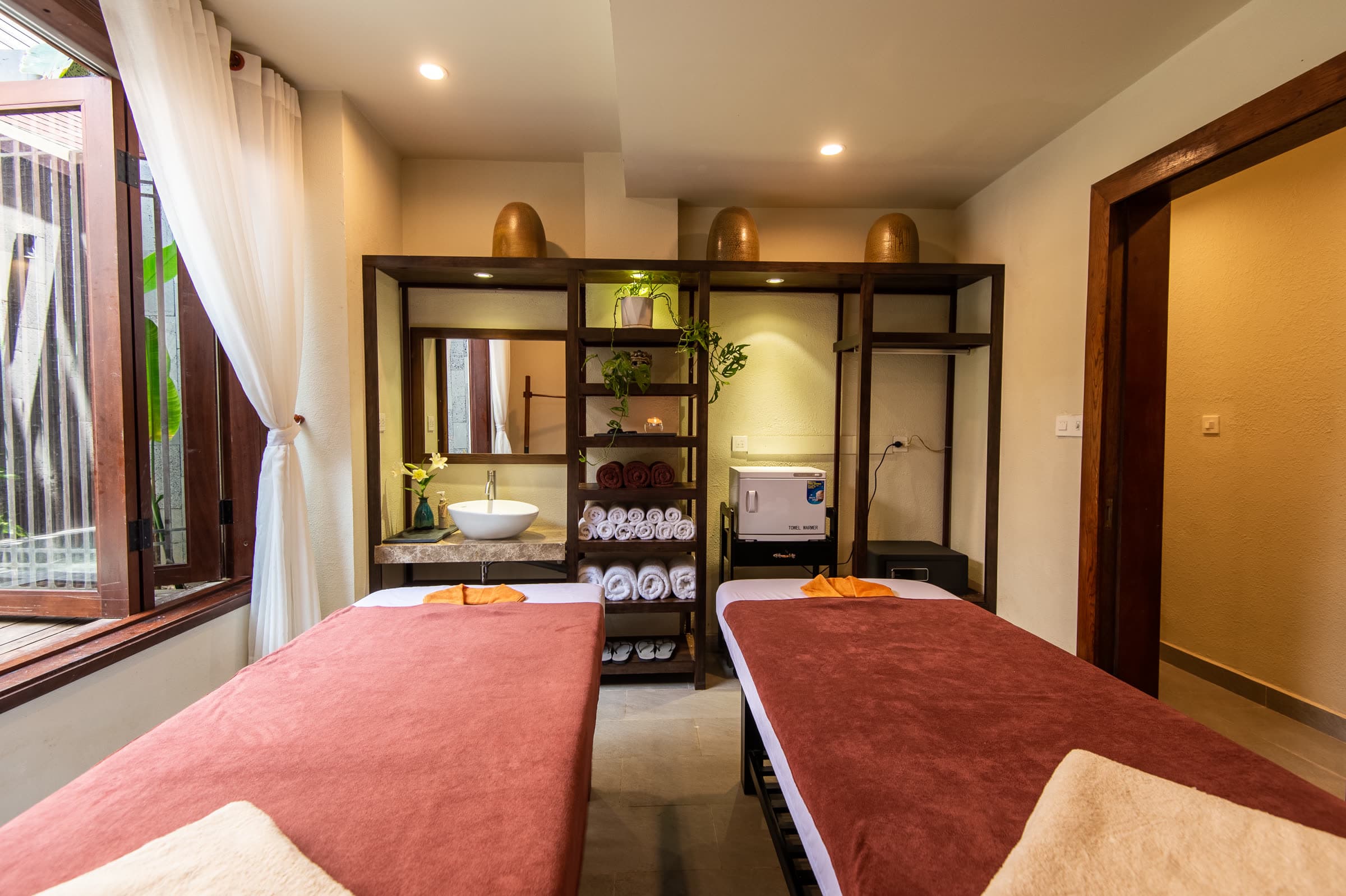
Every room at Nghê Prana is designed around the science of sleep. Blackout curtains, nightly aromatherapy turndown, and riverside quiet — experience what real rest feels like.
Chambres au bord du fleuve, à dix minutes à vélo de la vieille ville. Une nuit entre Hué et Da Nang ou une semaine sans emploi du temps — votre chambre restera silencieuse.
Annulation gratuite · Réservation directe auprès de la famille propriétaire


 WhatsApp
 Zalo
Zalo