Les hôtels les plus calmes de Hội An : où vous dormirez vraiment
Les endroits les plus calmes pour dormir à Hội An sont les villages riverains à 2-4 km de la vieille ville — An Hội, Cẩm Nam, Cẩm Thanh. Niveaux sonores nocturnes 35-42 dB(A), contre 55-65 dB(A) en vieille ville.
Les endroits les plus calmes pour dormir à Hội An sont les villages riverains à 2 à 4 km de la vieille ville — An Hội, Cẩm Nam, Cẩm Thanh. Les niveaux sonores nocturnes y tournent entre 35 et 42 dB(A), contre 55 à 65 dB(A) dans les rues à lanternes du centre. L'écart paraît mince sur le papier, il est énorme dans le corps. Les Lignes directrices de bruit environnemental 2018 de l'OMS placent le seuil de perturbation mesurable du sommeil à 40 dB(A) d'exposition nocturne moyenne — au-dessus, fragmentation du sommeil, élévation du cortisol et tension cardiovasculaire commencent à s'accumuler. La vieille ville franchit ce seuil chaque nuit jusque vers 23 h. La rive, rarement. Si vous venez à Hội An pour manger, faire les boutiques, photographier les lanternes, logez en vieille ville. Si vous venez pour dormir, non.
Pourquoi la vieille ville est plus bruyante qu'on ne le pense
La vieille ville a été conçue il y a quatre siècles pour un trafic piéton lent, dans des ruelles de pierre étroites. Elle n'a jamais été pensée pour 4,6 millions de visiteurs annuels, 1 200 restaurants et tailleurs licenciés, et le trafic moto presque continu qui les alimente. Entre 18 h et 22 h la plupart des soirs, Nguyễn Thái Học, Trần Phú et Bạch Đằng restent à 62-68 dB(A) — à peu près le volume d'une conversation normale serrée contre l'oreille. La musique live déborde des restaurants. Les marchands appellent. Les motos tournent au ralenti. Le son ne se dissipe pas en sortant de la ruelle ; il se réfléchit sur les murs jaunes serrés et reste en suspension. À 23 h, après la fermeture du marché, les niveaux mesurés à l'intérieur des guesthouses restent à 48-54 dB(A) — bien au-dessus du seuil OMS.
Ce n'est pas un problème spécifique à Hội An. C'est la conséquence universelle de superposer le tourisme moderne à un plan urbain médiéval. La même dynamique joue à Venise, Gion à Kyoto, dans la vieille ville de Prague. Ce qui distingue Hội An, c'est la proximité de l'alternative calme — souvent à dix minutes de vélo.
Une revue 2014 du Lancet a trouvé que l'exposition chronique au bruit nocturne supérieur à 40 dB(A) est associée à une hausse de 17 % du risque cardiovasculaire, médiée principalement par la fragmentation du sommeil et l'élévation du cortisol nocturne.
Ce que le bruit fait pendant que vous dormez
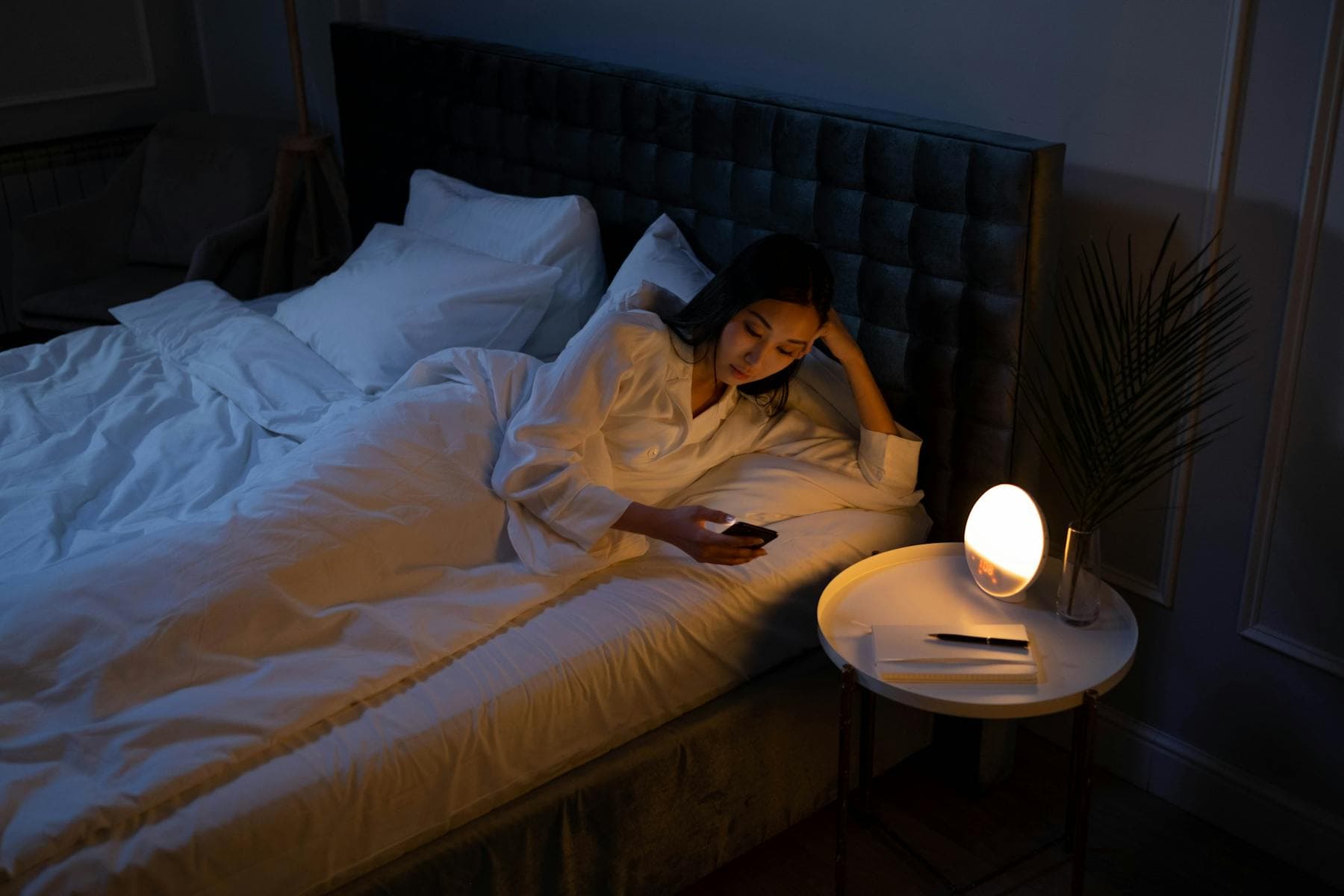
Votre système auditif ne s'éteint pas avec la conscience. Le thalamus — la porte sensorielle du cerveau — surveille le son entrant toute la nuit, et lorsqu'un bruit dépasse d'environ 35 dB(A) la base, il déclenche un micro-éveil. Vous ne vous en souviendrez pas. Vous ne vous réveillerez peut-être même pas tout à fait. Mais l'activité corticale glisse du sommeil profond vers le stade 2, le rythme cardiaque accélère de 5 à 10 battements par minute, et la libération de cortisol est perturbée. Une revue 2007 dans Sleep Medicine Reviews a documenté que le bruit environnemental réduit fiablement REM et sommeil profond de manière dose-dépendante — plus la nuit est bruyante, moins le sommeil répare, même quand la durée totale paraît inchangée.
D'où la possibilité de « dormir huit heures » dans un hôtel bruyant et de se réveiller épuisé. Durée n'est pas qualité. C'est l'architecture qui compte — la proportion de stade 2, sommeil profond, REM cyclée par le corps — et le bruit la perturbe avant même que vous ne le remarquiez.
Une étude 2018 dans l'European Heart Journal a relié l'exposition au bruit du trafic à une hausse de 6 % de la mortalité toutes causes par tranche de 10 dB(A) au-dessus, indépendamment de la pollution de l'air et des facteurs socio-économiques.
Vieille ville contre rive : comparaison concrète
Marchez dix minutes au sud du Pont japonais, traversez la passerelle An Hội, dépassez le marché de nuit. Cinq minutes de plus dans une ruelle étroite et le son de la ville s'évanouit. Le fleuve prend la suite. Grenouilles au crépuscule. Coq lointain. Faible vrombissement d'une barque. Le son ambiant mesuré ici — côté Cẩm Nam, ou plus à l'est vers les estuaires de palmiers nipa de Cẩm Thanh — se situe à 38-42 dB(A) le soir et tombe sous 35 dB(A) après 22 h. Sous le seuil OMS. En termes acoustiques, un autre pays.
La différence ne tient pas qu'à l'absence d'activité humaine. Elle tient aussi à la géographie. La vieille ville est un bol de pierre dense qui piège et réfléchit le son. Les villages riverains sont ouverts, peu denses, tamponnés par l'eau et la végétation — autant de surfaces qui absorbent plutôt que de réfléchir. L'eau, en particulier, agit comme un puits acoustique : les fréquences au-dessus de 500 Hz sont fortement atténuées au passage d'une surface fluviale. C'est pourquoi une chambre face au Thu Bồn sera presque toujours plus calme qu'une chambre équivalente face à une rue à la même distance.
Cinq questions à poser avant de réserver un hôtel calme à Hội An
Vous organisez votre séjour ? Vérifiez les disponibilités de notre paisible hôtel au bord de la Thu Bồn. Voir les disponibilités →
Les annonces hôtelières sont peu fiables sur ce point. « Paisible » et « tranquille » figurent dans presque chaque description, qu'il s'agisse d'une quatre-voies ou d'une rizière. Avant de réserver, posez ces cinq questions précises — idéalement par e-mail.
Premièrement : quelle est la distance à Nguyễn Thái Học ou Bạch Đằng ? À moins de 500 m, attendez le bruit des restaurants jusqu'au moins 23 h. Au-delà de 2 km, le profil sonore change entièrement. Deuxièmement : la chambre donne sur la route, le fleuve, ou un jardin ? Côté fleuve ou jardin, on est souvent 10 à 15 dB(A) plus bas que côté rue, dans le même hôtel. Troisièmement : rideaux occultants ? Vitrage double ? Le double vitrage seul réduit le bruit entrant de 20 à 30 dB(A). Quatrièmement : un restaurant, un pool bar, une musique de lobby tournent-ils après 21 h ? Le bruit interne est un meilleur prédicteur de mauvais sommeil que le bruit externe. Cinquièmement : l'hôtel accueille-t-il des événements — mariages, karaoké, gros groupes ? Si oui, demandez si vos dates recoupent.
Si la réception répond par une assurance générique au lieu d'une réponse précise, prenez-le pour un signal d'alarme. Les établissements qui connaissent leur profil sonore vous le diront.
Ce qu'un hôtel orienté sommeil fait différemment
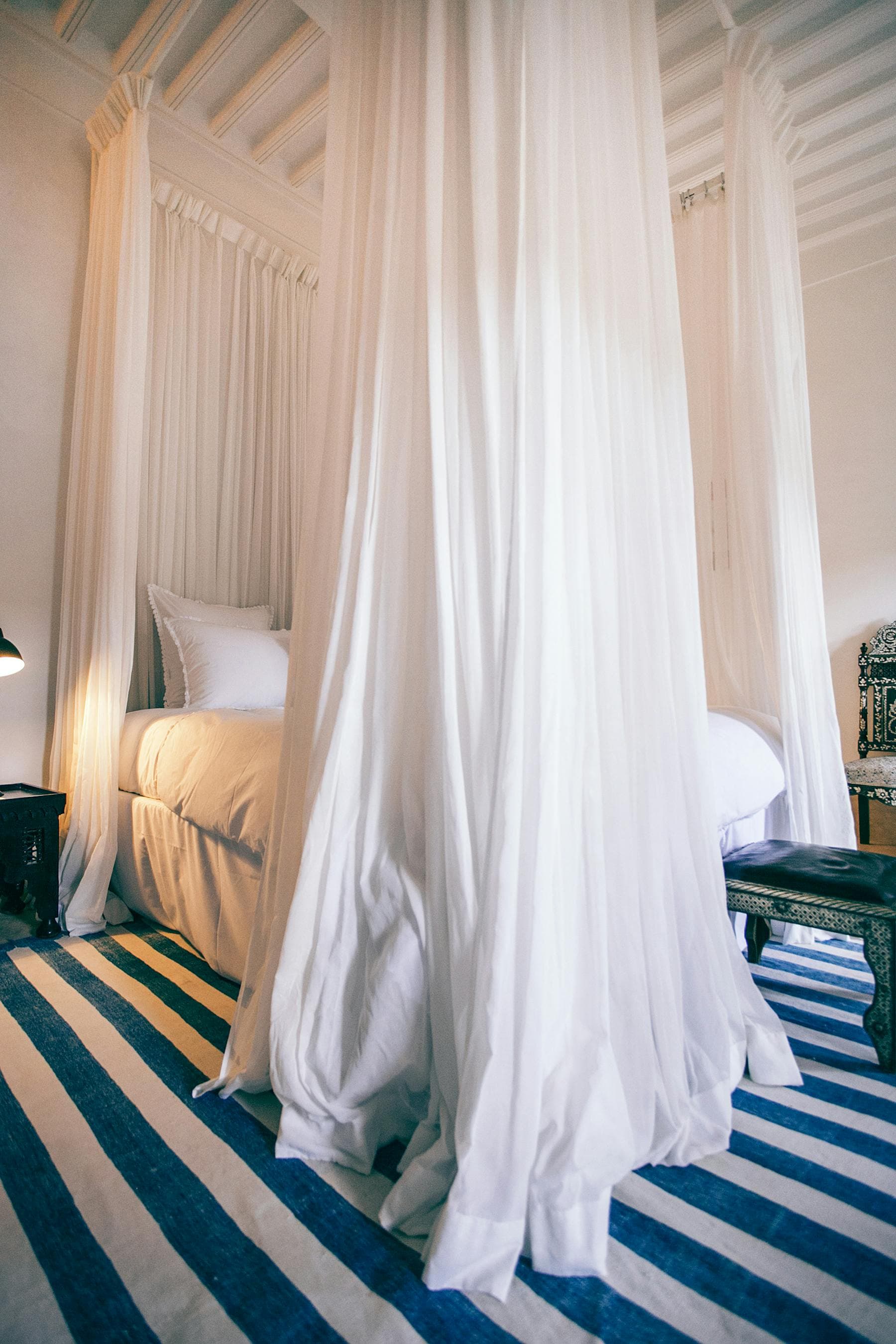
Les hôtels qui prennent le sommeil au sérieux partagent quelques choix de conception non évidents. Chambres éloignées des murs côté rue, même quand cela complique le plan. Rideaux textiles lourds (pas seulement des stores), parce que le tissu absorbe les médiums que le verre et le bois réfléchissent. Pas de pool bar, pas de musique de lobby tardive. Turndown demandé avant 20 h pour que les pas du personnel n'imprègnent pas les couloirs durant le premier cycle de sommeil. Et l'attention aux sources sonores en chambre — un climatiseur bon marché peut ajouter 45 dB(A) de bruit continu, annulant le calme que vous êtes venu chercher.
Nghê Prana a été conçu autour de ces choix exprès. L'établissement est à 3,2 km du Pont japonais, sur la rive tranquille du Thu Bồn, où le bruit ambiant moyen est de 39 dB(A). Chaque chambre donne sur le fleuve ou le jardin intérieur ; aucune sur la route. Vitrage double. Rideaux occultants doublés, non un simple voile. Climatisation spécifiée à 28 dB(A). Pas de pool bar, pas de musique de lobby, turndown achevé avant 20 h. Rien de cela ne se voit en photo. Tout cela fait la différence entre huit heures couché et huit heures endormi.
Où chercher si vous ne logez pas chez nous
Pour les voyageurs qui veulent rester central et acceptent l'arbitrage, les poches plus calmes de la vieille ville sont les ruelles au nord de Trần Hưng Đạo et à l'ouest de Hai Bà Trưng — loin de la berge et du marché. Pour ceux qui veulent du calme à pied, l'île d'An Hội (au sud de la passerelle) est mesurablement plus calme que la rive nord, à dix minutes des lanternes. Pour le vrai silence — nuits à 35 dB(A), pas de circulation, étoiles — visez Cẩm Thanh, Cẩm Kim ou la zone d'An Bàng, à 3 à 5 km, accessibles en navette ou en taxi court.
La vieille ville sera toujours là le matin. C'est un endroit remarquable où passer la journée. Mais ce n'est pas un endroit où passer la nuit si vous êtes fatigué, décalé, ou en quête de récupération. La science est sans ambiguïté. Logez là où il est assez calme pour que le corps fasse son travail, et la vieille ville devient un lieu que vous visitez, plutôt qu'un lieu qui vous visite à 2 h par une fenêtre fine.
Every room at Nghê Prana is designed around the science of sleep. Blackout curtains, nightly aromatherapy turndown, and riverside quiet — experience what real rest feels like.
Chambres au bord du fleuve, à dix minutes à vélo de la vieille ville. Une nuit entre Hué et Da Nang ou une semaine sans emploi du temps — votre chambre restera silencieuse.
Annulation gratuite · Réservation directe auprès de la famille propriétaire


 WhatsApp
 Zalo
Zalo