Lớp làm đèn lồng Hội An: Cách tự tay làm đèn lồng lụa (2026)
Một nửa số đèn lồng lụa lung linh trên Phố cổ Hội An được làm thủ công chỉ cách đó vài con phố, trên khung tre chẻ gần như không đổi suốt một trăm năm. Lớp làm đèn lồng là một trong số ít hoạt động ở Hội An mà bạn ra về với chính món đồ ấy — gập gọn, dễ đóng gói và là của bạn. Đây là cách chiếc đèn được dựng nên thật sự, một lớp học tử tế tốn bao nhiêu và mất bao lâu, những con phố nghề làm nên thủ công này, và cách chọn một lớp dạy bạn làm khung tre thay vì chỉ đưa sẵn linh kiện để dán.
Những chiếc đèn lồng lụa khiến Hội An trông đúng như trong mọi tấm ảnh không phải là đồ trang trí chở về từng thùng. Phần lớn vẫn được làm thủ công ngay trong lòng phố — đèn lồng Hội An, dựng trên khung tre chẻ với lụa hoặc vải bông căng và dán lên những nan. Lớp làm đèn lồng là hoạt động hiếm hoi ở Hội An mà món quà lưu niệm chính là bản thân hoạt động: bạn dành một hai giờ để dựng nên nó, rồi cầm nó bước ra. Vì những chiếc đèn tốt gập phẳng như chiếc ô, nó có thể về nhà trong hành lý của bạn.
Cẩm nang này là phiên bản chúng tôi dành cho khách hỏi tại quầy lễ tân. Nó nói về cách chiếc đèn thật sự được dựng nên (phần tách biệt một lớp học thực thụ với một buổi dán-và-dính), một lớp học tử tế tốn bao nhiêu và kéo dài bao lâu, nghề này xuất phát từ đâu trong phố, và cách chọn lớp. Các điểm tham chiếu xuyên suốt đều là nguồn Việt: truyền thống đèn lồng gắn với những con phố buôn bán xưa của Hội An, và những người thợ vẫn còn theo nghề.
Đèn lồng Hội An rốt cuộc là gì?
Đèn lồng Hội An cổ điển là đèn lồng lụa khung tre. Người thợ chẻ tre thành những nan mỏng, dẻo, ngâm nước rồi uốn thành khung — dáng củ tỏi, hình cầu hay hình thoi quen thuộc — buộc nan ở đầu và đáy để cả chiếc đèn gập phẳng rồi bật mở lại được. Lên khung ấy, họ căng vải: theo truyền thống là lụa, ngày nay thường là lụa gấm Jacquard, đôi khi là vải bông. Vải được dán theo từng nan, vuốt phẳng để không còn nếp nhăn khi thắp đèn, và hoàn thiện bằng một chiếc tua. Khung gập là phần khéo léo nhất và là lý do chiếc đèn theo bạn đi xa đến vậy.
Đây là một món khác hẳn với hoa đăng — chiếc đèn nến giấy nhỏ thả trôi trên sông trong lễ hội đèn lồng hằng tháng. Nếu bạn muốn biết ngày tháng và diễn biến của lễ ấy, hãy xem Lịch Lễ hội Đèn lồng Hội An 2026 của chúng tôi. Lớp học làm chiếc đèn treo bền, không phải chiếc đèn thả nước.
Trong một lớp làm đèn lồng, bạn thực sự làm gì?
Một lớp học đúng nghĩa dẫn bạn qua trọn vẹn trình tự thật. Bạn bắt đầu với tre: chọn những nan đã chẻ sẵn (việc cắt và chẻ tre thô thường được làm trước — chậm và sắc) rồi lắp chúng thành khung, tra nan vào trục trên và trục dưới để dáng đèn mở ra khép lại. Rồi bạn chọn vải và màu, căng lên khung, dán từng mảng một, gấp lụa gọn gàng ở mỗi nan. Bạn tỉa mép, gắn tua, và chiếc đèn hoàn thành. Hầu hết các lớp kết thúc bằng việc thắp sáng đèn để bạn ngắm chính tác phẩm của mình bừng lên, và nhiều lớp còn kèm phần thưởng trà Việt trong lúc chờ keo khô.
Điều đáng biết trước khi đặt lớp: một số "lớp" bỏ qua hoàn toàn phần khung và đưa cho bạn bộ khung tre dựng sẵn để bạn chỉ việc dán vải. Cách ấy nhanh hơn và ổn với trẻ nhỏ, nhưng gần với lắp ráp hơn là làm nghề. Nếu muốn thật sự học cách chiếc đèn được dựng nên, hãy hỏi một câu khi đặt lớp — "chúng tôi tự dựng khung tre hay khung đã làm sẵn?" Các xưởng tử tế sẽ nói thẳng, và những xưởng tốt hơn sẽ dựng khung cùng bạn.
Mất bao lâu, và tốn bao nhiêu?
Hầu hết các lớp kéo dài khoảng một giờ cho chiếc đèn gập tiêu chuẩn 20 phân; một số kéo dài 90 phút đến hai giờ cho những tác phẩm lớn hơn hoặc cầu kỳ hơn. Giá khá phải chăng — các xưởng thường tính từ khoảng 120.000 VND (chừng 8 USD) mỗi người lên tới khoảng 10–12 USD, thường bao gồm toàn bộ vật liệu (khung tre, lụa, keo, tua, và sơn nếu bạn muốn trang trí). Một lớp học hoàn toàn vừa vặn trong nửa ngày và để dành cho bạn phần còn lại của ngày.
Vài lưu ý thực tế từ việc hướng dẫn khách qua trải nghiệm này. Hãy chọn khung giờ cuối chiều nếu được: bạn hoàn thành chiếc đèn vừa đúng lúc đèn Phố cổ bật lên, là thời khắc đẹp nhất để mang nó đi bộ về. Chiếc đèn hoàn thành gập phẳng nên sống sót trong vali — nhưng hãy xin chiếc túi đựng nhỏ nếu xưởng có, vì tua hay bị rối. Và đây là một trong những hoạt động hay nhất cho mùa mưa: khi sông dâng cao và phố ướt vào tháng 10, tháng 11, một giờ trong nhà bên tre và lụa còn hơn ngồi chờ cơn mưa tạnh.
Nghề này xuất phát từ đâu?
Nghề làm đèn lồng ở Hội An gắn với những con phố buôn bán xưa của phố cổ, nơi nghề tụ lại dọc khu vực nay là đường Nguyễn Thái Học và các dãy phố lân cận — chính những phố thương nhân đã làm nên cốt cách của thương cảng khi Hội An (Faifo) còn là một hải cảng nhộn nhịp trên sông Thu Bồn. Đèn lồng như món biểu trưng của Hội An ra đời muộn hơn chính phố thị: nó lớn lên cùng cuộc phục hưng khu phố di sản cuối thế kỷ 20 và lễ hội tắt đèn hằng tháng từ năm 1998, biến một nghề thủ công gia đình thành bản sắc thị giác của phố. Còn phương pháp tre-và-lụa thì là kỹ năng gia truyền lâu đời hơn — uốn khung, căng vải, treo đèn trước cửa — và đó là phần mà một lớp học kết nối bạn vào.
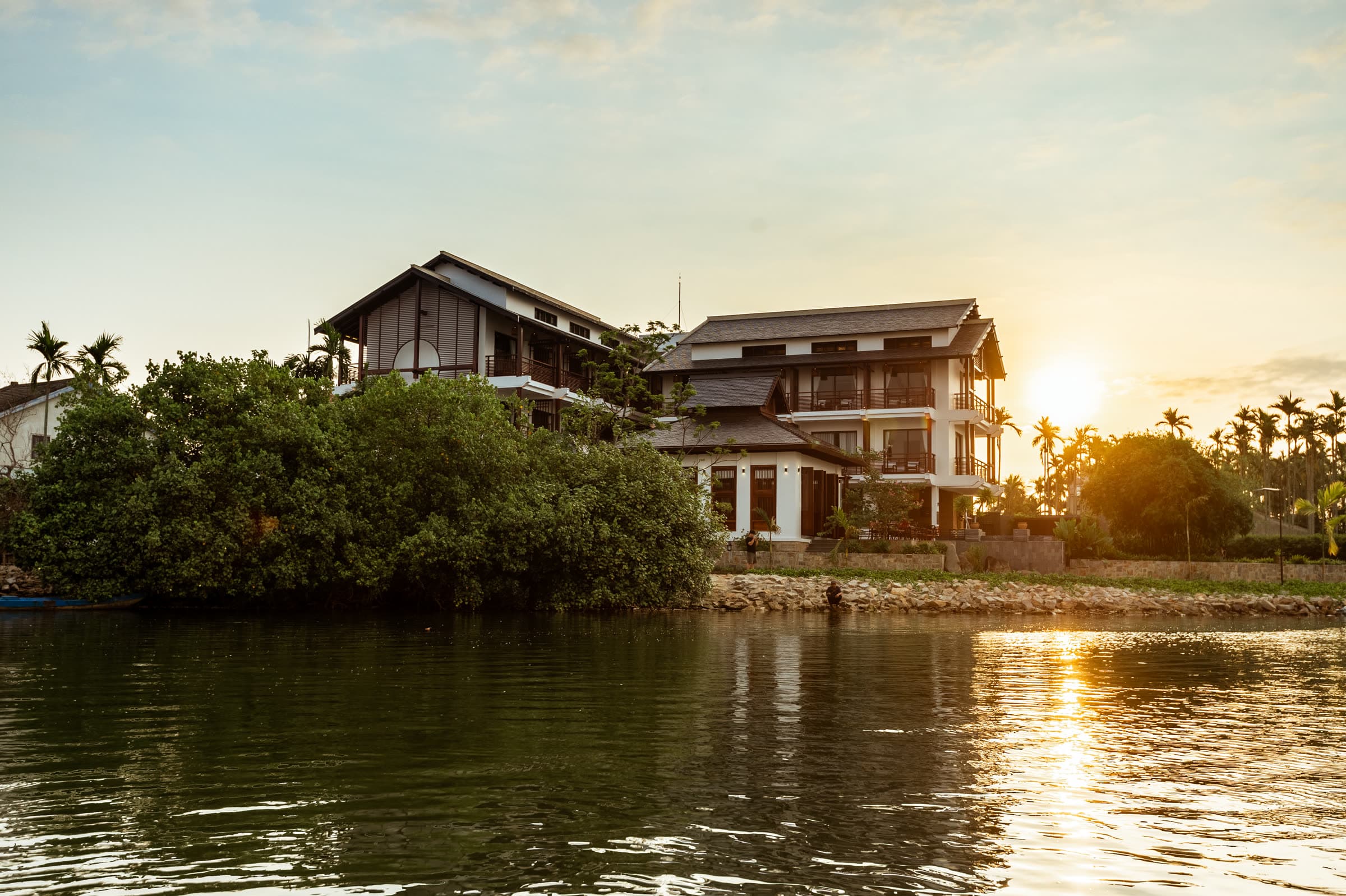
Đứng ở chính vị trí bên sông của mình giúp lý giải vì sao chiếc đèn lồng quan trọng riêng với nơi này. Hội An là phố của Thu Bồn: buôn bán, ánh sáng trên nước, đèn lồng phản chiếu trên dòng nước về đêm. Đèn lồng không phải món lưu niệm Việt Nam chung chung — nó là món đồ mà thương nhân, lễ hội và người thợ của phố bên sông cùng nhau tạo nên. Tự tay làm một chiếc là cách gần nhất mà một chuyến ghé thăm ngắn ngủi chạm tới dòng mạch ấy.
Cách chọn lớp (và xếp nó vào chuyến đi Hội An)
Một danh sách ngắn cần kiểm. Hỏi xem bạn tự dựng khung tre hay chỉ dán vải (dựng khung = học được nhiều hơn). Xác nhận sĩ số lớp — nhóm nhỏ thì người thợ mới thật sự sửa từng nếp gấp cho bạn. Kiểm thời lượng có khớp ý bạn không (một giờ cho một món kỷ niệm, hai giờ cho một bài học thực thụ). Xác nhận vật liệu đã bao gồm để bạn không bị chào bán thêm giữa giờ. Và chọn khung giờ trong ngày: buổi chiều, để bạn ra về vừa lúc đèn lồng bừng sáng.
Đang lên kế hoạch cho chuyến đi? Xem ngày trống tại khách sạn yên tĩnh bên sông Thu Bồn của chúng tôi. Kiểm tra phòng trống →
Nó khớp gọn ghẽ vào một ngày Hội An thong thả. Buổi sáng trên sông hoặc ra biển, những giờ nóng nhất ở trong xưởng dựng đèn của bạn, và buổi tối dạo Phố cổ — lý tưởng nhất là vào một trong những đêm hội 14 âm lịch, khi phố chìm vào bóng tối và những chiếc đèn lồng bạn vừa học làm bỗng là nguồn sáng duy nhất của phố. Từ một chốn nghỉ bên sông Thu Bồn, đó là một nhịp dễ dàng: ra xưởng, về bên sông, vào Phố cổ khi trời tối, rồi về nhà men theo bờ sông yên ả.
Các câu hỏi thường gặp
Một lớp làm đèn lồng ở Hội An tốn bao nhiêu?
Hầu hết các xưởng tính từ khoảng 120.000 VND (chừng 8 USD) lên tới 10–12 USD mỗi người, thường bao gồm toàn bộ vật liệu — khung tre, lụa, keo và tua.
Một lớp làm đèn lồng Hội An mất bao lâu?
Khoảng một giờ cho chiếc đèn gập tiêu chuẩn 20 phân; một số lớp kéo dài 90 phút đến hai giờ cho những chiếc đèn lớn hơn hoặc cầu kỳ hơn.
Có thể mang đèn lên máy bay về nhà không?
Được. Chiếc đèn lồng Hội An truyền thống dựng trên khung tre gập được và gập phẳng, nên dễ dàng xếp vào vali. Hãy xin một chiếc túi đựng để tua khỏi rối.
Lớp làm đèn lồng có hợp với trẻ em không?
Có — hầu hết các xưởng đón trẻ em, và những lớp dùng khung tre lắp sẵn (để trẻ chủ yếu dán và trang trí lụa) rất hợp với các bé nhỏ. Nếu bạn muốn tự dựng khung, hãy hỏi trước khi đặt.
Đèn làm bằng lụa hay giấy?
Chiếc đèn treo bền làm bằng tre và lụa (thường là lụa gấm Jacquard) hoặc vải bông. Chiếc đèn giấy nhỏ thả trôi trên sông trong lễ hội, tức hoa đăng, làm bằng giấy với một ngọn nến — là một món khác.
Lớp làm đèn lồng khác lễ hội đèn lồng ở chỗ nào?
Lớp học là một buổi làm nghề ban ngày, nơi bạn dựng một chiếc đèn lồng lụa để giữ. Lễ hội đèn lồng (Đêm Rằm Phố Cổ) là sự kiện hằng tháng vào buổi tối ngày 14 âm lịch, khi Phố cổ tắt đèn và thả những chiếc đèn giấy trên sông.
Thời điểm nào trong ngày là tốt nhất để làm lớp đèn lồng?
Cuối chiều — bạn hoàn thành chiếc đèn vừa đúng lúc đèn Phố cổ bật lên, là thời khắc đẹp nhất để mang nó đi bộ qua phố về.
Cẩm nang này tổng hợp lịch sử được ghi chép của nghề đèn lồng Hội An dọc những con phố thương nhân Nguyễn Thái Học và nguồn gốc năm 1998 của lễ hội tắt đèn đã biến chiếc đèn lồng thành món biểu trưng của Hội An, kết hợp với chi tiết giá cả và hình thức lớp học thu thập trực tiếp hiện tại (vật liệu, thời lượng, phân biệt khung-tre-tự-dựng với khung-làm-sẵn) từ các xưởng trong Phố cổ. Phần đóng góp từ phía khách sạn là nhịp lên kế hoạch nửa ngày và danh sách kiểm tại quầy lễ tân mà chúng tôi trao cho khách, viết từ điểm nhìn bên sông Thu Bồn.
Every room at Nghê Prana is designed around the science of sleep. Blackout curtains, nightly aromatherapy turndown, and riverside quiet — experience what real rest feels like.
Phòng bên sông, mười phút đạp xe ra phố cổ. Dù là một đêm dừng chân giữa Huế và Đà Nẵng, hay cả tuần thả mình không lịch trình — phòng của bạn vẫn yên tĩnh.
Miễn phí huỷ · Đặt trực tiếp với gia đình điều hành khách sạn


 WhatsApp
 Zalo
Zalo