Why Your Best Day in Hoi An Doesn't Happen in the Old Town
Almost every itinerary for Hoi An is built around the same eight Ancient Town landmarks. The travelers who leave in love with the place tend to have done something else entirely. A practical guide to the rice paddies, river islands, and dawn beaches that the brochures forget.
There is a quiet pattern we have watched for three years now from the front desk of our retreat. Guests arrive on day one full of plans for the Ancient Town — the Japanese Bridge, the Assembly Halls, the night market, the boat ride with floating candles. By day three, almost without exception, they have abandoned the original itinerary and are asking instead about the rice paddies, the pottery villages, and which beach is empty at sunrise. The Old Town is the entry ticket. The reason people fall in love with Hoi An is almost always something else.
This article is the something else.
The Geography Most Visitors Miss
Hoi An is not a town. It is a small archipelago at the mouth of the Thu Bồn River, where the river fans into a delta of islands, sandbars, fishing villages, and brackish coconut groves before reaching the South China Sea five kilometres east. The Ancient Town is one square on this larger board. The rest of the board contains:
Cẩm Nam, the closest river island, ten minutes by bicycle south. Pottery, river-fish restaurants, and the sweetest mangoes in central Vietnam. Cẩm Thanh, the coconut-palm waterway country to the east. Cam Kim, the agricultural island across the river to the south-west of the Old Town, accessed by a small ferry, where wood carvers work in open courtyards. An Bàng and Cửa Đại, the long beaches running north and south of the river mouth. Thanh Hà, the five-hundred-year-old pottery village. Trà Quế, the organic herb village whose basil and coriander supply most of the restaurants in town. Each of these is reachable on a single-speed bicycle in under thirty minutes.
A Day That Tends to Win
The day our guests describe most often as their favourite, in feedback after they leave, looks something like this:
06:15 — bicycle from the hotel toward An Bàng beach. The light is gold, the road is empty except for a few scooters delivering bread, and the entire ride takes about twenty-five minutes. Coffee at one of the wood-shack cafés on the dunes, watch the fishing boats come in.
08:30 — return through Trà Quế village. The herb farmers are working their beds with the same wooden tools shown in lithographs from the 1880s. You can stop, watch, and usually buy a bag of fresh herbs for what amounts to a euro.
10:00 — back at the retreat. Spa treatment, swim, slow breakfast. The middle of the day is when the Old Town fills with day-trippers and the temperature passes thirty-two degrees. Going anywhere in this window is a tax, not a reward.
16:00 — bicycle into the Old Town for the late afternoon, before the buses arrive but with the lanterns just beginning to come on. Two hours is enough.
18:30 — leave the Old Town as it fills. Dinner on the Cẩm Nam side of the river — the bridge across is a five-minute walk — at a small local restaurant where the river-fish hot pot costs less than a coffee in the tourist core.
21:30 — return to the Old Town for thirty minutes if you want a final lantern photograph. The buses have left. The candles are still floating.
The structural insight is simple: in Hoi An, the rewarding hours are the ones the buses cannot use. Mornings and late evenings belong to people who slept here. The middle of the day belongs to people who slept somewhere else.
Planning a trip around this? See dates at our quiet riverside hotel on the Thu Bồn. Check availability →
The Bicycle Is the Whole Point
Almost every hotel in Hoi An, ours included, lends bicycles for free. Almost no one rides them past the Old Town gates. This is the single largest gap between what the town offers and what visitors take. The bicycle infrastructure here is gentle — flat, quiet country lanes with almost no cars, only scooters at low speed — and the radius of a thirty-minute ride contains more of what makes central Vietnam beautiful than the entire Ancient Town does.
If you have never cycled in Asia and feel hesitant, the safest first ride is south across the Cẩm Nam bridge. The lane is wide, the traffic is local-residential, and within ten minutes you are in rice paddies. We send guests off with a hand-drawn map and a phone number; we have yet to need to retrieve one.
What to Eat Where
Three dishes that originated within twenty kilometres of where you are standing: cao lầu (the noodle that legally only exists when made with water from the Bá Lễ well), mì Quảng (turmeric noodles with shrimp and pork, the signature dish of surrounding Quảng Nam province), and bánh mì Phượng (the baguette sandwich made famous by Anthony Bourdain). The Bourdain pilgrimage to Bánh Mì Phượng in the Ancient Town now involves a forty-minute queue. The same family has a second branch on the road south of the bridge with no queue and the same bread.
For cao lầu, the version served at the hole-in-the-wall stalls along the Cẩm Nam waterfront is widely considered better than anything in the Old Town and costs about a third as much. Ask anyone working at a hotel where they personally eat lunch and you will receive a list that does not overlap with the TripAdvisor top ten.
Why the Quiet Side Matters for the Loud Side
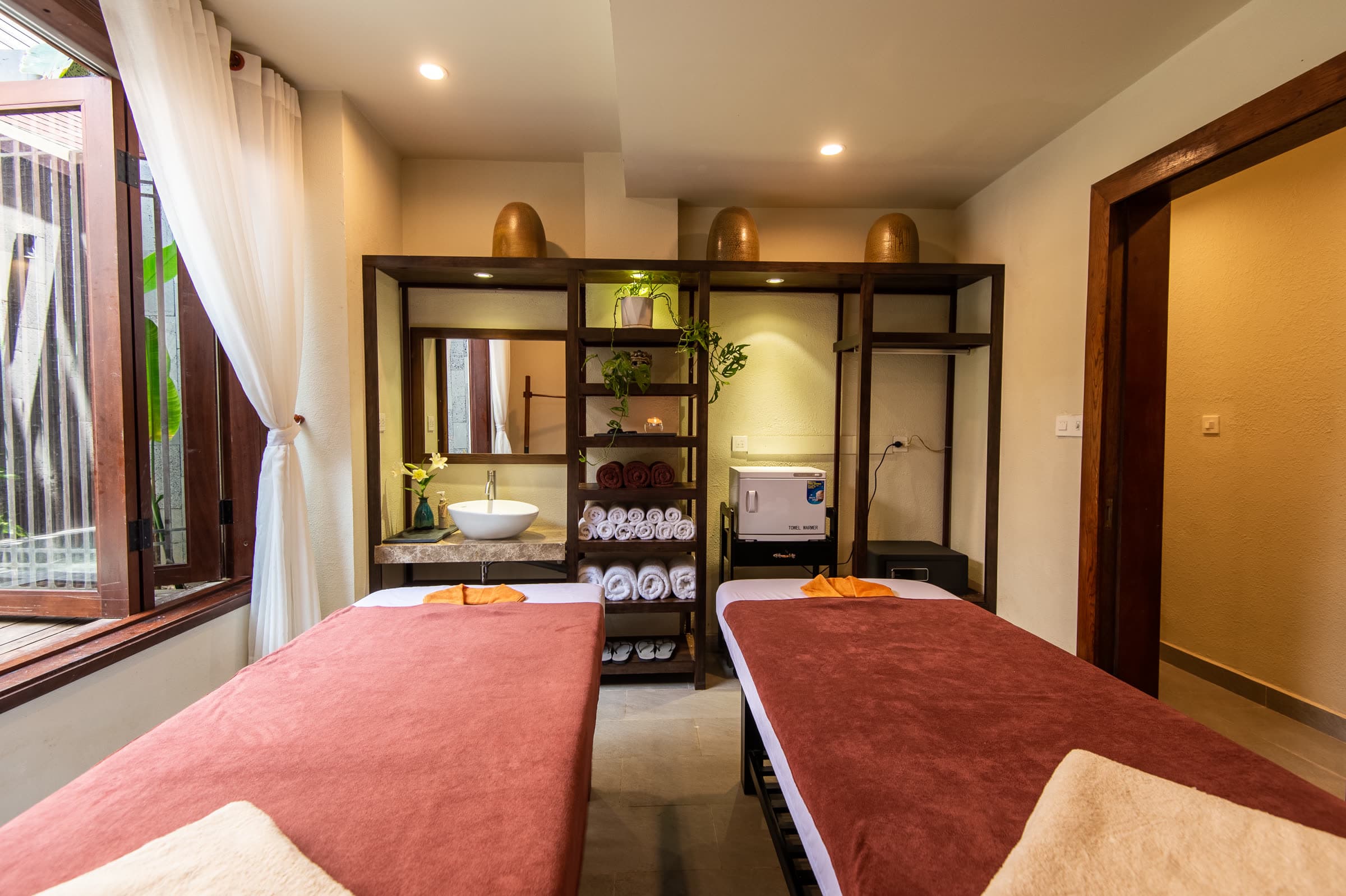
The wellness work we built Nghe Prana around — sleep, breath, slow recovery — is partly a response to what tourism does to the body. Heat, noise, queue stress, decision fatigue, late nights, and the particular exhaustion of being in a place where everyone is trying to sell you something. The most common feedback from guests is not that the spa was lovely. It is that they did not realise how much the town had been wearing on them until they came back to a room with no street noise and slept for ten hours.
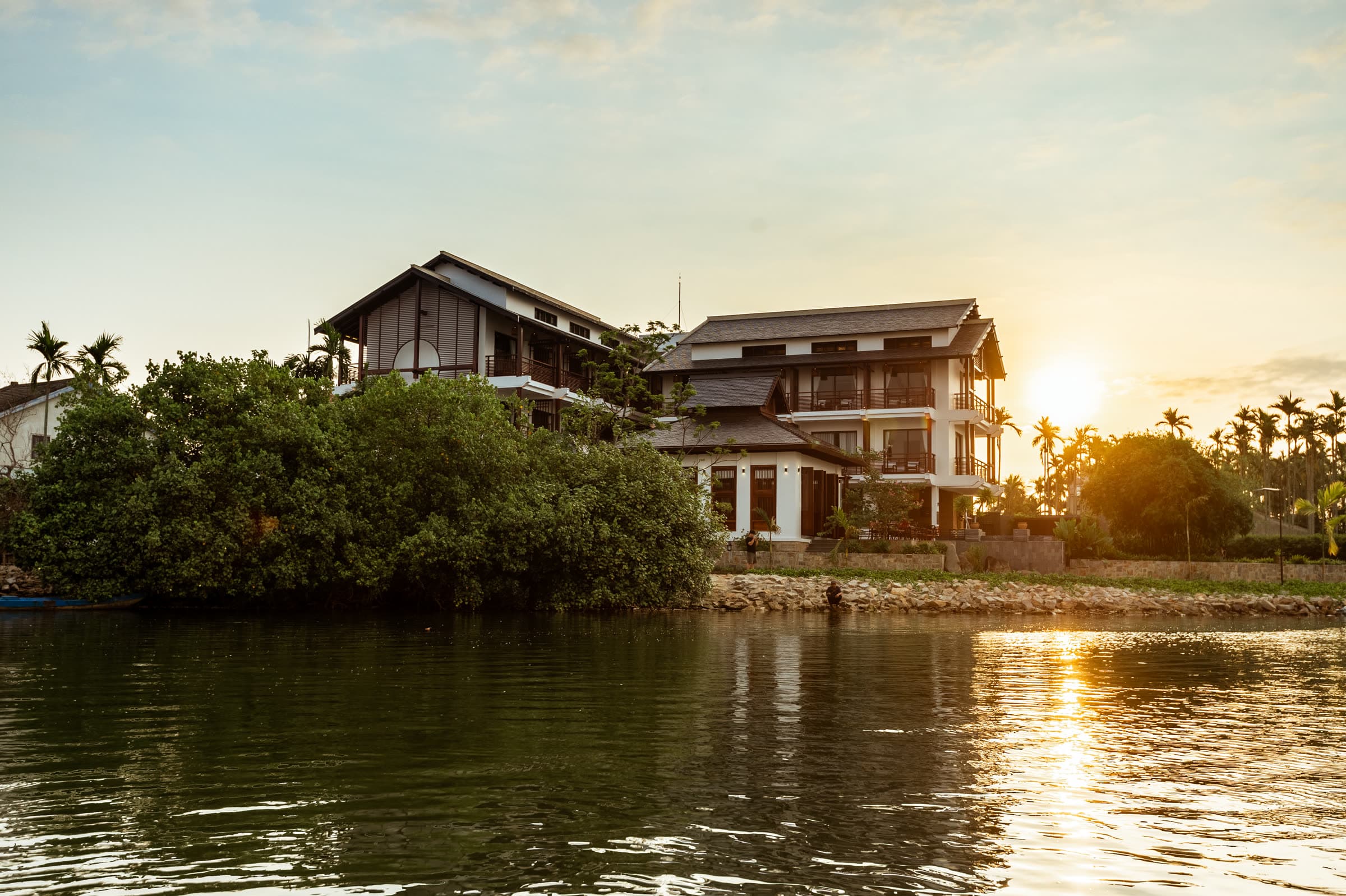
If you take one thing from this article, take this: build your itinerary so that the Ancient Town is a visit, not a residence. The version of Hoi An that earns the love it gets is the one you can step away from at will. We built our retreat at the precise distance where you can.
The Quiet Side of Hoi An is not a marketing line. It is a coordinate — the river island called Cẩm Nam, ten minutes by bicycle from the Japanese Bridge, where the noise of the town becomes the sound of the river within two streets.
Every room at Nghê Prana is designed around the science of sleep. Blackout curtains, nightly aromatherapy turndown, and riverside quiet — experience what real rest feels like.
Riverside hotel rooms on the Thu Bồn, ten minutes by bicycle from the Ancient Town. Whether it's one night between Hue and Da Nang or a full week of doing nothing — we kept your room quiet.
Free cancellation · Direct from the family who built the hotel


 WhatsApp
 Zalo
Zalo