Mid-Autumn Festival in Hoi An (Tết Trung Thu 2026): What to Expect, When to Come
The 2026 Mid-Autumn Festival falls on Friday, September 25. In Hoi An — where the lantern is already a year-round symbol — the celebration produces the most elaborate single night of the lunar year. Here is the practical guide.
Tết Trung Thu — the Mid-Autumn Festival, observed throughout Vietnam on the 15th day of the 8th lunar month — is the second-most important traditional festival in the Vietnamese calendar after Tết Nguyên Đán (Lunar New Year). In 2026 the festival falls on Friday, September 25, with the lead-up week from roughly September 20 carrying the most visible activity. Across Vietnam the festival is principally a children's holiday, marked by mooncakes, paper lanterns shaped as fish or stars, and lion-dance troupes circulating in residential streets. In Hoi An — where the lantern is already a year-round symbol of the town's identity, and where the lunar-month full-moon Lantern Festival already runs as a monthly event — Mid-Autumn produces the single most elaborate lantern night of the year, drawing visitors from across central Vietnam and from neighbouring countries.
What is different about Hoi An's Mid-Autumn night
The full-moon Lantern Festival — held monthly in Hoi An on the 14th day of each lunar month, with all motor traffic banned and the Ancient Town lit only by candle and lantern — is the regular template for the town's lantern celebrations. The September 25 (and surrounding three nights, September 24–26) celebration is the same template but expanded:
• A larger lantern procession through the Old Town, beginning at the Quan Cong temple and winding through the major streets, led by costumed troupes representing each of the five traditional Vietnamese guilds (carpenters, potters, weavers, traders, fishermen).
• Lion and dragon dances at the assembly halls (Phước Kiến, Trung Hoa, Triều Châu) throughout the early evening.
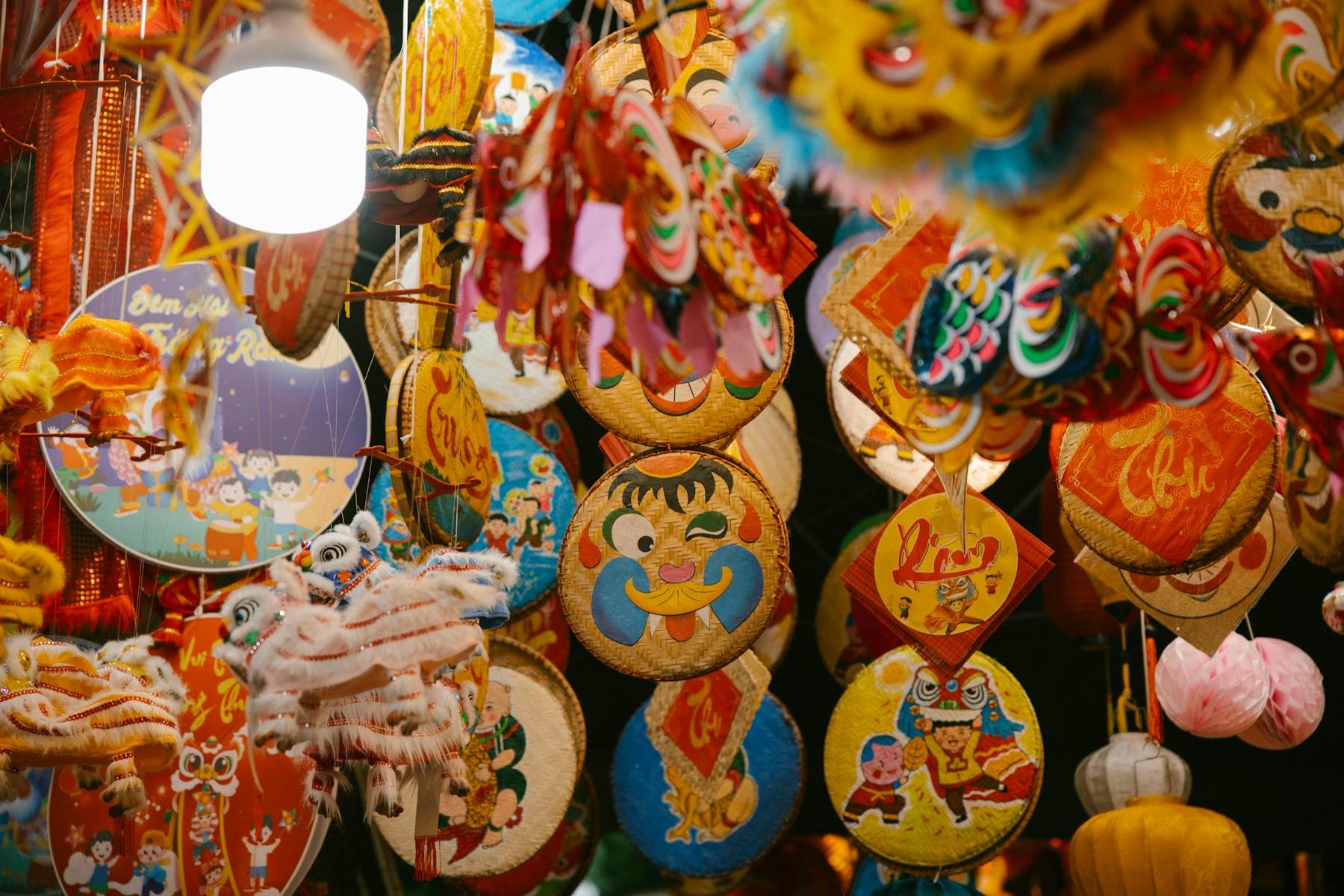
• A children's lantern parade along Trần Phú street starting around 19:00, with hundreds of locally-made paper lanterns in traditional shapes (carp, star, lotus) carried by the children of Hoi An families.
• Mooncake demonstrations and tastings at several of the older bakeries, with some of the most authentic at the small family-run bakeries along Lê Lợi and Trần Phú streets.
• Special performances of bài chòi, the regional folk song-game tradition that UNESCO recognised as Intangible Cultural Heritage in 2017.
• An expanded floating-candle ceremony on the Thu Bồn River; on Mid-Autumn night the river typically holds several thousand candles by 21:00.
The atmosphere is more familial than touristic. Vietnamese families bring their children specifically for the lantern parade. The mood is closer to a small-town summer festival than to a heritage-site spectacle, even though the lantern aesthetic is the same.
When to come
The festival itself is one night (September 25), but the lantern atmosphere expands to fill the surrounding three or four days. Our recommendation:
Arrive September 22 or 23. The Old Town is already decorated, but the heaviest crowds have not yet arrived. Use these days for the regular Hoi An rhythm — countryside cycling, spa, slow river dinners.
September 24 evening — the Lantern Festival night. This is the 14th of the lunar month, the eve of Mid-Autumn, and Hội An's formal full-moon Lantern Festival (Đêm Rằm Phố Cổ): the Ancient Town closes to traffic from early evening and is lit only by silk lanterns, candles, and the rising moon. This is the peak lantern spectacle of the Mid-Autumn window and the night most photographers come for — arrive early. (Mid-Autumn day itself, September 25, brings its own daytime-into-evening celebrations: children's lantern processions, lion and dragon dances, and mooncakes.)
September 25 (Mid-Autumn day itself). The holiday proper — the most family-centred night, when the children's celebration peaks even though the formal Lantern Festival fell the evening before. Plan a long, slow evening: dinner early on the south bank, walk into the Old Town around 19:30 for the children's parade, watch the lion dances at the Phước Kiến assembly hall, take a river boat with a candle around 20:30, and see the lantern-lit Old Town from the An Hội bridge around 21:00.
September 26. Quieter morning, locals are still recovering, the town is yours again. Good day for the spa, herbal bath, or a beach morning.
Plan to depart no earlier than September 27. The 26th-of-September departure traffic out of Đà Nẵng airport is significantly worse than usual; budget extra time or stay the extra night.
Planning a trip around this? See dates at our quiet riverside hotel on the Thu Bồn. Check availability →
Mooncakes — what to actually buy
Mooncakes (bánh trung thu) come in two main families: bánh nướng (baked, with a crisp pastry crust) and bánh dẻo (steamed, with a soft glutinous-rice exterior). Hoi An is best known for the bánh nướng tradition, with the standard fillings being lotus seed paste, mung bean, mixed nuts and dried fruit ("thập cẩm"), or salted egg yolk. The most authentic source is Đức Anh on Lê Lợi street — a third-generation family bakery that produces a few hundred boxes per day during the season. Đông Phương, on the opposite corner, is the second-best. Skip the mooncake stalls in the central market for serious purchases; their margins on tourists are higher and the freshness is variable.
Take an unopened box back to your hotel; mooncakes are one of the better Vietnamese food gifts to bring home (they keep well for two to three weeks, longer in a fridge).
Booking — and why early matters
Hoi An accommodation in the festival week books out 2–4 months ahead. By July 1, most of the riverside properties are sold out for the September 24–26 dates. Book by mid-July; book by mid-June if your dates are not flexible. Direct booking with the hotel (rather than through OTAs) is the most reliable way to ensure river-facing rooms during festival nights — most properties hold a small inventory of premium rooms back from OTA distribution for direct guests.
Day-trip access from Đà Nẵng is impossible to recommend. The Old Town is closed to vehicles and the Đà Nẵng-Hoi An road traffic during festival week makes a 30-minute drive into a 2-hour one. If you want to experience the festival, sleep in Hoi An.
From a Hoi An riverside hotel
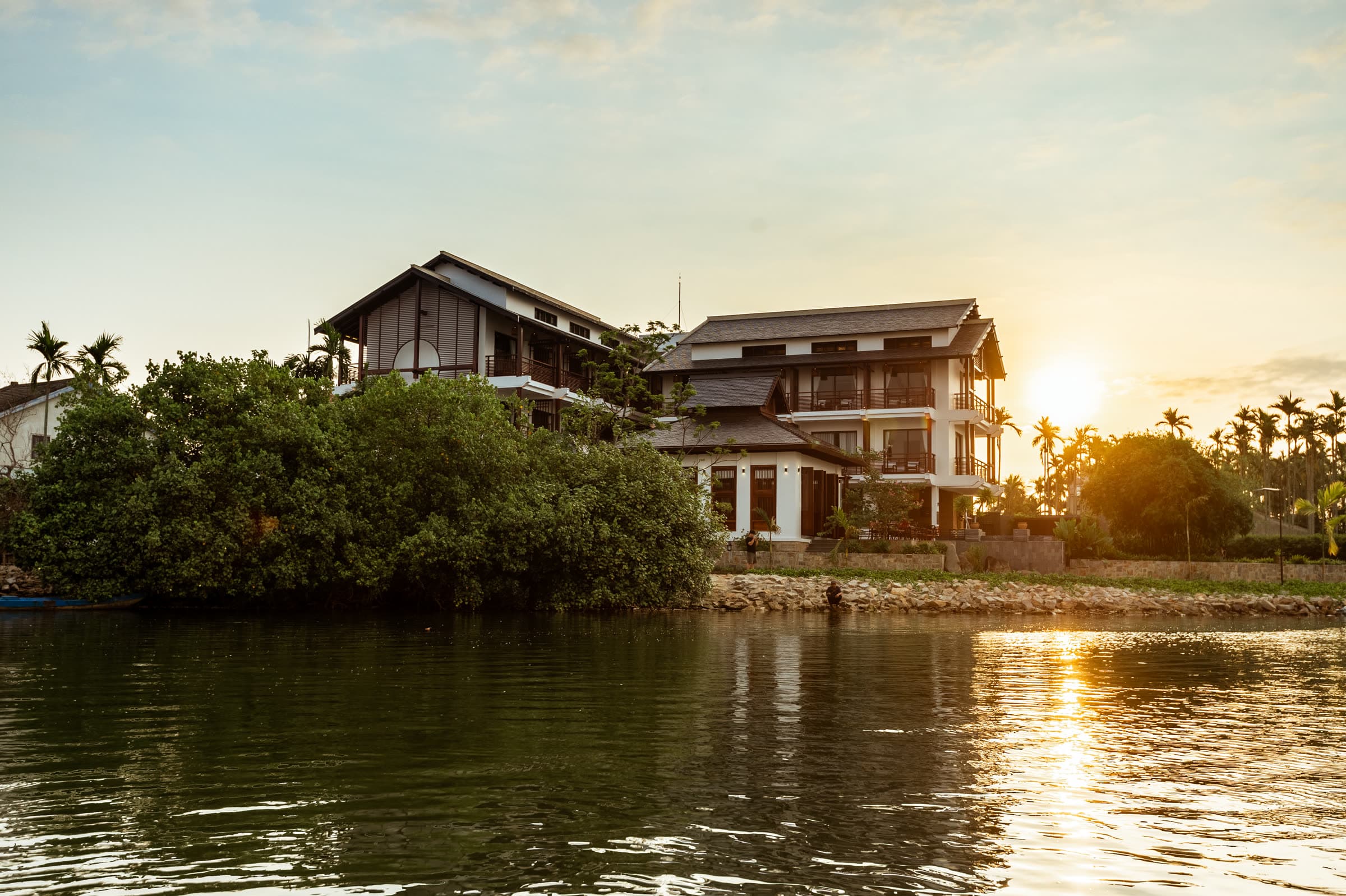
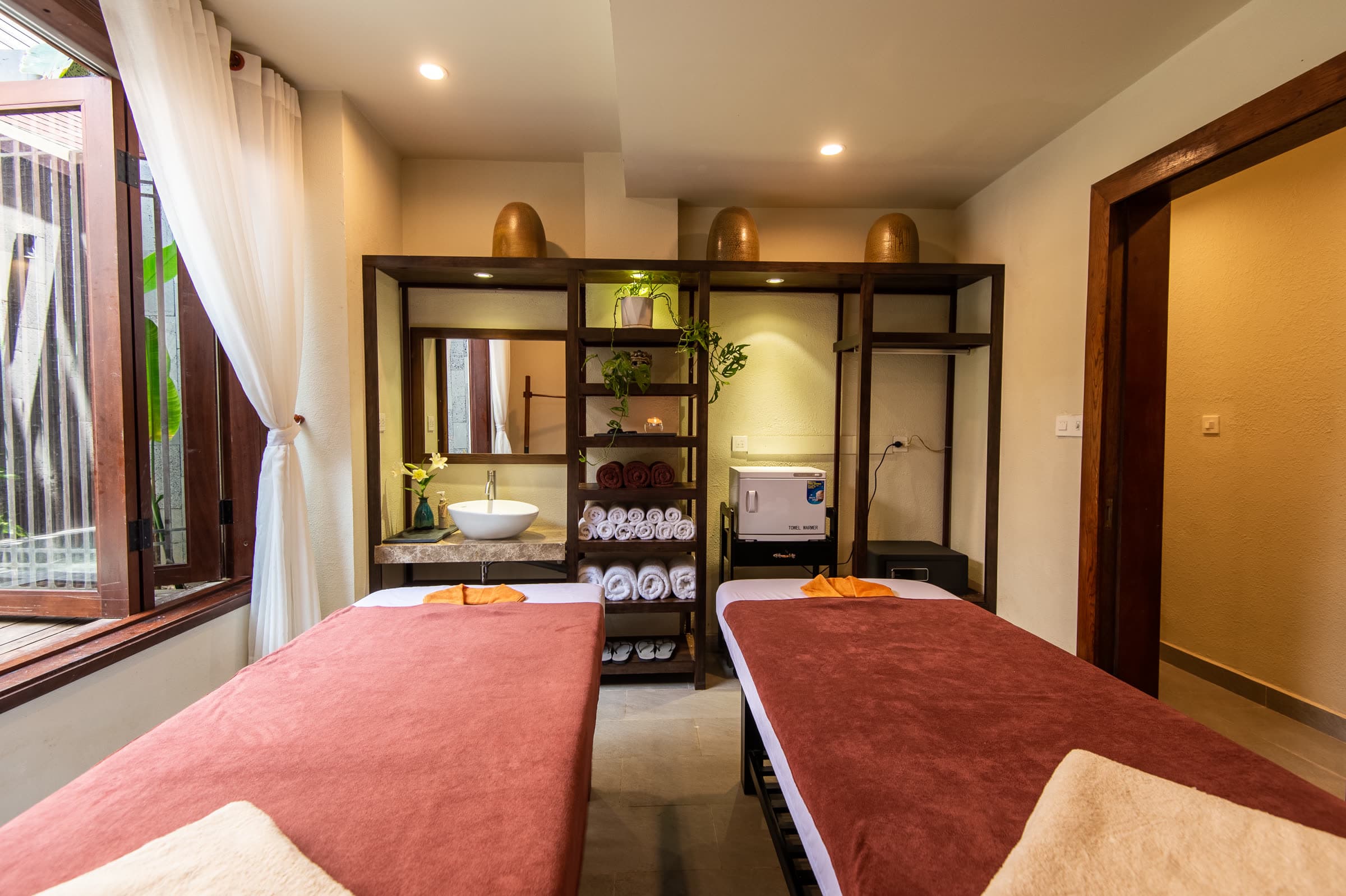
The riverside-hotel rhythm is unusually well-suited to Mid-Autumn week. The 10-minute bicycle commute into the Old Town gives you flexible re-entry across the busy days; the spa is an antidote to the festival's sensory load; and the river itself, on which the festival's floating candles drift past your window for two evenings, is part of the experience. We recommend booking 4–5 nights minimum across the festival window — fewer than that and the festival itself dominates the trip; more than that and the recovery rhythm is correctly built in.
Where to stay for Trung Thu 2026
Mid-Autumn is the busiest lantern night of the year, and the Old Town books out for it. We are on the quiet south bank of the Thu Bồn, ten minutes by bicycle from the bridge — close enough to walk into the middle of it, far enough to sleep afterwards. See our riverside rooms or read about the quiet side.
Tết Trung Thu is one of the better reasons to time a Vietnam trip around a specific date. In Hoi An it is among the most photographed and most under-attended (in the western traveller sense) festivals in Southeast Asia. The 2026 date makes it a Friday — naturally weekend-friendly for European travellers, falling just ahead of a busy autumn-travel period in Vietnam.
Every room at Nghê Prana is designed around the science of sleep. Blackout curtains, nightly aromatherapy turndown, and riverside quiet — experience what real rest feels like.
Riverside hotel rooms on the Thu Bồn, ten minutes by bicycle from the Ancient Town. Whether it's one night between Hue and Da Nang or a full week of doing nothing — we kept your room quiet.
Free cancellation · Direct from the family who built the hotel

 WhatsApp
 Zalo
Zalo