My Son Sanctuary: The Cham Temples Outside Hoi An, and How to Visit Them Right
Fifty kilometres from Hoi An, in a jungle valley ringed by mountains, sit the brick remains of a Hindu temple complex built and rebuilt continuously between the fourth and thirteenth centuries by the Champa kingdom. UNESCO listed it in 1999. The Vietnam War destroyed half of it. Here is how to see what remains.
Mỹ Sơn — pronounced roughly "mee-suhn" — is the most significant Hindu archaeological site in mainland Southeast Asia outside of Cambodia. It was the religious centre of the Champa civilisation, the maritime Hindu kingdom that ruled what is now central and southern Vietnam from approximately the second to the seventeenth century. Construction at the site began in the fourth century and continued for nearly a thousand years, producing seventy temple structures across eight clusters in a steep-sided jungle valley about forty kilometres west of Hoi An. UNESCO listed Mỹ Sơn as a World Heritage site in 1999, citing it alongside Angkor and Borobudur as one of the great Hindu architectural complexes of the region.
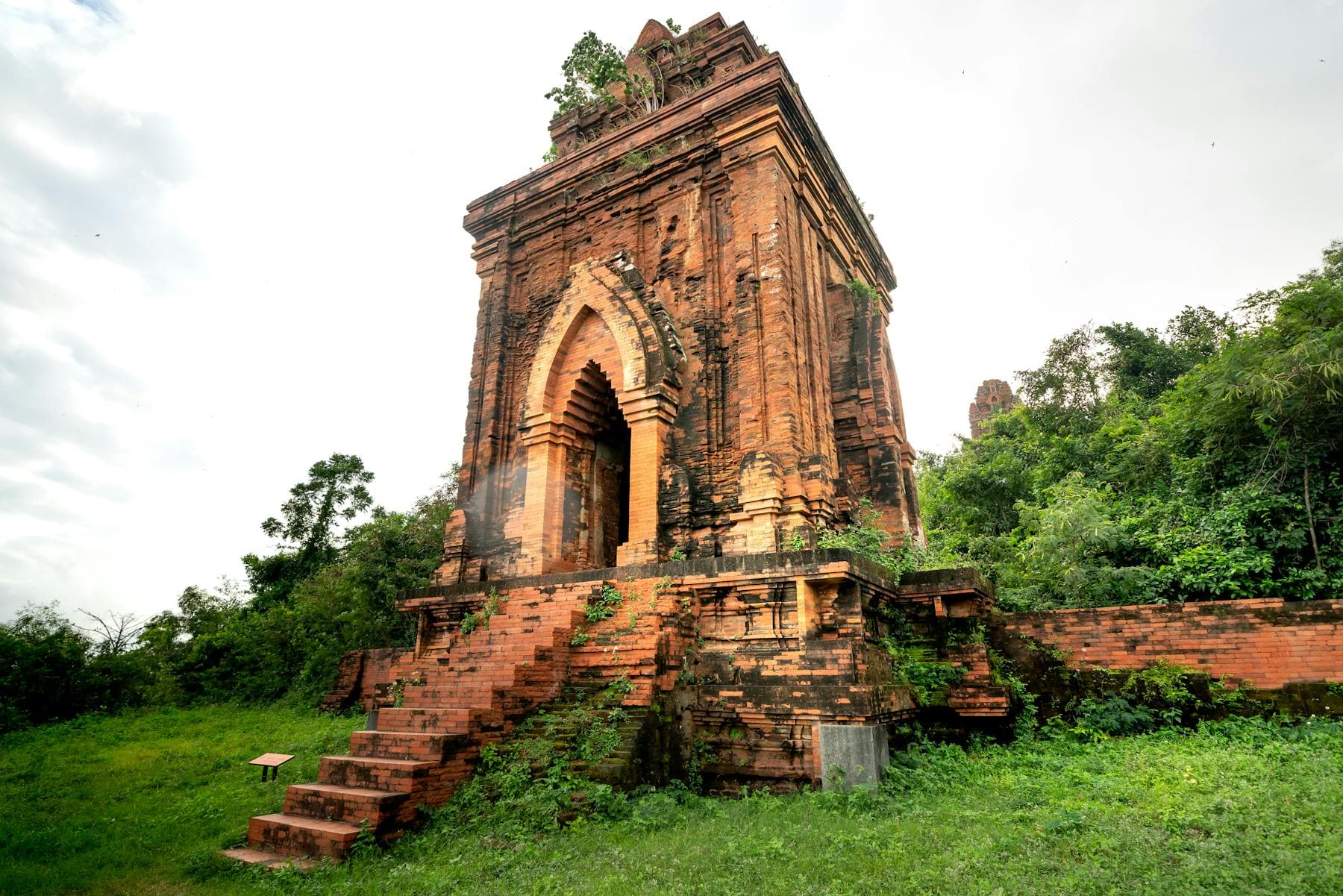
Most of what was built at Mỹ Sơn no longer stands. Group A — the most ambitious temple cluster, built in the late seventh century — was effectively destroyed by United States Air Force B-52 carpet bombing in August 1969. The Việt Cộng had been using the valley as a guerrilla base, and the targeting was deliberate; the loss is documented in archaeological reports from the post-war restoration efforts. Of the seventy original structures, around twenty remain in some recognisable form. The brickwork that does survive is itself a small archaeological mystery: the Cham used a baked-brick masonry technique that joined the bricks without visible mortar, a method that modern conservators have only partially reconstructed.
What you walk through at Mỹ Sơn today is not what was built there — but it is enough to read the ambition. The valley is small, the surviving towers are striking against the jungle, and the partial sanskrit inscriptions still legible on some of the stone door-frames are some of the oldest surviving texts in the region.
What you actually see at the site
Of the eight temple clusters at Mỹ Sơn, four are open to visitors: A (the bombed cluster, mostly rubble with a few surviving foundations), B and C (the best-preserved central group, including the famous tower B5 with its boat-prow roof and intact lingam shrine), and D (smaller temples and what remains of two long meditation halls). The walking circuit takes about ninety minutes at a steady pace, longer if you stop at the small site museum near the entrance. The museum is genuinely worth the fifteen minutes — it has the best surviving Cham sculpture from the site (most of the rest is in the Cham Museum in Đà Nẵng) and a coherent timeline of the Champa kingdom's religious shifts from Shaivism to Mahayana Buddhism and back.
Twice daily — at 09:30 and 14:00 — the site stages a brief Cham apsara dance performance in a small outdoor amphitheatre. The dancers are local conservatory students, the music is recorded, and the experience is twenty minutes of polished tourism rather than living tradition; whether you find it charming or unconvincing depends on your tolerance for that mode. The performance is included in the entry ticket so there is no marginal cost to staying for it.
When to go (this is the only thing that really matters)
Mỹ Sơn is hot. The valley sits in a depression that traps heat from late morning onward, and by 11:00 in the dry season the brick surfaces radiate so much warmth that walking the circuit is genuinely uncomfortable. The single most consequential decision you will make is what time you arrive. The earliest tour from Hoi An (the so-called sunrise tour) leaves at 04:30 and arrives at the gate when it opens at 06:00, putting you at Group B in the first golden light, with the site essentially empty. The standard tour leaves at 08:00 and arrives at 09:30, by which point the heat is rising and the first three or four group buses have already unloaded. Between October and February the early start matters less; from March to September it matters enormously.
Most of the regret travellers report after a Mỹ Sơn visit comes down to "I should have gone earlier." Take the sunrise tour, accept the early alarm, and be back in Hoi An by 11:00 with the rest of the day in front of you. The cost difference is negligible; the experience difference is substantial.
Planning a trip around this? See dates at our quiet riverside hotel on the Thu Bồn. Check availability →
Booking and getting there
Group tours run between 350,000 and 700,000 VND per person, including transfer, entry fee, English-speaking guide, and the morning's apsara performance. Private cars cost around 1.2 million VND for two to four people for the round trip with a few hours at the site. Going by motorbike is possible — it is a one-hour ride on country roads, mostly flat, no significant climbs — but only worthwhile if you are an experienced rider, because the last fifteen kilometres of the route involves heavier traffic on Highway 14B than the rural roads suggest.
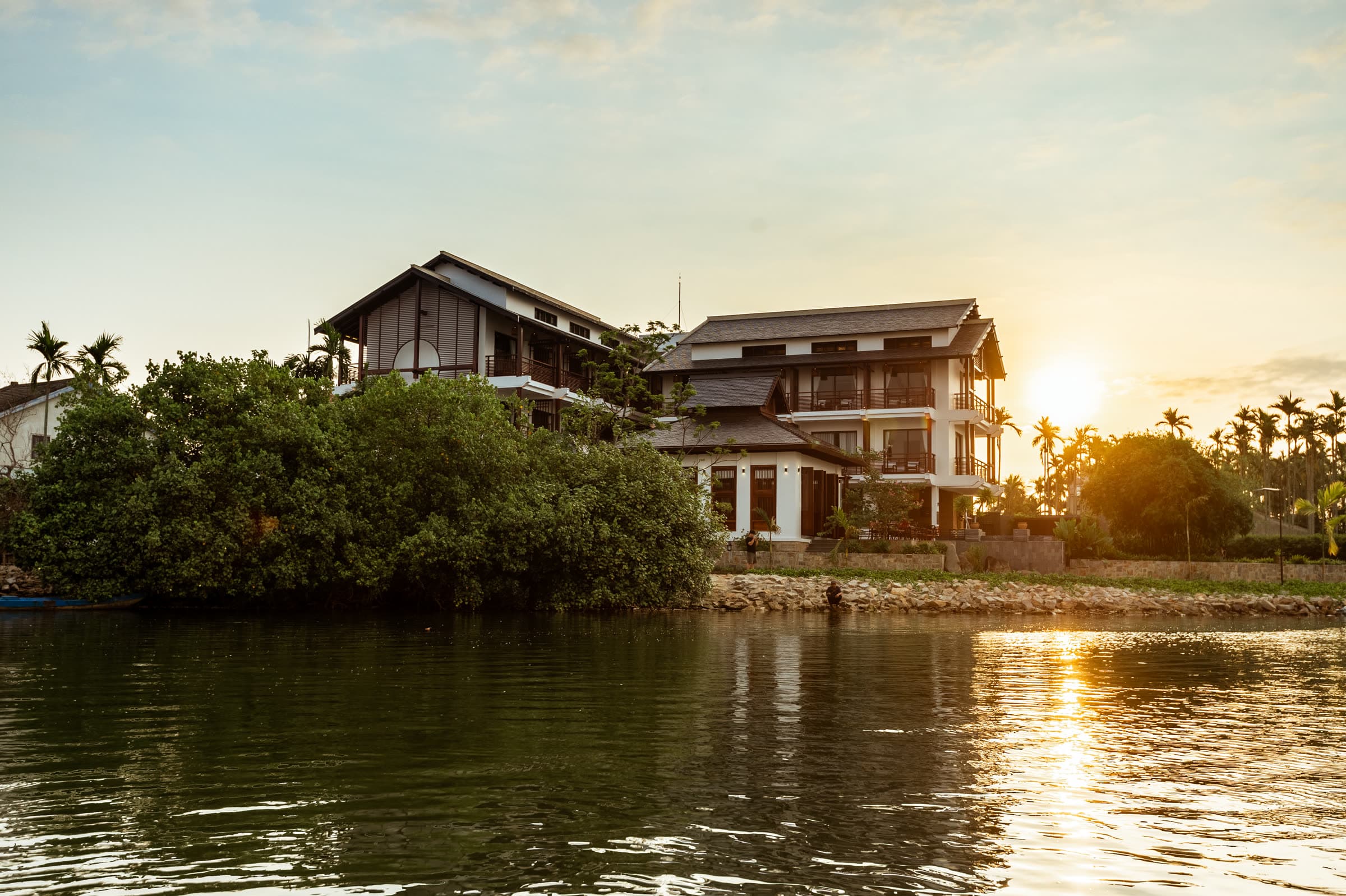
From Nghê Prana, on Cẩm Nam, the trip is one hour each way by car. The sunrise tour pairs naturally with a slow lunch back at the hotel, an afternoon swim, and an early dinner — an effective full-day rhythm that uses the cool morning for sightseeing and the heat of the day for water and rest. We arrange the booking; the early start is unavoidable but the rest of the day belongs to recovery.
What to bring
Sun protection (the site has very little shade), water (the small stalls inside the gate are unreliable), comfortable walking shoes (the paths are uneven brick rubble in several sections), and a guidebook or downloaded summary of the temple cluster history — the on-site signage is minimal and the guides are rushed. The dress code at the temple complex is informally enforced: shoulders covered, knees covered. There is a small dressing room near the entrance if you arrive in beachwear.
Mỹ Sơn rewards travellers who treat it seriously and arrive prepared. The buses unload, the heat builds, and by mid-morning the experience flattens into a generic photo opportunity. Take the cool hours; leave before the rest of central Vietnam shows up.
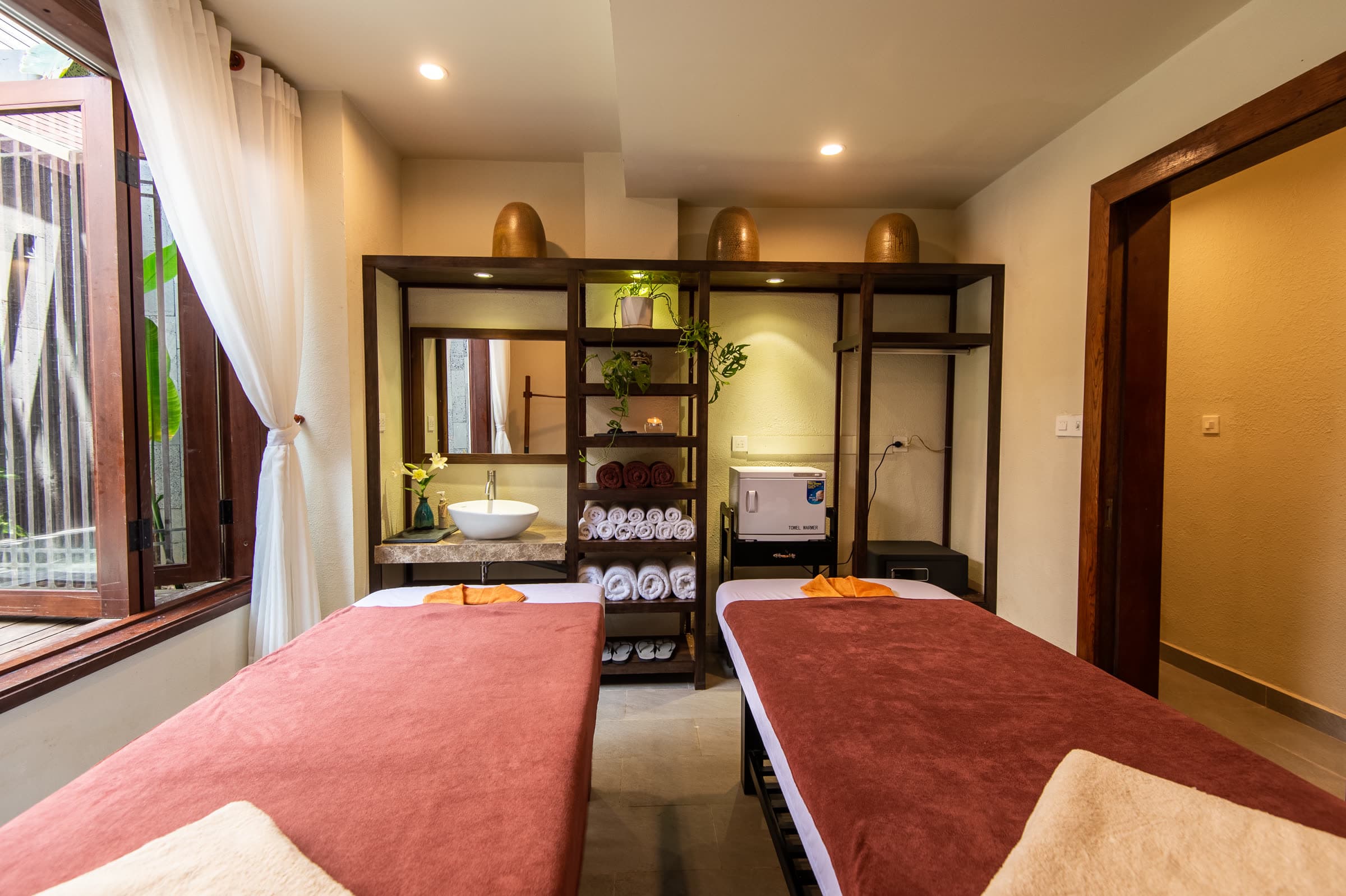
Every room at Nghê Prana is designed around the science of sleep. Blackout curtains, nightly aromatherapy turndown, and riverside quiet — experience what real rest feels like.
Riverside hotel rooms on the Thu Bồn, ten minutes by bicycle from the Ancient Town. Whether it's one night between Hue and Da Nang or a full week of doing nothing — we kept your room quiet.
Free cancellation · Direct from the family who built the hotel

 WhatsApp
 Zalo
Zalo