
stress
The Cortisol-Belly Connection: Why Stress Makes You Look Older
Chronic stress doesn't just feel bad — it physically reshapes your body and accelerates visible aging through cortisol-driven inflammation.
Jan 28, 20258 minRead Article
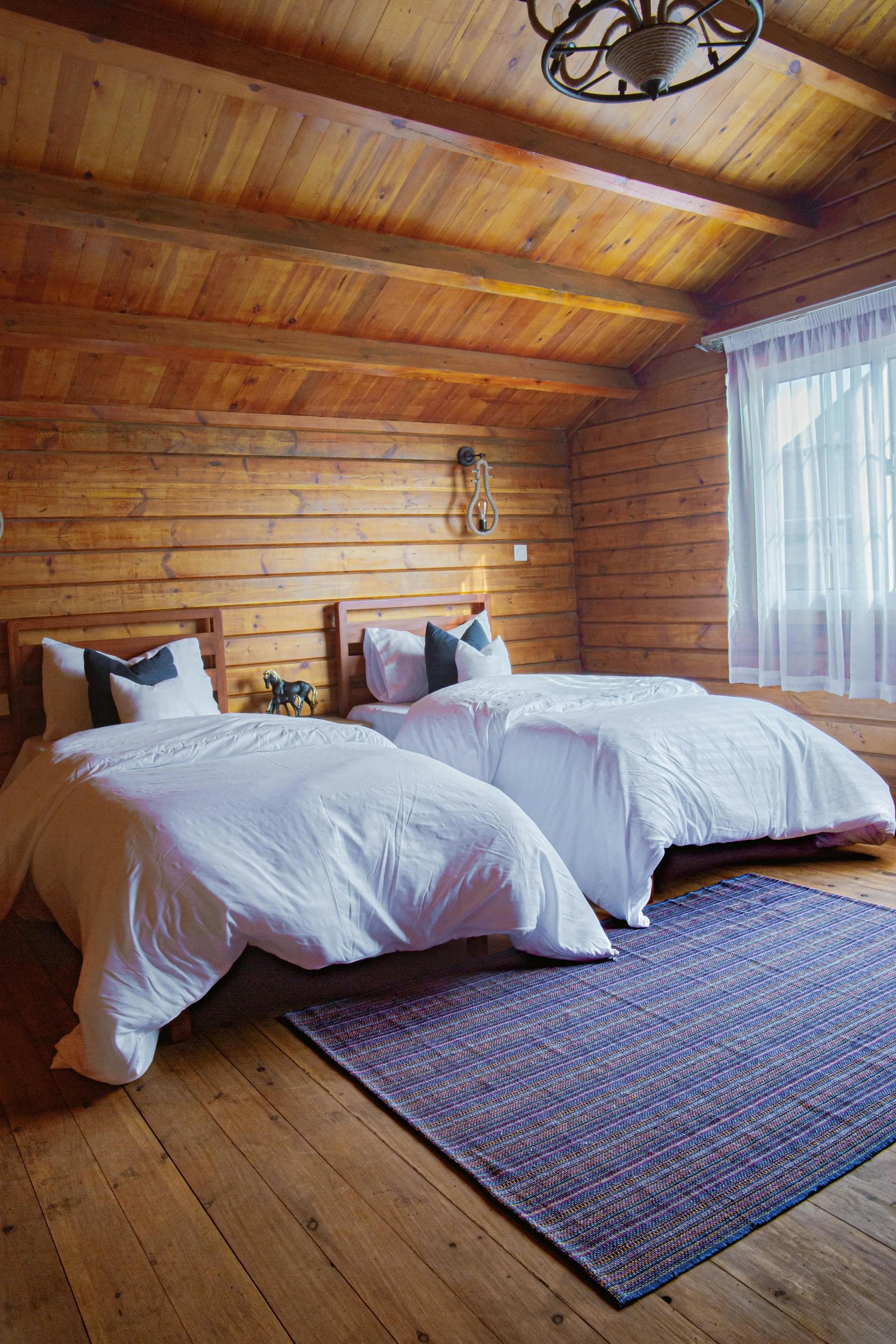
If your itinerary puts one night in Hoi An between Hue and Da Nang, the hotel you choose matters more than the length of stay. A single deep-sleep night recovers more travel fatigue than three restless ones. Here is the physiology of recovery sleep, and how to design that one night so it actually does its job.
Many Vietnam itineraries pass through Hoi An for a single night — a transit stop between the imperial calm of Hue to the north and the beach resorts of Da Nang and the south. The instinct is to treat it as a light stopover: a quick dinner, a lantern photo, an early bus out in the morning. But physiologically, a single night in the right kind of room does more than that. If you have been on the road for days, a genuinely deep eight-hour sleep can pay down a surprising amount of accumulated travel debt — enough to reset your energy, mood, and immune system for whatever comes next. The science on recovery sleep is specific, and it tells you exactly how to spend that one night.
Multi-day travel — especially the Vietnam standard of long bus or train legs, shifting hotels, unfamiliar food, and mid-day sun — accumulates a physiological load that is easy to miss because it lags behind the experience. Travel-medicine research describes the typical post-travel state as a combination of mild dehydration, disrupted circadian rhythm, disturbed stress-hormone (cortisol) cycles, and accumulated sleep debt from short, fragmented nights. None of this feels catastrophic. You notice it as a slight haze, a lower tolerance for minor frustrations, a morning where you hit snooze twice when normally you would not.
The mechanism behind that haze is primarily sleep-related. Your body uses the deep-sleep stages to clear metabolic byproducts from the brain (via the glymphatic system), consolidate memory, and regulate inflammation. When you shorten or fragment those stages across several nights in a row — as most travelers do — the deficit compounds. Sleep researchers have shown that even a single night of disrupted sleep can measurably reduce the brain's clearance of beta-amyloid, a waste protein associated with cognitive fatigue and, over decades, neurodegeneration. Travel is, in this sense, a slow-burn cognitive tax.
A Stanford study on collegiate basketball players (Mah et al., 2011) found that five to seven weeks of sleep extension — aiming for at least 10 hours in bed each night — improved shooting accuracy (free throws by 9 percent, three-pointers by 9.2 percent), sprint times, reaction time, and mood. The takeaway: consistently giving the body more time in bed yields measurable gains in alertness and performance.
There is a common belief that sleep cannot be "caught up" — that a single long night after a deficit will not help. This is only partially true. What you cannot fully recover is cognitive performance lost during the deprived days; much of that deficit lingers. What you can begin to recover is some of the physiological consequences: cortisol tends to normalize, growth hormone release rebounds, and several immune and metabolic markers move back toward baseline once you resume adequate sleep. Sleep-restriction studies that include recovery nights show that markers such as insulin sensitivity can rebound substantially with restored sleep — though the recovery is often incomplete after a single night and some inflammatory markers lag behind. Not full recovery — but enough to feel substantially different the next morning, and enough to continue a long trip without the accumulated deficit tipping into illness.
The practical implication is that if you have been traveling hard and you have one night to spend in Hoi An before the next leg, that night is not a throwaway. Designed well, it is the equivalent of several days of ordinary rest. Designed poorly — in a loud Old Town guesthouse with an air conditioner that rattles and a 2 am motorbike outside — it is just another restless night that adds to the debt.
The variables that matter most on a recovery night are the same ones that matter on any night, but the stakes are higher because there is only one of them. The first priority is absolute darkness. Your melatonin curve is already disrupted by the travel itself; ambient light above 5 lux during sleep will blunt it further. Choose a room with real blackout curtains — not just blinds — and if your hotel leaves a TV standby light or an illuminated door alarm visible, cover them with tape. Second, silence. Recovery sleep pushes more time into slow-wave and REM stages, both of which are unusually sensitive to noise-driven micro-arousals. A room under 40 dB(A) is the target; earplugs if needed.
Third, temperature. Your core-temperature drop at sleep onset needs to be steep enough to trigger the first deep-sleep cycle, and that cycle is where most of your recovery happens. Set the room between 18 and 20°C before you go to bed. Tropical rooms often default warmer; turn the air conditioner down for the first hour specifically. Fourth, time in bed. On a recovery night, target nine hours horizontal — not eight. The extra hour is where the second REM cycle extends, and REM is where emotional processing and cortisol-regulation benefits concentrate.
Planning a trip around this? See dates at our quiet riverside hotel on the Thu Bồn. Check availability →
Fifth, and most often overlooked: what you consume before sleep. Alcohol is the most common recovery-night mistake. A single glass of wine with dinner is fine; two or more will fragment your REM stages measurably and mostly cancel the recovery effect. Caffeine after 2 pm has a similar cost. A light dinner, hydration, and a walk along the river do more for your next morning than anything the Old Town restaurants can offer.
Sleep research consistently shows that even moderate alcohol consumption before bed (roughly two drinks for an average adult) suppresses REM sleep and increases night-time awakenings in the second half of the night — effects seen in healthy sleepers, not just problem drinkers.
The reason a wellness-focused hotel matters more for a one-night stay than for a week-long one is simple: on a longer trip, a bad room is annoying; on a single recovery night, a bad room wastes the only opportunity you have to repay travel debt before the next leg. For this reason, travelers on single-night Hoi An stops tend to over-optimize when they understand the physiology. They pick the quiet side of the river rather than the center. They pick blackout rooms, cool thermostats, and properties that finish turndown before 8 pm. They eat at the hotel rather than spending 45 minutes in Old Town traffic. They are horizontal by 10 and up at 7, and they leave the next day feeling as if they have added a day to the trip rather than subtracted one.
Nghê Prana sits a short taxi ride from the Hoi An bus station, with the nearest railway — Da Nang — about 45 minutes away by road, far enough from the Old Town to stay dark and quiet, close enough to feel central. For a one-night recovery stop, the formula we have seen work for most guests is: arrive by 6 pm, shower, eat lightly at the hotel restaurant, one short walk along the river at dusk, lights out by 10. The shuttle is there at 7 am if you need an early departure. Nine hours in bed, and a different body in the morning.
One night in Hoi An between two longer stops is easy to treat as wasted time or a logistics headache. Physiologically, it is the opposite: it is the single best recovery opportunity your trip offers. What happens in that room — how dark, how quiet, how cool, how uninterrupted — determines whether the second half of your Vietnam itinerary feels like a continuation of momentum or a grind through fatigue. Choose the room like it matters, because it does. The lanterns will be there tomorrow night too.
23 rooms on the quiet south bank of the Thu Bồn River, ten minutes by bicycle from the Ancient Town and a world from its noise.
Book your stayContinue at Nghê Prana
Ready to Sleep Better?
Every room at Nghê Prana is designed around the science of sleep. Blackout curtains, nightly aromatherapy turndown, and riverside quiet — experience what real rest feels like.
View Our RoomsYour Stay Awaits
Riverside hotel rooms on the Thu Bồn, ten minutes by bicycle from the Ancient Town. Whether it's one night between Hue and Da Nang or a full week of doing nothing — we kept your room quiet.
Free cancellation · Direct from the family who built the hotel
Save 15% booking directly via our website

 WhatsApp
 Zalo
Zalo