Thanh Hà Pottery Village: Eight Centuries of Terracotta, Ten Minutes from Hoi An
Three kilometres west of Hoi An's Ancient Town sits Thanh Hà — a pottery village that has been producing terracotta from the same red riverbank clay for eight hundred years. The roof tiles of the Old Town came from here. So did most of central Vietnam's water jars. Here is what to see.
Thanh Hà — sometimes spelled Thanh Ha or rendered in English as "the pottery village" — is a ribbon of working pottery workshops along the south bank of the Thu Bồn River, three kilometres west of Hoi An's Ancient Town. The village's documented history of pottery production reaches back to the late fifteenth century, when craftspeople from Thanh Hóa province in the north resettled here under the Lê dynasty's southward expansion and brought their kiln techniques with them. Within a generation, Thanh Hà had become the principal supplier of architectural ceramics for the Hoi An trading port: roof tiles, floor pavers, water cisterns, and the round red urns that still appear on every other street corner in the Ancient Town.
Most of the original architectural fabric of Hoi An — the famous yellow-and-terracotta colour palette of the Old Town's facades — depends on bricks and tiles that were either made at Thanh Hà or modelled on its production. The reason the colour reads as warm rather than orange is the specific iron content of the clay along this stretch of the Thu Bồn, which fires to a particular dusty red that the village has been working with continuously for half a millennium.
What there is to see
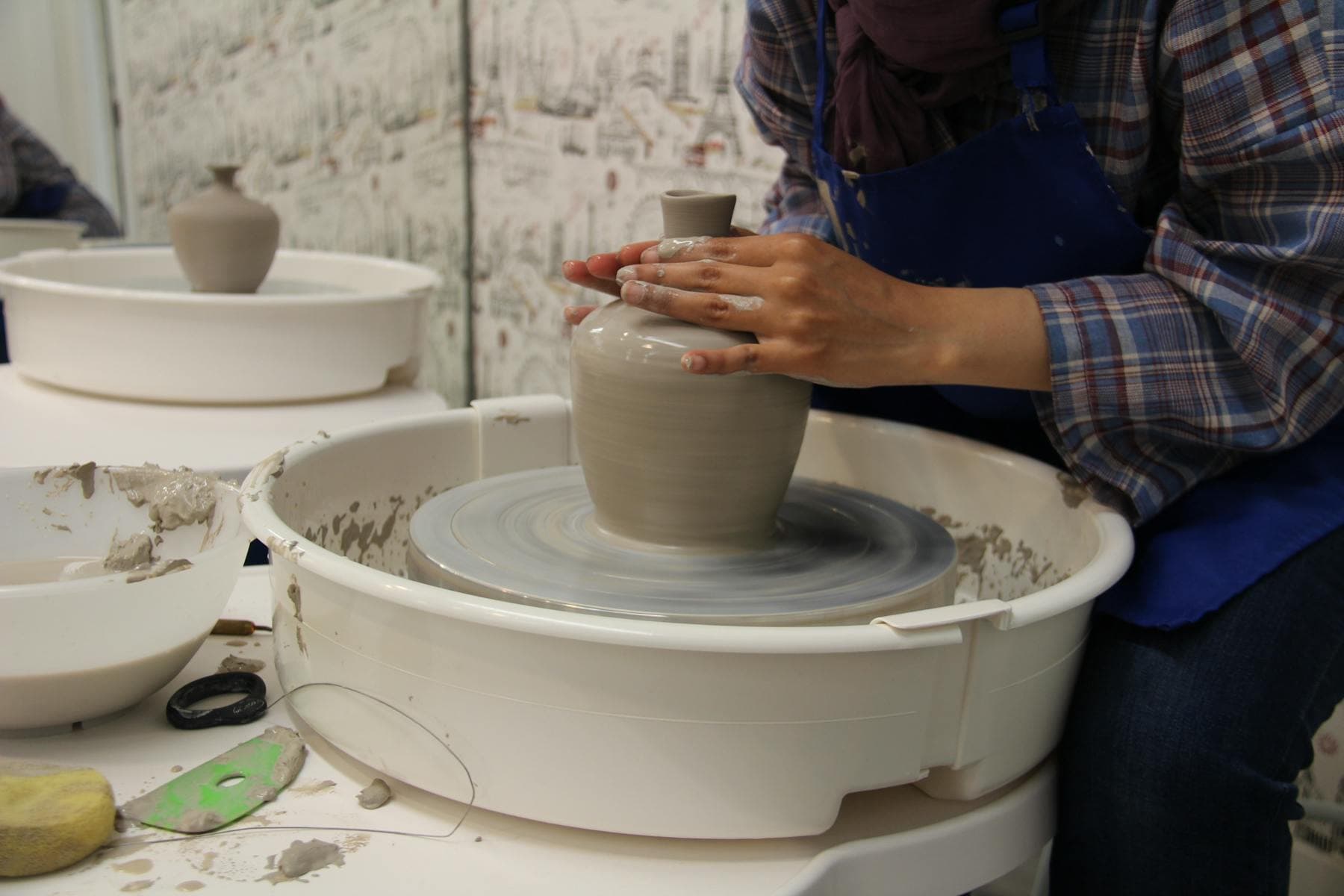
Thanh Hà is a working village, not a museum. Roughly thirty family workshops still operate along the village's two main streets, most of them open to visitors during business hours (typically 08:00 to 17:00). The standard practice is that you can walk into any open workshop, watch the potters at work, ask questions through gesture or basic Vietnamese, and buy directly from the maker if you see something you want. Prices are negotiable but generally reasonable — a small handmade bowl is in the 30,000–80,000 VND range, a mid-sized planter or vase 200,000–500,000 VND, a large traditional water urn 1.5–3 million VND. Pieces can be shipped internationally; ask the workshop owner for shipping arrangements (most use a logistics partner in Đà Nẵng for overseas orders).
The village also has two more formal attractions. The Thanh Hà Pottery Museum (Bảo tàng Gốm Thanh Hà) is a small two-floor museum tracing the village's history with surviving pieces from each major dynastic period and a working demonstration kiln. Entry is 35,000 VND. Terracotta Park (Công viên Đất nung) is a more elaborate paid attraction at the far end of the village — a kind of theme park of terracotta sculpture and architectural fantasies, with full-scale replicas of famous world buildings rendered in clay. Whether the park is interesting depends on your tolerance for the genre; it is the most photographed thing in Thanh Hà and also the least authentic. Entry is 50,000 VND.
The honest recommendation is to skip the formal attractions and spend an hour walking the working village. The actual potters at their actual wheels are more interesting than any reconstructed exhibit — and the small purchases you make from them stay in the village rather than going to the park's developers.
When to visit
Mornings between 08:00 and 10:00 are the best time. The kilns are firing, the wheels are turning, and the heat has not yet built up. By midday many workshop owners take a long lunch and the village quiets down. Late afternoon (15:30 to 17:00) is the second working window. Saturdays are slightly busier than weekdays; Sundays many workshops close.
The annual Thanh Hà Pottery Village Festival takes place in the seventh lunar month (typically August), with kiln demonstrations, traditional craft competitions, and a procession to the village's tutelary spirit shrine. If your visit overlaps with the festival, it is worth specifically attending — the village is at its most animated.
Planning a trip around this? See dates at our quiet riverside hotel on the Thu Bồn. Check availability →
How to get there from a Hoi An riverside hotel
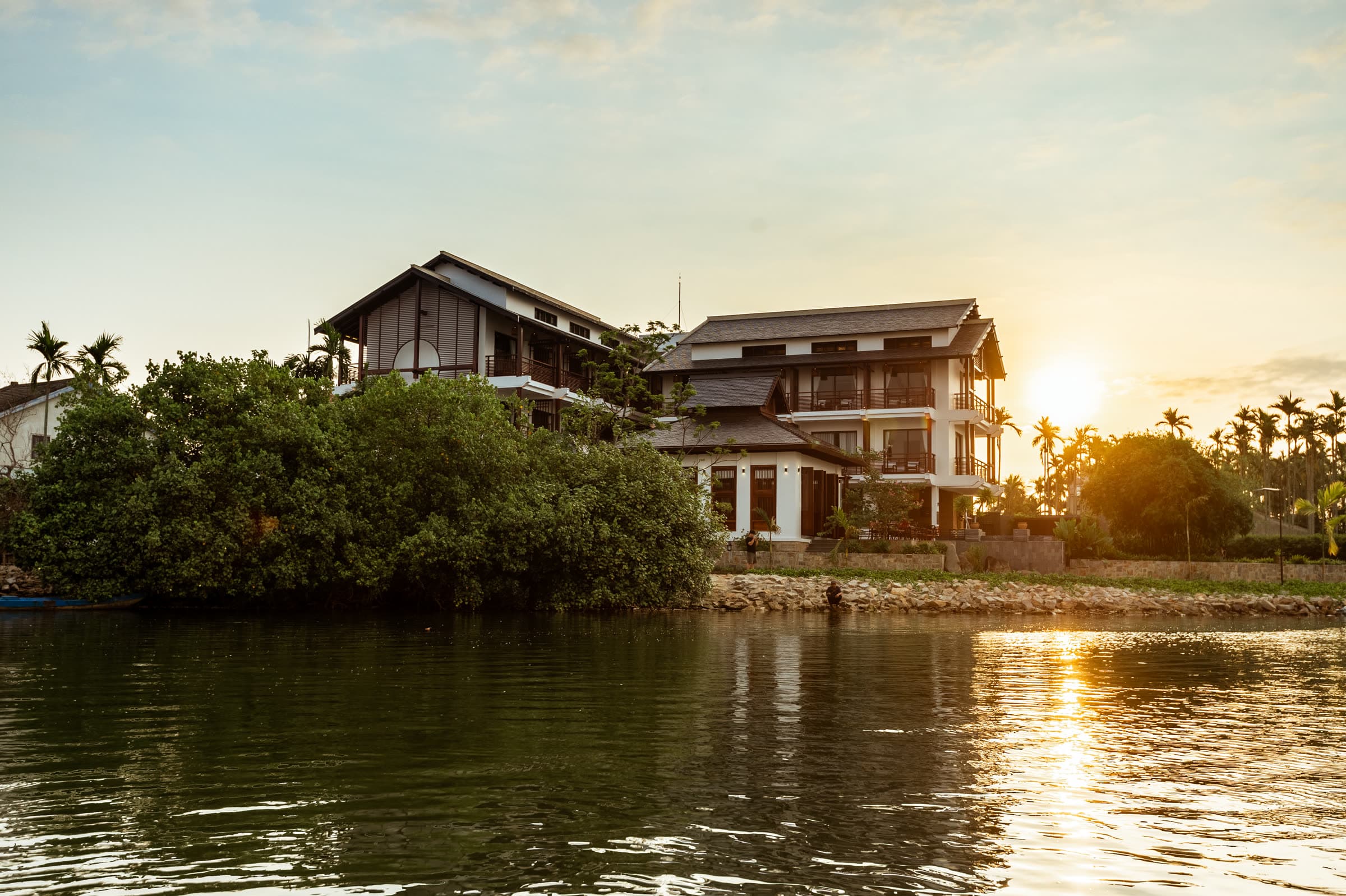
From Cẩm Nam, the bicycle ride to Thanh Hà takes about fifteen to twenty minutes. The route follows the river west, crosses the small bridge to the south-bank villages, and arrives directly at the eastern entrance to the pottery street. The road is flat, the traffic is mostly local scooters at low speed, and the route can be combined easily with a visit to the Cam Kim ferry crossing (twenty minutes further west) for a longer half-day on the agricultural island opposite the Ancient Town. By scooter the same trip is six minutes; by car or Grab, ten.
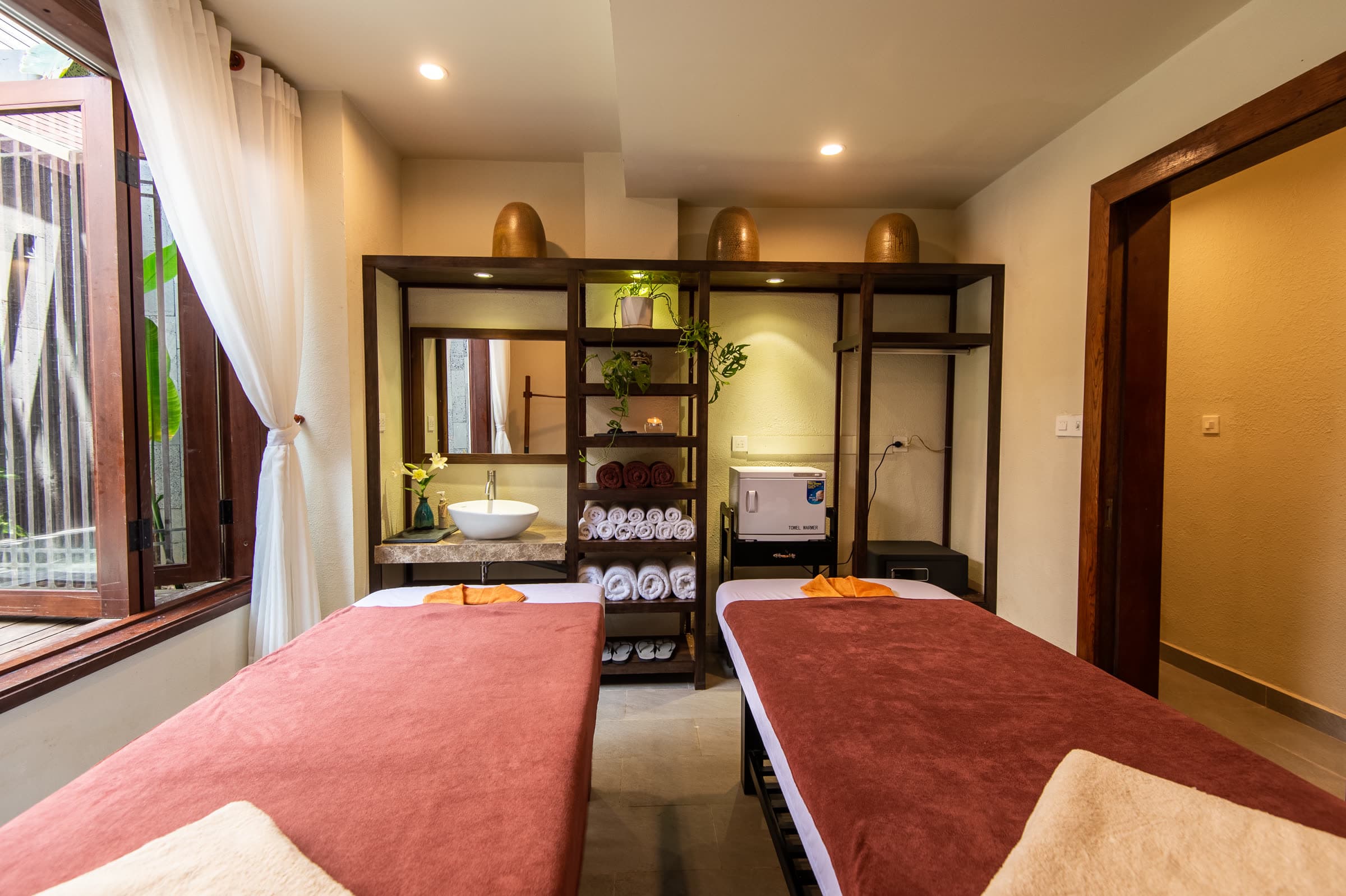
Most visitors do Thanh Hà as a morning bicycle loop with the Ancient Town: ride to Thanh Hà for the working pottery, ride back through the Old Town for an early lunch, return to the spa for the heat of the day. The whole loop is around three hours and pairs well with the slow rhythm of a wellness stay.
What to bring back
The Thanh Hà pieces that age best in a Western kitchen are the small lidded clay pots traditionally used for fish stew (nồi đất kho cá) and the unglazed water-storage jars that double as rustic vases. The pieces that travel poorly are the large unglazed pieces (they crack in dry climates) and anything fragile and unboxed (the village's packing materials are improvised). If you are flying with a piece, ask the workshop to wrap it in newspaper and bubble wrap together, and carry it onto the plane — the hand-luggage policy is generous in Vietnam and most pieces under three kilograms fit fine.
Thanh Hà is one of the few day-trip-able destinations from Hoi An that is genuinely a working village rather than a reconstruction. The continuity is the appeal: the wheels turn the way they have turned for five centuries, the clay comes from the same riverbank, and the wages support families who have made pottery here for generations. Visiting honours that continuity in proportion to the time you spend on the working side of it rather than the museum side.
Every room at Nghê Prana is designed around the science of sleep. Blackout curtains, nightly aromatherapy turndown, and riverside quiet — experience what real rest feels like.
Riverside hotel rooms on the Thu Bồn, ten minutes by bicycle from the Ancient Town. Whether it's one night between Hue and Da Nang or a full week of doing nothing — we kept your room quiet.
Free cancellation · Direct from the family who built the hotel

 WhatsApp
 Zalo
Zalo