Mittherbstfest in Hội An (Tết Trung Thu 2026): Was zu erwarten ist, wann zu kommen
Das Mittherbstfest 2026 fällt auf Donnerstag, den 17. September. In Hội An, wo der Lampion ohnehin ganzjährig Wahrzeichen ist, entsteht so die aufwendigste einzelne Lampionnacht des Mondjahres.
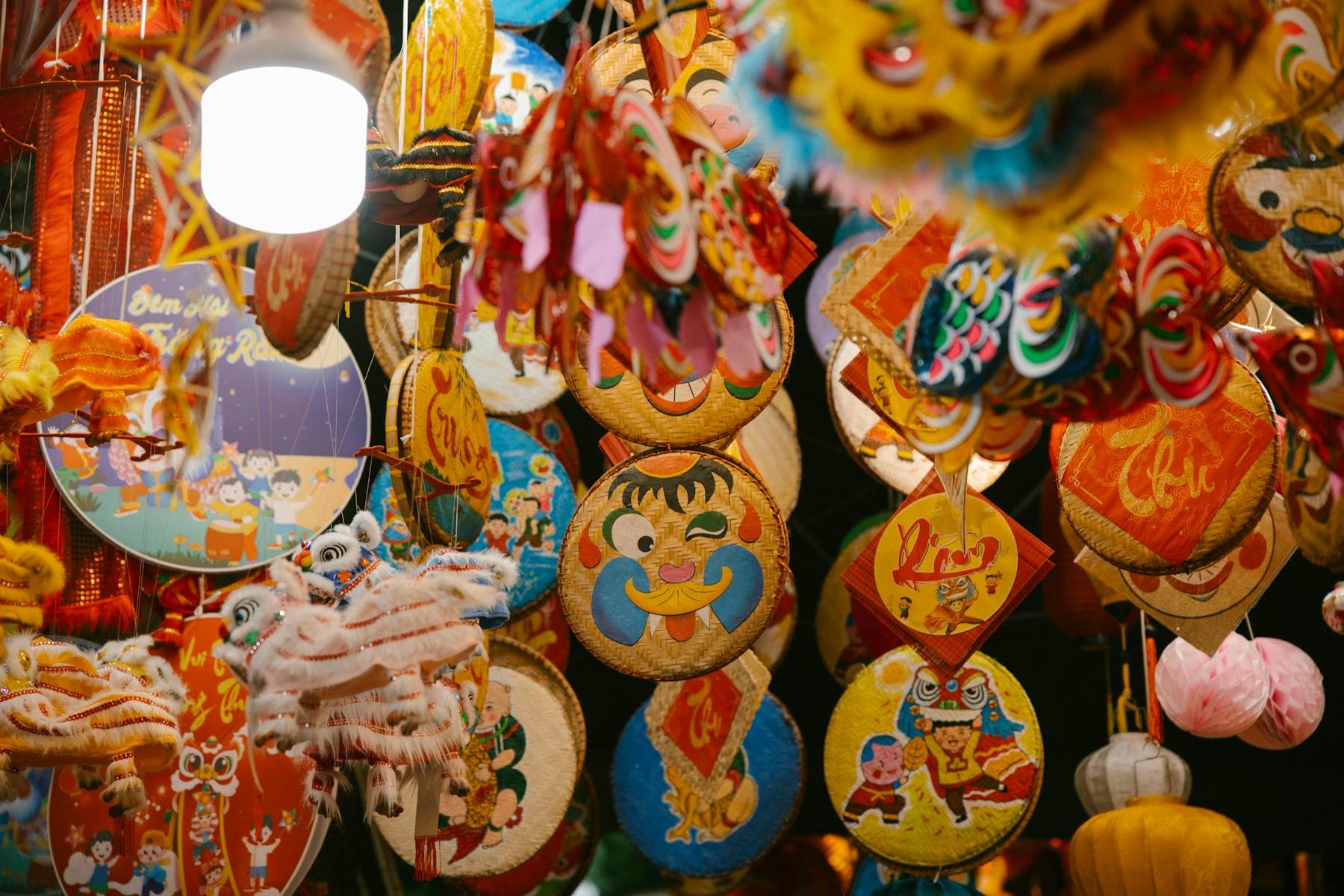
Tết Trung Thu — das Mittherbstfest, in ganz Vietnam am 15. Tag des 8. Mondmonats — ist nach Tết Nguyên Đán das zweitwichtigste traditionelle Fest des Kalenders. 2026 fällt es auf Donnerstag, den 17. September, mit der Vorlaufwoche ab etwa dem 12. September. Im Land vor allem ein Kinderfest, mit Mondkuchen, Papierlaternen in Fisch- oder Sternform und Löwentanztruppen in den Straßen. In Hội An — wo der Lampion ohnehin ganzjährig Stadtsymbol ist und das Lampion-Vollmondfest jeden Mondmonat stattfindet — entsteht so die aufwendigste Lampionnacht des Jahres, die Gäste aus Zentralvietnam und den Nachbarländern anzieht.
Was die Mittherbst-Nacht in Hội An anders macht
Das Vollmond-Lampionfest — am 14. Tag jedes Mondmonats, mit Motorverbot in der Altstadt und ausschließlich Kerzen- und Lampionlicht — ist die regelmäßige Vorlage. Die Feier am 17. September (mit den umliegenden drei Nächten 16.–18. September) ist dieselbe Vorlage, erweitert:
• Eine größere Lampionprozession durch die Altstadt, beginnend am Quan-Công-Tempel, durch die Hauptstraßen, angeführt von Truppen in Tracht der fünf traditionellen Zünfte (Zimmerleute, Töpfer, Weber, Händler, Fischer).
• Löwen- und Drachentänze an den Versammlungshallen (Phước Kiến, Trung Hoa, Triều Châu) im frühen Abend.
• Eine Kinder-Lampionparade auf der Trần Phú ab 19 Uhr, mit Hunderten lokal gefertigter Papierlaternen in traditionellen Formen (Karpfen, Stern, Lotus), getragen von den Kindern Hội Ans.
• Mondkuchen-Vorführungen und Verkostungen in einigen alten Bäckereien, am authentischsten am Zentralmarkt und bei Đức Anh, der alten Familienbäckerei in der Lê Lợi.
• Sonderaufführungen des Bài Chòi, der regionalen Volksspiel-Lied-Tradition, die die UNESCO 2017 als immaterielles Kulturerbe anerkannte.
• Eine erweiterte Schwimmkerzen-Zeremonie auf dem Thu Bồn; um 21 Uhr trägt der Fluss meist mehrere tausend Kerzen.
Die Atmosphäre ist familiärer als touristisch. Vietnamesische Familien kommen gezielt für die Kinderparade. Die Stimmung gleicht eher einem Kleinstadt-Sommerfest als einem Welterbe-Spektakel, auch wenn die Lampion-Ästhetik dieselbe ist.
Wann kommen
Das Fest ist eine Nacht (17. September), die Lampion-Atmosphäre dehnt sich aber auf drei bis vier Tage. Unsere Empfehlung:
Anreise 14. oder 15. September. Die Altstadt ist bereits geschmückt, doch die größten Mengen sind noch nicht da. Tage für den normalen Hội-An-Rhythmus — Radtouren, Spa, langsame Flussabende.
Abend 16. September. Erste große Lampionnacht, leichter als der 17., volle Lampion-Atmosphäre. Manche Reisende bevorzugen diese Nacht für Bilder, weil das Licht identisch ist und die Mengen rund 60 % der Spitze betragen.
17. September (Festnacht). Der große Abend. Langer, langsamer Plan: frühes Abendessen am Südufer, gegen 19:30 in die Altstadt zur Kinderparade, Löwentänze an der Phước-Kiến-Halle, gegen 20:30 Bootsfahrt mit Kerze, gegen 21:00 die volle lampionerleuchtete Altstadt von der An-Hội-Brücke aus.
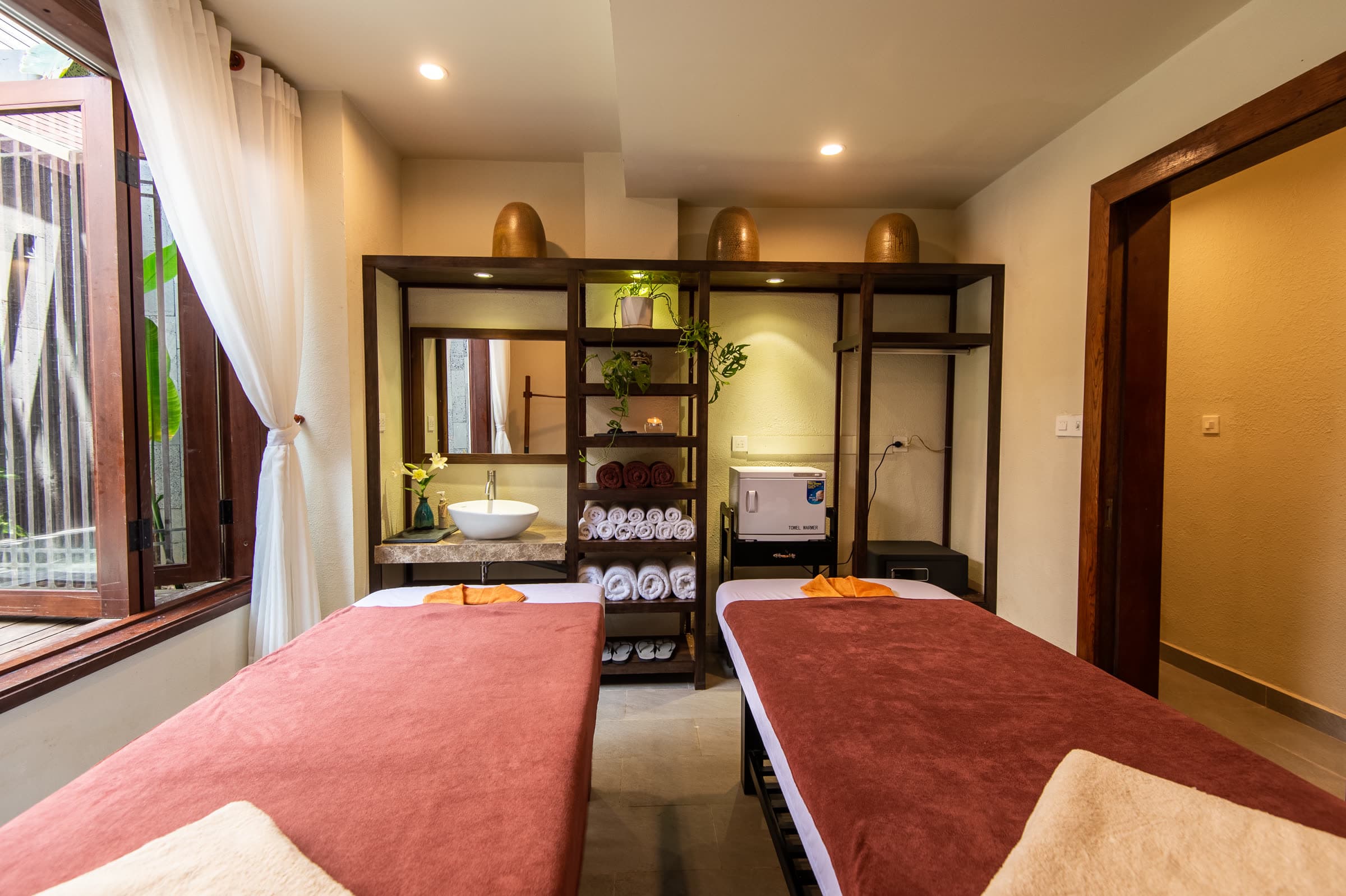
18. September. Ruhigerer Morgen, die Einheimischen erholen sich, die Stadt gehört wieder Ihnen. Guter Tag für Spa, Kräuterbad oder Strandvormittag.
Planen Sie Ihre Reise? Prüfen Sie die Verfügbarkeit in unserem ruhigen Hotel am Thu-Bồn-Fluss. Verfügbarkeit prüfen →
Abreise nicht vor dem 19. September. Der Flughafenverkehr in Đà Nẵng am 18. ist deutlich schlechter; Pufferzeit oder zusätzliche Nacht.
Mondkuchen — was kaufen
Mondkuchen (bánh trung thu) gibt es in zwei Familien: bánh nướng (gebacken, knusprige Kruste) und bánh dẻo (gedämpft, weiche Klebreis-Hülle). Hội An steht für die bánh-nướng-Tradition mit Lotussamenpaste, Mungbohne, gemischten Nüssen mit Trockenobst („thập cẩm") oder gesalzenem Eigelb. Die authentischste Quelle: Đức Anh in der Lê Lợi — eine Familienbäckerei in dritter Generation, die in der Saison ein paar hundert Schachteln pro Tag fertigt. Đông Phương an der Ecke gegenüber ist die zweitbeste. Mondkuchenstände im Zentralmarkt für ernsthafte Käufe meiden; höhere Margen, schwankende Frische.
Eine ungeöffnete Schachtel mit ins Hotel und nach Hause nehmen — Mondkuchen halten zwei bis drei Wochen, im Kühlschrank länger.
Buchung — und warum früh zählt
Hội Ans Unterkünfte für die Festwoche sind 2 bis 4 Monate im Voraus ausgebucht. Bis zum 1. Juli sind die meisten Boutique-Häuser am Fluss für den 16. bis 18. September voll. Bis Mitte Juli buchen; bei festen Daten bis Mitte Juni. Direktbuchung beim Hotel ist der zuverlässigste Weg an flussseitige Zimmer — die meisten Häuser halten ein kleines Premium-Kontingent außerhalb der OTAs für Direktgäste.
Tagesausflüge aus Đà Nẵng sind nicht zu empfehlen. Die Altstadt ist autofrei, der Verkehr Đà Nẵng–Hội An macht aus 30 Minuten zwei Stunden. Wer das Fest erleben will, schläft in Hội An.
Vom Hotel am Fluss in Hội An
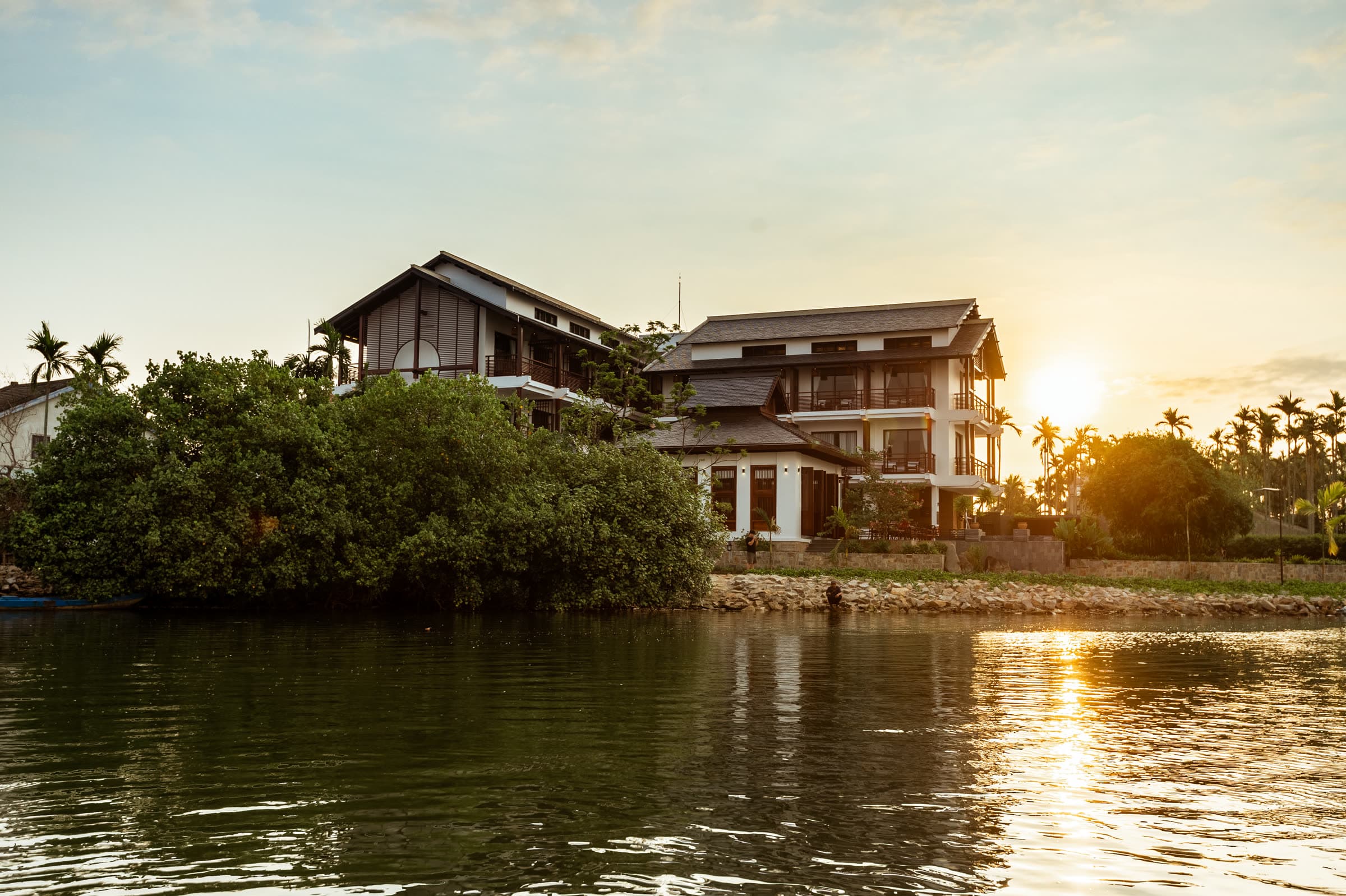
Der Rhythmus eines Hauses am Fluss passt zur Festwoche besonders. Die zehnminütige Radstrecke in die Altstadt erlaubt flexible Wiedereintritte; das Spa ist ein Gegenmittel zur sensorischen Last; und der Fluss selbst, auf dem die Schwimmkerzen zwei Abende vor dem Fenster vorbeitreiben, ist Teil des Erlebnisses. Wir empfehlen 4 bis 5 Nächte über das Festfenster — weniger lässt das Fest die Reise dominieren; mehr baut die Erholung korrekt ein.
Tết Trung Thu ist einer der besseren Gründe, eine Vietnamreise auf ein Datum zu legen. In Hội An gehört es zu den am häufigsten fotografierten und (nach westlicher Wahrnehmung) am wenigsten überfüllten Festen Südostasiens. 2026 fällt es auf einen Donnerstag — drei-Tage-wochenend-tauglich für europäische Reisende, vier Tage Inlandsfeier in Vietnam.
Every room at Nghê Prana is designed around the science of sleep. Blackout curtains, nightly aromatherapy turndown, and riverside quiet — experience what real rest feels like.
Zimmer am Fluss, zehn Fahrradminuten von der Altstadt. Ob eine Nacht zwischen Hué und Da Nang oder eine ganze Woche ohne Plan — Ihr Zimmer bleibt ruhig.
Kostenlose Stornierung · Direkt bei der Familie, die das Haus gebaut hat

 WhatsApp
 Zalo
Zalo