What UNESCO World Heritage Status Actually Means — And Why Hoi An Earned It
Hoi An Ancient Town holds the same international designation as Machu Picchu, the Great Wall of China, and Angkor Wat. Only 1,248 sites on Earth carry this title. Here is what it took for a small Vietnamese trading port on the Thu Bon River to join them — and what it means for your visit.
You have probably seen the phrase 'UNESCO World Heritage Site' on a travel brochure or Instagram caption and nodded along without thinking much about it. Most travelers treat it as a vague stamp of approval — something nice but not meaningfully different from a good TripAdvisor score. That is a mistake. UNESCO World Heritage designation is the single most rigorous, most selective, and most consequential recognition a place on Earth can receive. Understanding what it actually means will change the way you experience Hoi An.
The Nobel Prize of Places
To grasp the weight of the UNESCO World Heritage title, it helps to compare it to prestige systems people already understand. Think of it this way: Michelin awards three stars to restaurants that offer 'exceptional cuisine worth a special journey.' There are roughly 155 three-Michelin-star restaurants in the world. The Oscars hand out Best Picture once a year. The Nobel Prize recognizes perhaps six to twelve laureates annually. China's AAAAA (5A) scenic spot designation — the highest tier in its national tourism rating system — has been awarded to 358 sites since the classification began in 2007. Each of these systems shares a common trait: they exist to separate the exceptional from the merely good, applying standards so demanding that most candidates never qualify.
UNESCO World Heritage status is the equivalent of all of these — but for places. Out of every culturally and naturally significant site on the planet, only 1,248 across 170 countries have earned this designation. Hoi An Ancient Town is one of them.
The comparison to Michelin is particularly instructive. Michelin inspectors visit anonymously, judge against five fixed criteria (ingredient quality, flavor harmony, technique, personality, consistency), and award stars that can be revoked if standards slip. UNESCO operates on a strikingly similar model. A site must demonstrate Outstanding Universal Value — meaning its significance transcends national boundaries and belongs to all of humanity. It must meet at least one of ten strict selection criteria. It must prove integrity (is it intact?) and authenticity (is it genuine?). And it must show that an adequate management and protection plan is in place. Like a Michelin star, the designation can be revoked — and has been, three times in UNESCO history.
How Hoi An Made the List
Hoi An Ancient Town was inscribed on the UNESCO World Heritage List on December 4, 1999, during the 23rd session of the World Heritage Committee. It was recognized under two of the ten selection criteria — a significant achievement, since a site needs to satisfy only one.
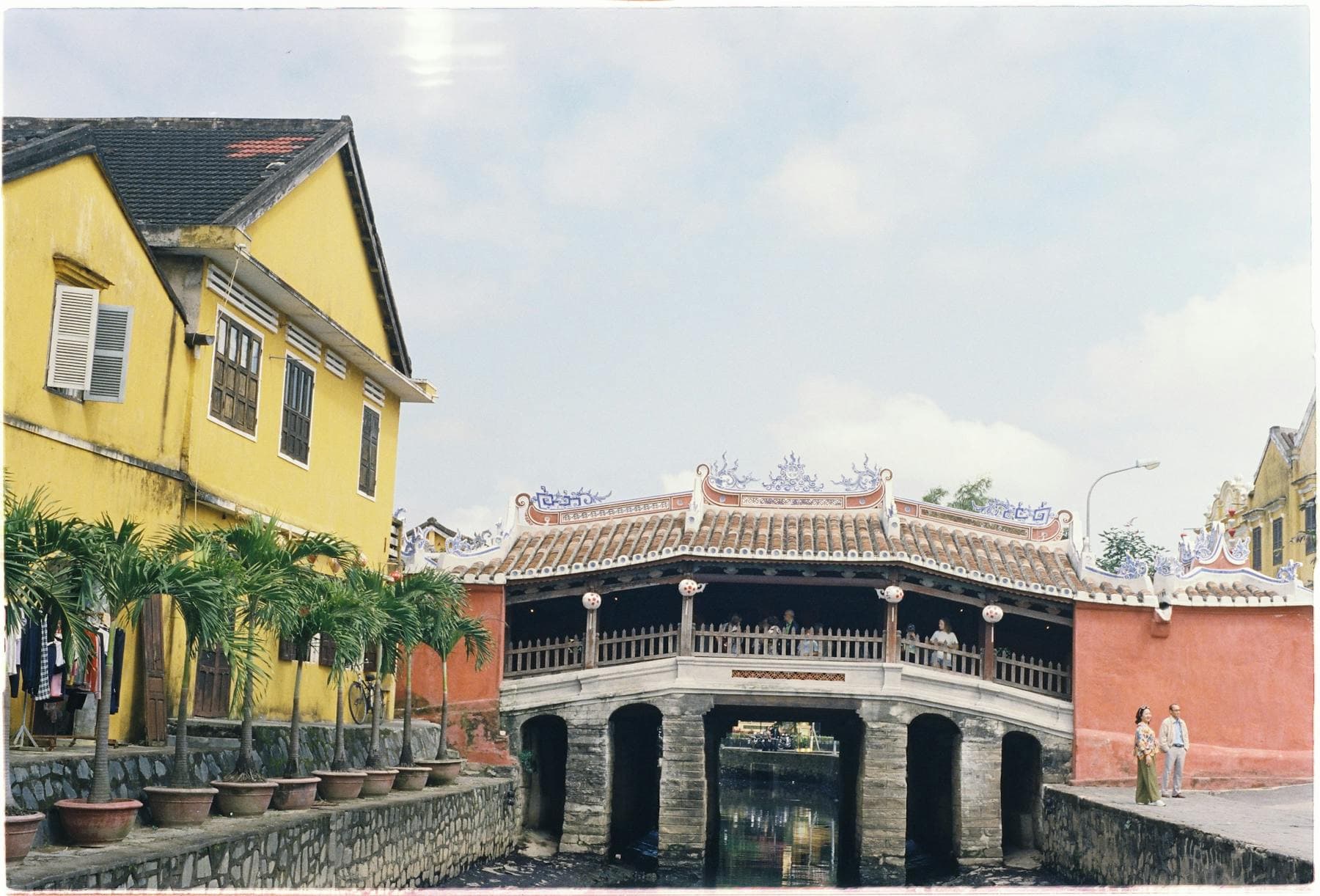
Criterion (ii) recognizes sites that 'exhibit an important interchange of human values over a span of time.' Hoi An qualifies because it is an outstanding material manifestation of the fusion of cultures in an international commercial port. Between the 15th and 19th centuries, merchants from Japan, China, India, the Netherlands, Portugal, and France converged here. The Japanese built their famous Covered Bridge around 1593. Chinese merchants from Fujian, Guangdong, and Hainan provinces erected elaborate assembly halls along Tran Phu Street. Portuguese and Dutch traders brought European architectural elements that still appear in the facades of the old town. The result is not a museum of any single culture — it is a living record of what happens when cultures meet, trade, borrow, and build together over four hundred years.
Criterion (v) recognizes 'an outstanding example of a traditional human settlement that is representative of a culture.' Hoi An earned this because its original urban fabric — the street plan, the timber-frame shophouses, the communal assembly halls, the family chapels, the bridges — has survived essentially intact. Unlike most historic Asian trading ports, which were destroyed by war, redevelopment, or natural disaster, Hoi An was preserved by the very thing that ended its commercial dominance: the Thu Bon River silted up in the 19th century, large ships could no longer dock, and the French colonial administration chose the deeper harbor at Da Nang instead. Commerce moved away. Development stopped. And without anyone intending it, an entire 16th-to-19th-century trading port was frozen in time.
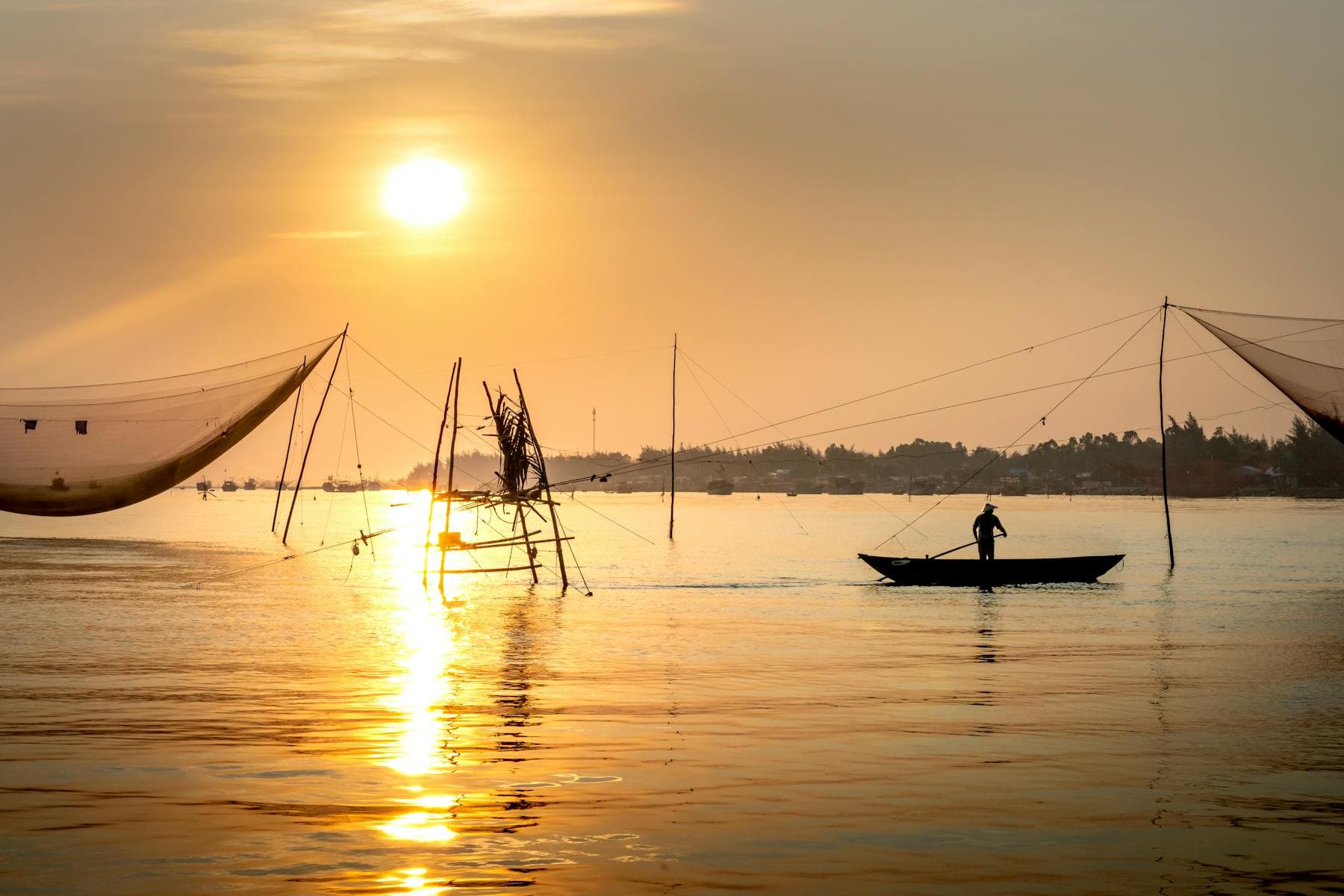
The irony at the heart of Hoi An's preservation is this: the river that once made it rich eventually made it irrelevant — and irrelevance is what saved it. The same Thu Bon River that flows past Nghe Prana today is the reason the Ancient Town still exists.
The Company Hoi An Keeps
Consider the sites that share UNESCO World Heritage designation with Hoi An. Angkor Wat in Cambodia, inscribed in 1992. Machu Picchu in Peru, inscribed in 1983. The Great Wall of China, inscribed in 1987. The Historic Centre of Rome, the Acropolis of Athens, Kyoto's historic monuments, the Taj Mahal. These are not just famous places — they are places that an international panel of experts, after years of evaluation, determined carry significance so profound that they belong to every person on the planet, regardless of nationality.
Within Vietnam itself, Hoi An is one of nine UNESCO World Heritage Sites. Ha Long Bay (inscribed 1994, extended in 2023 as Ha Long Bay-Cat Ba Archipelago) represents the natural heritage category. The Complex of Hue Monuments (1993) captures the imperial capital. My Son Sanctuary (1999, the same year as Hoi An) preserves the Hindu temple ruins of the ancient Cham civilization. Phong Nha-Ke Bang National Park (2003) protects one of the world's largest karst cave systems. Each site tells a different chapter of Vietnam's story. Hoi An's chapter is about connection — the moment when Vietnam opened its coast to the world and the world came flooding in.
China's 5A System: A Useful Contrast
If you have traveled in China, you may be familiar with the AAAAA (5A) scenic spot classification — the highest tier in China's national tourism rating system, administered by the Ministry of Culture and Tourism. As of March 2025, there are 358 AAAAA-rated sites across the country. The 5A system evaluates service quality, cleanliness, transportation access, safety, and visitor experience alongside landscape significance. It is a rigorous national standard, and earning 5A status is a genuine achievement.
But the difference between a national designation like 5A and an international designation like UNESCO World Heritage is structural. The 5A system asks: 'Is this an excellent tourism destination by Chinese standards?' UNESCO asks a fundamentally different question: 'Is this place so significant that losing it would diminish all of human civilization?' One measures quality of experience. The other measures irreplaceability. Hoi An passed the irreplaceability test.
Planning a trip around this? See dates at our quiet riverside hotel on the Thu Bồn. Check availability →
What This Means When You Walk Through the Old Town
Here is what changes when you understand all of this. The next time you cross the Japanese Covered Bridge, you are not just crossing a photogenic landmark. You are stepping onto a structure built by foreign merchants who sailed thousands of kilometers to trade silk and ceramics in a port town that no longer exists in any other form anywhere on Earth. The assembly halls along Tran Phu Street are not tourist attractions — they are the actual gathering places where Chinese merchant communities from specific provinces organized their commercial and spiritual lives, and some of those communities are still active today.
The timber-frame shophouses with their narrow facades and deep interiors — designed to minimize street-front tax exposure while maximizing interior space — are the same buildings that Vietnamese, Chinese, and Japanese families lived and worked in four centuries ago. Many are still occupied. The roof tiles are original. The load-bearing columns are the same columns that held the structure during Hoi An's commercial peak, when ships from across Asia and Europe anchored in the Thu Bon River.
When UNESCO says a site has Outstanding Universal Value, they mean exactly that: this place teaches something about humanity that cannot be learned anywhere else. Hoi An teaches what happens when an entire town becomes a conversation between civilizations — and the conversation is preserved, intact, for five hundred years.
Why We Built Nghe Prana Downriver
Nghe Prana Hotel and Spa sits on the Thu Bon River, about 3.2 kilometers downstream from the Ancient Town, on the south shore of Cẩm Nam island — about ten minutes by bicycle, or a short boat ride. We chose this location deliberately. The Ancient Town is extraordinary, but it is also busy, particularly in the evenings when the lantern market fills the streets and the bridge approaches are shoulder to shoulder with visitors. Staying downriver gives you something Hoi An's old quarter cannot: stillness.
You wake to the sound of the river. You cycle into the Ancient Town when the morning light is soft and the streets are quiet — before the tour groups arrive, when the shopkeepers are having coffee and the assembly halls are nearly empty. You see the town the way it was meant to be experienced: slowly, on foot, with time to notice the carved lintels and the courtyard gardens and the way the afternoon light falls through the wooden shutters. Then you return to the river, to the garden, to the quiet. You get both the heritage and the rest.
A Living Heritage, Not a Frozen One
The most remarkable thing about Hoi An is that it is not a ruin. It is not a reconstruction. It is not a theme park. The Ancient Town is a living neighborhood where people wake up, cook breakfast, send their children to school, run businesses, and hang laundry on the same balconies where merchants once displayed bolts of silk. UNESCO recognized this specifically — Hoi An's value lies not just in its architecture but in the continuity of daily life within that architecture.
This is what separates a UNESCO World Heritage Site from a well-preserved building. Buildings can be restored anywhere. What cannot be replicated is the unbroken thread of human habitation — the fact that the same narrow streets have been walked continuously for five centuries, that the same river has been fished by the same families, that the same festivals have been celebrated in the same assembly halls since the 1600s. That thread is what UNESCO set out to protect. And when you visit, you become part of it.
Only 1,248 places on Earth carry UNESCO World Heritage status. Hoi An did not receive this designation because it is charming, though it is. It received it because an international panel of experts determined that this small town on the Thu Bon River is irreplaceable — that there is nothing else like it, and there never will be again.
UNESCO World Heritage Committee (1999). Hoi An Ancient Town — Inscription on the World Heritage List (Criteria ii, v). UNESCO World Heritage Centre. View source
UNESCO World Heritage Centre (2005). The Criteria for Selection of World Heritage Sites. UNESCO Operational Guidelines. View source
UNESCO World Heritage Centre (2025). World Heritage List Statistics — 1,248 Properties in 170 Countries. UNESCO World Heritage Centre. View source
Ministry of Culture and Tourism, People's Republic of China (2024). National Standards for Classification and Rating of Tourist Attractions (5A Scenic Spots). Ministry of Culture and Tourism.
UNESCO World Heritage Committee (1992). Angkor — Inscription on the World Heritage List (Criteria i, ii, iii, iv). UNESCO World Heritage Centre. View source
UNESCO World Heritage Committee (1983). Historic Sanctuary of Machu Picchu — Inscription (Criteria i, iii, vii, ix). UNESCO World Heritage Centre. View source
UNESCO World Heritage Committee (1987). The Great Wall — Inscription on the World Heritage List (Criteria i, ii, iii, iv, vi). UNESCO World Heritage Centre. View source
Vietnam Law Magazine (2024). 25 Years of Hoi An as UNESCO World Cultural Heritage Site. Vietnam Law Magazine. View source
UNESCO (2020). Hoi An Ancient Town — Silk Roads Programme. UNESCO Silk Roads. View source
Every room at Nghê Prana is designed around the science of sleep. Blackout curtains, nightly aromatherapy turndown, and riverside quiet — experience what real rest feels like.
Riverside hotel rooms on the Thu Bồn, ten minutes by bicycle from the Ancient Town. Whether it's one night between Hue and Da Nang or a full week of doing nothing — we kept your room quiet.
Free cancellation · Direct from the family who built the hotel

 WhatsApp
 Zalo
Zalo