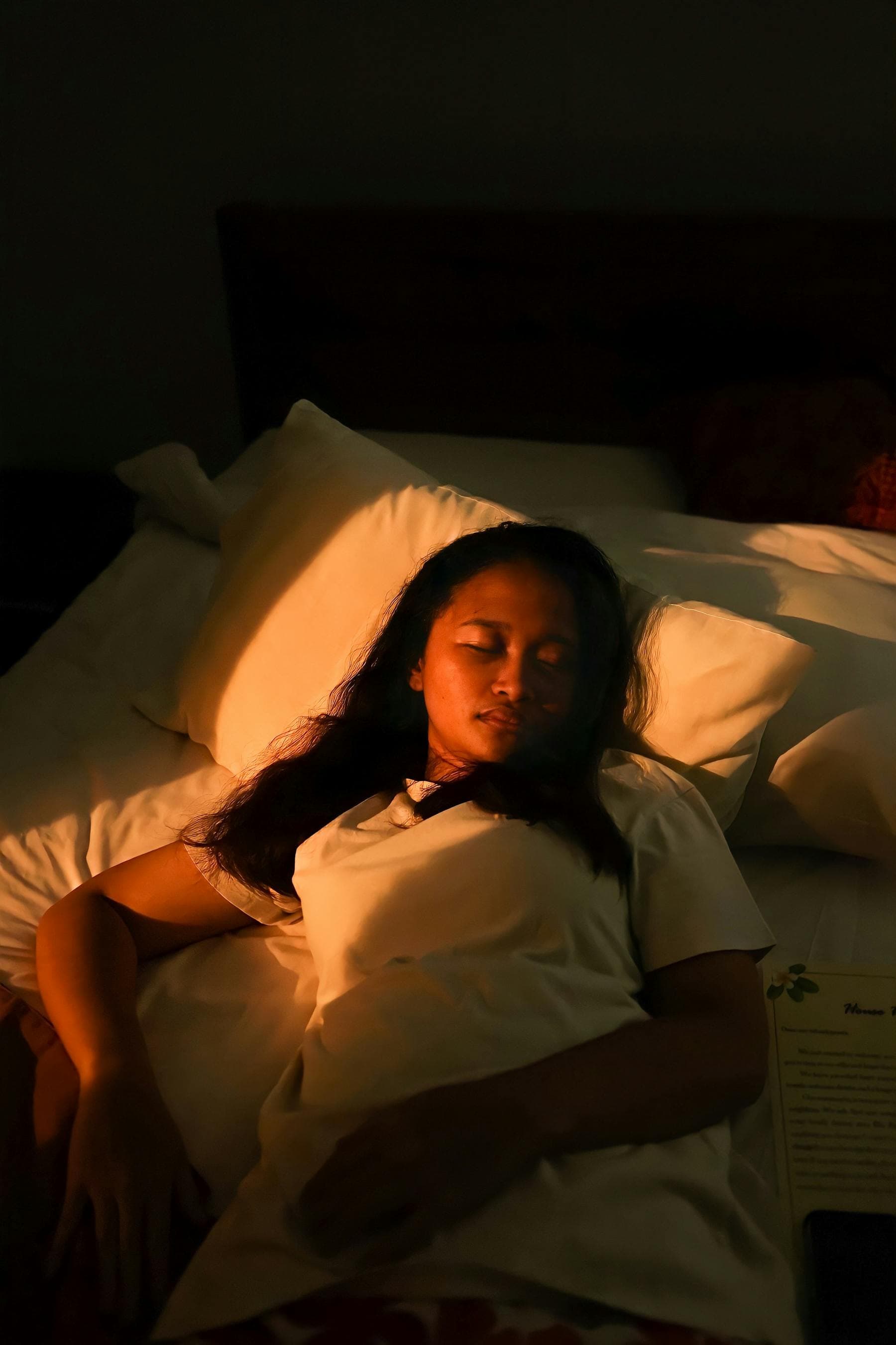
There is a reason the phrase 'beauty sleep' has persisted across cultures and centuries. It is not a myth or a marketing slogan — it is a biological reality. While you sleep, your body enters a state of deep repair that no serum, cream, or clinical procedure can replicate. Understanding this process can transform the way you think about skincare — and about rest itself.
Growth Hormone and Collagen Synthesis
During the deep stages of non-REM sleep, your pituitary gland releases a surge of human growth hormone (HGH). Sleep research has shown that in adults roughly 70 percent of daily HGH output is released during early sleep, in close association with the first episode of slow-wave sleep. HGH is the master signal for cellular repair: it stimulates fibroblasts in the dermis to produce collagen, the structural protein that keeps skin firm, plump, and resilient. Without adequate deep sleep, collagen synthesis slows dramatically.
Cortisol, Moisture Loss, and the Skin Barrier
Cortisol — the stress hormone — follows an inverse pattern. It drops to its lowest levels during the first half of the night, allowing your skin's inflammatory response to quiet down.
A 2015 study in Clinical & Experimental Dermatology found that poor-quality sleepers showed significantly higher transepidermal water loss and slower recovery of skin barrier function than good-quality sleepers. Poor sleep literally makes your skin leak moisture.
Blood flow to the skin also increases during sleep, delivering oxygen and nutrients while flushing metabolic waste. This is why you often wake with a natural flush after a deep night's rest, and why sleep deprivation leaves you with that unmistakable sallow, dull complexion. A 2010 study from the British Medical Journal asked observers to rate photographs of sleep-deprived versus well-rested individuals — the sleep-deprived faces were consistently rated as less healthy and less attractive.
Sleep and Acne: The Cortisol Connection
Planning a trip around this? See dates at our quiet riverside hotel on the Thu Bồn. Check availability →
When cortisol remains elevated due to sleep loss, sebaceous glands produce excess oil, while the immune system's ability to manage Cutibacterium acnes bacteria weakens. Dermatology research has repeatedly linked short sleep duration and poor sleep quality with more frequent and more severe acne, with the association growing stronger as acne severity increases.
What This Means for Your Routine
At Nghe Prana, we designed every room around these principles. Our blackout curtains eliminate light pollution — even small amounts of ambient light can suppress melatonin and reduce time spent in deep sleep. The nightly herbal pillow sachet, infused with lemongrass and lavender, draws from a 2005 Chronobiology International study showing that lavender inhalation increased the percentage of deep, slow-wave sleep in young men and women.
The next time you consider investing in an expensive night cream, consider this: the most effective skincare treatment you will ever find is already free and available to you every night. The catch is that you must actually allow yourself to receive it — lights off, phone down, and seven to nine hours of uninterrupted stillness.
Beauty, in its truest form, is restoration. And restoration, at its deepest, is sleep.
Van Cauter E, Plat L (1991). Physiology of growth hormone secretion during sleep. Journal of Clinical Investigation.
Oyetakin-White P, Suggs A, Keri B, et al. (2015). Does poor sleep quality affect skin ageing?. Clinical and Experimental Dermatology.
Axelsson J, Sundelin T, Ingre M, et al. (2010). Beauty sleep: experimental study on the perceived health and attractiveness of sleep deprived people. BMJ. View source
Schrom KP, Ahsanuddin S, Baeez M, et al. (2023). Sleep duration and acne severity: a cross-sectional study. Sleep Medicine.
Goel N, Kim H, Lao RP (2012). An olfactory stimulus modifies nighttime sleep in young men and women. Chronobiology International.
Every room at Nghê Prana is designed around the science of sleep. Blackout curtains, nightly aromatherapy turndown, and riverside quiet — experience what real rest feels like.
Riverside hotel rooms on the Thu Bồn, ten minutes by bicycle from the Ancient Town. Whether it's one night between Hue and Da Nang or a full week of doing nothing — we kept your room quiet.
Free cancellation · Direct from the family who built the hotel
 WhatsApp
 Zalo
Zalo