Ngọc Linh Ginseng Festival 2026: Vietnam's 'National Treasure', the Đà Nẵng Medicinal-Herb Event & the Herbal-Wellness Lineage Behind It
The first Da Nang International Ngoc Linh Ginseng and Medicinal Herbs Festival runs 1–3 August 2026, with a 'Ginseng Spirit' ceremony on 31 July in the Trà Linh highlands. A riverside Hội An wellness desk on what Vietnam's quốc bảo ginseng is, the verified festival schedule, and the thuốc-nam herbal lineage a Thu Bồn spa shares with it.
In late July 2026, an opening ceremony will unfold at a small shrine in the Ngọc Linh mountains — incense, lowland and highland dignitaries, and a row of fragile, fern-like ginseng seedlings handed to Xơ Đăng growers. This is the Lễ cúng Thần Sâm, the "Ceremony Honouring the Ginseng Spirit," and it sets in motion the first Da Nang International Ngoc Linh Ginseng and Medicinal Herbs Festival (Lễ hội Sâm Ngọc Linh và Dược liệu Quốc tế Đà Nẵng 2026). What follows is, for our riverside wellness desk in Hội An, the clearest signal yet that the herbal lineage we draw on every evening — the steam, the lemongrass, the thuốc nam bath — is about to have its biggest stage in central Vietnam.
Photo: Julia Volk / Pexels
This post synthesises the official planning documents and Vietnamese press coverage — the Đà Nẵng city portal (danang.gov.vn), the city tourism portal (danangfantasticity.com), Tuổi Trẻ, Báo Văn hóa, and Nông nghiệp & Môi trường — and connects a hard 2026 news event to the question our German and Korean wellness guests keep asking on the south bank of the Thu Bồn: what is this "national treasure" ginseng, and is it part of the same herbal tradition the spa here is built on? The short answer is yes — and 2026 is the year to understand why.
What is the Ngọc Linh Ginseng & Medicinal-Herb Festival 2026?
The festival is a first-of-its-kind event organised by the People's Committee of Đà Nẵng under Plan 259 (Kế hoạch 259), issued in May 2026. Its full title in Vietnamese is Lễ hội Sâm Ngọc Linh và Dược liệu Quốc tế Đà Nẵng 2026; the official English rendering is the Da Nang International Ngoc Linh Ginseng and Medicinal Herbs Festival 2026. The stated goals, as reported by Nông nghiệp & Môi trường, are to promote the special value of Ngọc Linh ginseng — the herb Vietnam calls its quốc bảo, or "national treasure" — to build out the ginseng and medicinal-plant value chain, to attract investment in the dược liệu (medicinal-herb) sector, and, crucially for us, to promote health and wellness tourism (du lịch chăm sóc sức khỏe).
That last phrase is why this event sits on a wellness desk and not only a travel one. The organisers are explicitly framing Ngọc Linh ginseng not as an agricultural curiosity but as the anchor of a botanical-wellness economy — the same logic that, on a far smaller scale, underpins a Vietnamese herbal bath after a long-haul flight.
When and where does it happen in 2026?
The headline festival runs 1–3 August 2026, with the ceremonial opening the day before. Here is the confirmed schedule, drawn from the Đà Nẵng city portal and Tuổi Trẻ's 26 May 2026 report:
31 July 2026 — Ceremony Honouring the Ginseng Spirit (Lễ cúng Thần Sâm) and the handing-over of Ngọc Linh ginseng seedlings, held at the Ngọc Linh ginseng shrine in Kon Pin village, Trà Linh commune, deep in the Nam Trà My highlands.
1 August 2026 — opening day in central Đà Nẵng, with the "Day Honouring Ngọc Linh Ginseng" (Ngày hội tôn vinh Sâm Ngọc Linh), a juried ginseng contest, and a live auction of prize ginseng plants whose proceeds, per the organisers, go to ginseng-zone conservation, community development, and scholarships for highland students.
2 August 2026 — international scientific seminar (hội thảo khoa học quốc tế) on Ngọc Linh ginseng and medicinal herbs, in Đà Nẵng city.
31 July–3 August 2026 — the "Great-Forest Journey" tour (Chuyến đi đại ngàn — Khám phá Sâm Ngọc Linh), taking visitors into the cultivation zones to meet growers and walk the ginseng market.
In the city, the public-facing programme clusters around APEC Park, the Bạch Đằng riverside walking street, and the landscaped area west of the Dragon Bridge (Cầu Rồng) — alongside sport-and-spectacle add-ons including a Ngọc Linh Ginseng golf tournament and a pickleball event. The growing-zone activities reach across the communes of Trà Linh, Trà Vân, Trà Leng, Trà Tập and the wider Nam Trà My district. An international exhibition space will display ginsengs from Korea, China, the United States, Canada, Russia and Uzbekistan beside the Vietnamese dược liệu.
Photo: Q. Hưng Phạm / Pexels
Why is Ngọc Linh ginseng called Vietnam's "national treasure"?
Sâm Ngọc Linh (Panax vietnamensis) is a ginseng species endemic to the Ngọc Linh massif on the old Quảng Nam–Kon Tum border, growing wild only at roughly 1,500–2,200 metres under undisturbed primary forest. It was discovered in 1973 and formally described as a new species — Panax vietnamensis Hà et Grushv. — in 1985, and what set it apart is its chemistry: it carries an unusually high concentration of saponins — including majonoside-R2, a compound rare in other ginsengs — which is the pharmacological basis for the reverence it attracts.
In 2017 the Vietnamese government designated Sâm Ngọc Linh a national product, and the quốc bảo ("national treasure") framing has been official rhetoric ever since. Cultivation is painstaking: a ginseng root needs the better part of a decade under canopy before harvest, and authenticated Trà Linh ginseng routinely sells by the gram. The festival's auction-and-contest format exists precisely because each mature plant is, in market terms, closer to a gemstone than a vegetable.
For a wellness audience the relevant point is not the price. It is the lineage. Ngọc Linh ginseng sits at the apex of a Vietnamese medicinal-plant tradition — thuốc nam, "southern medicine" — that runs from this rarest highland root all the way down to the everyday lemongrass, perilla and kinh giới (Vietnamese balm) that flavour a Hội An kitchen and steam in a Hội An bath. The festival is putting the whole pyramid on display, apex and base together.
How does this connect to a riverside wellness stay in Hội An?
Planning a trip around this? See dates at our quiet riverside hotel on the Thu Bồn. Check availability →
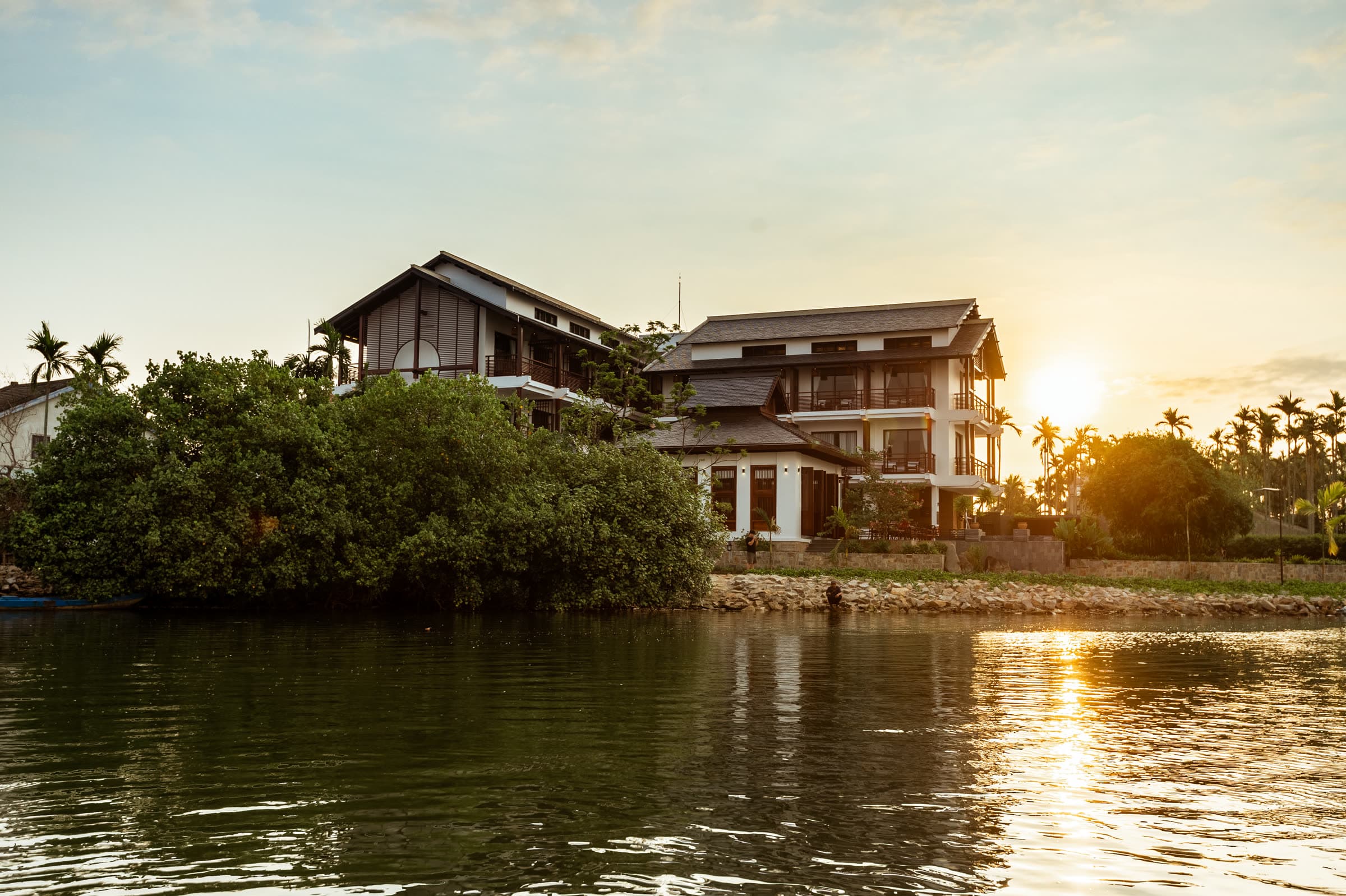
Nghê Prana is a riverside hotel and wellness spa on the Thu Bồn in Hội An — roughly 150 kilometres downstream and seaward of the ginseng forests, but inside the same Quảng Nam–Đà Nẵng medicinal-plant world that the festival celebrates. The administrative 2025 merger that folded Quảng Nam into a single Đà Nẵng-led administration means the ginseng zones of Nam Trà My and the riverfront of Hội An now share one provincial-level government — and, increasingly, one wellness-tourism story.
Photo: Tima Miroshnichenko / Pexels
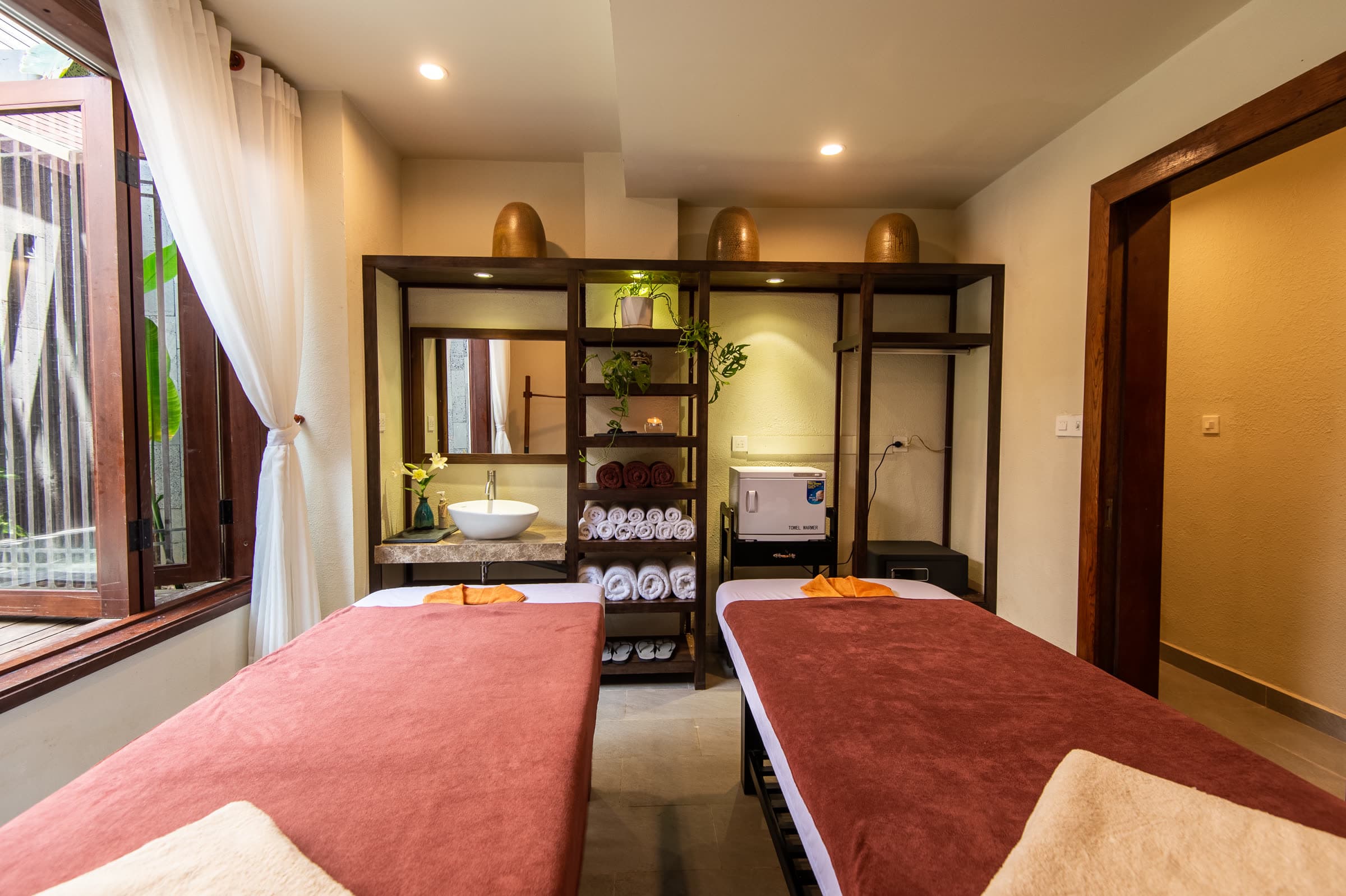
That lineage is what our spa actually runs on. The evening xông hơi — the Vietnamese herbal steam — is built from a bundle of leaves any thuốc nam practitioner would recognise: lemongrass (sả), perilla (tía tô), pomelo leaf (lá bưởi), Vietnamese balm (kinh giới) and ngải cứu (mugwort), simmered until the room fills with volatile oils. It is the same botanical logic the festival is scaling up to an international stage: that central Vietnam's plants are medicine, not garnish.
We have written about this tradition at length before. Our piece on the Vietnamese parallel to the German Heilfasten and Kneipp tradition maps thuốc nam against the five-pillar European naturopathy our DACH guests grew up with — and the ginseng festival is, in effect, the Vietnamese state making the same argument we make to one guest at a time. Our guide to the Vietnamese herbal bath walks through the specific leaves, why lemongrass and lavender pair the way they do, and how a soak resets the body after travel. Read together, those two posts are the everyday, base-of-the-pyramid version of what Đà Nẵng will showcase at its apex in August.
Why does 2026 make this the year to pay attention?
Botanical wellness and "longevity travel" are the defining wellness-tourism trends of 2026 — guests increasingly choose destinations for what the local plant pharmacopoeia can do for recovery, sleep and stress, not only for the view. Vietnam has a deep, under-translated answer to that demand, and for the first time a Vietnamese city is staging it at international scale, with a scientific seminar, an international ginseng exhibition, and a wellness-tourism mandate written into the plan.
For a traveller, the practical reading is this. If you are visiting central Vietnam in the dry season, the first three days of August 2026 put the region's entire medicinal-plant culture within a short drive of the coast — the contest, the auction, the international displays, the highland Chuyến đi đại ngàn tour into the ginseng forests themselves. And a riverside base in Hội An lets you experience the base of that same pyramid every evening: the steam, the compress, the herbal bath that the thuốc nam tradition has been quietly perfecting for centuries.
How to experience the herbal lineage from the Thu Bồn
Photo: Yan Krukau / Pexels
A practical itinerary writes itself. Base on the Thu Bồn in Hội An for the riverside evenings and the wellness rituals; reserve the herbal steam and a herbal-compress treatment for the days you arrive and the day before you leave, when the body most needs resetting. If the festival dates align with your stay, the Nam Trà My ginseng zone is reachable as a long day or overnight from the coast, and the central-Đà Nẵng programme around APEC Park and the Bạch Đằng walking street is an easy half-day from Hội An.
The deeper invitation is to read the two halves together. The Ngọc Linh ginseng on an auction table in Đà Nẵng and the lemongrass steaming in a Hội An spa are not separate stories. They are the apex and the base of one Vietnamese medicinal-plant tradition that the country is, in August 2026, finally presenting to the world on its own terms — and that a riverside wellness stay lets you feel in the body the same week.
About this article. Synthesised from the Đà Nẵng city portal (danang.gov.vn) and city tourism portal (danangfantasticity.com), Tuổi Trẻ's 26 May 2026 report, Báo Văn hóa, Báo Đà Nẵng and Nông nghiệp & Môi trường on the Lễ hội Sâm Ngọc Linh và Dược liệu Quốc tế Đà Nẵng 2026, organised under Đà Nẵng People's Committee Plan 259. Hotel-side reporting: the herbal-steam (xông hơi) and herbal-bath rituals described are drawn from first-hand practice at our riverside wellness spa on the Thu Bồn in Hội An. Festival dates and the official festival name were verified against danang.gov.vn and Tuổi Trẻ; package pricing and any festival shuttle arrangements are operator-side to confirm closer to the dates.
UBND TP Đà Nẵng (2026). Đà Nẵng chuẩn bị tổ chức Lễ hội Sâm Ngọc Linh và Dược liệu quốc tế năm 2026 (Kế hoạch 259). Cổng thông tin điện tử thành phố Đà Nẵng (danang.gov.vn). View source
Tuổi Trẻ (2026). Lễ hội sâm Ngọc Linh và dược liệu quốc tế Đà Nẵng 2026 diễn ra đầu tháng 8. Tuổi Trẻ. View source
Báo Văn hóa (2026). Các hoạt động đặc sắc tại Lễ hội Sâm Ngọc Linh và Dược liệu quốc tế Đà Nẵng 2026. Báo Văn hóa (baovanhoa.vn). View source
Nông nghiệp & Môi trường (2026). Đà Nẵng quảng bá 'quốc bảo' Sâm Ngọc Linh qua lễ hội quốc tế năm 2026. Báo Nông nghiệp & Môi trường (nongnghiepmoitruong.vn). View source
Báo Đà Nẵng (2026). Chi tiết Lễ hội sâm Ngọc Linh và dược liệu quốc tế Đà Nẵng 2026. Báo Đà Nẵng (baodanang.vn). View source
Cổng thông tin du lịch thành phố Đà Nẵng (2026). Lễ hội Sâm Ngọc Linh và Dược liệu quốc tế 2026 – Nơi tinh hoa đại ngàn hội tụ. Da Nang Tourism Portal (danangfantasticity.com). View source
Đầu tư Chứng khoán (Tin nhanh Chứng khoán) (2026). Đà Nẵng lên kế hoạch cho Lễ hội Sâm Ngọc Linh và Dược liệu quốc tế 2026. Tin nhanh Chứng khoán (tinnhanhchungkhoan.vn). View source
Every room at Nghê Prana is designed around the science of sleep. Blackout curtains, nightly aromatherapy turndown, and riverside quiet — experience what real rest feels like.
Riverside hotel rooms on the Thu Bồn, ten minutes by bicycle from the Ancient Town. Whether it's one night between Hue and Da Nang or a full week of doing nothing — we kept your room quiet.
Free cancellation · Direct from the family who built the hotel


 WhatsApp
 Zalo
Zalo