Plage d'An Bàng : la plage de Hội An que les habitants fréquentent vraiment
À quatre kilomètres au nord de la vieille ville, là où Cửa Đại a perdu l'essentiel de son sable à l'érosion, An Bàng est la plage où vont les résidents et les expatriés installés. Voici le guide complet.
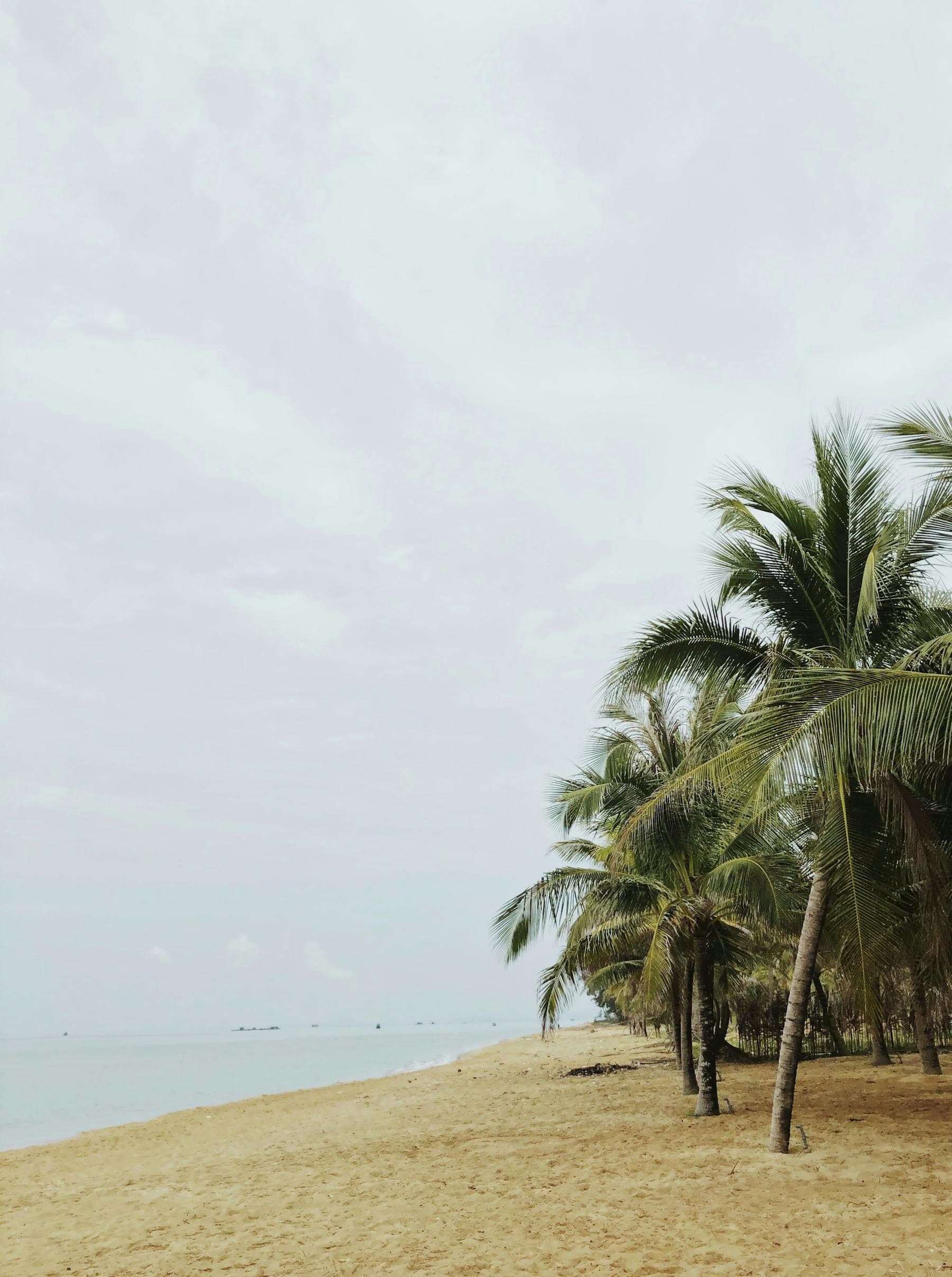
An Bàng est un ruban de quatre kilomètres de sable fin et pâle sur la côte de la mer de l'Est, juste au nord de l'embouchure du fleuve Thu Bồn. C'est la plage baignable la plus proche de la vieille ville de Hội An — quinze minutes à vélo depuis le centre, dix en scooter depuis Cẩm Nam — et elle est devenue, en une décennie, à la fois la plage préférée des habitants pour la baignade et l'une des meilleures petites scènes balnéaires du Centre-Vietnam. La plage située immédiatement au sud, Cửa Đại, fut longtemps la plus connue ; l'érosion l'a réduite à une bande étroite adossée à des digues de sacs de sable, et la plupart de ses anciens resorts donnent désormais sur un mur plutôt que sur la mer. An Bàng a hérité du rôle.
Le ruban court grossièrement parallèle à la côte sur près d'un kilomètre de façade restaurants, puis s'ouvre sur une portion non aménagée qui file plusieurs kilomètres vers le nord, jusqu'aux villages côtiers de Tân Thành et au-delà. La portion aménagée compte une vingtaine de restaurants et bars posés à même le sable, avec des transats déployés devant chacun. Le schéma est la stricte économie balnéaire vietnamienne : les transats sont gratuits si vous commandez à manger et à boire au restaurant qui les chapeaute, et l'on peut tirer un café pendant une heure sans qu'on vienne vous bousculer. Les serviettes sont en général fournies. Chargeurs, casiers et douches varient d'une adresse à l'autre.
Quand venir
Le lever du soleil — entre 5 h 30 et 6 h 30 selon la saison — est l'heure la plus belle d'An Bàng, et personne ou presque n'est là. Les pêcheurs tirent leurs barques-paniers rondes sur le sable, leur silhouette en osier se découpe sur le soleil levant, et la population se résume à un mince essaim de joggeurs et de groupes de yoga. Vers 9 h, les restaurants installent les transats ; à 10 h, les premiers bus arrivent ; en milieu d'après-midi, le ruban est animé. La fenêtre 16 h – 18 h est la seconde heure magique — le soleil est tombé derrière les dunes (on ne voit pas le coucher depuis cette côte orientale, mais la lumière s'or sur le sable) et la chaleur s'apaise.
La saison de baignade va à peu près de mars à début septembre. De fin septembre à février, la mer génère de fortes houles sur cette côte, et le drapeau rouge flotte la plupart des jours pour interdire la baignade ; les courants d'arrachement peuvent être sérieux et plusieurs noyades surviennent chaque hiver malgré les avertissements. L'eau reste chaude toute l'année (24 à 29 °C) mais c'est la houle qui dicte la loi. Les surfeurs profitent de la houle d'hiver, et une petite communauté locale s'est formée autour d'An Bàng ces cinq dernières années, avec locations et cours débutants disponibles dans un ou deux établissements de l'extrémité sud.
Où manger et boire
Les restaurants se ressemblent par les cartes et la qualité, mais quelques-uns valent d'être connus. Soul Kitchen, à l'entrée centrale, est le plus ancien des bars d'inspiration européenne et reste fiable pour un long déjeuner face à la mer. Salt Pub a la meilleure sélection de bières artisanales. Shore Club est l'option haut de gamme avec une petite piscine à débordement. La Plage, restaurant franco-vietnamien situé un pâté en arrière, est la meilleure adresse pour un dîner dans le secteur, et mérite une réservation en haute saison. Pour la cuisine vietnamienne, le petit étal de bún chả cá au fond du marché central (à gauche en entrant, troisième étal) sert la meilleure soupe de nouilles au poisson du voisinage immédiat, pour moins de 50 000 VND.
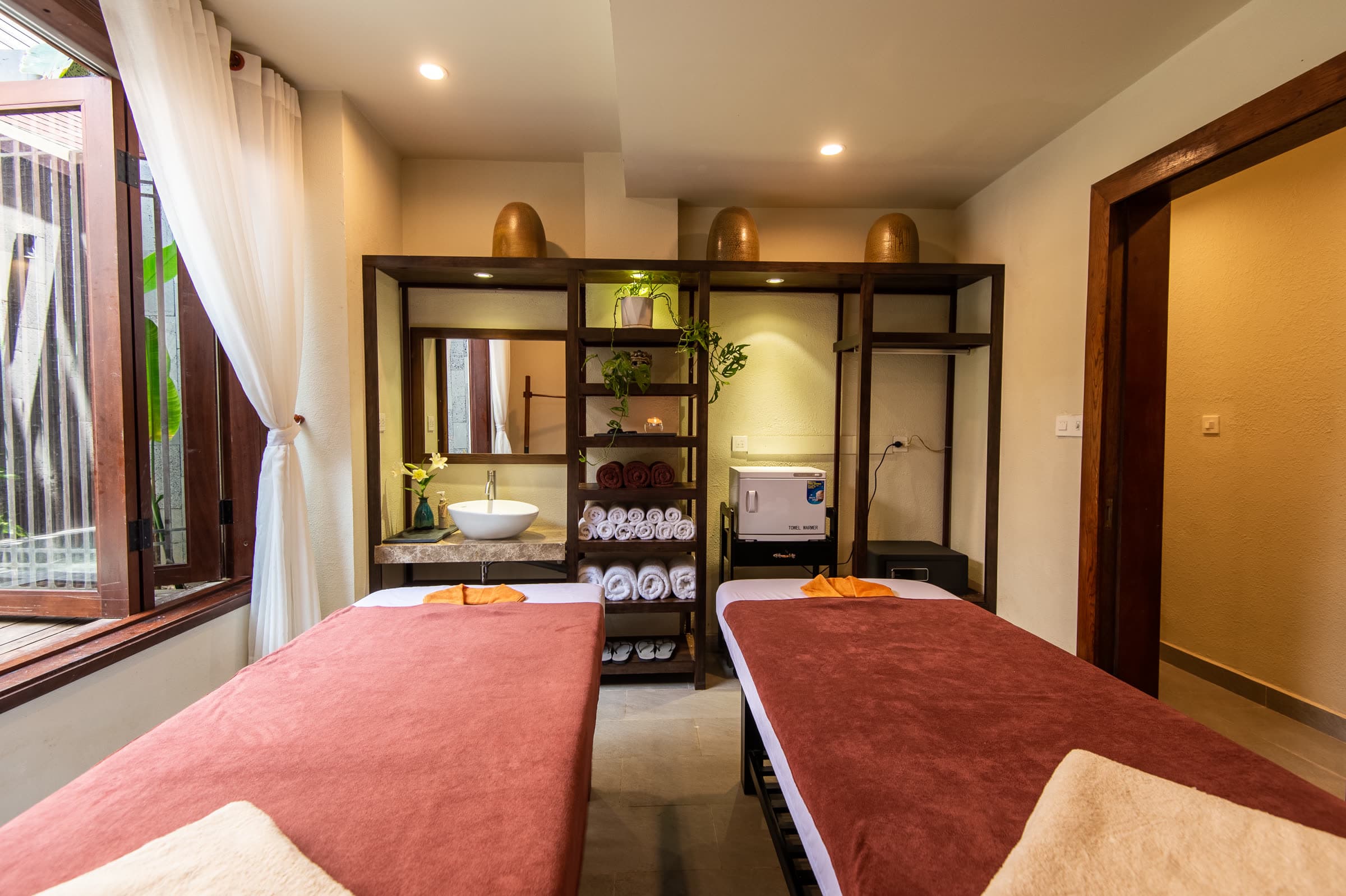
Le rythme pratique idéal : vélo depuis l'hôtel avant 6 h 30, baignade et observation des barques qui rentrent, petit-déjeuner dans un café de plage, retour par le village de Trà Quế (la ferme d'herbes qui approvisionne la plupart des restaurants du Centre) avant 9 h 30, juste avant que la chaleur ne s'installe. La boucle dure deux heures et demie, finit à votre spa, et c'est la journée que la majorité de nos clients décrivent comme leur favorite.
Vous organisez votre séjour ? Vérifiez les disponibilités de notre paisible hôtel au bord de la Thu Bồn. Voir les disponibilités →
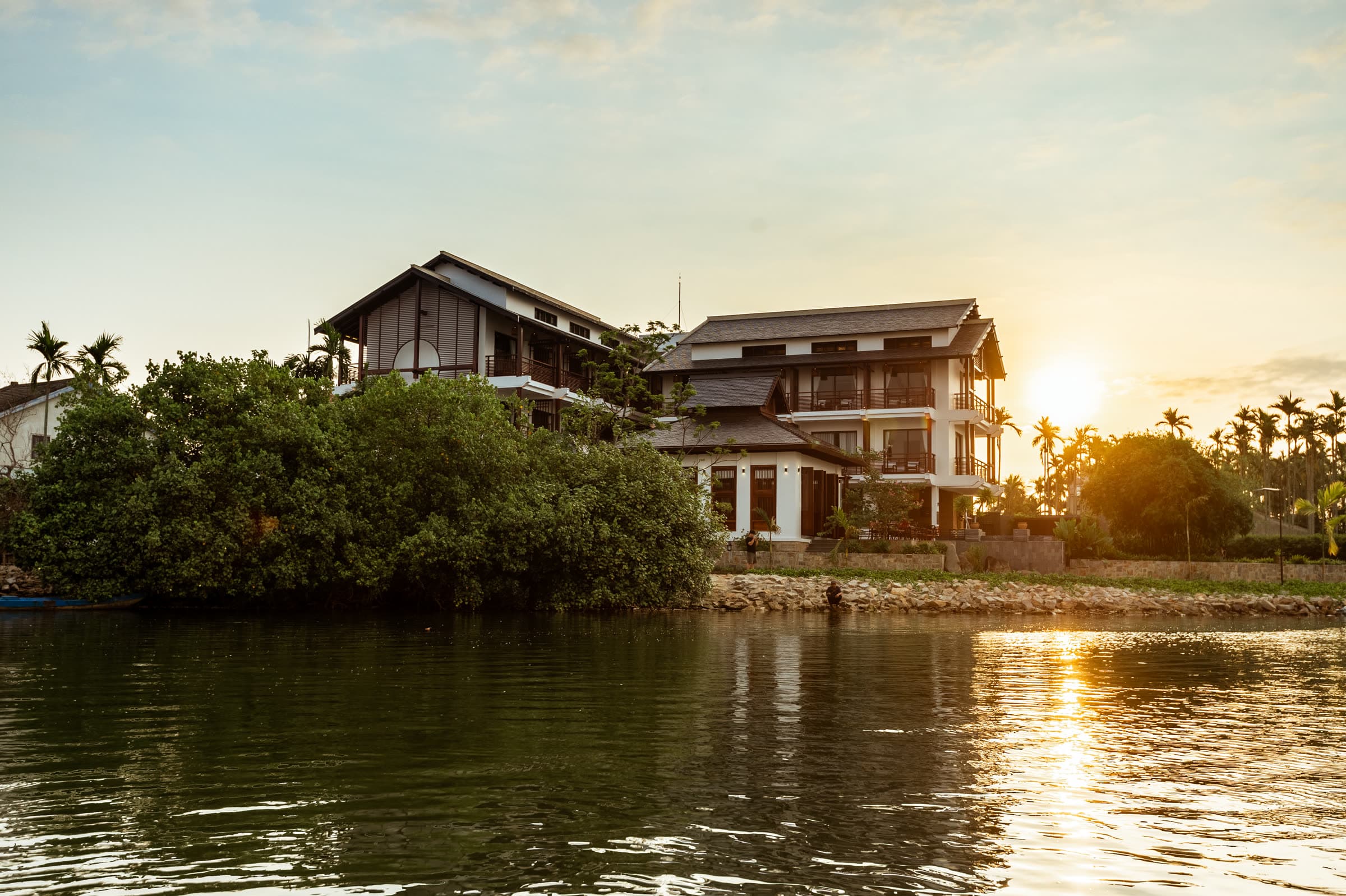
Y aller depuis une base à l'hôtel au bord du fleuve à Hội An
Depuis Cẩm Nam, la sortie à vélo prend environ vingt-cinq minutes. La route est plate, les voies de campagne sont calmes (essentiellement résidentielles et agricoles), et le paysage défile entre rizières et planches d'herbes de Trà Quế avant d'atteindre la route côtière. En scooter, douze minutes. En taxi ou en Grab, quinze minutes ; comptez 100 000 à 150 000 VND par trajet. Nous prêtons des vélos à tous nos clients sans frais, avec une carte dessinée à la main qui prend les chemins détournés et évite la route principale.
La plupart des clients pédalent jusque-là pour une visite matinale et un café, rentrent pour la chaleur de la journée, et y retournent au crépuscule pour un verre en début de soirée avant de filer vers la vieille ville. Cẩm Nam est exceptionnellement bien placée pour ce rythme : dix minutes à vélo de la vieille ville d'un côté, vingt-cinq de la plage de l'autre.
Notes pratiques
Apportez un tee-shirt anti-UV ou un rash guard si vous comptez nager en milieu de journée ; le soleil est intense ici et la crème solaire ordinaire est dépassée en vingt minutes. Toilettes publiques correctes à l'entrée principale. Casiers disponibles dans la plupart des restaurants pour 10 000 à 20 000 VND. Le vol à la tire est rare, et les caches sous les transats sont raisonnablement sûres.
An Bàng est de ces plages qui restent agréables même en haute saison — assez petite pour avoir l'âme d'une plage de ville, assez peu aménagée au nord pour qu'une marche de vingt minutes vous mène sur le sable vide, assez proche de la vieille ville pour ne pas y consacrer une journée entière. Les voyageurs en tirent plus que des grandes destinations balnéaires vietnamiennes parce qu'ils la traitent comme une virgule dans la journée, et non comme la journée elle-même.
Every room at Nghê Prana is designed around the science of sleep. Blackout curtains, nightly aromatherapy turndown, and riverside quiet — experience what real rest feels like.
Chambres au bord du fleuve, à dix minutes à vélo de la vieille ville. Une nuit entre Hué et Da Nang ou une semaine sans emploi du temps — votre chambre restera silencieuse.
Annulation gratuite · Réservation directe auprès de la famille propriétaire

 WhatsApp
 Zalo
Zalo