Pourquoi votre meilleure journée à Hội An ne se passe pas dans la vieille ville
Presque chaque itinéraire de Hội An se construit autour des huit mêmes monuments. Or les voyageurs qui repartent amoureux de la ville ont presque toujours fait tout autre chose. Guide pratique de la rive d'en face.
Voilà trois ans que nous observons, depuis la réception de notre retraite, le même schéma silencieux. Les hôtes arrivent au jour 1 plein de plans pour la vieille ville — le Pont japonais, les salles de réunion, le marché de nuit, la promenade en barque aux bougies flottantes. Au jour 3, presque sans exception, ils ont abandonné l'itinéraire d'origine et demandent plutôt où se trouvent les rizières, les villages de potiers, et quelle plage est vide au lever du soleil. La vieille ville est le ticket d'entrée. Ce dont les gens tombent amoureux à Hội An est presque toujours autre chose.
Cet article parle de cette autre chose.
La géographie que la plupart des visiteurs manquent
Hội An n'est pas une ville. C'est un petit archipel à l'embouchure du Thu Bồn, là où le fleuve s'épanouit en delta — îles, bancs de sable, villages de pêcheurs, palmeraies saumâtres — avant de rejoindre la mer cinq kilomètres à l'est. La vieille ville est une seule case sur ce plus grand échiquier. Le reste comprend :
Cẩm Nam, l'île la plus proche, dix minutes à vélo au sud. Poteries, restaurants de poisson de rivière, et les mangues les plus sucrées du Centre. Cẩm Thanh, le pays des palmiers d'eau à l'est. Cam Kim, l'île agricole à l'ouest, accessible par un petit bac, où les sculpteurs sur bois travaillent en cour ouverte. An Bàng et Cửa Đại, les longues plages au nord et au sud de l'embouchure. Thanh Hà, le village de potiers vieux de huit cents ans. Trà Quế, le village d'herbes biologiques dont le basilic et la coriandre fournissent la plupart des restaurants de la ville. Tous se rejoignent à vélo, en moins de trente minutes, sur une simple monovitesse.
Une journée qui finit toujours par gagner
La journée que nos hôtes désignent le plus souvent comme leur préférée, après leur séjour, ressemble à ceci :
06 h 15 — vélo depuis l'hôtel en direction de la plage d'An Bàng. La lumière est dorée, la route quasi vide, à part quelques scooters de livraison de pain ; vingt-cinq minutes en tout. Café dans l'une des cabanes en bois sur les dunes, on regarde rentrer les bateaux de pêche.
08 h 30 — retour par le village de Trà Quế. Les producteurs d'herbes travaillent leurs planches avec les mêmes outils en bois que sur les lithographies des années 1880. On peut s'arrêter, regarder, et le plus souvent acheter un sachet d'herbes fraîches pour à peine un euro.
10 h 00 — retour à la retraite. Soin au spa, baignade, petit-déjeuner lent. Le milieu du jour est l'heure où la vieille ville se remplit de visiteurs et où la température franchit les 32 °C. Aller où que ce soit dans cette fenêtre est une taxe, pas une récompense.
16 h 00 — vélo vers la vieille ville pour la fin d'après-midi, avant l'arrivée des bus mais alors que les lanternes s'allument. Deux heures suffisent.
18 h 30 — quitter la vieille ville pendant qu'elle se remplit. Dîner du côté de Cẩm Nam — le pont est à cinq minutes à pied — dans un petit restaurant local où la marmite de poisson de rivière coûte moins cher qu'un café dans le centre touristique.
21 h 30 — retour vingt minutes en vieille ville si vous voulez une dernière photo aux lanternes. Les bus sont partis. Les bougies flottent encore.
L'observation structurelle est simple : à Hội An, les heures qui récompensent sont celles que les bus ne peuvent pas exploiter. Les matins et les fins de soirée appartiennent à ceux qui ont dormi ici. Le milieu du jour appartient à ceux qui ont dormi ailleurs.
Vous organisez votre séjour ? Vérifiez les disponibilités de notre paisible hôtel au bord de la Thu Bồn. Voir les disponibilités →
Le vélo est le cœur du sujet
Presque tous les hôtels de Hội An, le nôtre y compris, prêtent les vélos gratuitement. Presque personne ne franchit avec eux les portes de la vieille ville. C'est l'écart le plus grand entre ce que la ville offre et ce que les visiteurs prennent. L'infrastructure cyclable d'ici est douce — chemins plats, ruelles de campagne, presque pas de voitures, des scooters à vitesse modérée — et le rayon d'une sortie de trente minutes contient plus de ce qui rend le Centre-Vietnam beau que toute la vieille ville.
Si vous n'avez jamais pédalé en Asie et que vous hésitez, la première sortie la plus sûre va vers le sud, par le pont de Cẩm Nam. La voie est large, le trafic est local-résidentiel, et en dix minutes on est dans les rizières. Nous laissons partir nos hôtes avec une carte dessinée à la main et un numéro de téléphone ; nous n'avons jamais eu à aller récupérer personne.
Quoi manger, où
Trois plats nés à moins de vingt kilomètres d'ici : le cao lầu (la nouille qui, en toute légalité, n'existe que faite avec l'eau du puits Bá Lễ), le mì Quảng (nouilles au curcuma, crevettes et porc, originaire de la province voisine de Đà Nẵng) et le bánh mì Phượng (le sandwich-baguette qu'Anthony Bourdain a rendu célèbre). Le pèlerinage Bourdain au Bánh Mì Phượng de la vieille ville implique aujourd'hui une queue de quarante minutes. La même famille a ouvert une seconde adresse sur la route au sud du pont — sans queue, et avec le même pain.
Pour le cao lầu, la version servie aux échoppes de la berge à Cẩm Nam est largement considérée comme meilleure que tout ce que l'on trouve en vieille ville, et coûte environ un tiers du prix. Demandez à n'importe quel employé d'hôtel où il déjeune lui-même : la liste ne recoupera pas le top dix de TripAdvisor.
Pourquoi le côté calme compte aussi pour le côté bruyant
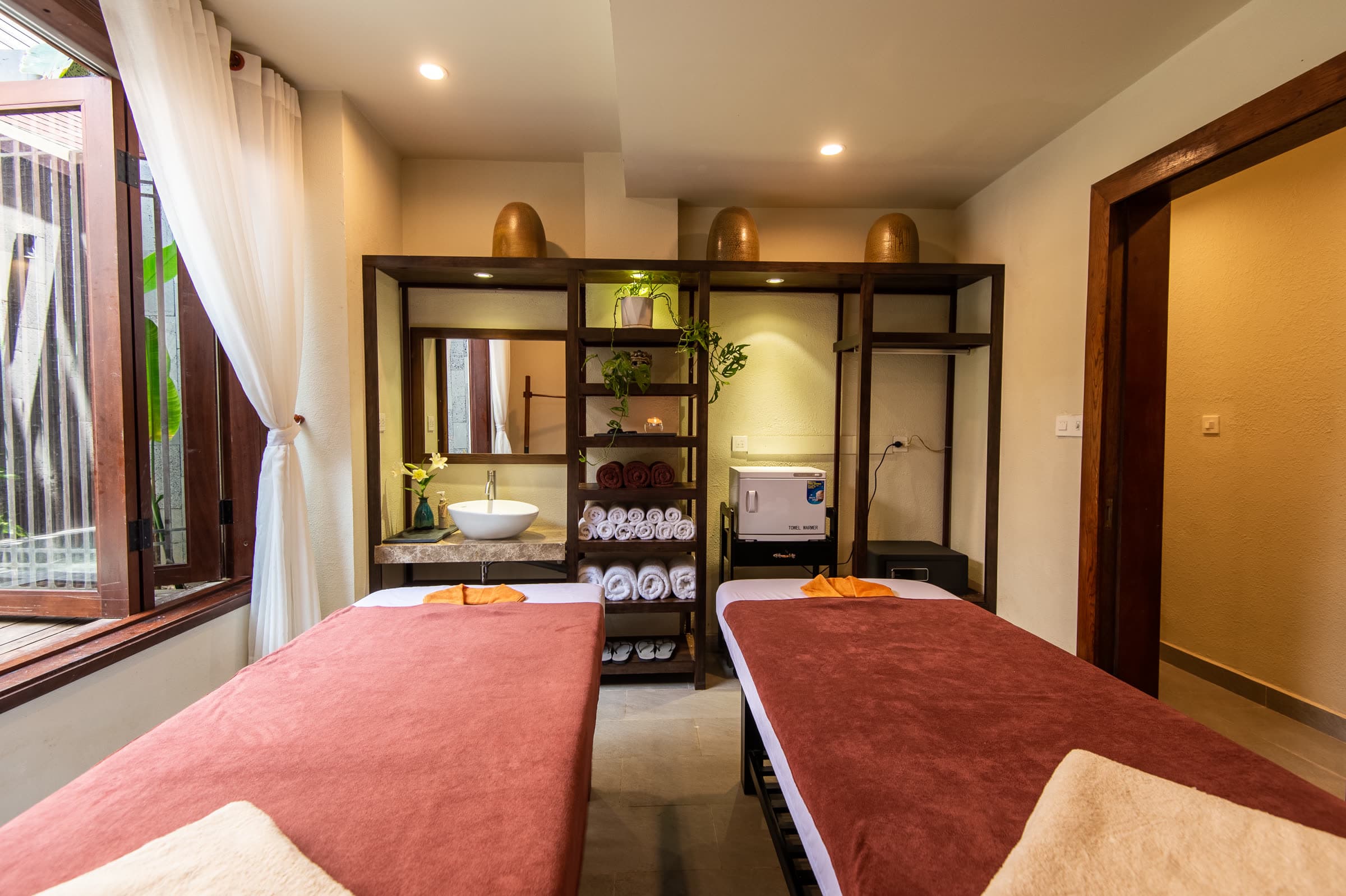
Le travail bien-être autour duquel nous avons bâti Nghê Prana — le sommeil, le souffle, la récupération lente — répond en partie à ce que le tourisme inflige au corps. Chaleur, bruit, stress des files, fatigue de décision, soirées tardives, et cette fatigue particulière d'être dans un lieu où chacun cherche à vous vendre quelque chose. Le retour le plus fréquent de nos hôtes n'est pas que le spa était délicieux. C'est qu'ils ne mesuraient pas combien la ville les usait, jusqu'au moment où ils se sont retrouvés dans une chambre sans bruit de rue et qu'ils ont dormi dix heures.
Si vous ne retenez qu'une chose : construisez votre itinéraire de sorte que la vieille ville soit une visite, non une résidence. La version de Hội An que les voyageurs aiment vraiment est celle dont on peut s'éloigner à volonté. Nous avons bâti notre retraite à la juste distance pour que cela soit possible.
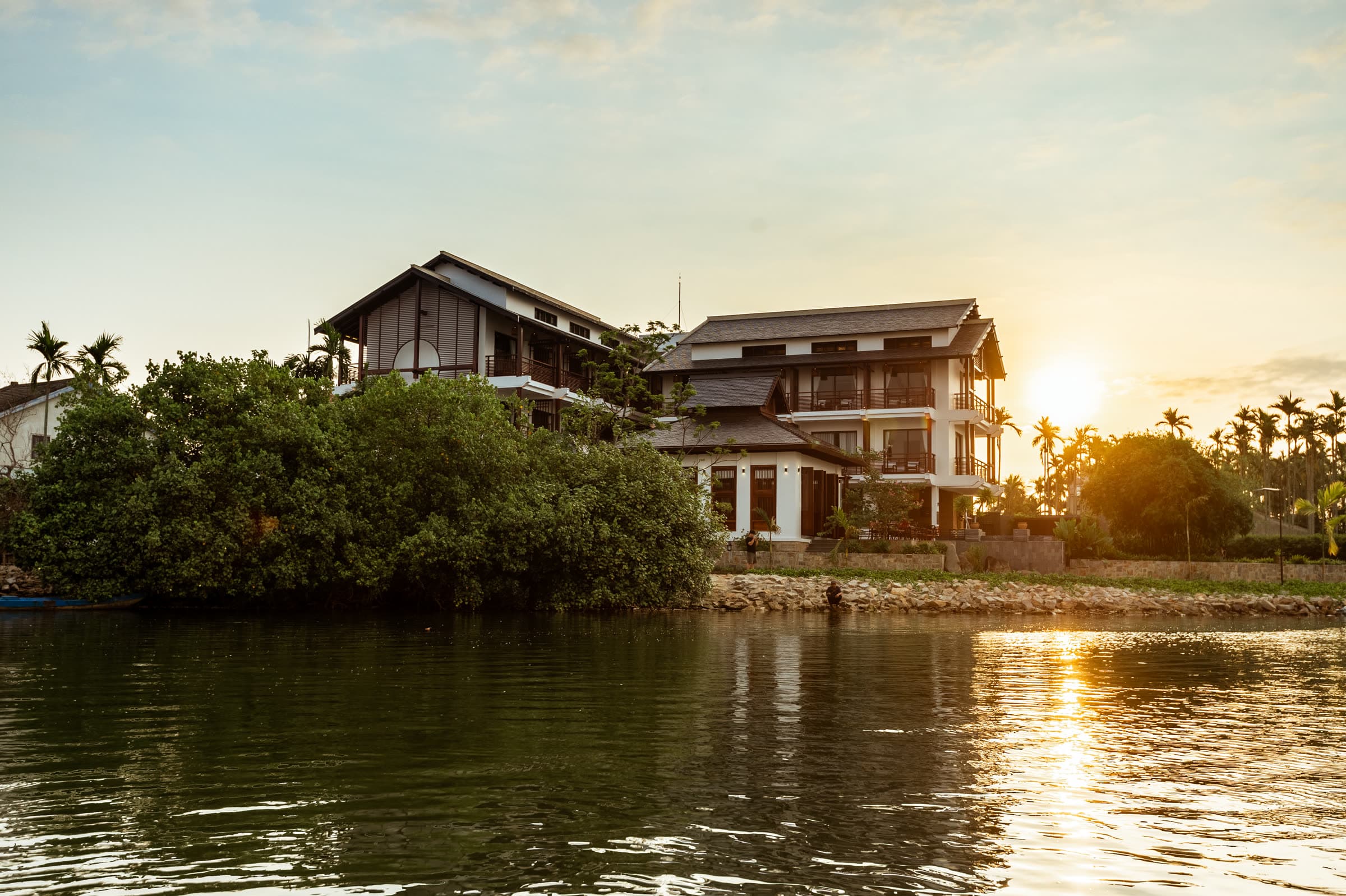
Le côté calme de Hội An n'est pas un slogan. C'est une coordonnée — l'île de Cẩm Nam, à dix minutes à vélo du Pont japonais, où le bruit de la ville devient le bruit du fleuve en deux rues.
Every room at Nghê Prana is designed around the science of sleep. Blackout curtains, nightly aromatherapy turndown, and riverside quiet — experience what real rest feels like.
Chambres au bord du fleuve, à dix minutes à vélo de la vieille ville. Une nuit entre Hué et Da Nang ou une semaine sans emploi du temps — votre chambre restera silencieuse.
Annulation gratuite · Réservation directe auprès de la famille propriétaire


 WhatsApp
 Zalo
Zalo