Combien de jours à Hội An ? Un itinéraire jour par jour (1, 2, 3, 4 et 5 jours)
Une journée à Hội An suffit à parcourir une fois la vieille ville. Deux jours, et l'on ajoute la plage. Trois, et la ville change de visage. Quatre ou cinq, c'est le moment où l'on regrette de n'avoir pas réservé plus long.
La question la plus fréquente dans nos messages est une variante de « combien de jours faut-il vraiment à Hội An ? » Réponse honnête : un jour est le minimum qui justifie le voyage, trois jours sont l'équilibre idéal pour une première visite, et cinq jours marquent le seuil à partir duquel Hội An cesse d'être une étape sur un circuit du Vietnam pour devenir la raison du voyage. Voici un programme jour par jour qui ajoute, chaque soir, une couche bien dosée — vous pouvez vous arrêter au compte qui correspond à votre séjour.
1 jour à Hội An : la vieille ville en une seule boucle
Une journée suffit pour faire la vieille ville correctement, à condition d'arriver la veille au soir et de commencer au lever du soleil. Venir de Đà Nẵng pour la journée et tenter de caser Hội An en huit heures fonctionne rarement — on arrive en pleine chaleur, on repart avant l'heure des lanternes, et on rate les deux seules fenêtres où la ville révèle son vrai visage.
06 h 30 — café rue Phan Chu Trinh, 25 000 VND, debout. La ville est vide.
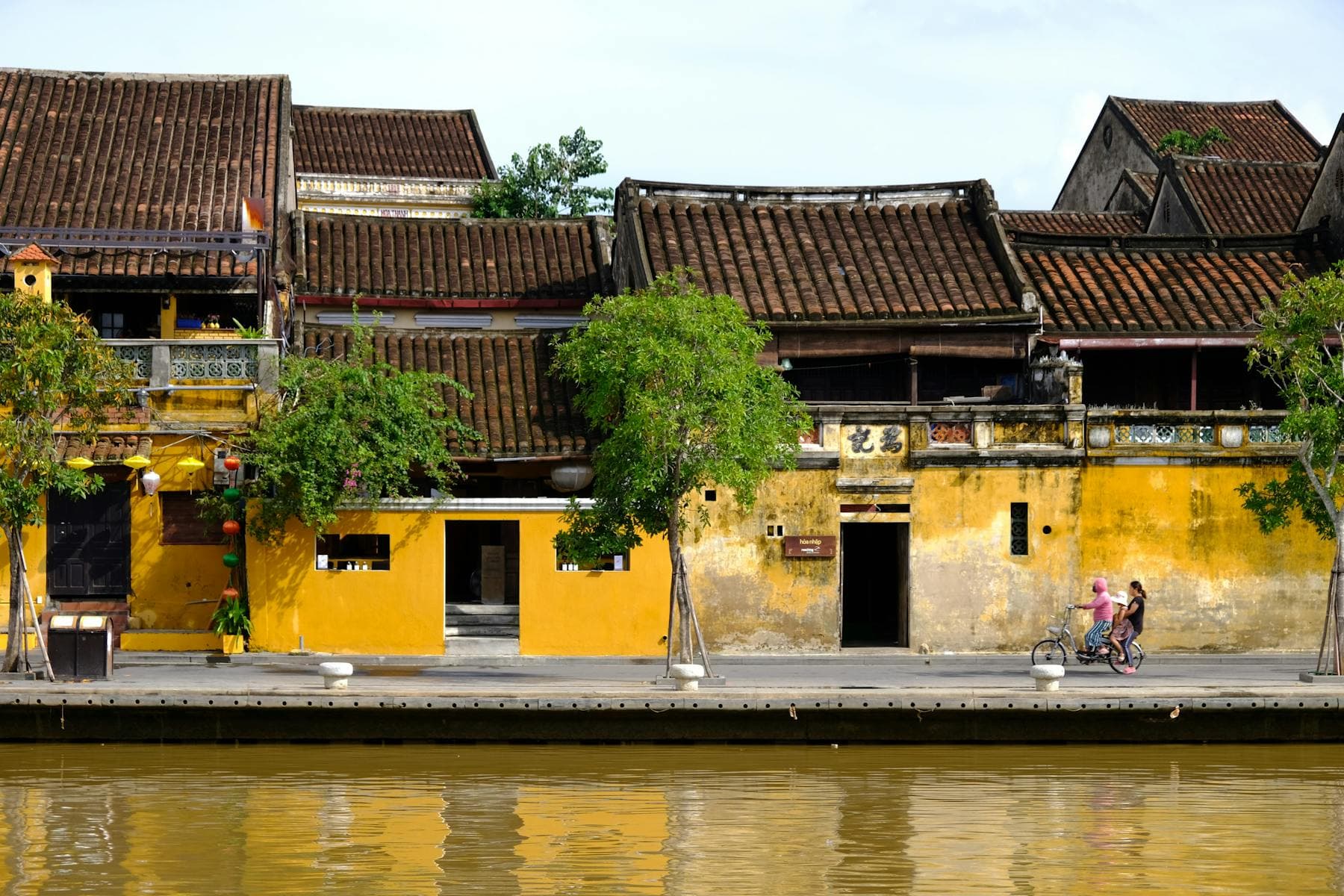
07 h 00 — marche jusqu'au Pont couvert japonais (Chùa Cầu). Photographiez-le sans personne dans le cadre. C'est l'unique heure de la journée où c'est possible.
07 h 30 — achat du billet de la vieille ville (120 000 VND, cinq entrées parmi les sites classés).
08 h 00 – 11 h 00 — la marche patrimoniale. Dans l'ordre : maison Tấn Ký, salle de réunion du Fujian, maison Quân Thắng, chapelle de la famille Trần, temple intérieur du Pont japonais. Voilà vos cinq entrées.
11 h 30 — déjeuner. Cao lầu chez Quán Thanh, rue Hai Bà Trưng ; ou bánh mì chez Madam Khánh.
13 h 00 — sieste. Sérieusement. La ville se vide entre 13 h et 15 h, la chaleur culmine à 14 h 30. La plupart des commerces ferment.
15 h 30 — marché de Hội An, rue Bạch Đằng. Achetez des fruits ; observez la criée au poisson, à l'arrière.
17 h 00 — promenade sur le quai Bạch Đằng. Asseyez-vous dans n'importe quel café à balcon. Commandez un café vietnamien.
18 h 00 — les lanternes s'allument. Remontez Nguyễn Thái Học vers l'est, jusqu'à la passerelle Cầu An Hội. Faites flotter une lanterne de papier (20 000 VND les trois).
20 h 00 — dîner. Raviolis « rose blanche » et bière fraîche dans n'importe quel restaurant du quai.
22 h 00 — la ville brille encore mais les barques cessent leurs courses. Refaites un tour par les rues éclairées.
Une journée à Hội An est, structurellement, une journée du lever du soleil à la fin de la nuit, avec une longue sieste au milieu. Si vous coupez l'une ou l'autre extrémité, vous ne voyez pas vraiment la ville.
2 jours à Hội An : ajoutez la plage
Deux jours permettent de donner à la vieille ville sa propre journée et à la côte la sienne. Le schéma sur lequel presque tout le monde converge : la ville d'abord, la plage ensuite.
Jour 1 — l'itinéraire d'un jour ci-dessus, à l'identique.
Jour 2 — la plage.
07 h 00 — vélo de l'hôtel (la plupart en prêtent gratuitement ; sinon 30 000 VND/jour).
07 h 30 — direction la plage d'An Bàng par Hai Bà Trưng. Douze minutes de plat, sans côte, piste cyclable complète après le premier kilomètre.
08 h 00 — baignade avant que le soleil ne soit au zénith. Café dans l'un des établissements du front de mer (Soul Kitchen, Salt Pub, La Plage).
10 h 30 — dix minutes à pied vers le nord sur le sable jusqu'à la plage de Tân Thành, plus tranquille.
12 h 30 — déjeuner de fruits de mer dans une des cabanes d'An Bàng : calamars grillés, liseron d'eau, riz, bière. Environ 250 000 VND pour deux.
14 h 00 — retour à l'hôtel, sieste.
16 h 30 — fin d'après-midi au spa ou à la piscine.
18 h 30 — dîner en ville. Bánh xèo (crêpe salée vietnamienne) au Quán Phù Sa, ou un menu lent chez Morning Glory ou Mango Mango.
21 h 00 — promenade en barque aux lanternes sur le Thu Bồn, 150 000 VND pour 30 minutes.
3 jours à Hội An : ajoutez une excursion
Trois jours est la durée la plus demandée et celle que nous recommandons le plus souvent en première visite. Le troisième jour offre une vraie échappée hors de la ville et fait basculer le voyage de l'étape au séjour.
Jours 1 et 2 comme ci-dessus.
Jour 3 — choisissez. Les trois grands classiques :
Sanctuaire de Mỹ Sơn (40 km à l'ouest, demi-journée matinale). L'ensemble de temples hindous cham, classé à l'UNESCO en 1999, la même année que Hội An. Bâti entre le IV<sup>e</sup> et le XIII<sup>e</sup> siècle ; bombardé en 1969 pendant la guerre américaine ; partiellement restauré. Prenez la sortie « lève-tôt » de 5 h pour être à l'intérieur des temples au lever du soleil, avant l'arrivée des bus à 8 h 30. Retour en ville pour midi.
Îles Chàm (15 km au large, journée entière). Bateau rapide depuis le port de Cửa Đại ; fermées d'octobre à février. La plage de Bãi Chồng pour le snorkeling, le village de Bãi Làng pour un déjeuner de fruits de mer, la réserve marine pour l'eau claire. Comptez 600 000 à 800 000 VND par personne selon la taille du groupe.
Village de cocotiers de Cẩm Thanh + barque-panier (3 km au sud, demi-journée). La forêt de palmiers d'eau, dans la zone saumâtre où le Thu Bồn rejoint la mer. Les pêcheurs locaux promènent les visiteurs dans les barques rondes en bambou — le même engin qu'ils utilisent depuis deux cents ans — pour ramasser des crabes de vase et tresser des anneaux en feuilles de palmier. Touristique mais agréable ; à combiner avec un déjeuner dans une ferme bio du même village.
Quel que soit le choix, dîner de retour dans la vieille ville, promenade aux lanternes, coucher tôt.
4 jours à Hội An : ajoutez un cours de cuisine ou une journée de spa
Vous organisez votre séjour ? Vérifiez les disponibilités de notre paisible hôtel au bord de la Thu Bồn. Voir les disponibilités →
Quatre jours autorisent à faire quelque chose de ses mains. Deux options solides pour le quatrième jour.
Une demi-journée de cours de cuisine. La plupart des bons cours se déroulent de 8 h à 13 h : visite du marché, maniement du couteau, on cuisine trois ou quatre plats, on les mange. Red Bridge Cooking School propose le cours original (et toujours excellent) — 850 000 VND par personne, navette en bateau jusqu'à leur cuisine pédagogique au bord du fleuve. Vy's Market Restaurant offre un cours plus intimiste à 700 000 VND.
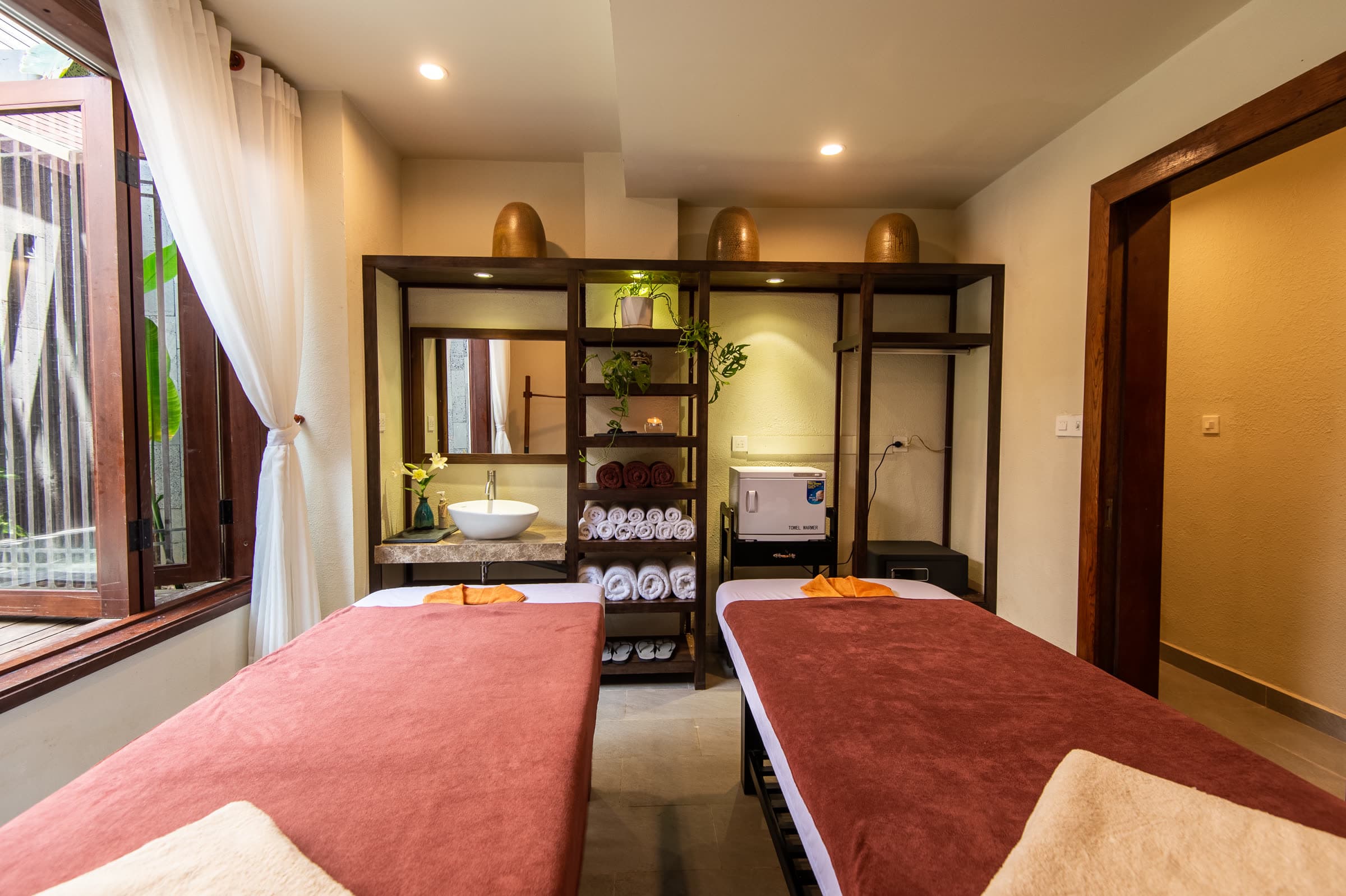
Une journée complète de spa vietnamien. La tradition des bains aux herbes du Centre — citronnelle, lavande, gingembre, feuille de pamplemoussier — précède l'industrie du bien-être de plusieurs siècles. Une vraie demi-journée de bain aux herbes, massage de 90 minutes et déjeuner coûte de 1 000 000 à 1 800 000 VND selon l'établissement. Sieste en milieu d'après-midi. Dîner léger. Quasiment pas de marche. C'est la journée dont les gens se souviennent.
Dans les deux cas, dîner du quatrième soir de retour dans la vieille ville, avec un rythme qui, à ce stade, vous semblera plus familier que trois nuits ne le laissent penser.
5 jours à Hội An : ajoutez Huế, ou ralentissez
Cinq jours marquent le seuil. Vous pouvez tout faire du cinquième jour, mais les deux meilleurs usages sont une journée complète à Huế (l'ancienne capitale impériale, 130 km au nord, trois heures de chaque côté par le col de Hải Vân — réservez une voiture privée à 1 800 000 – 2 400 000 VND pour l'aller-retour avec trois arrêts touristiques) ou, plus souvent, simplement répéter le rythme que vous avez bâti.
Au cinquième matin, la plupart des voyageurs ne veulent pas d'une cinquième visite guidée. Ils veulent le même café rue Phan Chu Trinh, la même baignade à An Bàng, le même bánh mì chez Madam Khánh, la même promenade aux lanternes. C'est cette répétition qui fait que Hội An cesse d'être une destination pour devenir un endroit où l'on a vécu. C'est aussi le jour où l'on commence à regarder s'il est possible de prolonger.
Erreurs d'itinéraire les plus fréquentes
Faire la vieille ville sous la chaleur de midi le premier jour. La ville est 7 °C plus chaude entre 11 h et 14 h qu'à 7 h. Les maisons anciennes n'ont pas la climatisation. Vous serez à plat.
Mettre la plage en jour 1. Vous arrivez fatigué, vous vous endormez sur le sable, vous brûlez, et vous ratez votre première soirée aux lanternes. La ville d'abord, la plage ensuite.
Vouloir caser Bà Nà Hills dans un séjour à Hội An. Bà Nà Hills (le Pont d'Or aux mains géantes) est à 75 kilomètres au nord — c'est une excursion depuis Đà Nẵng, pas depuis Hội An. C'est faisable depuis Hội An ; l'aller-retour avale onze heures.
Visiter Hội An à la journée depuis un resort de Đà Nẵng. Le regret le plus fréquent dans nos messages. On arrive à 10 h, on repart à 17 h, on rate les lanternes. Logez dans la vieille ville ou tout près au moins une nuit.
Quand venir (cela change l'itinéraire)
De février à avril : la fenêtre sèche et clémente — idéale pour une première visite. De mai à août : chaud (32 à 36 °C) mais fiable ; le rythme matinal compte plus que jamais. De septembre à novembre : la mousson, avec des inondations sérieuses possibles en octobre et novembre — la vieille ville ferme effectivement pendant les crues fortes, parfois deux ou trois jours. Décembre et janvier : doux et secs, mais les îles Chàm sont fermées.
Où ancrer le séjour
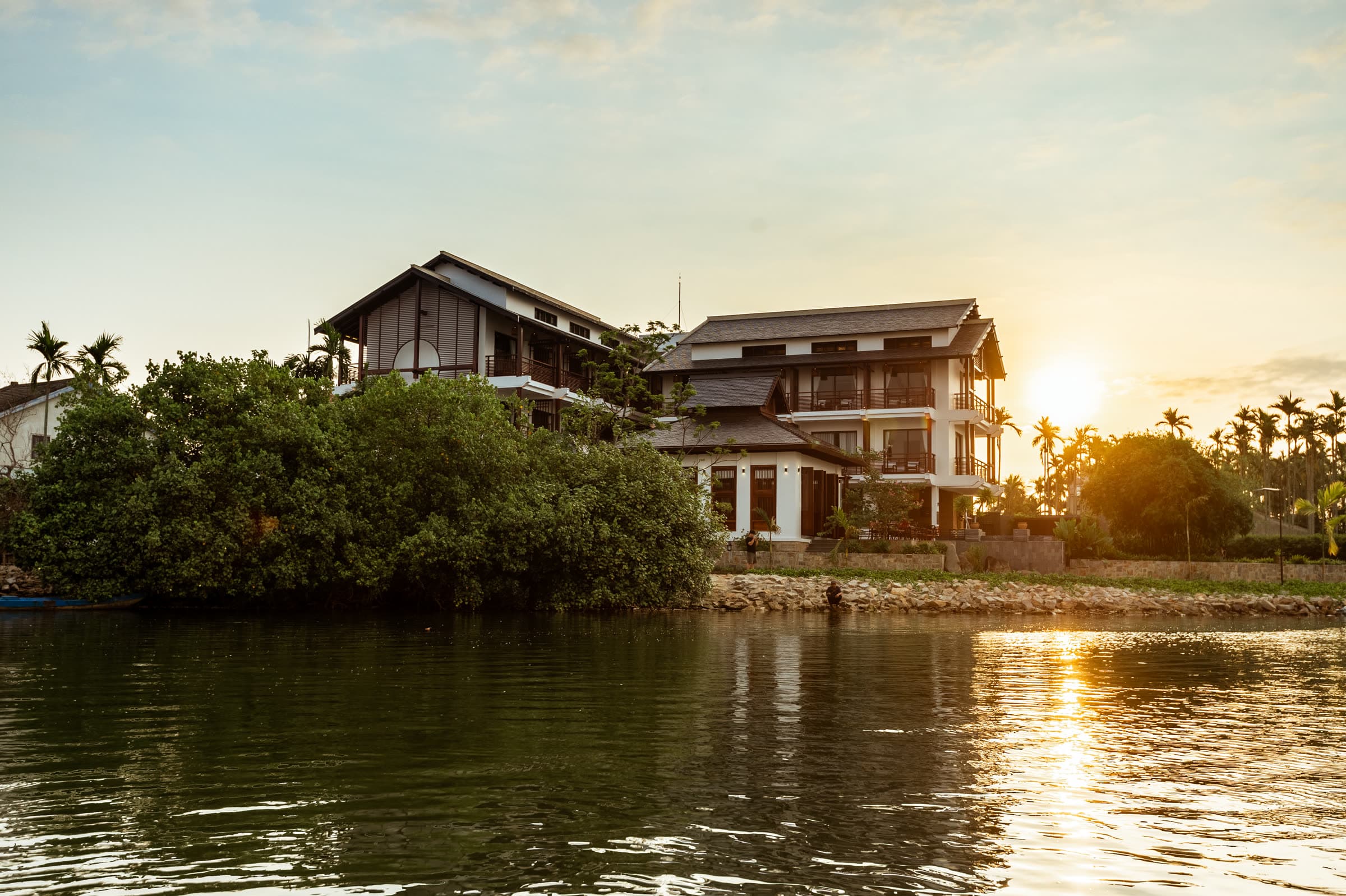
Il y a un vrai choix entre loger à l'intérieur de la vieille ville (promenades aux lanternes à minuit, chambres étroites, bruit des motos) et loger côté fleuve ou près de la plage d'An Bàng (plus calme, 5 à 10 minutes en voiture du centre, place pour une piscine). Pour 2 ou 3 jours, le séjour en ville se justifie. Pour 4 ou 5 jours, c'est la rive qui prend tout son sens — la ville devient un ingrédient d'un rythme plus large, et non plus la trame entière de la journée.
Quel que soit le compte : arrivez la veille du jour 1, partez le lendemain du dernier. Un vol à 10 h le jour 3 vous donne en réalité deux jours, pas trois.
Récapitulatif : ce que chaque jour ajoute
Jour 1 : marche patrimoniale dans la vieille ville + soirée aux lanternes.
Jour 2 : plage (An Bàng ou Hidden Beach) + dîner en ville.
Jour 3 : une excursion (Mỹ Sơn, îles Chàm ou Cẩm Thanh).
Jour 4 : cours de cuisine ou journée complète de spa.
Jour 5 : Huế, ou répétition des jours 1 et 2 sans programme.
Trois jours est la réponse à « le minimum pour rendre justice à Hội An ». Cinq jours, à « combien de temps avant de vouloir prolonger ». La réponse vraie à « combien de jours à Hội An ? » est : un de plus que ce que vous avez réservé.
Every room at Nghê Prana is designed around the science of sleep. Blackout curtains, nightly aromatherapy turndown, and riverside quiet — experience what real rest feels like.
Chambres au bord du fleuve, à dix minutes à vélo de la vieille ville. Une nuit entre Hué et Da Nang ou une semaine sans emploi du temps — votre chambre restera silencieuse.
Annulation gratuite · Réservation directe auprès de la famille propriétaire

 WhatsApp
 Zalo
Zalo