Sanctuaire de Mỹ Sơn : les temples cham aux portes de Hội An, et comment bien les visiter
À cinquante kilomètres de Hội An, dans une vallée de jungle ceinturée de montagnes, se dressent les vestiges de briques d'un complexe de temples hindous bâti et rebâti sans interruption du IV<sup>e</sup> au XIII<sup>e</sup> siècle par la civilisation cham.
Mỹ Sơn — prononcez approximativement « mi-seun » — est le site archéologique hindou le plus important d'Asie du Sud-Est continentale en dehors du Cambodge. Ce fut le centre religieux du Champa, le royaume hindou maritime qui dirigea l'actuel Centre et Sud du Vietnam, du II<sup>e</sup> au XVII<sup>e</sup> siècle environ. La construction commença au IV<sup>e</sup> siècle et se poursuivit près de mille ans, donnant naissance à soixante-dix structures de temples réparties en huit ensembles, dans une vallée encaissée à cinquante kilomètres à l'ouest de Hội An. L'UNESCO a inscrit Mỹ Sơn au Patrimoine mondial en 1999, le citant aux côtés d'Angkor et de Borobudur parmi les grands ensembles d'architecture hindoue de la région.
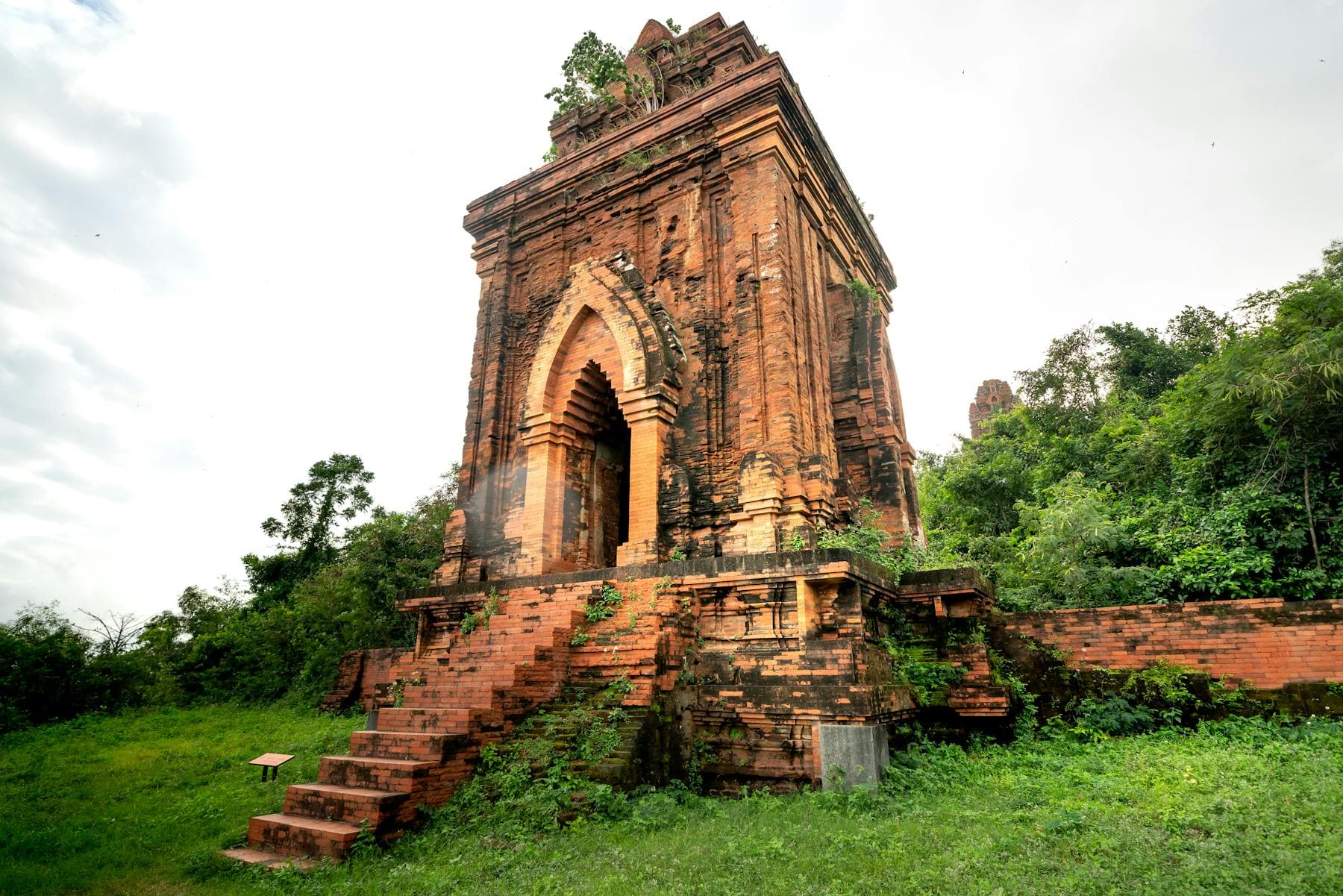
L'essentiel de ce qui fut construit à Mỹ Sơn n'existe plus. Le groupe A — l'ensemble le plus ambitieux, élevé à la fin du VII<sup>e</sup> siècle — fut effectivement détruit par les bombardements en tapis des B-52 de l'US Air Force en août 1969. Le Việt Cộng utilisait la vallée comme base de guérilla, et le ciblage fut délibéré ; la perte est documentée dans les rapports archéologiques de la restauration d'après-guerre. Sur les soixante-dix structures originelles, une vingtaine subsistent sous une forme reconnaissable. La maçonnerie qui a survécu est en elle-même une petite énigme archéologique : les Cham employaient une technique de briques cuites assemblées sans mortier visible, méthode que les conservateurs modernes n'ont que partiellement reconstituée.
Ce que vous traversez aujourd'hui à Mỹ Sơn n'est pas ce qui y fut bâti — mais c'en est assez pour lire l'ambition. La vallée est petite, les tours rescapées tranchent contre la jungle, et les inscriptions partielles en sanskrit, encore lisibles sur certains chambranles de pierre, comptent parmi les plus anciens textes conservés dans la région.
Ce que l'on voit réellement sur le site
Sur les huit ensembles de temples, quatre sont ouverts aux visiteurs : A (l'ensemble bombardé, surtout des décombres avec quelques fondations préservées), B et C (le groupe central le mieux conservé, dont la fameuse tour B5 au toit en proue de barque et son sanctuaire au lingam intact), et D (de plus petits temples et ce qui reste de deux longues salles de méditation). Le circuit prend environ une heure trente à allure régulière, davantage si vous vous arrêtez au petit musée du site, près de l'entrée. Le musée vaut sincèrement les quinze minutes — il abrite la meilleure sculpture cham subsistante du site (la majeure partie du reste se trouve au Musée Cham de Đà Nẵng) et offre une chronologie cohérente des oscillations religieuses du Champa, du shivaïsme au bouddhisme mahāyāna et retour.
Deux fois par jour — à 9 h 30 et 14 h — le site présente une brève performance de danse cham apsara dans un petit amphithéâtre en plein air. Les danseurs sont des étudiants du conservatoire local, la musique est enregistrée, et le moment relève davantage du tourisme rodé que de la tradition vivante ; vous le trouverez charmant ou peu convaincant selon votre tolérance pour ce registre. La performance est incluse dans le billet d'entrée, donc le coût marginal est nul.
Quand y aller (la seule chose qui compte vraiment)
Mỹ Sơn est chaud. La vallée se loge dans une dépression qui piège la chaleur dès la fin de matinée, et à 11 h en saison sèche, les surfaces de brique rayonnent assez pour rendre le circuit franchement inconfortable. La décision la plus lourde de conséquences sera votre heure d'arrivée. La sortie la plus matinale depuis Hội An (le tour « lever du soleil ») part à 4 h 30 et arrive au portail à son ouverture, à 6 h, vous plaçant au groupe B dans la première lumière dorée, sur un site quasiment vide. Le tour standard part à 8 h et arrive à 9 h 30 ; à ce moment la chaleur monte et trois ou quatre bus de groupe ont déjà déchargé. D'octobre à février, l'avantage matinal est moindre ; de mars à septembre, il est immense.
L'essentiel des regrets après une visite à Mỹ Sơn tient en une phrase : « j'aurais dû partir plus tôt ». Prenez le tour du lever du soleil, acceptez l'alarme matinale, soyez de retour à Hội An pour 11 h avec le reste de la journée devant vous. La différence de prix est négligeable ; la différence d'expérience est considérable.
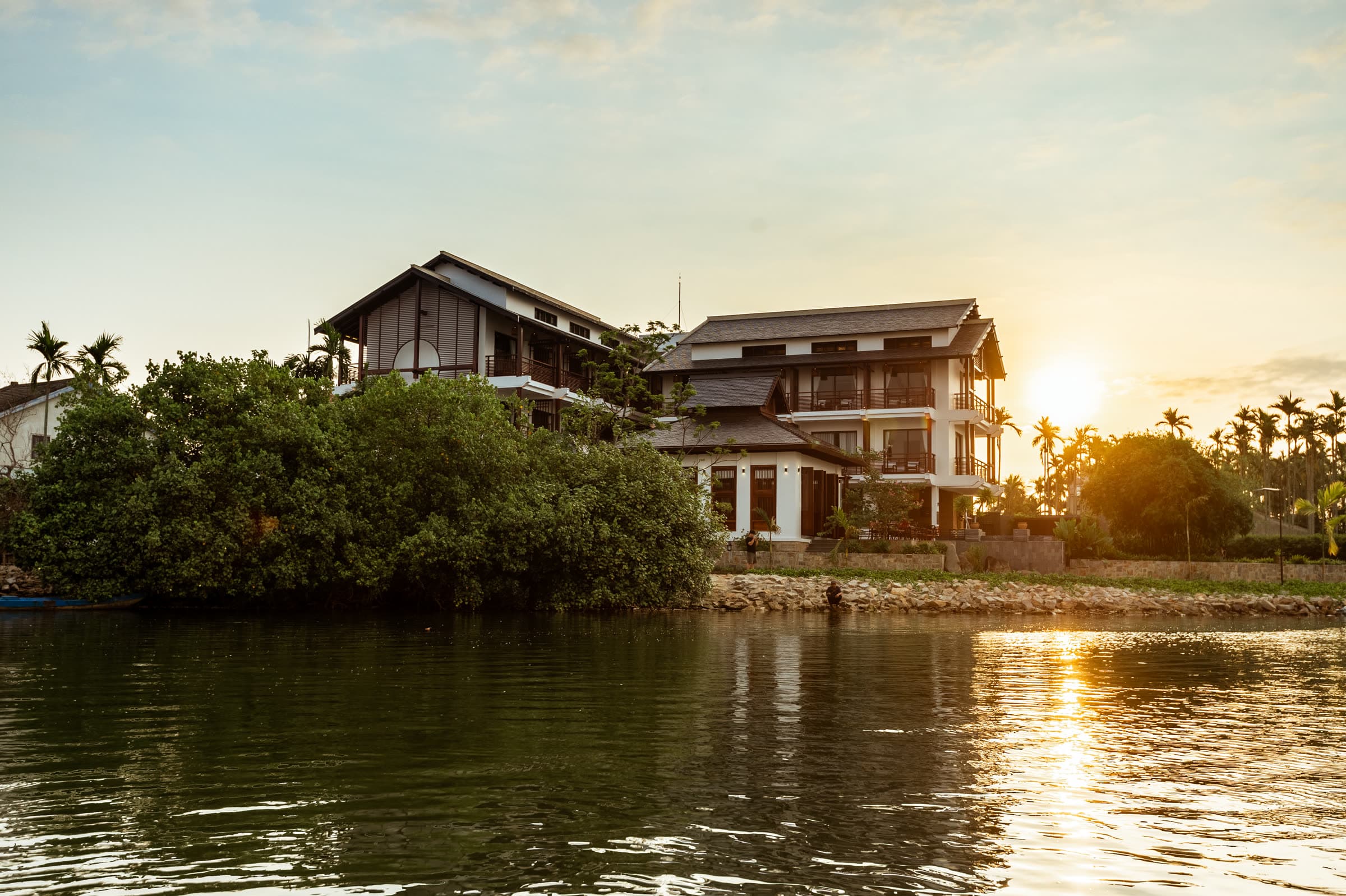
Vous organisez votre séjour ? Vérifiez les disponibilités de notre paisible hôtel au bord de la Thu Bồn. Voir les disponibilités →
Réservation et trajet
Les visites de groupe vont de 350 000 à 700 000 VND par personne, transfert, droit d'entrée, guide anglophone et performance d'apsaras compris. Les voitures privées coûtent environ 1,2 million de VND pour deux à quatre personnes, aller-retour avec quelques heures sur place. La moto est possible — une heure de route sur des chemins de campagne, presque plat, sans côtes notables — mais réservez-la aux conducteurs aguerris : les quinze derniers kilomètres empruntent la nationale 14B, plus chargée que les routes rurales ne le laissent croire.
Depuis Nghê Prana, à Cẩm Nam, comptez une heure de chaque côté en voiture. La sortie « lever du soleil » s'enchaîne naturellement avec un déjeuner lent à l'hôtel, une baignade en après-midi et un dîner tôt — un rythme de journée pleine, qui place le matin frais sous le signe de la visite et la chaleur du jour sous celui de l'eau et du repos. Nous organisons la réservation ; l'aube est inévitable, mais le reste du jour appartient à la récupération.
Quoi emporter
Protection solaire (le site offre très peu d'ombre), de l'eau (les petites échoppes derrière le portail sont peu fiables), des chaussures de marche confortables (les sentiers sont des décombres de briques irréguliers par endroits), et un guide ou un résumé téléchargé de l'histoire des ensembles — la signalétique sur place est sommaire et les guides sont pressés. Le code vestimentaire est appliqué de manière informelle : épaules couvertes, genoux couverts. Une petite cabine près de l'entrée permet de se changer si vous arrivez en tenue de plage.
Mỹ Sơn récompense les voyageurs qui le prennent au sérieux et arrivent préparés. Les bus déchargent, la chaleur s'installe, et en milieu de matinée l'expérience s'aplatit en simple opportunité photo. Prenez les heures fraîches ; partez avant que le reste du Centre-Vietnam ne s'invite.
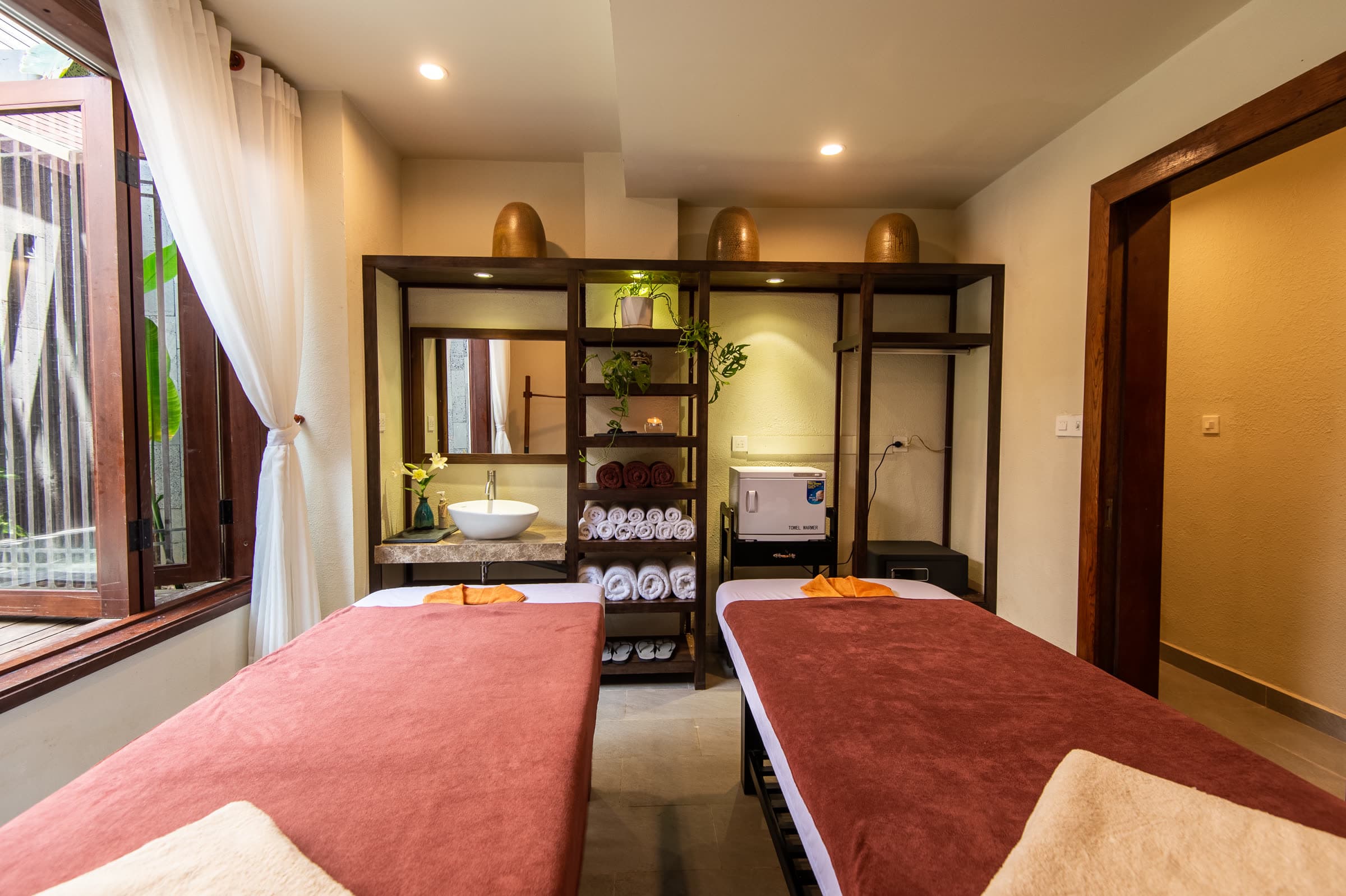
Every room at Nghê Prana is designed around the science of sleep. Blackout curtains, nightly aromatherapy turndown, and riverside quiet — experience what real rest feels like.
Chambres au bord du fleuve, à dix minutes à vélo de la vieille ville. Une nuit entre Hué et Da Nang ou une semaine sans emploi du temps — votre chambre restera silencieuse.
Annulation gratuite · Réservation directe auprès de la famille propriétaire

 WhatsApp
 Zalo
Zalo