
travel
호이안 랜턴 나이트 로맨틱: 커플을 위한 보름달 축제 가이드 (Đêm Rằm Phố Cổ)
호이안의 랜턴 나이트를 둘만의 온전한 로맨틱 하루로 바꾸는 법 — 강가에서 느긋하게 보내는 아침, 오후의 커플 스파, Thu Bồn 강 위로 지는 노을, 함께 촛불 등불 하나를 강물에 띄우기, 그리고 조용한 팜 투 테이블 저녁 식사. 검증된 2026년과 2027년 축제 날짜와 함께.
Jul 1, 20269 minRead Article

구시가지에서 자전거로 20분 거리, 베트남–독일 합동 발굴팀이 라이응이(Lai Nghi)의 사후인(Sa Huỳnh) 문화 묘지에서 2,000년 된 금 장신구 108점을 발굴했습니다. 뒤이은 참파(Champa) 왕국, 파이포(Faifo)의 부상, 그리고 투본강(Thu Bồn)이 적어도 3천 년간 교역의 등뼈였다는 사실을 — 다섯 개의 베트남어 자료와, 영어권 여행 안내서들이 놓쳐 온 독일어 단행본을 종합해 풀어냅니다.
대부분의 영어권 여행 안내서는 호이안(Hội An)의 이야기를 16세기, 파이포(Faifo)의 일본 상인들로부터 시작합니다. 그 시작점은 실제보다 약 2,500년이나 늦습니다. 구시가지에서 남쪽으로 자전거 20분 거리, 디엔반(Điện Bàn)에 있는 라이응이(Lai Nghi)라는 사후인(Sa Huỳnh) 문화 묘지에서 베트남–독일 합동 발굴팀은 2002년부터 2004년까지, 단 192제곱미터 넓이의 땅에 흩어진 63기의 옹관에서 온전한 금 장신구 108점, 8,600점이 넘는 유리구슬, 그리고 홍옥수(카닐리언) 동물 펜던트 두 점 — 물새 한 마리와 호랑이 한 마리 — 을 들어 올렸습니다 (Báo Đà Nẵng, 2025년 1월 11일; Báo Văn hóa, 2024년 10월 19일). 베트남 언론은 이 발견을 세세히 다뤘지만, 영어권 기록은 그렇지 않았습니다. 이 글은 다섯 개의 베트남어 자료, ISBN으로 확인 가능한 독일어 단행본 한 권, 그리고 안드레아스 라이네케(Andreas Reinecke)와 비프케 로보(Wibke Lobo)의 출간된 연구를 종합해 지금까지 밝혀진 바를 정리합니다.

연표: Nghe Prana 편집부 — 출처는 아래 참고 문헌에 표기
사후인(Văn hóa Sa Huỳnh)은 대략 기원전 1000년부터 기원후 2세기 후반까지 베트남 중부 해안에 자리했던 철기 시대 문화로, 프랑스 세관원 M. 비네(M. Vinet)가 1909년 옹관 무덤 밭을 처음 발견한 꽝응아이성(Quảng Ngãi) 득포(Đức Phổ)의 한 염전 마을 이름에서 따왔습니다 (VnExpress, 2025년 1월 10일; vi.wikipedia.org — Văn hóa Sa Huỳnh). 비네는 1936년에 이 문화를 공식적으로 규정했습니다. 그 진단적 특징은 옹관묘, 세 갈래·쌍두 동물 귀걸이, 철제 도구, 그리고 lưu ly(인공 유리)를 막대한 양으로 생산한 이른 시기의 지역 유리구슬 산업입니다.
이들은 자급자족하던 촌민이 아니었습니다. Báo Thanh Niên은 2024년 10월 보도를 "Cư dân cổ Sa Huỳnh từng rất giàu có" — “고대 사후인 주민들은 대단히 부유했다” — 라는 표제로 시작하며, 라이응이 발굴 트렌치에서 직접 작업했던 하노이국립대학교의 럼티미중(Lâm Thị Mỹ Dung) 교수를 인용해 이들을 “노련한 교역자이자 세련된 소비자였으며, 동–서 해양 교역망 안에서 유달리 부유했던 이들”이라고 묘사합니다 (Báo Thanh Niên, 2024년 10월 30일).
그렇습니다 — 그리고 그 기관 파트너는 라이응이 발견을 다룬 모든 주요 베트남어 기사에 명시적으로 이름이 등장합니다. 독일 고고학연구소(Deutsches Archäologisches Institut, 본 KAAK)는 2002–2004년 라이응이 발굴 시기에 꽝남(Quảng Nam) 박물관 및 하노이국립대학교 인문사회과학대학과 더불어 공식 협력 기관이었으며, 2004–2005년에는 꽝응아이에서 별도의 공동 연구 프로그램을 운영했습니다 (Báo Văn hóa, 2024년 10월 19일; vi.wikipedia.org — Văn hóa Sa Huỳnh).
베트남 보도에서 가장 자주 언급되는 독일 고고학자는 안드레아스 라이네케(Andreas Reinecke) 박사입니다. Báo Đà Nẵng은 라이응이가 “현재까지 베트남의 모든 사후인 유적을 통틀어 발견된 금 구슬 중 가장 풍부한 양”을 담고 있다는 그의 관찰을 기록합니다 (Báo Đà Nẵng, 2025년 1월 11일). 발굴팀의 독일어 종합 연구서인 *Andreas Reinecke 외, Neue Entdeckungen zur Sa Huynh-Kultur (Lindensoft Verlag, 2002, ISBN 3-929290-27-8)*는 이 문화를 다룬 몇 안 되는 서구권 단행본 분량의 연구 중 하나로 남아 있지만 — 영어권 여행 문헌에서는 거의 인용되지 않습니다.
두 번째로 알아 둘 만한 인물은 비프케 로보(Wibke Lobo)로, 베를린 민족학박물관(Ethnologisches Museum Berlin)에 몸담았던 그의 참(Cham) 조각 및 다낭/투란(Tourane) 박물관 소장품에 관한 출간 연구는 사후인 이후 시기에 대한 표준적인 독일어 참고 문헌으로 남아 있습니다.

지도: Nghe Prana 편집부 — 출처는 아래 참고 문헌에 표기
라이응이 묘지는 꽝남성 디엔반시 디엔남동(Điện Nam Đông)동에 자리하며 — 투본강 남안을 따라 호이안 구시가지에서 남쪽으로 자전거 약 5킬로미터 거리입니다 (공개된 유적 표지석의 정확한 GPS 좌표는 호텔 측 확인이 필요합니다). 2002년부터 2004년 사이 세 차례의 발굴은 192제곱미터의 땅을 열었고 다음을 산출했습니다 (Báo Đà Nẵng, 2025년 1월 11일; Báo Thanh Niên, 2024년 10월 30일):
C-14 연대 측정은 이 묘지를 약 2,070년 전으로 잡습니다. 네 점의 금 귀걸이 장식은 사후인 문화에 귀속된 최초의 그러한 유물로, 세 차례 발굴에 모두 참여한 하노이국립대학교의 응우옌찌에우(Nguyễn Chiều)가 짚은 점입니다. 전체 소장품은 현재 꽝남 박물관에 보관되어 있으며, 2024년 10월 꽝남성은 문화체육관광부에 라이응이 금 유물군을 bảo vật quốc gia — 국보 — 로 지정해 줄 것을 공식 청원했습니다 (Báo Văn hóa, 2024년 10월 19일).

사진: Vitaly Gariev / Pexels
사후인 문화는 기원후 2세기 후반에 쇠퇴했습니다. 거의 곧바로, 기원후 192년에 같은 해안을 따라 럼업(Lâm Ấp)이라는 정치체가 세워졌습니다 — 훗날 참파(Champa) 왕국이 될 씨앗이었습니다. 그 연속성은 단지 연대기적인 것만이 아닙니다. 찰스 하이엄(Charles Higham)은 Early Mainland Southeast Asia (River Books, 2014)에서, 그리고 샤오춘 훙(Hsiao-chun Hung)과 동료들은 남중국해 전역의 해안 연결성을 다룬 2013년 Journal of Island & Coastal Archaeology 논문에서, 사후인의 해양 교역망 — 인도에서 홍옥수를, 역내 전역에서 유리구슬 가공 노하우를 가져온 바로 그 항로들 — 이 참파의 인도화된 통치술이 세워진 기반이었다고 함께 주장합니다.
참파는 약 13세기에 걸쳐 정치 중심지를 여러 차례 옮겼습니다. 알려진 가장 이른 수도 심하푸라(Simhapura)는 호이안에서 남서쪽으로 약 25킬로미터 떨어진 오늘날의 짜끼에우(Trà Kiệu)에 자리합니다. 불교 수도 인드라푸라(Indrapura)는 오늘날의 동즈엉(Đồng Dương)에 있습니다. 힌두교 성소 복합체 미선(Mỹ Sơn) — 1999년 유네스코에 등재된, 구시가지 자체와 더불어 우리의 가장 가까운 세계유산 이웃 — 은 4세기에서 13세기 사이에 지어졌습니다. 주권 왕국으로서의 참파는 1471년, 레탄똥(Lê Thánh Tông) 휘하의 다이비엣군이 남부 수도 비자야(Vijaya)를 함락하면서 막을 내렸습니다.
오늘날 호이안을 거치는 여행자에게 이것이 바로 관통하는 맥락입니다: 투본강 삼각주는 400년이 아니라 적어도 2천 년 동안 지역 교역의 결절점이었으며, 미선으로 향하는 내륙 길의 참 사원들은 훨씬 더 오래된 연쇄의 눈에 보이는 가장 위층입니다. (사원 방문 자체에 대해서는 별도의 안내 글을 참고하세요: 미선 성소: 호이안에서의 당일 여행.)
파이포(Faifo) — 옛 베트남어 표기로는 Hoài Phố, 현대 표기로는 Hội An — 는 15세기부터 18세기까지 주요 국제 교역항으로 떠올랐으며, 일본의 면허 주인선(shuinsen) 교역과 상당한 규모의 중국 상인 공동체와 더불어 1600년대 초에 절정에 이르렀습니다. 유네스코는 1999년 호이안 구시가지를 세계유산으로 등재했습니다. 2025년, 베트남 국회 결의 제202/2025/QH15호가 꽝남과 다낭을 행정적으로 통합하면서 호이안과 미선은 이제 다낭에서 관할합니다 (이 변화는 2026년 호이안과 다낭: 유산지 통합으로 무엇이 달라졌나에서 자세히 다뤘습니다).
이 일정으로 여행을 계획 중이신가요? 투본 강가의 조용한 리버사이드 호텔 예약 가능 날짜를 확인하세요. 예약 가능 여부 확인 →
인상적인 점은 그 연쇄의 모든 층 — 사후인 교역 구슬, 참파 사암, 파이포 도자기, 프랑스 식민기 지적도 — 이 구시가지에서 자전거로 하루 거리 반경 안에 들어 있고, 그 대부분이 안내인 없이도 닿을 수 있다는 것입니다.
1999년 유네스코 등재문이 묘사하는 호이안 — 15세기에서 19세기에 이르는 동남아시아 교역항 — 은 청동기 시대 말부터 국제적 교역 거점이었던 한 장소의 가장 젊고 가장 많이 사진 찍힌 층이기 때문입니다. 꽝남 박물관의 홍옥수 호랑이 펜던트는 거의 틀림없이 인도양 연안의 공방에서 훈련받은 장인이 깎았고, 우리 테라스 앞을 흐르는 바로 그 투본강을 거슬러 내륙으로 교역되었습니다. 이를 아는 것은 구시가지를 읽어 내는 방식을 바꿔 놓습니다.

사진: Thái Trường Giang / Pexels
이 층층의 이야기를 하루 동안 쌓아 올리는 실용적인 일정:
1. 오전 — 꽝남 박물관 (땀끼(Tam Kỳ) 소재; 현재 개관 시간과 라이응이 금 유물의 상설 전시 여부는 호텔 측 확인이 필요합니다) 에서 홍옥수 물새와 호랑이 펜던트를 직접 봅니다.
2. 정오 — 짜끼에우(Trà Kiệu, Simhapura) 에서 참파 수도의 층을 봅니다.
3. 오후 — 미선(Mỹ Sơn) 에서 힌두교 성소를 봅니다.
4. 저녁 — 호이안 구시가지 에서 파이포 교역항의 층을, 가능하면 보름달 밤 Đêm Rằm Phố Cổ에 맞춰 둘러봅니다.
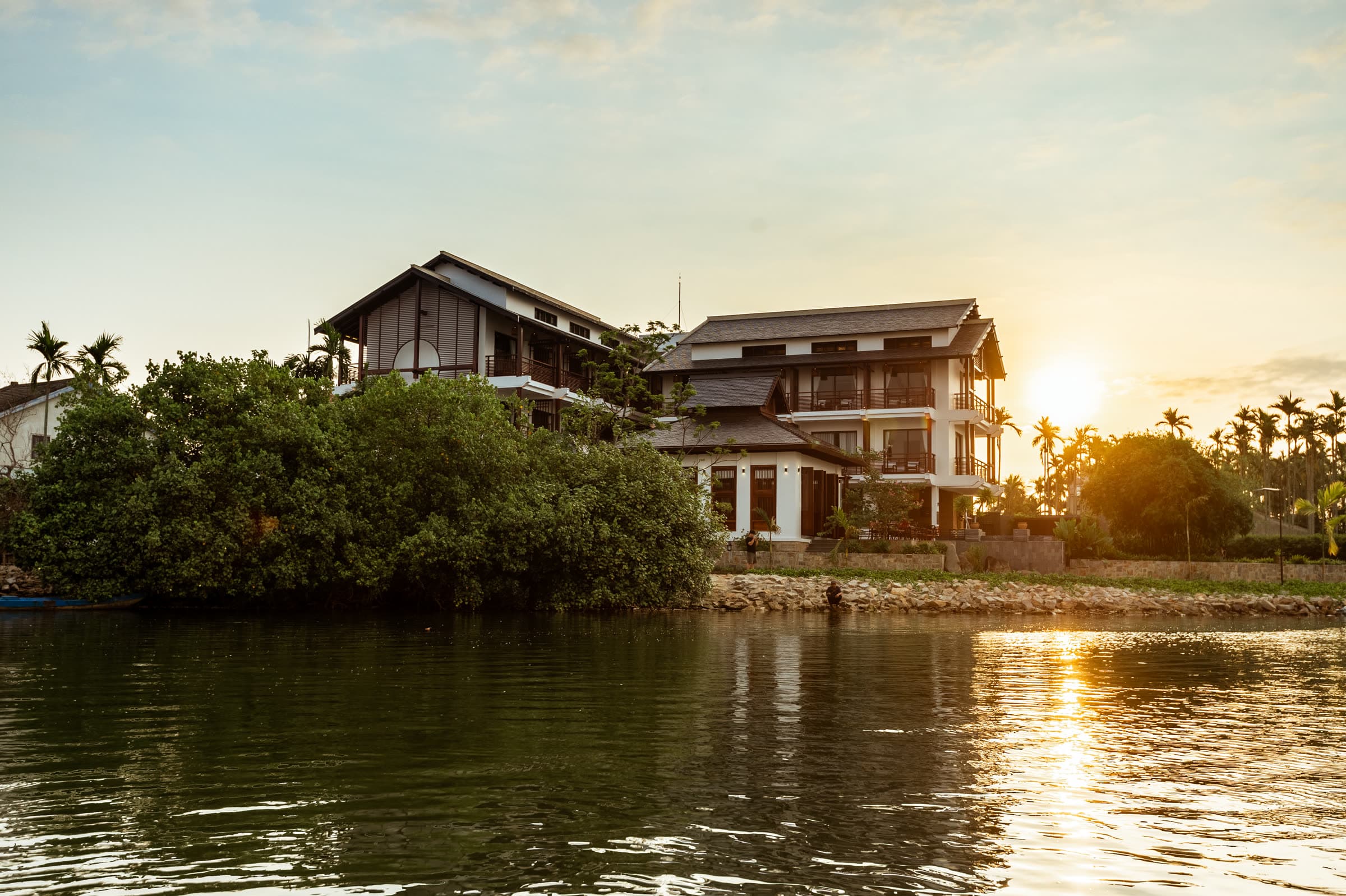
우리는 구시가지와 디엔반 사이, 투본강 남안에 자리합니다 — 즉 그 모든 금 구슬이 나온 사후인 유적인 라이응이 묘지는 우리 정문에서 강변 도로를 따라 자전거로 약 5킬로미터 거리에 있습니다 (제방 길의 현재 상태와 공개 유적 표지석의 표지판은 우리가 구간별 길 안내를 게시하기 전에 호텔 측 확인이 필요합니다). 1604년 주인선(shuinsen)을 파이포로 들였고 오늘날 화물선을 끄어다이(Cửa Đại)로 흘려보내는 바로 그 투본강은, 2천 년 앞서 사후인 교역자들이 홍옥수와 유리를 실어 나르던 통로였습니다. 강이 곧 관통하는 줄기입니다.
우리는 이를 마케팅이 아니라 방향을 잡아 주는 안내로 언급합니다: 손님들이 구시가지와 해변 너머에 무엇이 해 볼 만한지 물을 때, 고고학이라는 답은 정말로 덜 알려져 있고, 그것도 그들이 이미 서 있는 곳에서 자전거로 20분 거리에 있습니다.
두 가지입니다. 첫째, 사후인과 초기 참파에 관한 독일어 학술 연구의 상당 부분 — 라이네케의 단행본, 본 KAAK 워킹페이퍼, 그리고 참 조각에 관한 비프케 로보의 도록 기고 — 은 어떤 체계적인 방식으로도 영어로 번역된 적이 없습니다. 둘째, 라이응이 현지의 해설은 미선이나 짜끼에우에 비해 미미합니다. 이 두 공백은 바로 우리가 호텔 측에서 — 번역 발췌와 현지 답사를 통해 앞으로의 글에서 — 메우는 데 보탬이 되고 싶은 종류의 것입니다.
이 글에 관하여. 이 글은 다섯 개의 베트남어 1차 자료(Báo Đà Nẵng, Báo Văn hóa, Báo Thanh Niên, VnExpress, vi.wikipedia.org)와 ISBN으로 확인 가능한 안드레아스 라이네케의 독일어 단행본(Neue Entdeckungen zur Sa Huynh-Kultur, Lindensoft Verlag 2002), 그리고 두 편의 영어권 학술 참고 문헌(Higham 2014; Hung 외 2013)을 종합합니다. 호텔 측 기여는 자전거 거리 기준의 방향 안내와 층층의 하루 일정입니다; 유적 표지석의 GPS 좌표, 현재 박물관 전시 상태, 현지 표지판은 현지에서 확인한 뒤 확정되면 글을 갱신하겠습니다.
Continue at Nghê Prana
Ready to Sleep Better?
Every room at Nghê Prana is designed around the science of sleep. Blackout curtains, nightly aromatherapy turndown, and riverside quiet — experience what real rest feels like.
View Our Rooms당신의 머무름은 지금 시작됩니다
강변 객실, 올드타운까지 자전거로 10분. 후에–다낭 이동 중 하룻밤이든, 일주일간 아무것도 안 하는 일정이든 — 당신의 방은 고요합니다.
무료 취소 · 호텔을 직접 짓고 운영하는 가족에게 바로 예약
웹사이트에서 직접 예약하면 15% 할인
 WhatsApp
 Zalo
Zalo