Cẩm Nam, Cẩm Kim, Cẩm Thanh — The Three Quiet Islands of Hội An
Cẩm Nam Hội An sits opposite the Old Town on the south bank of the Thu Bồn — a neighbourhood guide to the three river islands where Hội An actually lives.
The Old Town is the postcard. The three river neighbourhoods that ring it — Cẩm Nam directly across the south bank, Cẩm Kim further west, and Cẩm Thanh out toward the estuary — are where Hội An actually lives. If you want to understand the town rather than only photograph it, these are the places to walk, eat, and sleep.
All three sit on the Thu Bồn River, a 205 km waterway that rises in the Ngọc Linh range and reaches the sea at Cửa Đại just past Cẩm Thanh. The river drains a 10,350 km² basin and is the reason Hội An exists at all — it carried Champa, Đại Việt, Japanese, Chinese and later French trade between the 15th and 19th centuries, the trade era UNESCO recognised when it inscribed the Hội An Ancient Town in December 1999. Each of the three islands relates to that river story differently. Cẩm Nam is the residential foreground. Cẩm Kim is the workshop. Cẩm Thanh is the wetland edge.
Cẩm Nam — the residential south bank
Cẩm Nam sits one short bridge south of the Old Town across the Thu Bồn. According to local genealogies, the settlement (formerly known as Cẩm Phô village) is among the oldest in the Hội An area, predating the trading-port boom that made the north bank famous. What you find on Cẩm Nam today is a quieter, lower-rise village rhythm: morning markets, corn fields along the dikes, and food stalls known across the region for bánh đập (a sesame-rice cracker pressed onto a soft wet rice sheet) and hến xào (stir-fried baby clams from the Thu Bồn).
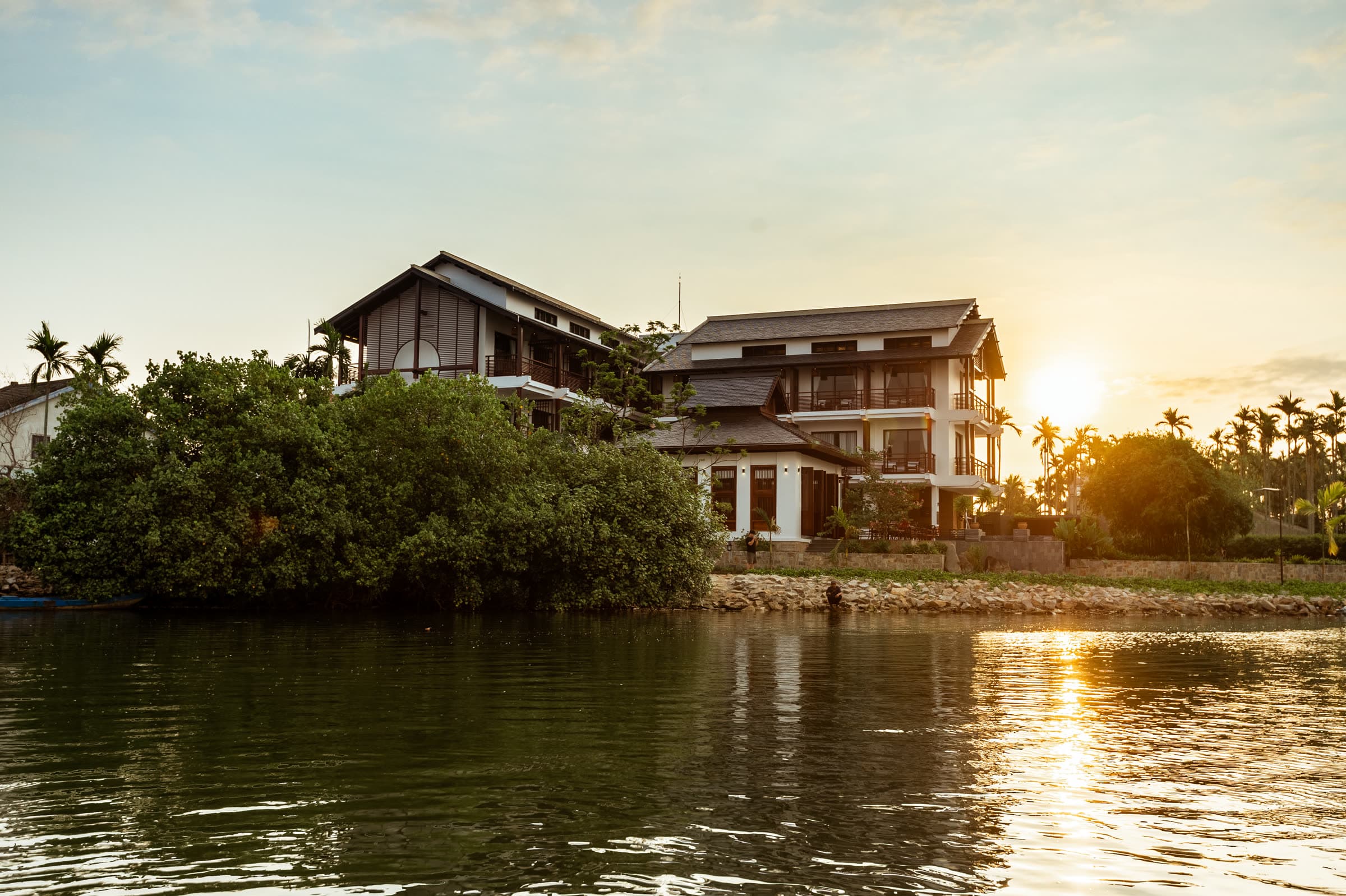
For visitors used to evaluating a stay by Old Town walking distance, Cẩm Nam is the rare neighbourhood that's actually inside that envelope while sitting outside the noise envelope. From the island's west end it is a five-minute walk over the bridge to An Hội and the lantern-lit waterfront (from our end, the quiet east end on the main channel, it is ten minutes by bicycle), and at the same time the south bank's soundscape is structurally quieter — fewer scooters, no nightlife frontage, the river acting as a buffer. We measured 39 dB(A) at our riverside terrace on a typical evening, which sits in the "library" range. It's the reason Nghê Prana — a riverside hotel in Hội An — is on this side of the water rather than inside the pedestrian core.
Match Cẩm Nam to a trip whose centre of gravity is the river itself: morning walks along the dike, late-afternoon coffee facing the Old Town silhouette, dinner back across the bridge. See the Hội An hotel noise map for how the south bank compares to other neighbourhoods.
Cẩm Kim — the carpentry island
Cẩm Kim is the larger island west of An Hội, reached either by a short ferry from the Bạch Đằng waterfront or by the Cẩm Kim Bridge that opened in 2016. Its village of Kim Bồng has been known for ship-building and joinery since at least the late 15th century. Hội An's old merchant houses, assembly halls, and many of the wooden boats still working the river were built or rebuilt by Kim Bồng carpenters, and the craft tradition is described as a blend of Cham, Chinese, Japanese, and Vietnamese techniques shaped by centuries of trade.
Today Cẩm Kim is the slowest of the three. Roads are narrow, traffic is mostly bicycles and the occasional scooter, and the workshops along the riverfront still make and repair wooden hulls in the open air. A morning here is best done by bike: cross to the island, ride the river road clockwise, stop at one of the family workshops (most are open to visitors out of habit, not as a paid attraction), and come back via the bridge. Match Cẩm Kim to a trip with a craft or photography interest, or to a half-day where you simply want the river without the crowd.
Cẩm Thanh — the nipa-palm wetland
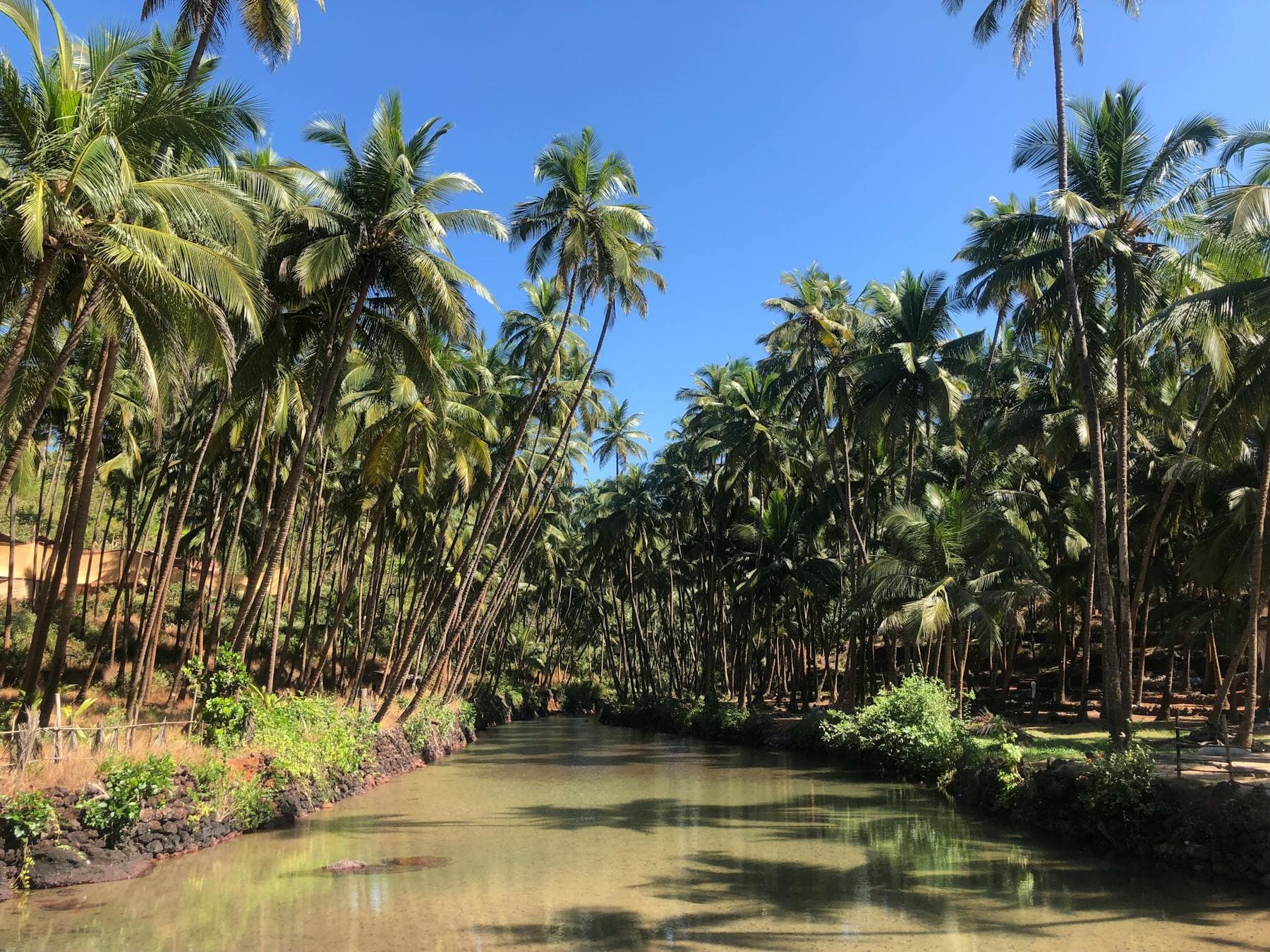
Cẩm Thanh is east of the Old Town toward the estuary, a 9.4 km² rural commune of around 9,000 residents. Its character is set by the Bảy Mẫu nipa-palm forest — a brackish-water palm grove that according to local tradition began with seedlings brought up from the south roughly two centuries ago. The grove is now a meaningfully larger area and has become one of Hội An's defining ecological landscapes. The whole area sits inside the Cù Lao Chàm-Hội An Biosphere Reserve, designated by UNESCO in 2009.
The famous thuyền thúng — round bamboo basket boats — are part of the Cẩm Thanh fabric and are how local fishermen and crab catchers move between the palm channels. The water-coconut groves were also used as cover during the wars of the 20th century, which is part of why local guides talk about them with a particular weight. As a visitor, the most respectful way to experience Cẩm Thanh is to arrange a quieter morning paddle rather than the louder midday tourist circuits — ask at your hotel; in Hội An's family-network economy, your reception desk almost certainly has a cousin or neighbour who runs boats and will match you with the right kind of trip.
Match Cẩm Thanh to a trip that wants ecology and slow water — birdlife at dawn, palm channels at golden hour, dinner at a riverside table watching boats come in.
Planning a trip around this? See dates at our quiet riverside hotel on the Thu Bồn. Check availability →
Which island for which trip
The three are not ranked. They are different soundscapes for different trips. Cẩm Nam is for travellers who want to walk into the Old Town in five minutes and walk back out of it into quiet. Cẩm Kim is for craft, bicycles, and structural slowness. Cẩm Thanh is for water, palms, and the estuary. Most three- or four-night stays in Hội An have time for all three; what matters is choosing the right base.
If your priority is sleep and proximity, the south bank — Cẩm Nam — is structurally the quietest of the close-in neighbourhoods, and the easiest to combine with everything else. From a Cẩm Nam base, Cẩm Kim is a 15-minute bike ride west, and Cẩm Thanh is a 15-minute ride east. The Old Town is across the bridge. The Thu Bồn River does the work of holding all of it together.
A short note on how to spend a day on each
On Cẩm Nam: dawn walk along the river, breakfast of bánh đập and hến xào at one of the family stalls near the bridge, mid-morning across the bridge into the Old Town for the Japanese Covered Bridge) and the assembly halls along Trần Phú, lunch back on the south bank, afternoon by the river, dinner facing the lanterns.
On Cẩm Kim: ferry or ride across after breakfast, bike loop of the island in 60–90 minutes, stop at Kim Bồng for the workshops, lunch at a riverside cơm gà spot, return mid-afternoon. This pairs well with a sunset back near An Hội bridge.
On Cẩm Thanh: morning is best for the palm channels and the wildlife, before the heat and the day-tour boats arrive. Pair it with a slow lunch and an afternoon at An Bàng beach, which is just a few kilometres further. The basket boats are part of a working coastal village; treat them that way and the experience opens up.
The Old Town will give you Hội An's silhouette. The three islands give you the place itself.
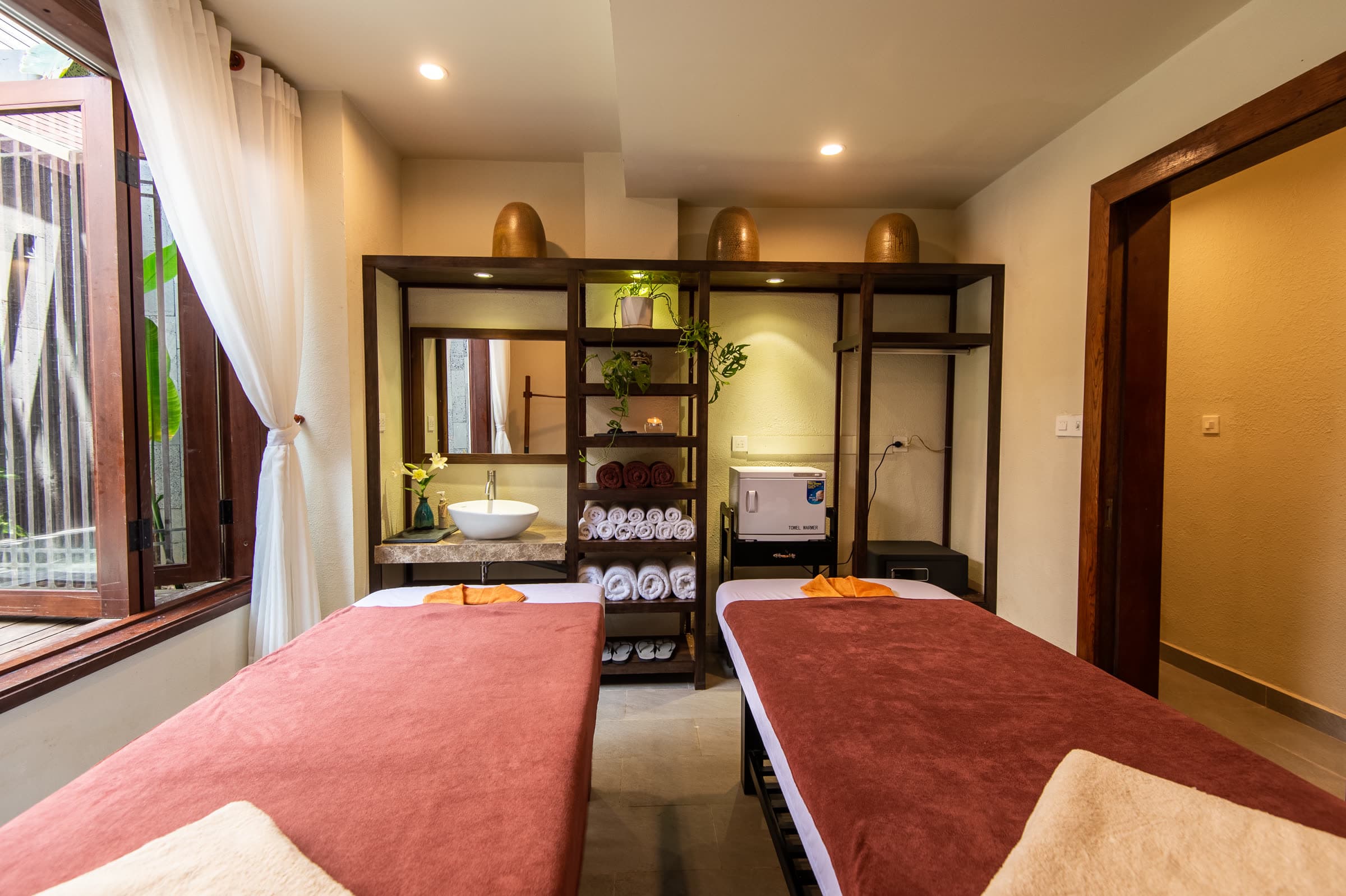
Every room at Nghê Prana is designed around the science of sleep. Blackout curtains, nightly aromatherapy turndown, and riverside quiet — experience what real rest feels like.
Riverside hotel rooms on the Thu Bồn, ten minutes by bicycle from the Ancient Town. Whether it's one night between Hue and Da Nang or a full week of doing nothing — we kept your room quiet.
Free cancellation · Direct from the family who built the hotel

 WhatsApp
 Zalo
Zalo