The most beautiful riverside towns in Vietnam are not interchangeable. Hội An, Huế, Tam Cốc, Sa Đéc, Châu Đốc, Cần Thơ, and Long Xuyên each sit on a different river system — the Thu Bồn, the Perfume, the Ngô Đồng, and three branches of the Mekong — and each one gives you a different kind of trip. This is a list of seven, in the order we'd send a first-time traveller through them, with what each town actually delivers.
1. Hội An — Thu Bồn River, Central Vietnam
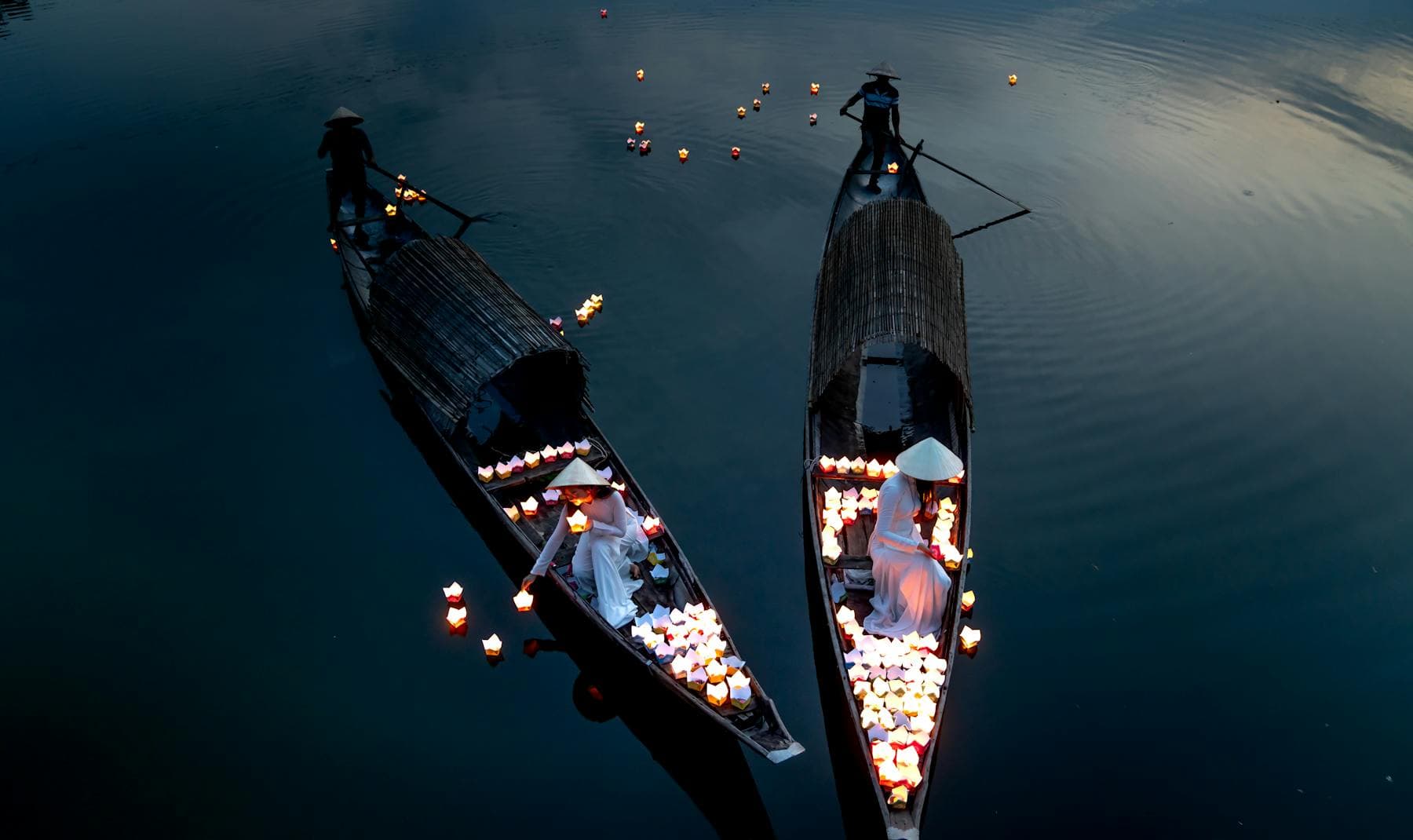
Hội An is the most photographed riverside town in Vietnam, and rightly so: the Old Town is the world's best-preserved example of a 15th–19th century South-East Asian trading port, inscribed by UNESCO in December 1999 over a 30-hectare core with a 280-hectare buffer. It sits low and tight along the Thu Bồn, a 205 km river that drops from the Ngọc Linh range to the sea at Cửa Đại. What Hội An gives you is the rare combination of a walkable historic town and a working river — wooden boats moving between the south-bank villages and the estuary every hour of the day.
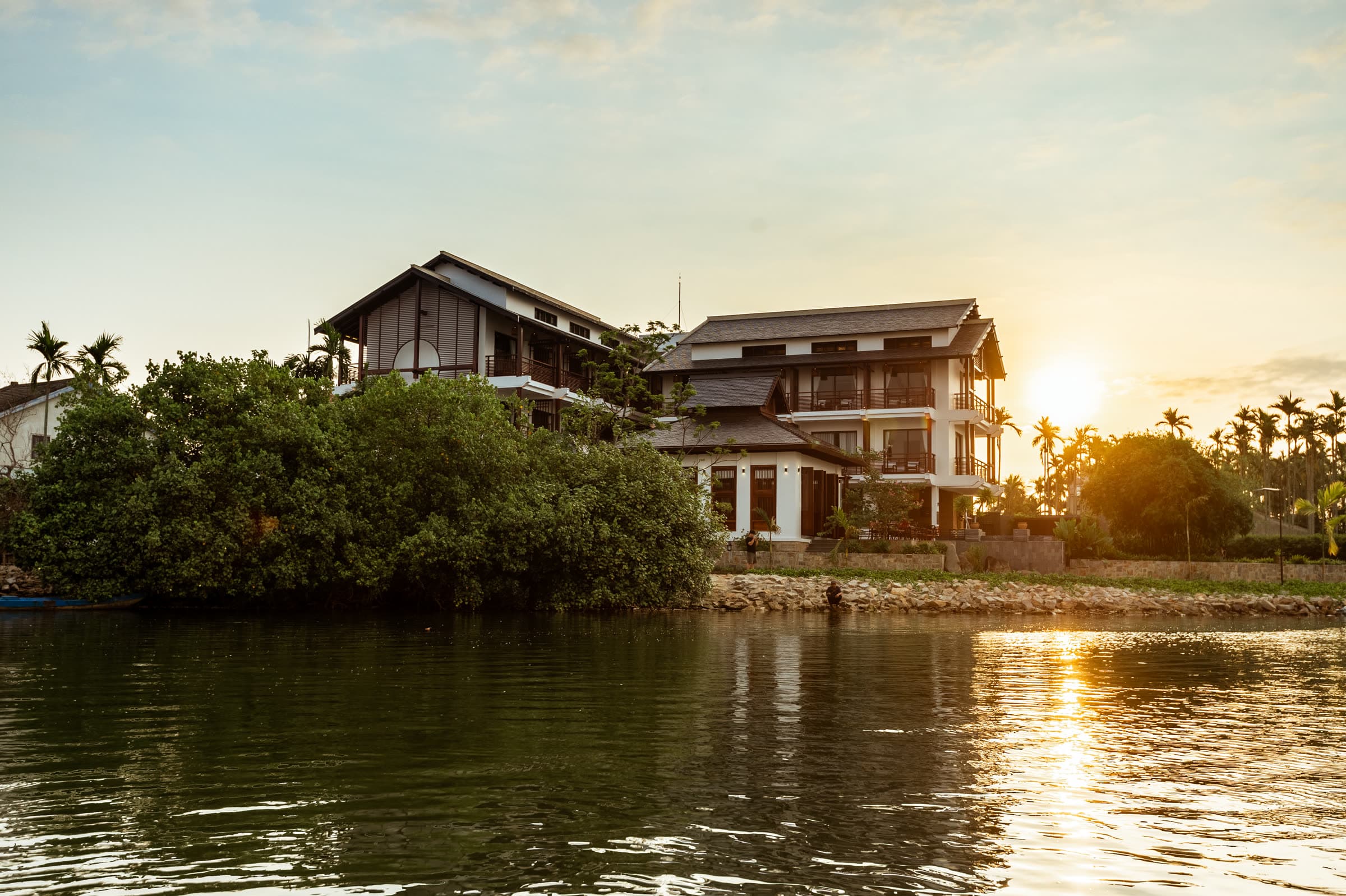
The town is at its best from the water. Stay on the south bank — Cẩm Nam — and walk in across the bridge in the morning, walk out into quiet at night. The Thu Bồn River pillar covers what to do on the river itself; the riverside-hotel guide covers where the genuine river-frontage properties are.
2. Huế — Perfume River, Central Vietnam
Huế gives you imperial weight. The Perfume River (Sông Hương) flows roughly 80 km from the Trường Sơn range to Thuận An beach, and its banks carry the Imperial Citadel of the Nguyễn Dynasty (1802–1945), the Thiên Mụ Pagoda, and a string of royal tombs. It is said to take its name from the upstream orchards whose blossoms scent the water in autumn. Three hours up the coast from Hội An on the train, Huế is a slower, more contemplative town — a good complement to Hội An's mercantile bustle.
Take a dragon boat upriver in the late afternoon to see Thiên Mụ at golden hour. Huế is also the place to taste Central Vietnamese imperial cuisine — bún bò Huế, bánh bèo, bánh khoái — which is more delicate, more dish-by-dish, than the better-known southern food.
3. Tam Cốc (Ninh Bình) — Ngô Đồng River, Northern Vietnam
Tam Cốc is not a town in the urban sense — it's a karst landscape near the small city of Ninh Bình, where the Ngô Đồng River winds between limestone peaks and through three river caves (Hang Cả, Hang Hai, Hang Ba). The boat ride takes about 1.5–2 hours by sampan. The boatwomen are famous for rowing with their feet, oars looped under the soles, a technique that frees the hands for nets, hats, or rest on long days. The river is shallow and calm; the rice fields fluoresce green in April and turn gold by late May.
Tam Cốc gives you the iconic Northern Vietnam landscape: rice fields rising into karst, water lilies in autumn, and a quietness you can't find in a city. Pair it with Hoa Lư, the 10th-century capital that sits a few kilometres away.
4. Sa Đéc — Mekong (Tiền) River, Đồng Tháp Province
Sa Đéc is the Mekong Delta's flower-growing capital — its nurseries supply much of southern Vietnam — and the town where the French writer Marguerite Duras spent part of her adolescence in the late 1920s, when her mother taught at the local school. Her novel L'Amant (The Lover, 1984; Prix Goncourt) is set partly here, and the Huỳnh Thuỷ Lê ancient house — built in 1895, remodelled in 1917, recognised as a National Historical Relic in 2009 — is open to visitors as the home of the Chinese-Vietnamese man at the centre of the novel.
Sa Đéc gives you a literary, lived-in Mekong town. The flower villages around Tân Quy Đông are best in the weeks before Tết, when the nurseries fill with chrysanthemums, marigolds, and ornamental fruit trees being prepared for the New Year market.
5. Cần Thơ — Hậu River, Mekong Delta
Cần Thơ is the Mekong Delta's largest city and sits at the confluence of several waterways, including the Hậu — one of the two main Vietnamese branches of the Mekong. Its calling card is the Cái Răng floating market, a wholesale fruit-and-vegetable market that operates daily from around 2–3 a.m. with peak activity from 4–6 a.m. Vendors signal what they sell by hanging samples from a tall pole — the cây bẹo — so buyers can read the offerings from a distance.
Planning a trip around this? See dates at our quiet riverside hotel on the Thu Bồn. Check availability →
Cần Thơ gives you a Mekong city: a riverside boulevard, broad bridges, an active port, and easy access to a network of smaller canals and orchards by boat. Go to Cái Răng before sunrise; come back for breakfast in town.
6. Châu Đốc — Bassac (Hậu) River, An Giang Province
Châu Đốc is at the Cambodian border, on the Hậu/Bassac branch of the Mekong, in An Giang Province. It is one of Vietnam's most religiously diverse small cities — Vietnamese Mahayana Buddhists, Khmer Theravada Buddhists, Cham Sunni Muslims, and Chinese trader-merchant communities all live and worship along the same river stretch. The town has floating houses, fish farms suspended below them, a floating market, the sacred Sam Mountain (Núi Sam) just outside town, and the Trà Sư cajuput forest a short drive away.
Châu Đốc gives you a working border riverscape and a more layered cultural texture than the more visited delta stops. From here, slow boats continue up the Mekong into Cambodia toward Phnom Penh — historically the way travellers entered Vietnam from the west.
7. Long Xuyên — Hậu River, An Giang Province
Long Xuyên is the An Giang provincial capital, also on the Hậu, and is home to one of the last working floating markets where local trade still outweighs visitor traffic. The market opens around 4 a.m. and is at its best from 5–7 a.m.; vendors specialise in local fruit — coconuts, bananas, pineapples — and the boats trading there have dropped from several hundred in the early 1990s to a smaller fleet today as roads, supermarkets, and younger career paths have changed how the delta moves goods.
Long Xuyên gives you the Mekong as residents experience it. Many families along this stretch live year-round on boats or floating fish farms. It's the right last stop on a riverside circuit because it puts the others into perspective: not every river town is a destination; some are simply where the river still runs the day.
How to put them together
A two-week Vietnam trip can comfortably include two to three of these. The natural pairings: Hội An plus Huế for Central Vietnam, three to four nights each; Sa Đéc plus Cần Thơ plus Châu Đốc for the southern delta, two nights each; Tam Cốc as a two- or three-day add-on from Hà Nội. If you have time for only one, Hội An gives the most layered single-base experience — UNESCO history, an active river, food, walkable streets, and quiet sleeping options on the south bank of the Thu Bồn.
The reason these seven are on the list and others aren't is consistent: each is structured around its river. The river is what sets the daily rhythm — what time the market opens, where the boats moor, when sunset lands on the water. In a country with the coastal beauty Vietnam has, that's a particular and rarer thing.
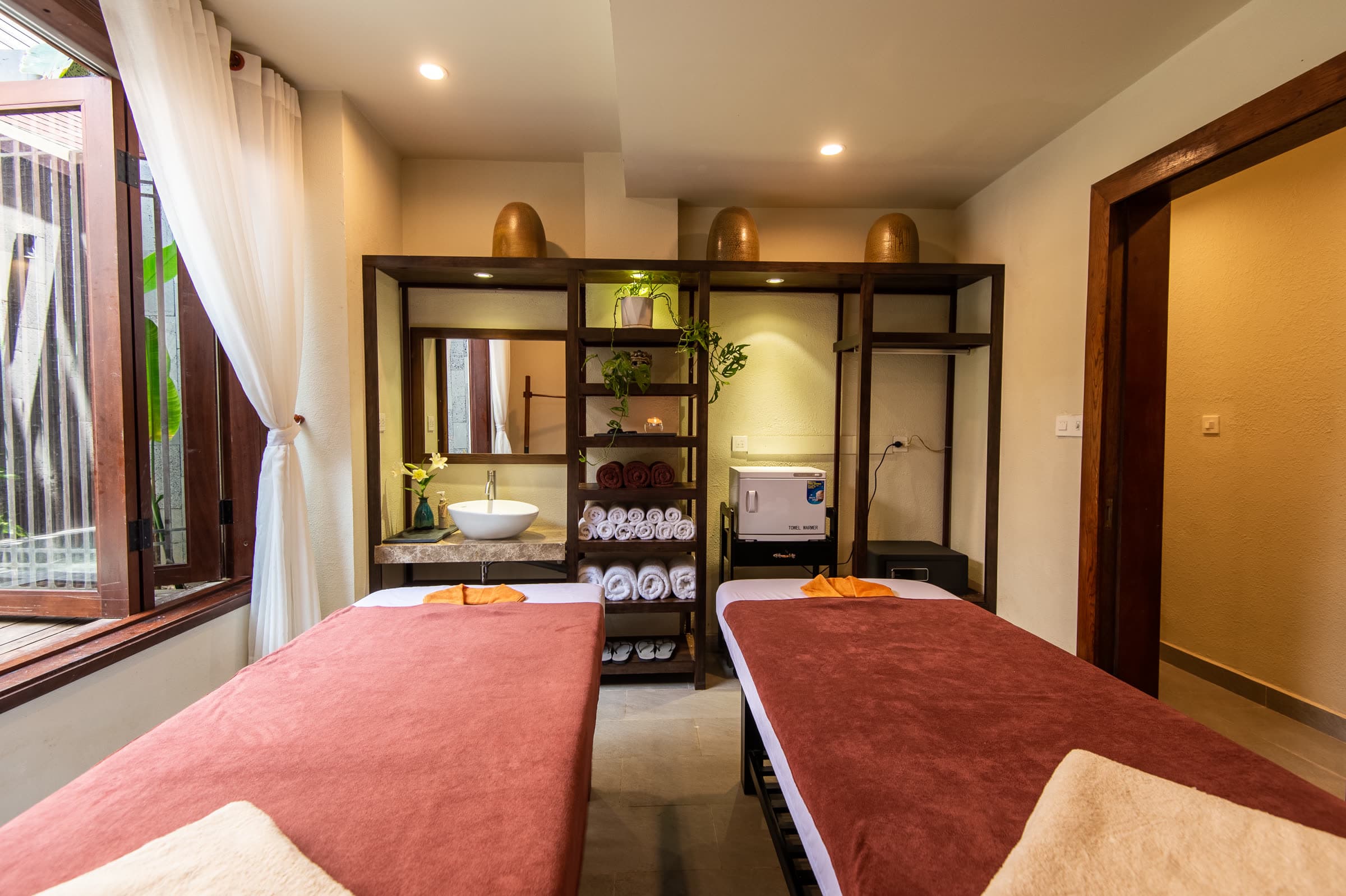
Every room at Nghê Prana is designed around the science of sleep. Blackout curtains, nightly aromatherapy turndown, and riverside quiet — experience what real rest feels like.
Riverside hotel rooms on the Thu Bồn, ten minutes by bicycle from the Ancient Town. Whether it's one night between Hue and Da Nang or a full week of doing nothing — we kept your room quiet.
Free cancellation · Direct from the family who built the hotel

 WhatsApp
 Zalo
Zalo