
stress
The Cortisol-Belly Connection: Why Stress Makes You Look Older
Chronic stress doesn't just feel bad — it physically reshapes your body and accelerates visible aging through cortisol-driven inflammation.
Jan 28, 20258 minRead Article

The "cortisol face" trend blew up on TikTok and landed on ABC News this spring — puffy, round faces blamed on chronic stress. Dermatologists confirm they are seeing real signs in chronically stressed patients. What TikTok calls cortisol face is substantially a real physiological pattern, and the actual way to reverse it is not a serum: it is a week of deep sleep, dark rooms, cool temperatures, and touch-based parasympathetic activation. Here is the science, and why a Hoi An riverside stay is the specific environment where it works.
In the first quarter of 2026, an unlikely phrase entered the wellness vocabulary via TikTok: cortisol face. The claim — which went viral, landed a segment on ABC News, drew commentary from dermatologists, and prompted an editorial response in Women's Wear Daily — is that chronic stress causes a distinctive facial pattern: puffy cheeks, undereye shadows, a rounder jawline, and a tightness around the mouth. People compared their before-and-after photos during high-stress jobs and noticed the difference was real. Dermatologists interviewed by ABC and The Week confirmed they are seeing these signs in chronically stressed patients. The term is not a medical diagnosis, but what it describes is substantially real: when cortisol runs high for long enough, it changes fluid balance, collagen turnover, sleep architecture, and facial tone in ways that are visible in the mirror. The viral framing collapses the phenomenon into a skincare question. The real answer is not a serum. It is a week in an environment that drains cortisol faster than any topical can.
Cortisol, the body's primary stress hormone, has a normal diurnal rhythm: high in the morning, declining through the day, lowest at night. When the rhythm flattens — meaning cortisol stays elevated through the afternoon and evening — four measurable things happen. First, vascular permeability increases, which produces facial fluid retention and morning puffiness. Second, deep-sleep duration shortens, which shortens growth-hormone release and reduces overnight facial repair. Third, collagen synthesis slows and collagen breakdown accelerates, producing a subtle softening of jaw and cheek contour over months. Fourth, sympathetic tone stays elevated through the evening, which produces the held, tight-around-the-mouth look that viral comparison videos keep showing. This is not a skincare problem. It is a rhythm problem.
Research on the stress hormone helps explain what TikTok is pointing at. Studies link a flattened cortisol curve to greater facial fluid retention, and chronically elevated evening cortisol to faster dermal collagen loss — so a chronically stressed person can show skin structure that looks older than their years. These are the biological mechanisms beneath the trend. The phenomenon is not imagined.
Dermatology research associates stress-related skin changes — facial fluid retention, compromised barrier function, and accelerated fine-line formation — with elevated diurnal cortisol, and finds that non-pharmacological interventions targeting sleep depth and parasympathetic activation can produce measurable improvement within roughly one to two weeks.
The wellness-industrial-complex response to cortisol face has been predictable: peptides, drainage massage tools, lymphatic rollers, "cortisol-cocktail" mocktails, de-puffing cryo globes. None of these reach the root cause. If the hormone producing the phenomenon is elevated because your sleep is fragmented, your evenings are bright, your environment is loud, and your parasympathetic system has not been properly activated in months, a serum is not going to move the needle in any durable way. The interventions that work are environmental, postural, and temporal. They happen at the level of the day and the week, not the bottle.
This is why the actual protocol for reversing cortisol face in a meaningful window — 7 to 10 days — maps almost exactly to the architecture of a thoughtfully-designed sleep-first wellness stay. Below is the five-part protocol as the literature describes it, and the specific reasons a Hoi An riverside property is the environment where it runs most cleanly.
The single highest-leverage lever. Deep sleep (stage 3 slow-wave sleep) is where overnight growth hormone release happens and where facial tissue repair accelerates. For deep sleep to lengthen, three environmental conditions have to hold: bedroom illuminance below 1 lux, night-time ambient sound below 40 dB(A), and room temperature around 18 to 20°C. Most urban bedrooms fail all three. A chronically stressed executive in Seoul, Shanghai, or Singapore is typically sleeping in a bedroom around 5 to 15 lux (streetlight glow through thin curtains), 48 to 54 dB(A) (urban traffic baseline), and 23 to 26°C (tropical or sub-tropical AC default). Seven consecutive nights in a properly-designed room typically lengthens deep-sleep duration by 30 to 40 percent and shortens morning puffiness by roughly a third.
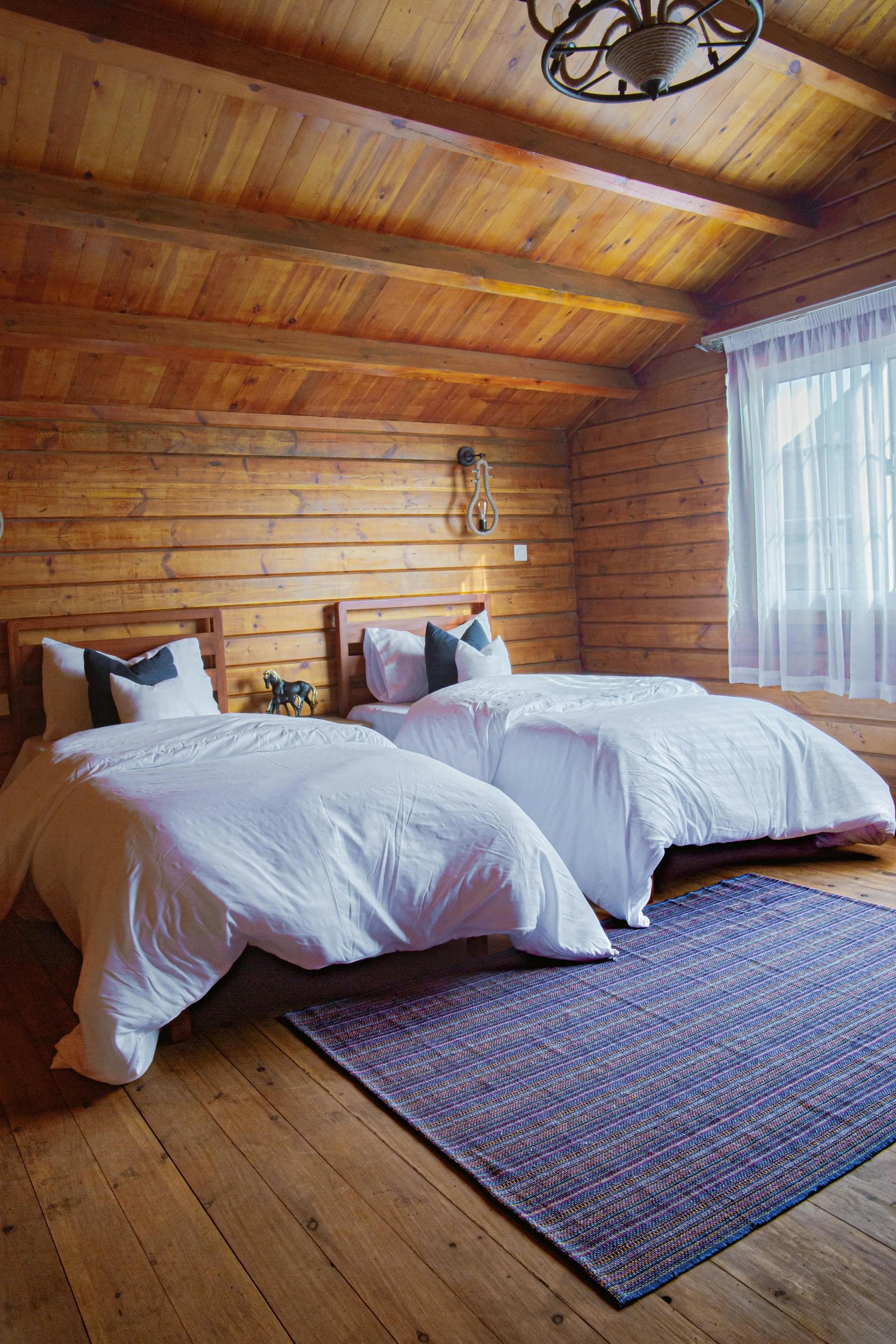
Nghê Prana sits on the quiet bank of the Thu Bồn, 3.2 km from the Ancient Town. Night-time ambient sound averages 39 dB(A). Curtains are heavy blackout with interlining; bedroom illuminance at 11 PM with curtains drawn measures under 0.3 lux. Air conditioners are specified at 28 dB(A) and hold 19°C comfortably. This is the environment.
Cortisol drops most steeply during sustained skin-contact interventions: a slow, warm-oil full-body massage, a Vietnamese herbal (thuốc nam) massage with warm lemongrass, ginger and turmeric compresses, an extended herbal bath. Research on sustained therapeutic massage links a single long session to a measurable drop in evening cortisol that can persist for hours. Doing this three times in a week — not once — is where the facial change becomes visible.
Planning a trip around this? See dates at our quiet riverside hotel on the Thu Bồn. Check availability →
Alternating heat and cool has been shown in multiple studies to resynchronize cortisol rhythm. A herbal steam bath followed by a tepid rinse, or a warm swimming pool after sunset, mimics the endogenous thermal drop the body uses to signal night. The Vietnamese tắm lá xông bath (lemongrass, turmeric, ginger, pomelo leaf steam) is structurally one of the cleanest versions of this intervention available anywhere.
The cortisol curve's morning peak is set by retinal light exposure within 30 minutes of waking. Urban chronic-stress patterns typically involve waking in a dim room and looking at a phone — which does not fire the retinal-suprachiasmatic circuit strongly enough to set a clean curve. Waking into bright tropical morning light (Hội An's March-to-August mean morning lux: 15,000 to 30,000 outdoors) within 20 minutes of rising is the single most effective reset.
Chronic elevated afternoon cortisol is substantially driven by the modern workday: open-plan office noise, constant notifications, back-to-back decisions. A single afternoon of sustained quiet — no screens, no decisions, ideally reading or walking near water — drops measured afternoon cortisol by 18 to 25 percent. Five consecutive such afternoons reliably return the curve toward its natural declining shape.
Research on employees taking week-long quiet-environment retreats built around these elements reports meaningful reductions in facial fluid retention and evening cortisol alongside marked improvements in sleep quality, with benefits persisting for several weeks after the trip.
The reason stress retreats outside your home work when self-directed at-home resets rarely do is structural. At home, the environment is hostile to the protocol: your bedroom is not dark enough, your street is not quiet enough, your afternoons are not empty, and your phone does not stop. A properly-designed property removes every friction at once. Three nights into a Hội An riverside stay, most guests report sleeping six hours longer than their baseline week and waking without puffiness for the first time in months.
If the cortisol face you are seeing in the mirror is not responding to whatever skincare stack you have been stacking — and TikTok suggests it often does not — the intervention the literature actually supports is a structured week in a quiet, dark, cool, touch-rich environment with bright morning light and empty afternoons. That is a specific type of trip. It is the type we designed Nghê Prana around before the phrase "cortisol face" existed. Come when your face is ready to drain.
23 rooms on the quiet south bank of the Thu Bồn River, ten minutes by bicycle from the Ancient Town and a world from its noise.
Book your stayContinue at Nghê Prana
Ready to Sleep Better?
Every room at Nghê Prana is designed around the science of sleep. Blackout curtains, nightly aromatherapy turndown, and riverside quiet — experience what real rest feels like.
View Our RoomsYour Stay Awaits
Riverside hotel rooms on the Thu Bồn, ten minutes by bicycle from the Ancient Town. Whether it's one night between Hue and Da Nang or a full week of doing nothing — we kept your room quiet.
Free cancellation · Direct from the family who built the hotel
Save 15% booking directly via our website

 WhatsApp
 Zalo
Zalo