Hoi An vs Hue: An Honest Decider for Your Central Vietnam Trip
Huế is the imperial-history leg; Hội An is the slow, lantern-lit, restful leg. They sit only about three hours apart over the Hải Vân Pass, so most central-Vietnam itineraries include both. Here is how to choose, and how to sequence the two if you do both.
If you are weighing Hội An vs Huế for a central Vietnam trip, here is the one-line answer most guides bury: they are different enough that you probably want both, and they sit close enough together that you can. Huế is the former imperial capital — walls, royal tombs, and a slow river heavy with history. Hội An is the lantern-lit trading town — tailors, riverside cafés, a beach twenty minutes away, and a pace that asks nothing of you. The two are roughly 120 km apart, about three hours by road or rail over the Hải Vân Pass, with Đà Nẵng sitting neatly between them. We run a small riverside hotel on the quiet south bank of the Thu Bồn in Hội An, so we have hosted a steady stream of guests arriving footsore from Huế's monuments — but we have tried to keep this genuinely balanced: if Huế is the better fit for your trip, this guide will say so.
The short answer
Choose Huế if you came to central Vietnam for history, architecture, and royal cuisine, and you do not mind a more solemn, monument-heavy day or two. Choose Hội An if you came to slow down — to wander a walkable old town, eat well, get clothes made, cycle rice paddies, and reach a beach in twenty minutes. If you have four days or more in the region, do both, with Huế as the sightseeing leg and Hội An as the decompression leg. Almost everyone who has the time ends up doing exactly that.
Hoi An vs Hue at a glance
Huế
Hội An
History & sights
Imperial capital: the Citadel & Đại Nội, royal tombs, Thiên Mụ Pagoda
UNESCO trading port: Ancient Town, Japanese Bridge, assembly halls
Signature food
bún bò Huế, royal/imperial cuisine, bánh bèo, com hến
cao lầu, white rose dumplings, bánh mì Phượng, mì Quảng
Vibe
Solemn, historical, less touristy, spread out
Romantic, walkable, lantern-lit, intimate
River
Sông Hương (Perfume River), wide and stately
Thu Bồn, narrow, lantern reflections at night
Beach
Thuận An / Lăng Cô, further out
An Bàng & Cửa Đại, ~15–20 min by bike
Days needed
1.5–2 days
2–3+ days
Best for
History lovers, photographers, food-history travellers
Couples, slow travel, families, shoppers, beach time
Huế: the imperial capital, in depth
Huế was the seat of the Nguyễn dynasty from 1802 to 1945, and the whole city is still organised around that past. The centrepiece is the Kinh Thành (Citadel) and, inside it, the Đại Nội — the Imperial City, a walled and moated complex of gates, courtyards, and throne halls modelled in part on Beijing's Forbidden City. It is a recognised UNESCO World Heritage site, and a half-day there is the single most worthwhile thing you will do in the city. Wear sun protection; the courtyards are large and largely shadeless.
Beyond the walls, Huế's signature experience is the royal tombs scattered along the Sông Hương (Perfume River). Each emperor built his own, and they differ sharply in character: the serene, poetic landscape of Tự Đức's tomb; the formal symmetry of Minh Mạng's; and the extraordinary, almost baroque fusion of Vietnamese and European styles at Khải Định's. Thiên Mụ Pagoda, a seven-tiered tower above the river, completes the classic circuit, often strung together by car, motorbike, or dragon-boat cruise. Huế is also a food destination in its own right, with a cuisine shaped by the royal court's taste for many small, refined dishes. The famous one is bún bò Huế, a lemongrass-and-chilli beef noodle soup locals insist tastes better here than anywhere else; round it out with bánh bèo, bánh nậm, and com hến. The overall feeling is quieter and more reflective than Hội An — you spend your time at monuments rather than in cafés, which is precisely its appeal for the right traveller.
Hội An: the lantern-lit trading town, in depth
Hội An was central Vietnam's great international port from roughly the 16th to 18th centuries, when Japanese, Chinese, and European merchants traded silk and spice along the Thu Bồn. That history survives as a remarkably intact Ancient Town — wooden shophouses, Chinese assembly halls, and the covered Japanese Bridge — which is itself a UNESCO World Heritage site. Unlike Huế's grand, spread-out monuments, Hội An's heritage is human-scaled and walkable; the pleasure is in wandering rather than ticking off sights.
The town's most famous draw is its lantern light. Every evening the Ancient Town glows with silk lanterns, and on the 14th of each lunar month — the eve of the full moon — Hội An holds its lantern night, when many shopfronts dim their electric lights and the riverbanks fill with candle-lit paper boats. Hội An is also Vietnam's tailoring capital, where you can have clothes measured and made in a day or two, and a serious food town: cao lầu (a thick noodle dish that, by local tradition, depends on water from a specific well), white rose dumplings, mì Quảng, and the bánh mì that put the place on the global food map. Then there is the beach — An Bàng and Cửa Đại sit only about 15–20 minutes from the Ancient Town by bicycle — plus cycling routes through Cẩm Thanh's water-coconut palms and the surrounding rice paddies. It is the part of central Vietnam where you finally stop rushing, and the natural place to recover after Huế's monuments, which is exactly how we tend to see it from our riverbank.
How to travel between Hội An and Huế
The two towns are about 120 km apart, and the journey is one of Vietnam's most scenic. The dramatic stretch is the Hải Vân Pass — the "Sea Cloud Pass" — a mountain road that climbs over a spur of the Trường Sơn range with the sea on one side. You can cross it three ways: over the top by car or motorbike, under it through the Hải Vân Tunnel (faster but viewless), or alongside the coast by train. By private car, plan on roughly 2.5–3 hours door to door, and ask the driver to take the pass rather than the tunnel and to stop at the summit and at Lăng Cô lagoon. By train, the Huế–Đà Nẵng segment is widely considered one of the most beautiful rail journeys in Southeast Asia, hugging cliffs and beaches the road cannot reach; you then continue from Đà Nẵng to Hội An by taxi, since Hội An has no station. Either way, Đà Nẵng sits between the two, so it is easy to add a night there or to fly in or out of its international airport.
If you do both: a sample sequence
Most travellers we host arrive on a loop like this. Start in Huế for two nights: a half-day at the Imperial City, a half-day on the royal tombs and Thiên Mụ, an evening on the Perfume River, and a proper bún bò Huế breakfast. On the third morning, transfer south over the Hải Vân Pass — by car with photo stops, or by train to Đà Nẵng — arriving in Hội An by early afternoon. Then give Hội An two to three nights: the Ancient Town after dark, a beach morning at An Bàng, a tailoring fitting, a countryside cycle, and at least one slow day with nothing planned. Doing it in this order front-loads the sightseeing and ends on rest, rather than the other way around. For a tighter version of the same idea, see our guide to a one-night recovery stay in Hội An between Huế and Đà Nẵng. If your schedule only allows a taste of Huế, you can also reach it as a long day trip — we cover the logistics and whether it is worth it in our Huế day trip from Hội An guide, and if you are choosing between Hội An and its bigger neighbour instead, our Hội An vs Đà Nẵng comparison covers that pairing.
Who should pick just one
Planning a trip around this? See dates at our quiet riverside hotel on the Thu Bồn. Check availability →
If you genuinely have to choose, decide by what you came for. Pick Huế alone if you are a history, architecture, or food-history traveller on a short, focused trip, and monuments energise rather than tire you. Pick Hội An alone if you want a single base that combines an atmospheric old town, great food, shopping, countryside, and a beach — and if "restful" ranks above "educational" on your list. Couples, families, and anyone treating central Vietnam as the slow part of a longer trip almost always lean Hội An; serious culture-first travellers on a tight clock can be perfectly happy with Huế and a Hải Vân drive.
Frequently Asked Questions
Should I visit Hội An or Huế first? Either works, but most travellers do Huế first and Hội An second. Huế is monument-heavy and best tackled while you are fresh, while Hội An is where you want to end up rested. If you fly into Đà Nẵng, you are already between the two and can go either direction.
How many days do I need for both Hội An and Huế? Plan about four to six days for the pair: roughly 1.5–2 days for Huế and 2–3+ days for Hội An, plus a half-day transfer over the Hải Vân Pass. With only three days total, focus on one town rather than splitting thin.
Is the train between Huế and Đà Nẵng worth it? Yes, if you have the time. The Huế–Đà Nẵng rail segment is one of the most scenic in Vietnam, tracing cliffs and beaches the road cannot reach. Remember that Hội An has no station, so you finish the last 30 km from Đà Nẵng by car. A private car over the pass is the alternative and lets you stop for photos.
Which has better food, Hội An or Huế? They are different cuisines, not better or worse. Huế is famous for royal-court cooking and bún bò Huế; Hội An is famous for cao lầu, white rose dumplings, mì Quảng, and bánh mì. Food-history travellers often rate Huế highest; most casual eaters find Hội An's variety easier to love.
Which is better for a beach holiday? Hội An. An Bàng beach sits about 15–20 minutes from the Ancient Town by bicycle, so you can combine town, countryside, and sand from one base. Huế's beaches (Thuận An, Lăng Cô) are further from the centre and less woven into a typical visit.
Is Hội An or Huế more romantic? Hội An, for most couples — the lantern-lit riverfront, walkable lanes, and quiet countryside make it the softer, more intimate choice. Huế is more solemn and historical. Many couples do both and save Hội An for the relaxed end of the trip.
Can I do Huế as a day trip from Hội An? You can, but it is a long day — roughly three hours each way — so you only see the highlights. If Huế's history matters to you, an overnight stay is far more rewarding than a day trip.
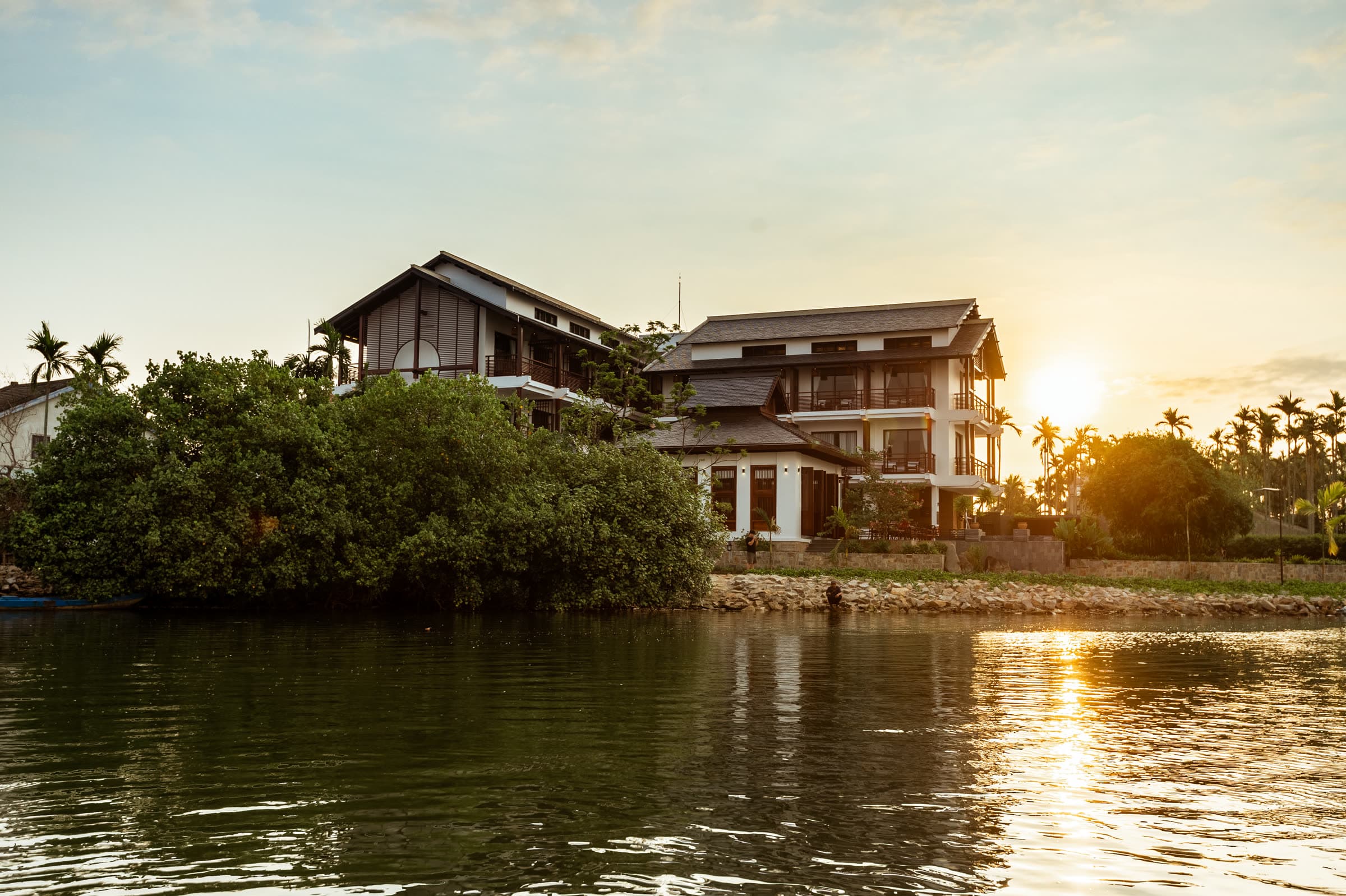
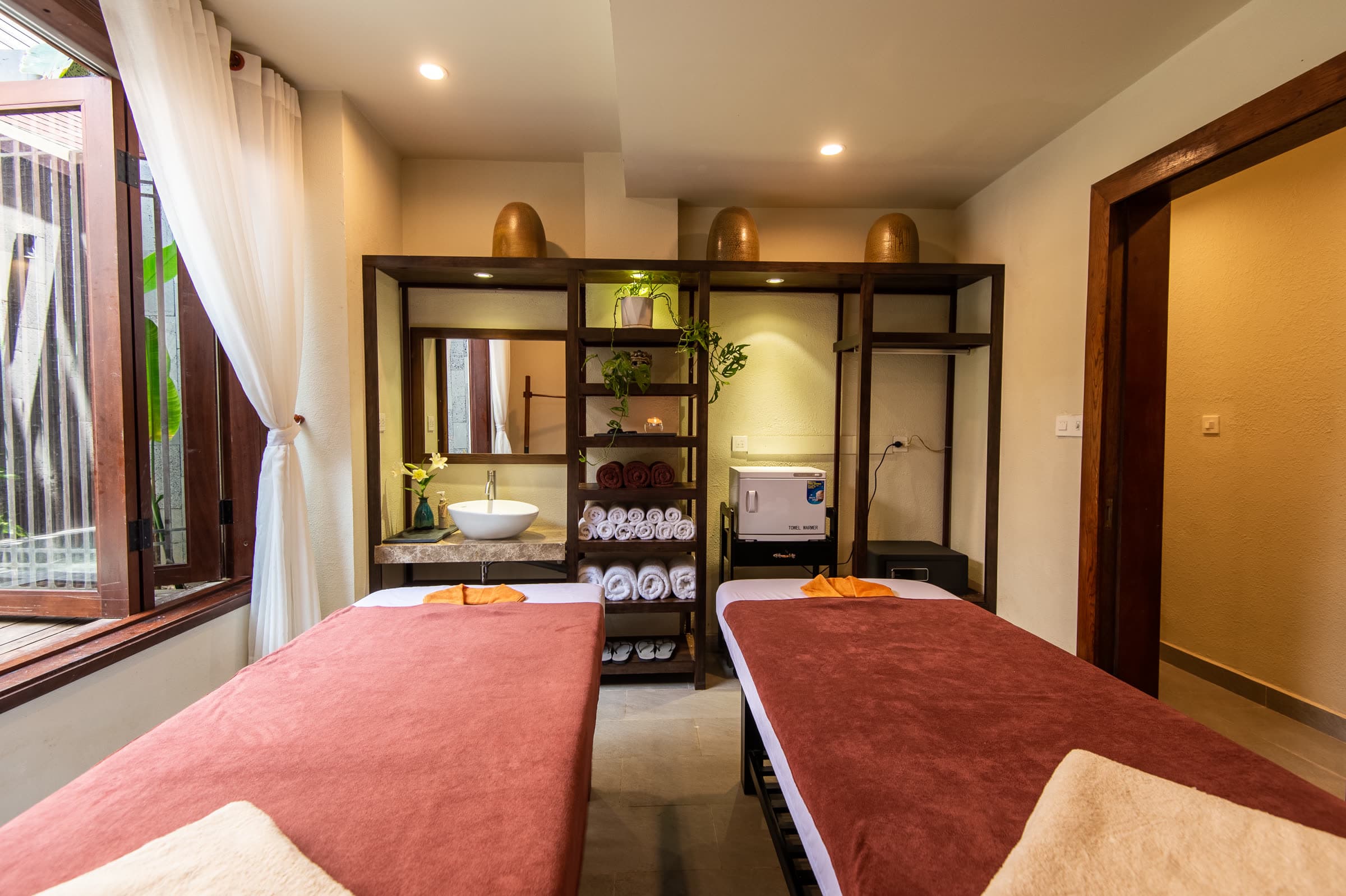
*A closing note on where to rest: after Huế's monuments and a Hải Vân crossing, the Hội An leg is the one that should feel like nothing is being asked of you. Our hotel sits on the quiet south bank of the Thu Bồn, about ten minutes by bike from the Ancient Town — riverside rooms, a pool, bikes at the door, The Corn farm-to-table kitchen, and a couple's spa with a private jacuzzi for the evening you finally stop sightseeing. It is built for the restful half of a central Vietnam trip. You can read more about the couple's spa or our wider wellness offering when you are planning that part.*
Every room at Nghê Prana is designed around the science of sleep. Blackout curtains, nightly aromatherapy turndown, and riverside quiet — experience what real rest feels like.
Riverside hotel rooms on the Thu Bồn, ten minutes by bicycle from the Ancient Town. Whether it's one night between Hue and Da Nang or a full week of doing nothing — we kept your room quiet.
Free cancellation · Direct from the family who built the hotel


 WhatsApp
 Zalo
Zalo