Cycling Hội An: Five River-and-Paddy Routes for Travellers Used to the Donauradweg
Germany generates 5.5 million cycling holidays a year, worth €11 billion (ADFC Radreiseanalyse 2024). Hội An is the closest Asian counterpart on the substance — flat, riverside, signed, with five named loops radiating from a single base on the Thu Bồn. A DACH-traveller's guide to cycling Hội An from a riverside hotel that has ridden every loop.
If you have ridden the Donauradweg from Donaueschingen to Passau, or pedalled the Elberadweg from Schöna to the North Sea, the cycling around Hội An will read instantly. Flat. Riverside. Quiet. Signed. Made for slow days and 40–60 km loops. The signage is in Vietnamese rather than the green-on-white ADFC standard, and there is no Bett+Bike sticker on the door — Vietnam is not yet in the scheme. But the substance of what makes a DACH cycle-tourist happy is here in unusual concentration. This piece is for the Radreisende who already understands what a long-distance riverside route is, and is asking the natural question: does Asia have anything like it?
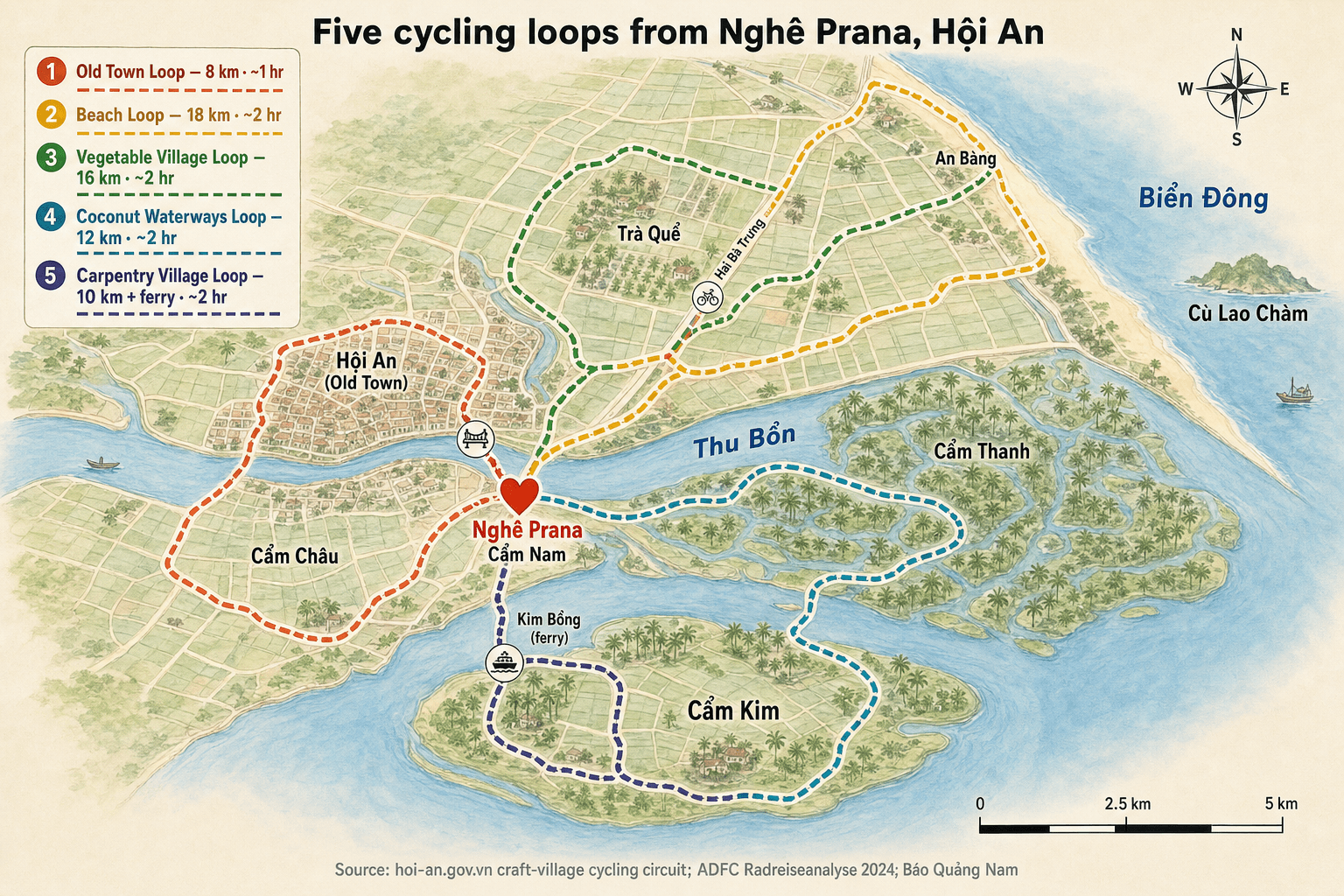
The five Nghê Prana cycling loops. Source: hoi-an.gov.vn craft-village cycling circuit; ADFC Radreiseanalyse 2024; Báo Quảng Nam.
The short answer: only really here. According to the Allgemeiner Deutscher Fahrrad-Club (ADFC), Germany generates roughly 5.5 million multi-day Radurlaube (three nights or more) per year, with value creation in that segment of about €6–7 billion (cycle tourism across all segments, including day trips, totals €22–25 billion). The DACH cycle-tourist is the world's highest-spend, lowest-volume travel segment — average age over fifty, six-to-nine nights per stay, around €117 per day. They search "Radreise Vietnam", "Mit dem Fahrrad durch Hội An", "Vietnam Radurlaub". Hội An is one of three destinations the Cục Du lịch Quốc gia Việt Nam (Vietnam National Authority of Tourism) names as a model for cycle-based tourism, alongside Mai Châu and Cát Tiên. Our hotel on the south bank of the Thu Bồn at Cẩm Nam sits at the natural starting point of every one of those rides.
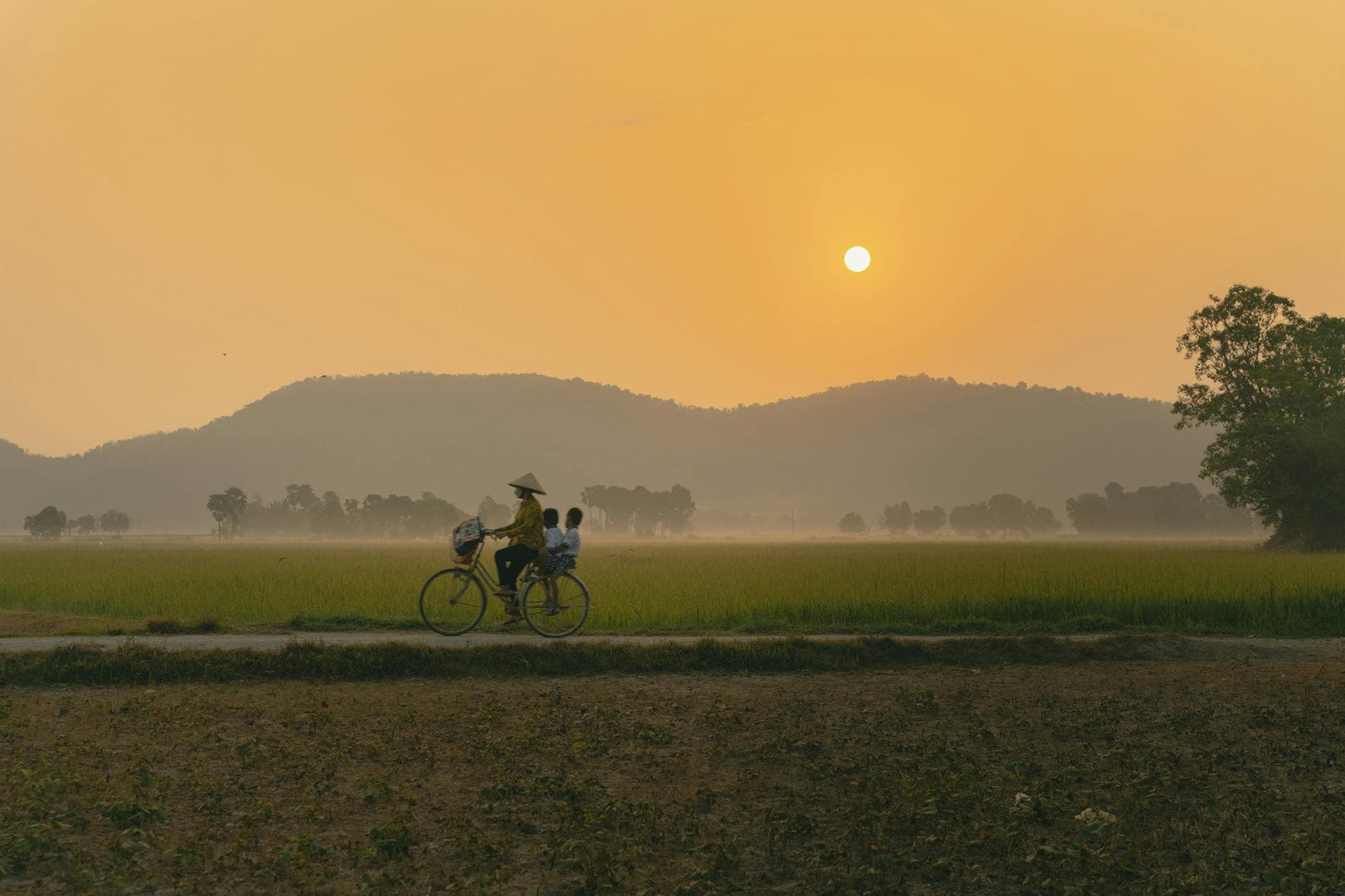
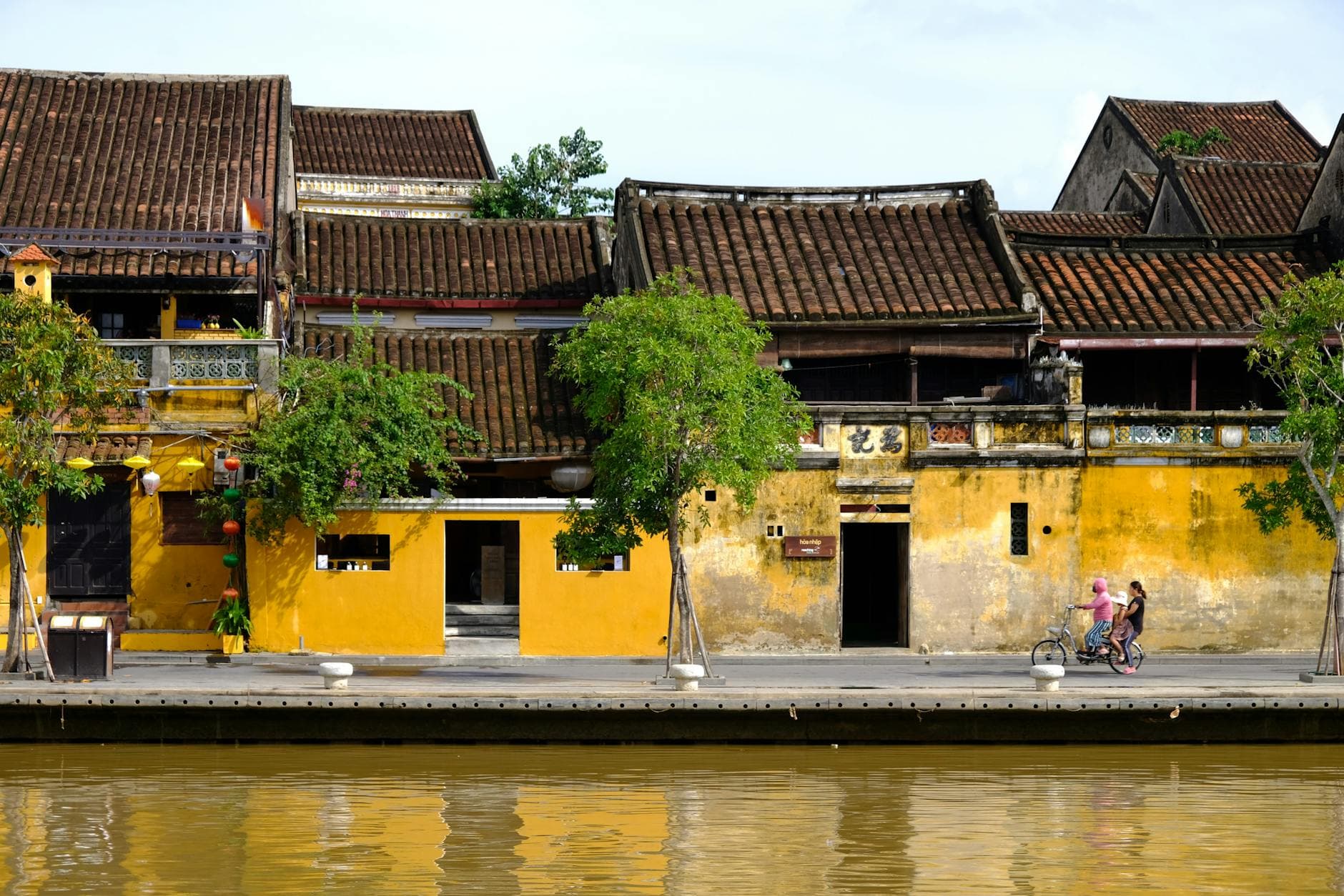
Photo: Michaela St / Pexels
What makes Germany the world's cycle-tourism capital?
Germany's cycle-tourism infrastructure is a 50-year project. The Allgemeiner Deutscher Fahrrad-Club (ADFC), founded in 1979, now counts more than 200,000 members and publishes the canonical Radreiseanalyse every year at the ITB Berlin trade fair. The 2024 edition reports ~5.5 million multi-day cycling trips (three nights or more) annually, with value creation in that segment of ~€6–7 billion (cycle tourism across all segments tops €22–25 billion). The average Radurlauber is over fifty, books six to nine nights, and spends around €117 per day — a profile that, in industry terms, looks more like a cultural traveller than a sports tourist.
The route layer is unusually dense. The Donauradweg from Donaueschingen to Passau (~600 km within Germany) is the most-cycled long-distance route in the German-speaking world, designated as EuroVelo 6, continuing on to Vienna and Budapest for a total of ~2,850 km. The Elberadweg from the Czech border at Schöna to Cuxhaven on the North Sea (860 km) has topped the ADFC Radreiseanalyse's most-popular-route ranking for over a decade. The Romantische Straße Radweg from Würzburg to Füssen (460 km) carries the heritage-tourism cyclist through medieval towns. Below them sit the 50+ ADFC-Qualitätsradrouten — a federal quality standard covering surface, signage, traffic separation, services and accommodation.
Beneath the routes sit two cultural institutions. Bikeline, the spiral-bound weatherproof guidebook series published since 1987 by Esterbauer Verlag in Austria, is the de-facto kilometre-by-kilometre standard. Bett+Bike, the ADFC accreditation scheme for cycle-friendly accommodation, lists around 5,400 certified properties across Germany and Austria as of 2024. The DACH cyclist looks for the Bett+Bike sticker the way an American driver looks for the AAA window decal — it is the trusted shorthand for "they understand what a wet cyclist with two panniers needs."
What unifies all of this is a cultural premise that the Donauradweg and the Bodensee-Königssee-Radweg share with the rest of Naturheilkunde-era Germany: slow movement at conversational tempo, daily, outdoors, for many days in a row, is worth organising a holiday around. That premise has no real Asian equivalent.
Why is Hội An Vietnam's cycle-tourism flagship?
Hội An is one of only three destinations the Cục Du lịch Quốc gia Việt Nam (Vietnam National Authority of Tourism) names as a model destination for cycling tourism, alongside Mai Châu in the northwest and Cát Tiên in the south. Báo Quảng Nam — the provincial paper of record before the 2025 Đà Nẵng merger — has covered the development of the dedicated bicycle lanes through Cẩm Thanh, the Hai Bà Trưng cycle corridor to An Bàng beach, and the rice-paddy circuits around Trà Quế as part of the city's long-running sustainable-tourism programme. The city portal at hoi-an.gov.vn has maintained a designated craft-village cycling circuit since the early 2010s linking Cẩm Nam, Cẩm Thanh, Cửa Đại, An Bàng and Trà Quế, developed in cooperation with UNESCO's sustainable-tourism advisory framework around the time of the 2009 Cù Lao Chàm Biosphere Reserve designation.
The terrain does the rest. The Thu Bồn delta is dead flat — there is not a meaningful climb within a 15 km radius of our front gate. The road network has a working separation between heavy traffic and the cycling backstreets: the QL1 north-south highway runs well inland, leaving the Old Town fringe, the An Bàng beach corridor, the Cẩm Thanh wetland and the Trà Quế herb village on quiet lanes that are now genuinely shared with bicycles. The basket-boat tour at Cẩm Thanh exploded in popularity after 2015, and as Báo Quảng Nam has noted, bicycles became the dominant transit mode from the Old Town to the wetland because the road is unsuitable for tour buses. Two-wheel infrastructure followed the demand.
One administrative caveat. The 2025 Quảng Nam–Đà Nẵng merger (Resolution 202/2025/QH15 and the heritage-management reorganisation that followed) means all five of the routes below now cross three wards under a single Đà Nẵng administration — Phường Hội An, Phường Hội An Tây and Phường Hội An Đông — plus the island commune Xã Tân Hiệp. For practical purposes the rides have not changed, but if you read older Vietnamese-language coverage referring to "Cẩm An" or "Cẩm Châu" as separate wards, those names have folded upward — see our companion piece on the 2026 heritage merger for the full picture.
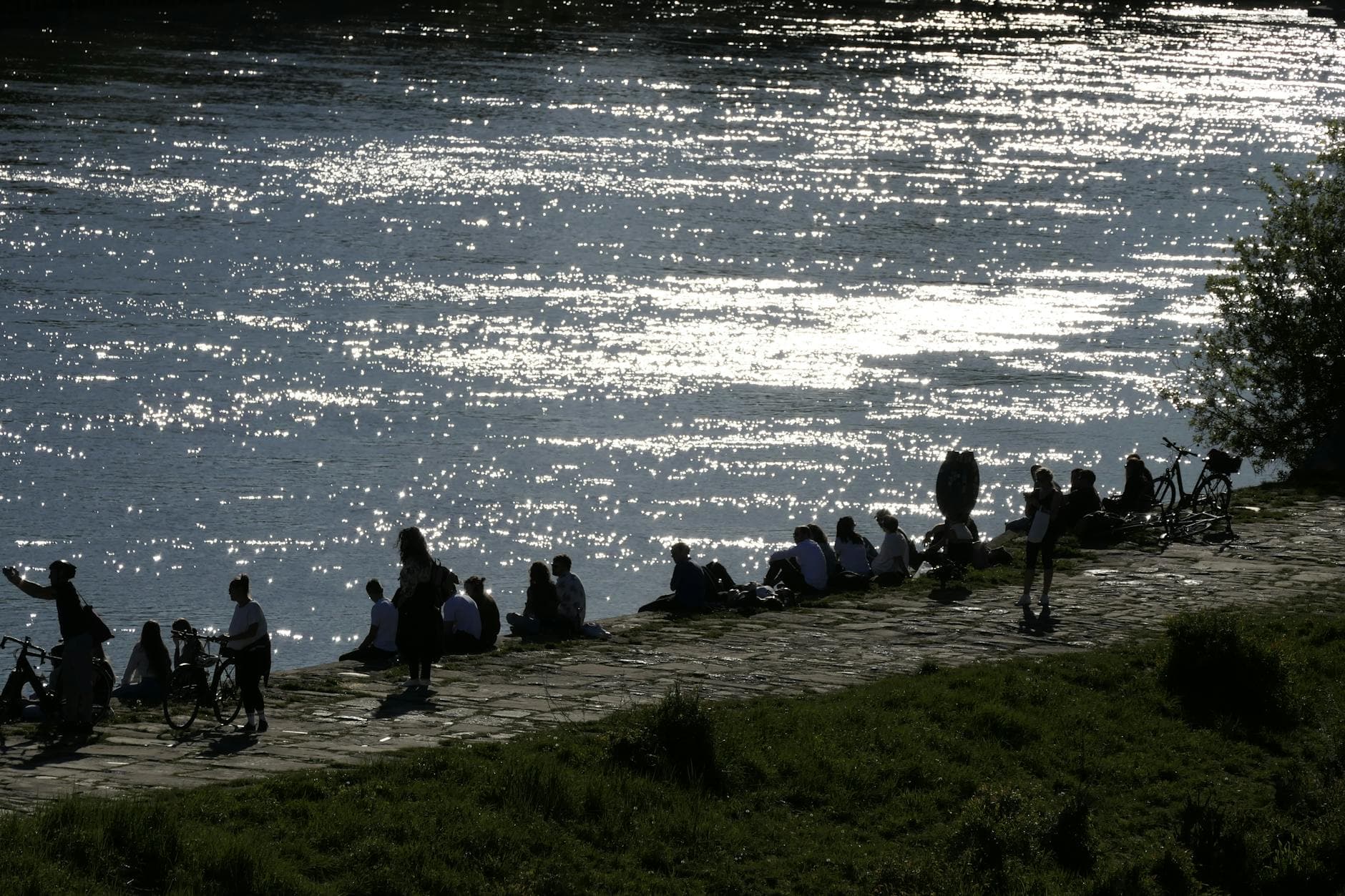
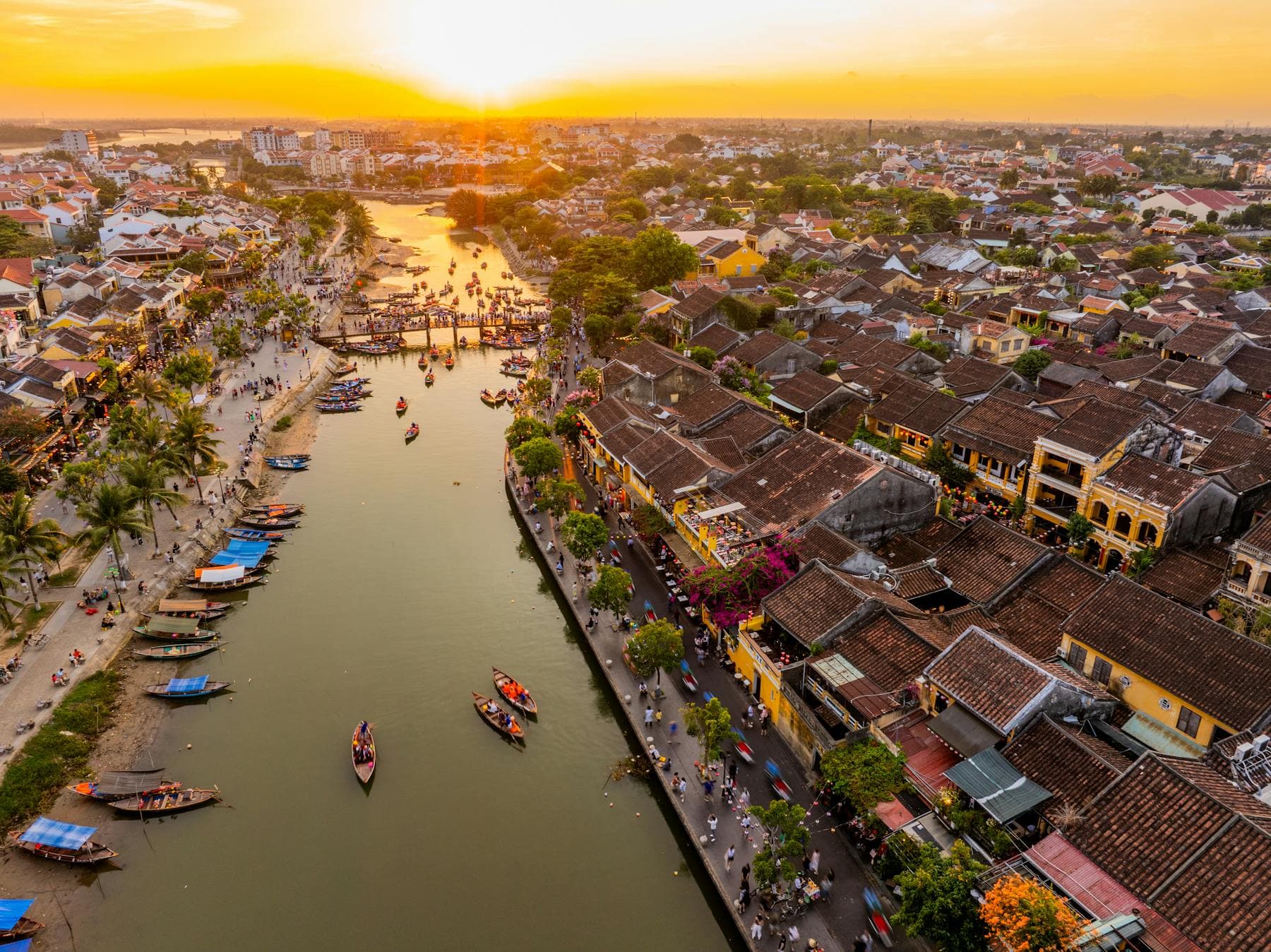
Photo: Jolenne Trieu / Pexels
What are the five Nghê Prana cycling loops?
Every one of these rides starts and ends at our front gate on the south bank of the Thu Bồn at Cẩm Nam (now Phường Hội An ward). The bicycles are free for guests. The terrain is 100% flat. Distances are hotel-side approximate and worth verifying with your own GPS — central Vietnam's road network has been redrawn enough times in the last decade that paper maps lag the ground.
Loop 1 — The Old Town Loop · 8 km · ~1 hr. Cẩm Nam → south-bank dyke path → An Hội footbridge (cyclist-only) → slow traversal of the UNESCO-inscribed Old Town → Cẩm Châu rice paddies → return. Three minutes of timber-and-tile streetscape in the middle, reflective paddy fields either side. The shortest of the five; the right ride for the day you arrive jet-lagged.
Loop 2 — The Beach Loop · 18 km · ~2 hr. Cẩm Nam → Cẩm Châu → the Hai Bà Trưng cycle corridor (the dedicated north-east lane the city built specifically for this circuit) → An Bàng beach → north along the coastal road → return via inland paddy lanes. An Bàng is genuinely swimmable, the basket-boats are pulled up at dawn, and the inland return through coastal scrub is one of the loops where you stop seeing motor traffic altogether. See the An Bàng beach page for the swimming end of this ride.
Loop 3 — The Vegetable Village Loop · 16 km · ~2 hr. Cẩm Nam → Cẩm Châu → Trà Quế (the 400-year-old organic herb village) → onward along the coastal road to An Bàng → return. The Trà Quế village track threads between the herb beds: basil, mint, perilla, coriander, lemongrass, each in its own raised bed. Cooking-class options run from several family kitchens; identification of the herbs is a small but real pleasure for guests used to packet supermarket Kräuter.
Planning a trip around this? See dates at our quiet riverside hotel on the Thu Bồn. Check availability →
Loop 4 — The Coconut Waterways Loop · 12 km · ~2 hr. Cẩm Nam → cross Cẩm Châu → Cẩm Thanh nipa-palm wetland (now Phường Hội An Đông) → optional 30-minute basket-boat (thúng chai) detour → return along the river. The nipa-palm tunnels are the visual highlight; the morning fishing co-op is the working backbone. See the Cẩm Thanh page for the wetland in depth.
Loop 5 — The Carpentry Village Loop · 10 km cycle + 5 min ferry · ~2 hr. Cẩm Nam → south to the Kim Bồng ferry slip → small-boat ferry across the Thu Bồn → Kim Bồng carpentry village on Cẩm Kim island → return. The only ferry transfer of the five loops, and the 600-year-old boat-building and furniture workshops you can walk into are the closest thing Hội An has to an open-air craft museum. Coming back at golden hour with the river ahead of you is the postcard.
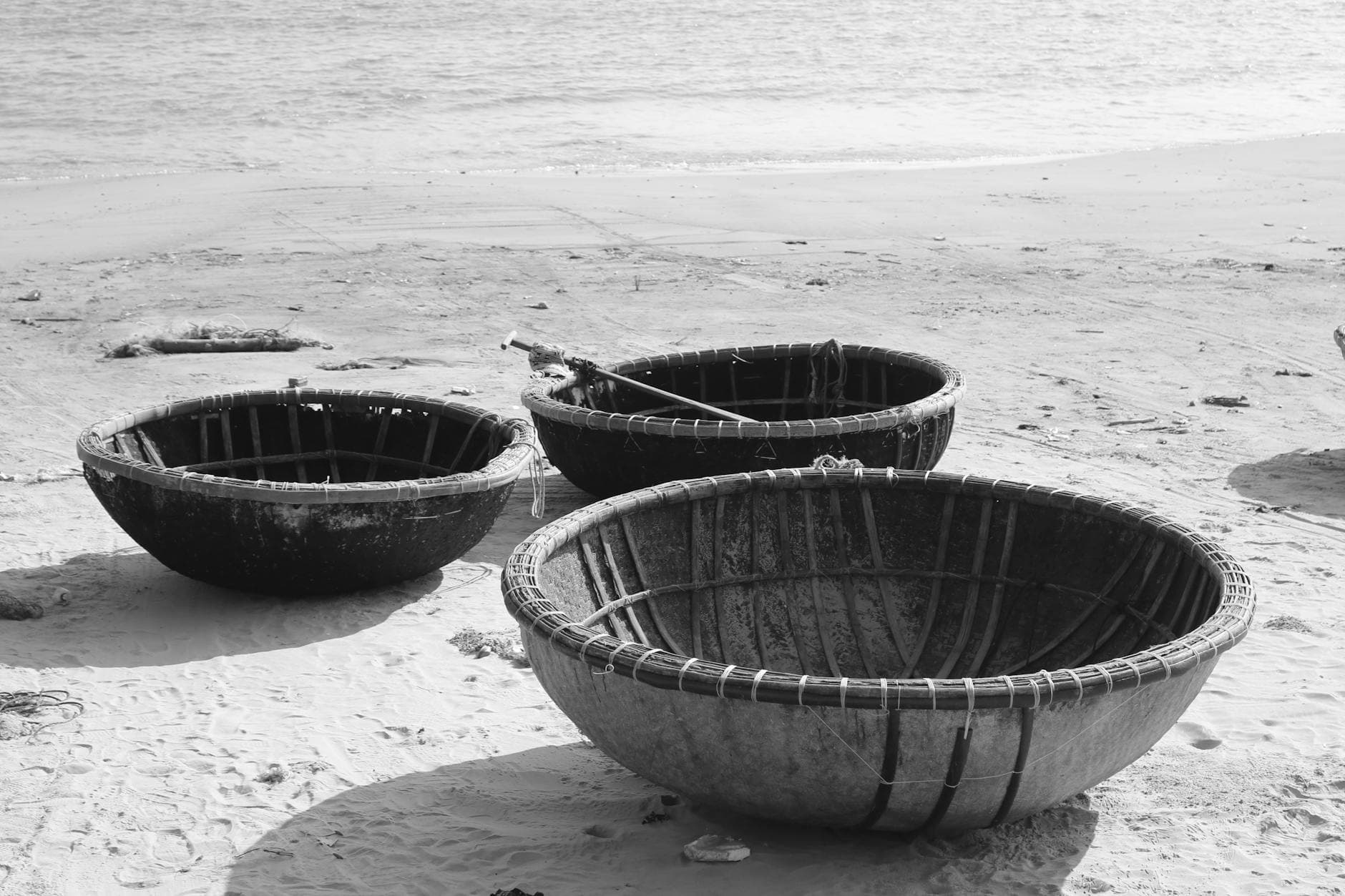
Photo: Sirikul R / Pexels
What's the ADFC-equivalent infrastructure here?
Honest framing first. Hội An is not an ADFC-Qualitätsradroute. The Bett+Bike scheme does not operate in Vietnam, so no hotel in the country — ours included — carries the sticker. There is no Vietnamese federal cycle-quality standard, no spiral-bound Bikeline Hội An yet, and no insurance-reimbursed cycling Kur. The closest Asian equivalent is not the same as the German original, and we will not claim otherwise.
What is functionally in place is everything a Bett+Bike property would offer in substance: free bicycles for guests, helmets, water for the longer loops, a small repair kit at the front desk, secure indoor parking for your own bike if you have travelled with it, knowledge of all five loops from staff who have ridden them, and the option of an English-speaking guide for the first ride if you would rather be shown the lines than read them on a screen. The route signage on the Hai Bà Trưng corridor is in Vietnamese; route logic from our front desk is in English (and in writing in German by email, on request).
On the institutional side, the Cục Du lịch Quốc gia Việt Nam's 2024 sectoral planning lists Hội An as one of three model destinations for cycling tourism, and the UNESCO Cù Lao Chàm Marine Biosphere Reserve (designated 2009) sits at the end of every loop that includes the Cửa Đại estuary view. Cycling here has been an explicit national strategy for over a decade — it is not a sideline anyone is improvising.
How do German cyclists actually plan a Hội An stay?
A useful length is five to nine nights — long enough to ride all five loops at conversational tempo with a rest day in between, short enough to fit a standard DACH holiday window. The components are à la carte by design. Free bicycles included with the stay; cooking class in Trà Quế bookable from the front desk; basket-boat at Cẩm Thanh added to the Coconut Waterways Loop; Kim Bồng craft workshop visit on the Carpentry Loop. We do not currently market a fixed multi-day cycling package with a single price (specific seasonal package pricing: operator-side to confirm before publication), because German cyclists in our experience prefer to set their own daily distance rather than have one set for them.
If the Kneippkur logic matters to you, the cycling pillar (Bewegungstherapie in Sebastian Kneipp's five-Säulen framework) interlocks naturally with the other four. We have written separately about the broader Vietnamese wellness parallel to the German Heilfasten / Kneipp tradition, where the five-Säulen mapping is laid out pillar by pillar. The short version: cycling here is the Bewegung half, and the herbal steam and plant-forward kitchen complete the rest of the pattern on the same day.
Two practical notes for DACH guests. First, season: the dry months from February through August are the cycling window. September through January is the rainy season, when the Thu Bồn occasionally floods Cẩm Nam — the loops still work but you will lose riding days. Second, traffic: the routes themselves are quiet, but a small section of the An Bàng approach crosses a working road. The morning hour before about 09:00 is the right time for the longer loops both for the temperature and for the traffic.
If you want to plan the rides at a glance, the guest map shows every starting point above on a single page. The deeper invitation is straightforward. Germany's Donauradweg and Elberadweg are two of the few European riverside cycle routes with a 50-year cultural infrastructure behind them. Hội An is the closest Asian counterpart on the substance — flat, riverside, signed, quiet, supported by a national tourism strategy that explicitly names it. Spending a week riding five short loops from one base, with a river at one end and the East Sea at the other, is not a holiday from the Radreise idea. It is the Radreise idea in a second climate.
About this article. Synthesised from German cycling-tradition references (ADFC Radreiseanalyse 2024; Donauradweg / Elberadweg / Romantische Straße Radweg; Bikeline / Esterbauer Verlag since 1987; ADFC-Qualitätsradrouten and Bett+Bike) and Vietnamese primary sources (Báo Quảng Nam on the Cẩm Thanh and An Bàng cycling corridors; hoi-an.gov.vn craft-village cycling circuit; Cục Du lịch Quốc gia Việt Nam model-destination listing; UNESCO Cù Lao Chàm Biosphere Reserve 2009; Resolution 202/2025/QH15). Hotel-side primary reporting: all five loops ridden and timed from our own front gate at Cẩm Nam on the south bank of the Thu Bồn.
Yes. Hội An sits on the flattest river-delta terrain in central Vietnam, has dedicated cycling lanes through living craft villages, and is one of three named model cycling-tourism destinations by Cục Du lịch Quốc gia Việt Nam. Five loops of 8–18 km link the Old Town, An Bàng beach, Trà Quế vegetable village, Cẩm Thanh coconut waterways, and Kim Bồng carpentry village — all within a 2-hour ride.
How does Hội An compare to the Donauradweg for DACH cyclists?
Hội An lacks the Donauradweg's 600 km length and ADFC certification, but matches it on the substance: 100% flat terrain, slow river to follow, dedicated cycle lanes, signed route segments, and accommodation directly on the route. It is the closest Asian equivalent to a DACH river-cycle holiday — five interconnected day loops rather than one long linear route.
Is Nghê Prana Bett+Bike certified?
No — Bett+Bike is an ADFC accreditation scheme that does not extend to Vietnam. However, Nghê Prana offers the functional equivalents: free bicycles for guests, helmets, water, a basic repair kit, secure indoor bicycle parking, and detailed local knowledge of all five loops from the front gate at Cẩm Nam (now Phường Hội An ward).
What are the five cycling loops from Nghê Prana?
(1) Old Town Loop — 8 km, ~1 hr via the An Hội footbridge. (2) Beach Loop — 18 km, ~2 hr via Hai Bà Trưng to An Bàng beach. (3) Vegetable Village Loop — 16 km, ~2 hr via Trà Quế. (4) Coconut Waterways Loop — 12 km, ~2 hr to Cẩm Thanh. (5) Carpentry Village Loop — 10 km cycle plus 5-min ferry to Kim Bồng village on Cẩm Kim island.
Do I need to bring my own bicycle to Vietnam?
No. Bicycles are free for guests at Nghê Prana. For DACH cyclists used to a familiar saddle or bringing a touring bike, Hội An airports and the hotel can accommodate a packed bicycle in standard format, but the local rental bikes are adequate for the city's flat terrain — single-speed step-through frames suit all five loops.
When is the best month to cycle in Hội An?
March, April, and May are optimal — dry, 24–30°C, low humidity. June through August are hot (32–35°C) but rideable with early-morning starts. October and November bring monsoon rain and possible flooding; cycling is uncomfortable. December through February is the cool dry season, 20–25°C — excellent for DACH visitors escaping the European winter.
Can families with children cycle in Hội An?
Yes. All five loops are 100% flat with minimal motor traffic on the river-island roads and the dedicated Hai Bà Trưng cycle corridor. The Old Town Loop (8 km) and the Coconut Waterways Loop (12 km) are best for families with primary-school-age cyclists. Child seats and smaller frames are available at most local rental shops; ask the front desk to arrange.
Are the cycling routes signed in English or German?
Route signage in Hội An is primarily in Vietnamese, with some English wayfinding at major junctions. Nghê Prana hands out the hand-drawn guest map of Hội An (available also on /guest-map) which labels all five loops, every landmark and ward name with full Vietnamese diacritics — readable at a glance by a Grab driver if you need to be picked up mid-ride.
References & Sources
Allgemeiner Deutscher Fahrrad-Club (ADFC) (2024). Radreiseanalyse 2024 — annual report on German cycle-tourism: ~5.5 million Radurlaube/year, ~€11 billion sector, average Radurlauber 50+, 6–9 nights, ~€90/night. ADFC e.V., Bremen / ITB Berlin.
Donauradweg / EuroVelo 6 (2024). Donauradweg Donaueschingen–Passau (~600 km in Germany; ~2,850 km to Budapest) — most-cycled long-distance route in the German-speaking world; EuroVelo 6 designation. ADFC / European Cyclists' Federation.
Esterbauer Verlag (1987). Bikeline radtourenbücher — spiral-bound weatherproof cycle-guide series published since 1987; the de-facto DACH kilometre-by-kilometre standard. Esterbauer Verlag, Rodingersdorf, Austria.
ADFC e.V. (2024). Bett+Bike — ADFC accreditation scheme for cycle-friendly accommodation; ~5,400 certified properties across Germany and Austria; ADFC-Qualitätsradrouten federal quality standard. ADFC Bett+Bike Service GmbH.
Báo Quảng Nam (2023). Tuyến đường đạp xe Hội An — coverage of dedicated bicycle lanes through Cẩm Thanh, the Hai Bà Trưng corridor to An Bàng beach, and the rice-paddy circuits around Trà Quế as part of Hội An's sustainable-tourism programme. Báo Quảng Nam. View source
UBND TP Hội An / hoi-an.gov.vn (2014). Designated craft-village cycling circuit linking Cẩm Nam, Cẩm Thanh, Cửa Đại, An Bàng and Trà Quế — developed in cooperation with UNESCO sustainable-tourism advisory framework around the 2009 Cù Lao Chàm Biosphere Reserve designation. UBND Thành phố Hội An. View source
Cục Du lịch Quốc gia Việt Nam (2024). Hội An named one of three model destinations for cycling tourism in Vietnam (alongside Mai Châu and Cát Tiên) — 2024 sectoral planning. Vietnam National Authority of Tourism / Bộ Văn hóa, Thể thao và Du lịch. View source
UNESCO Man and the Biosphere Programme / Quốc hội Việt Nam (2025). Cù Lao Chàm Marine Biosphere Reserve designation (2009); Resolution 202/2025/QH15 — Quảng Nam–Đà Nẵng administrative merger reorganising the wards crossed by all five Hội An cycling loops. UNESCO MAB / Quốc hội Việt Nam.
Every room at Nghê Prana is designed around the science of sleep. Blackout curtains, nightly aromatherapy turndown, and riverside quiet — experience what real rest feels like.
Riverside hotel rooms on the Thu Bồn, ten minutes by bicycle from the Ancient Town. Whether it's one night between Hue and Da Nang or a full week of doing nothing — we kept your room quiet.
Free cancellation · Direct from the family who built the hotel
 WhatsApp
 Zalo
Zalo