Dragon Boat Festival in Vietnam 2026: What It Actually Is (Tết Đoan Ngọ), the Date, and the China-vs-Vietnam Confusion Explained
Searching for the "Dragon Boat Festival in Vietnam" leads most travellers to the wrong picture. The date — the 5th day of the 5th lunar month, which falls on Friday 19 June in 2026 — is shared with China's Duanwu, but in Vietnam the day is Tết Đoan Ngọ, the mid-year "pest-killing" festival of fermented sticky rice and seasonal fruit, not a day of dragon-boat racing. This is the honest, source-checked version: what the day really is in Vietnam, the verified 2026 date, where the dragon-boat idea comes from, and where you actually see boat racing here.
If you have searched for the "Dragon Boat Festival in Vietnam 2026," the picture in your head is probably wrong — and it is not your fault. The name travels with the date, and the date is real: the 5th day of the 5th lunar month, the same calendar slot as China's Duanwu (端午, the Chinese Dragon Boat Festival). But in Vietnam, that day is Tết Đoan Ngọ (also written Tết Đoan Dương), and it is not a festival of dragon-boat racing. It is the mid-year "pest-killing" festival — Tết diệt sâu bọ — marked at home with fermented sticky rice, sour seasonal fruit, ash cakes and a noon ritual. The dragon boats most English pages picture belong to China's version of the day, or to separate Vietnamese boat-racing festivals that happen at other times of year entirely.
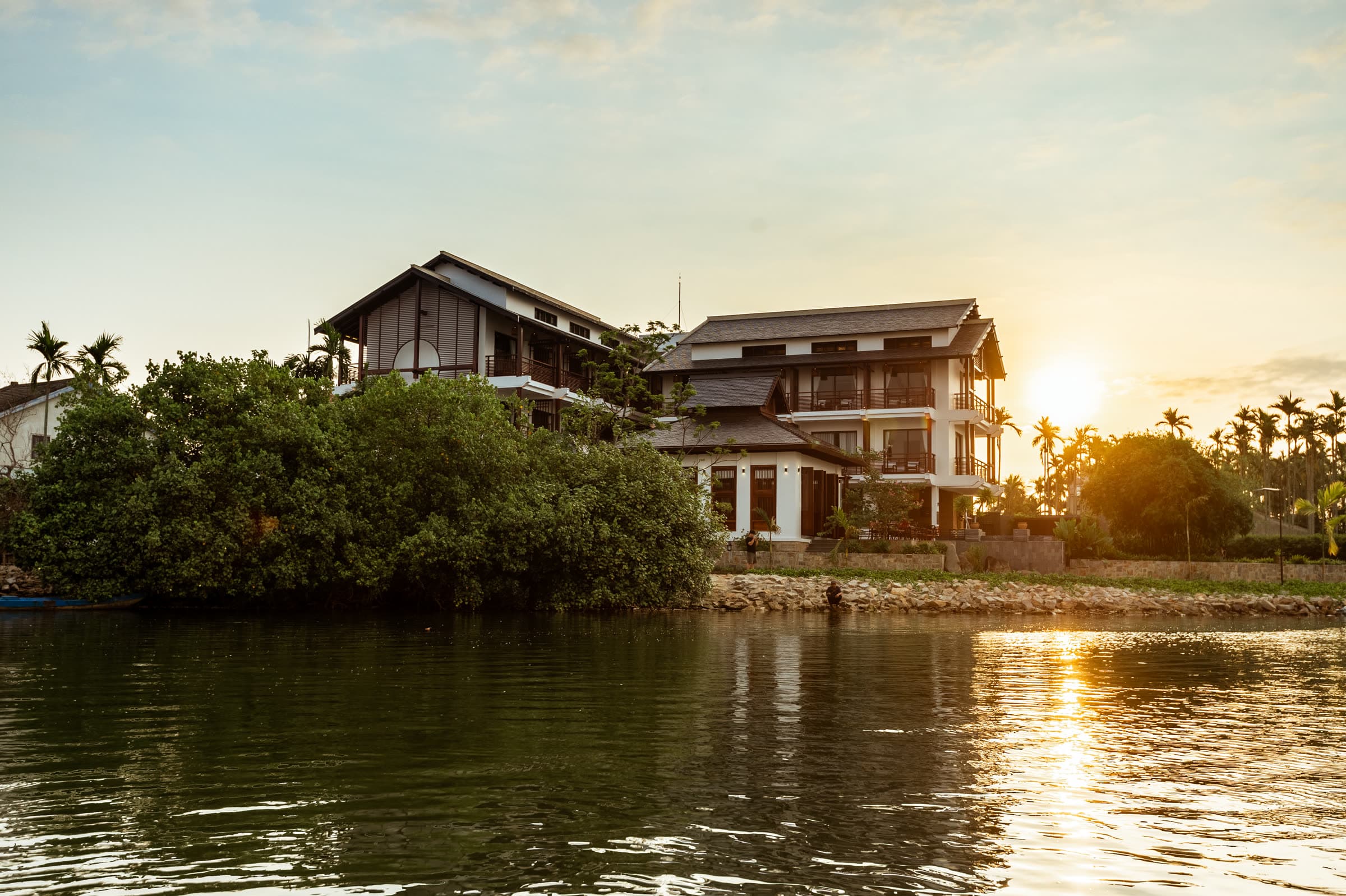
This post is the source-checked version that does not exist cleanly in English yet. We write it as a riverside hotel on the Thu Bồn in Hội An, where guests ask at the desk every June whether there is a "dragon boat festival" to watch — and the honest answer takes a minute to explain. Below: the verified 2026 date, what the day actually is in Vietnam, why the "dragon boat" label sticks, and where you really do see boat racing here.
When Is the "Dragon Boat Festival" (Tết Đoan Ngọ) in Vietnam in 2026?
Tết Đoan Ngọ 2026 falls on Friday, 19 June 2026 — the 5th day of the 5th month in the Vietnamese lunar calendar. The ritual is tied to noon: Đoan Ngọ literally means "the start of the Ngọ hour," the midday window (roughly 11:00 to 13:00), which is when families traditionally perform the offering. The date is fixed to the lunar calendar, so it drifts each year against the Gregorian one — in 2026 it lands on a Friday in mid-June, at the start of the dry, hot season in central Vietnam.
Often around National Day, 2 Sept, and local river festivals
Long-boat racing — a separate tradition, not on Tết Đoan Ngọ
Why Is It Called the "Dragon Boat Festival" If There Are No Dragon Boats?
The confusion is a translation accident. The 5th-of-the-5th date is shared across East Asia, and in China that day is Duanwu, famous worldwide as the "Dragon Boat Festival" for its long-boat races commemorating the poet Qu Yuan. Because Vietnam shares the calendar date, English-language travel content, search engines and AI assistants frequently map the Chinese name onto the Vietnamese day — so a search for "Dragon Boat Festival Vietnam" returns images of races that do not actually happen in Vietnam on that day.
In Vietnam, the same date carries a different story. The most-cited folk origin tells of an elder named Đôi Truân, who taught farmers facing a plague of crop pests to lay out offerings of sour fruit and fermented rice on the morning of the 5th and to perform calisthenics — and the pests dispersed. From that, the day became Tết diệt sâu bọ, the "festival to kill the insects/pests," understood as a mid-year cleansing of the body and the fields alike. There is no dragon-boat element in the Vietnamese tradition of this day.
What Do Vietnamese People Actually Do on Tết Đoan Ngọ?
The heart of the day is cơm rượu (or rượu nếp) — fermented glutinous rice with a sweet, lightly alcoholic tang, eaten first thing in the morning to "intoxicate" and drive out the pests believed to live in the body. Alongside it come sour and astringent seasonal fruits — lychee, plum, early mangoes — and bánh tro / bánh ú tro, pyramid-shaped ash-water sticky-rice cakes. Families set out a noon offering to ancestors and, in many regions, observe small rituals tied to the midday sun. It is a domestic, food-centred festival rather than a public spectacle — there is no parade and, again, no boat race. For the full breakdown of the customs, foods and the central-Vietnam version of the day, see our companion guide, Tết Đoan Ngọ explained.
So Where Do You Actually See Boat Racing in Vietnam?
Boat racing is a real and vivid Vietnamese tradition — it is simply not on Tết Đoan Ngọ. Vietnamese đua thuyền (rowing race) and bơi trải (long-boat racing) are tied to other occasions: many of the country's biggest races fall around National Day on 2 September, and others belong to specific local river and harvest festivals scheduled by their own lunar dates. The most famous is the long-boat festival on the Kiến Giang River in Lệ Thủy, Quảng Bình, raced each year around 2 September and recognised in 2019 as a national intangible cultural heritage. If watching a Vietnamese boat race is what you actually came for, that is the tradition to chase — and we lay out the where and when in our guide to boat racing in central Vietnam.
What Does This Mean If You're in Hội An on 19 June 2026?
Do not expect a dragon-boat spectacle on the Thu Bồn that day — that is not what the date is here. What you will find is the festival in its real, quieter form: markets such as those in the Old Town stocked with cơm rượu, ash cakes and the season's first lychees and plums, families buying for the noon offering, and a distinctly local rhythm to the morning. It is a lovely, low-key day to be in town if you know what you are looking at. And because the festival is about food and home, the most rewarding way to mark it is exactly that — a slow morning on the river, the market in the cool early hours, and the season's fruit on the table.
Planning a trip around this? See dates at our quiet riverside hotel on the Thu Bồn. Check availability →
From a riverside base on the Thu Bồn, the 5th-of-the-5th is one of those days where knowing the difference changes the trip: instead of waiting on a riverbank for a race that will not come, you spend the morning in the market and the heat of noon by the water. If you want the year's actual river spectacle in Hội An — the lights-off lantern evening on the 14th of each lunar month — that is a different and very real event; the dates are in our Hội An Lantern Festival 2026 calendar.
Frequently Asked Questions
When is the Dragon Boat Festival in Vietnam in 2026?
The date most people mean — the 5th day of the 5th lunar month — is Tết Đoan Ngọ, which falls on Friday, 19 June 2026. It is the same calendar date as China's Dragon Boat Festival (Duanwu), but in Vietnam it is the mid-year "pest-killing" festival, not a day of dragon-boat racing.
Is there really a Dragon Boat Festival in Vietnam?
Not in the Chinese sense. Vietnam shares the 5th-of-the-5th date as Tết Đoan Ngọ, a domestic festival of fermented sticky rice and seasonal fruit. Boat racing (đua thuyền) is a separate Vietnamese tradition held at other times, most prominently around National Day on 2 September.
What is the difference between Tết Đoan Ngọ and the Chinese Dragon Boat Festival?
They fall on the same lunar date but mean different things. China's Duanwu commemorates the poet Qu Yuan with dragon-boat races and zongzi. Vietnam's Tết Đoan Ngọ is the "festival to kill the pests" (Tết diệt sâu bọ), marked at home with cơm rượu, sour fruit and ash cakes, with no boat racing.
Will I see dragon boats in Hội An on Tết Đoan Ngọ?
No. There is no dragon-boat race in Hội An on that day. You will see markets full of cơm rượu, ash cakes and seasonal fruit, and families preparing the noon offering. For an actual river spectacle in Hội An, the monthly lantern evening is the event to plan around.
Where can I watch a Vietnamese boat race?
Around National Day (2 September) and at local river festivals. The best-known is the long-boat race on the Kiến Giang River in Lệ Thủy, Quảng Bình, held each year near 2 September and listed as national intangible cultural heritage in 2019.
What do people eat on Tết Đoan Ngọ in Vietnam?
Cơm rượu / rượu nếp (fermented glutinous rice), sour seasonal fruit such as lychee and plum, and bánh tro / bánh ú tro (ash-water sticky-rice cakes). In central Vietnam the day also commonly features duck (thịt vịt) and millet sweet soup (chè kê).
This guide synthesises Vietnamese-language coverage of Tết Đoan Ngọ — including the verified 2026 date and the Đôi Truân / "pest-killing" origin from VietnamNet and Vietnamese reference sources, and the boat-racing heritage of the Kiến Giang River from Báo Nhân Dân and Quảng Bình provincial sources — to correct the common English-language conflation with China's Dragon Boat Festival. The hotel-side contribution is the front-desk perspective on what the day actually looks like in Hội An, written from a riverside vantage on the Thu Bồn.
Every room at Nghê Prana is designed around the science of sleep. Blackout curtains, nightly aromatherapy turndown, and riverside quiet — experience what real rest feels like.
Riverside hotel rooms on the Thu Bồn, ten minutes by bicycle from the Ancient Town. Whether it's one night between Hue and Da Nang or a full week of doing nothing — we kept your room quiet.
Free cancellation · Direct from the family who built the hotel


 WhatsApp
 Zalo
Zalo