Massage for Neuropathy: What the Trials Found, Why None Shows a Nerve Repaired, and Why Numb Feet Should Skip the Heat
Does massage help neuropathy? It may ease pain and tingling for a while: in a trial of 46 people with diabetic nerve pain, four weeks of aromatherapy massage did better than routine care, and a 2026 review of 11 trials after chemotherapy rated its own evidence low to very low. No trial we found shows a nerve repaired. The bigger issue on a spa table is numbness: diabetic-foot guidance says water below 37°C and no heaters, so with numb feet we advise against the heated treatments on our own menu and the foot soak.
Does massage help neuropathy? It may ease the pain and tingling for a while, and no trial we found shows it repairing a damaged nerve. The trials are small and short. In 46 people with painful diabetic neuropathy, four weeks of aromatherapy massage lowered pain scores more than routine care alone (Gok Metin and colleagues, 2017). In 60 people with diabetic neuropathy, two weeks of Thai foot massage left them 1.13 seconds faster on a timed walking test than foot-care lessons and exercises did (Chatchawan and colleagues, 2015). For neuropathy after chemotherapy, a 2026 review of 11 trials with 646 patients rated its own evidence "low to very low" (Chen and colleagues). The bigger question on a spa table is the numbness itself. If you cannot feel your feet properly, you cannot judge heat or pressure, and the international diabetic-foot guideline says people with diabetes whose feet are at risk should wash them in water "always below 37°C" and should not warm them with "any kind of heater". So this page advises against part of our own menu: with numb feet, skip the hot stones, the warm compresses, the warmed bamboo, the steam room and the foot soak, and book the oil massage or the foot massage at gentle pressure. We are Nghê Prana, a riverside hotel and spa on the Thu Bồn in Hội An. Nothing on our menu is a treatment for neuropathy. Every source below was read on 23 November 2026.
Does massage help neuropathy? The short answer
Claim
What was tested
Verdict
Massage eases diabetic nerve pain
46 people, aromatherapy massage 3 times a week for 4 weeks against routine care alone, open label (Gok Metin 2017)
Less pain at week 4; the comparison group got no extra time or touch
Foot massage steadies people with diabetic neuropathy
60 people, Thai foot massage 3 times a week for 2 weeks against foot-care education and exercises (Chatchawan 2015)
1.13 seconds faster on a timed walk; standing on one leg no different
Massage eases neuropathy after chemotherapy
11 trials, 646 patients, of massage, reflexology and acupressure (Chen 2026)
It may; the review rates its evidence "low to very low"
The massage has to be on the numb area
71 people, lower-leg massage against head, neck and shoulder massage (Lopez 2022)
No significant difference between the two at 10 weeks
Massage repairs damaged nerves
Nerve-conduction tests in two trials without a sham comparison and in two reviews of Chinese trials; none that we found counted nerve fibres
Not shown. Some better readings, each with a catch
One massage helps
23 patients, one session, scores before and after, no comparison group (Yang 2025)
Less pain straight afterwards; the abstract reports nothing later
Guidelines recommend massage
NHS, NINDS, ADA, AAN, ASCO and IWGDF documents, as far as we could open them
NINDS says it "may help" with pain; the NHS pages, the ADA's 2017 statement and IWGDF do not mention it
Heat is fine on numb feet
IWGDF 2023, Diabetes UK, Bệnh viện Tâm Anh and the American Massage Therapy Association's hot stone article
No. For at-risk feet in diabetes, water below 37°C and no heaters; hot stones are heated in water at 43 to 54°C
What is neuropathy, and how is it different from a pinched nerve?
Peripheral neuropathy is damage to the nerves outside the brain and spinal cord, most often the ones that run to the feet and hands. The NHS says it "develops when nerves in the body's extremities, such as the hands, feet and arms, are damaged", that in the UK diabetes is "the most common cause of peripheral neuropathy", and that in the UK "it's estimated almost 1 in 10 people aged 55 or over are affected". Some chemotherapy medicines cause it too, and the NHS adds that "In some cases, no cause can be identified and this is termed idiopathic neuropathy." The US institute for neurological disorders, NINDS, counts "More than 100 types". The usual kind, polyneuropathy, the NHS says, "starts by affecting the longest nerves first, so symptoms typically begin in the feet": numbness and tingling, burning or shooting pain, loss of balance. Two lines from the NHS symptom list matter on a massage table. One is "numbness and less ability to feel pain or changes in temperature, particularly in your feet". The other is its opposite: "feeling pain from something that should not be painful at all, such as a very light touch". And you may have it without knowing: the American Diabetes Association's 2017 statement says "Up to 50% of diabetic peripheral neuropathies may be asymptomatic". A pinched nerve is a different mechanism: one nerve squeezed or irritated at one place, as in carpal tunnel syndrome or sciatica. Doctors class carpal tunnel syndrome as a neuropathy of a single nerve, but the massage evidence for pinched nerves is separate, and they have their own pages here (see the questions near the end).
Does massage help neuropathy in the legs and feet? What the trials tested
In small trials it eased pain or improved a walking test, over 2 to 4 weeks in the diabetic neuropathy trials, and the clearest results came where the comparison group got nothing extra. These are the trials in diabetic neuropathy that we read, followed by the ones in neuropathy after chemotherapy.
60 people with type 2 diabetes and neuropathy, Thai foot massage for 30 minutes, 3 days a week for 2 weeks, against foot-care education and ankle exercises for the same length of time (Chatchawan and colleagues, 2015). Both groups improved. After the 2 weeks the massage group was 1.13 seconds faster on the timed up-and-go test (stand up from a chair, walk 3 metres, turn and walk back) and did better on a touch test of the sole with a fine filament; standing on one leg was no different. The therapist pressed "until the participant started to feel some discomfort", and people with a foot ulcer or a foot deformity were not admitted. The authors add that it is not clear "how long this positive effect can last".
46 people with painful diabetic neuropathy in Turkey, aromatherapy massage 3 times a week for 4 weeks, against routine care (Gok Metin and colleagues, 2017). Twenty-one had the massage and 25 did not. Pain scores fell more in the massage group by the fourth week, and quality-of-life scores improved. The trial was "open-label" and the comparison group "received only routine care", so it cannot separate the massage from the essential oils (the abstract names rosemary, geranium, lavender, eucalyptus and chamomile), the attention, or the hope that comes with a new treatment.
36 adults with painful diabetic neuropathy, 5 sessions of a package of manual therapy, exercise and "psychologically informed conversations" from osteopaths, against 5 sessions of a look-alike control from the same osteopaths, or usual care (Hohenschurz-Schmidt and colleagues, 2026). A feasibility trial, and the only one we found in diabetic neuropathy with a look-alike comparison meant to keep participants blind. Its own summary: "Clinical outcomes were uncertain compared with control and promising compared with usual care." It tested a package, not massage alone: the hands-on part included "soft tissue mobilisation" alongside joint and nerve techniques.
Illustrative photo, not our spa. In most of the trials, foot and lower-leg massage was given two or three times a week for 2 to 6 weeks.
40 women with breast cancer, classical massage before each paclitaxel infusion, against usual care (Izgu and colleagues, 2019). A prevention trial: it asked whether massage during chemotherapy keeps neuropathy away. Nerve pain was lower in the massage group at week 12, and two nerve-test readings were better (next section). The comparison group "received only usual care".
71 people whose legs were still affected after chemotherapy, on average more than 3 years after their last dose, Swedish massage of the lower legs against the same schedule of massage to the head, neck and shoulders (Lopez and colleagues, 2022). Each leg got 10 to 12.5 minutes, 3 times a week for 4 weeks or twice a week for 6. At 10 weeks there were "no statistically significant treatment group interactions": leg massage did not beat head-and-neck massage. Symptoms were lower on three sessions a week than on two, "regardless of whether the massage was directly to the CIPN-affected area or not" (CIPN is chemotherapy-induced peripheral neuropathy), though the authors saw "some suggestion" that leg massage three times a week gave the best results. Everyone was massaged, and the authors say so: "we did not have a usual care or placebo control groups".
40 people with non-Hodgkin lymphoma, classical foot massage for 20 minutes, 3 times a week for 4 weeks, against standard care (Sarısoy and Ovayolu, 2020). The abstract reports less pain and better sleep in the massage group and gives no figures; the group sizes, 20 and 20, are from the 2026 review's table.
48 hospital patients in Korea, foot massage against a foot bath, 30 minutes every other day, 8 sessions in 2 weeks (Park and Park, 2015). Not randomised: patients were assigned alternately. Quality of life rose in the bathing group and fell in the massage group, and the authors concluded that "foot bathing was more effective than foot massage". We come back to this one under heat.
11 trials, 646 patients: 4 trials of massage, 4 of reflexology and 3 of acupressure, with courses of 3 to 12 weeks (Chen and colleagues, 2026). Pooled, these hands-on treatments "may reduce core symptoms and pain", which the authors grade as "Low- to very low–certainty evidence" to be "interpreted with caution", partly because it is hard to blind anyone to being massaged.
Why do the results look better than the certainty ratings? Look at what the comparison groups got. Where they got nothing extra (routine, usual or standard care), massage looks clearly better, but a trial like that cannot tell massage from half an hour of someone's time, touch and attention. Where the comparison was something of the same kind, the gap narrows or closes: both groups improved in the Thai trial, leg massage did no better than head-and-neck massage in the 2022 trial, and the 2026 package was "uncertain" against its look-alike control. That does not mean massage does nothing. It means that a good part of what these trials measured may be the general effect of being looked after, which is real and pleasant. It is also all short-term: across all these trials the massage courses ran for 2 to 12 weeks, and what was measured was mostly pain scores, questionnaires and a walking test. A 2026 review of massage for nerve pain reaches the same place: the benefits "should be regarded as suggestive rather than definitive" (Guo and colleagues, Pain Research and Management).
Can you fix nerve damage with massage?
Not on the evidence we found. No trial we found showed damaged nerves regrowing, and none counted nerve fibres before and after. What some studies did measure is how well nerves carry a signal, and three kinds of study report better readings. In the prevention trial of 40 women on paclitaxel, at week 12 the "Sensory action potential amplitude of the median nerve was significantly higher and the tibial nerve latency was significantly shorter" in the massage group (Izgu and colleagues, 2019). In a reflexology trial of 58 people with diabetic neuropathy, slow nerve conduction was found in 21 of 29 people before and 7 of 29 at the end of a 6-month follow-up, against 20 and then 21 of 29 on medicines alone (Dalal and colleagues, 2014). And two reviews of Chinese trials in diabetic neuropathy, one of tuina in 24 trials with 1,989 participants (Yan and colleagues, 2025) and one of traditional Chinese medicine foot baths with acupoint massage in 31 trials with 3,284 (Fu and colleagues, 2020), report faster conduction in some nerves. In the Thai trial, a touch test of the sole with a fine filament also improved more with massage, measured 2 to 3 days after the last session. Neither of the two nerve-conduction trials used a sham comparison, and each of these results has a catch. A touch test is not a count of nerves. The paclitaxel trial was about preventing damage, not reversing it. The reflexology trial was "open label", and its reflexology group also brought HbA1c, the long-term blood sugar marker, down from 9.7% to 6.4%, against 9.4% to 8.6% in the comparison group, so better blood sugar may explain the nerves: the NHS says that keeping diabetes well controlled "may help improve neuropathy, or at least stop it getting worse". The tuina review found no significant difference for the tibial and median nerves and asks for "large-scale, high-quality RCTs"; the foot-bath review says that "due to the low methodological quality" better trials are needed. Tuina is a Chinese medical massage and is not what we do. What can let nerves recover is treating the cause. NINDS: "Sometimes, when the underlying cause of the neuropathy is corrected, it can resolve on its own as nerves recover and regrow." The NHS is more guarded: some cases "may improve with time if the underlying cause is treated, whereas in some people the damage may be permanent".
Does reflexology help neuropathy?
Two trials found that it eased symptoms and a third found almost no difference; none was against a sham treatment, and none tested a single session. In Delhi, 58 people with diabetic neuropathy either carried on with their medicines or added foot reflexology given at home by a trained caregiver of their own, about half an hour twice a day, over a 6-month follow-up that included the first month of training the caregiver: the pain score fell from 7.8 to 3.0 with reflexology and from 7.0 to 6.0 without (Dalal and colleagues, 2014). The catches are the ones above: open label, an hour of someone's attention every day, and much better blood sugar in the reflexology group. After chemotherapy, a trial of 60 patients found that reflexology "did not lead to differences in either group in terms of peripheral neuropathy severity and incidence" and improved only sensory function (Kurt and Can, 2018); the 2024 review below notes that the difference showed only in the last week of a six-week course. In 63 women with gynaecological cancer, 6 weeks of self-reflexology with aroma oil at home lowered symptom scores compared with women still waiting for it (Noh and Park, 2019). A 2024 review of reflexology in cancer care, 26 studies with 2,465 patients, concluded that "a clear statement regarding the effectiveness of reflexology on cancer patients is not possible", and that it does better than "passive control groups" but needs testing against "comparable active control groups" (Klaus and colleagues). Our menu has a Special reflexology for foot; one session of it is not what any of these trials tested. What reflexology has and has not shown more widely is on our page on foot massage benefits.
What helps neuropathy the most, and what do the guidelines say about massage?
Treating the cause helps most, and for the pain the guidelines name a short list of medicines; most of the guidance we could read does not mention massage at all. Document by document:
NHS, peripheral neuropathy pages (reviewed 10 October 2022). Treatment "depends on the symptoms and underlying cause": better blood sugar control in diabetes, B12 for a deficiency, stopping a medicine that caused it. For nerve pain it names amitriptyline, duloxetine, pregabalin and gabapentin, because standard painkillers "often do not work". Its list of complementary therapies is acupuncture, herbal medicine and two supplements, with the comment that "the evidence for them is not always clear". The word massage does not appear on any of the six NHS peripheral neuropathy pages (overview, symptoms, causes, diagnosis, treatment and complications).
NINDS, the US National Institute of Neurological Disorders and Stroke (reviewed 13 March 2026). One sentence: "Complementary treatments such as acupuncture, massage, and tai chi, may help people manage chronic neuropathic pain." It is the only current official source we found that names massage.
American Academy of Neurology, painful diabetic neuropathy (Price and colleagues, 2022). The update is, by its title, about "Oral and Topical Treatment", and recommends four classes of medicine. By that scope it is not about massage, and its abstract does not mention it. Its 2011 predecessor, now retired, listed "Reiki massage" among the non-drug treatments it asked about, and the abstract says only that "Other treatments have less robust evidence or the evidence is negative". We read both as abstracts, because the journal's site refused our request.
American Diabetes Association, position statement on diabetic neuropathy (Pop-Busui and colleagues, 2017). We read the full text and the word massage is not in it. Prevention "focuses on glucose control and lifestyle modifications". We could not open the ADA's 2026 Standards of Care chapter on neuropathy and foot care.
American Society of Clinical Oncology, neuropathy after chemotherapy (Loprinzi and colleagues, 2020). From the abstract: "Duloxetine is the only agent that has appropriate evidence to support its use for patients with established painful CIPN", and even so "the amount of benefit from duloxetine is limited". We could not open the full guideline, so we do not report whether it discusses massage.
IWGDF, the International Working Group on the Diabetic Foot, prevention of foot ulcers (2023). The word massage does not appear in the guideline or in its practical companion. What they say about feet and heat is in the next section.
The Foundation for Peripheral Neuropathy's massage page. It says "more research is needed to confirm the benefits of massage" and that "some studies have found" it may help, and it names no trial.
Can you have hot stones or a foot soak with numb feet?
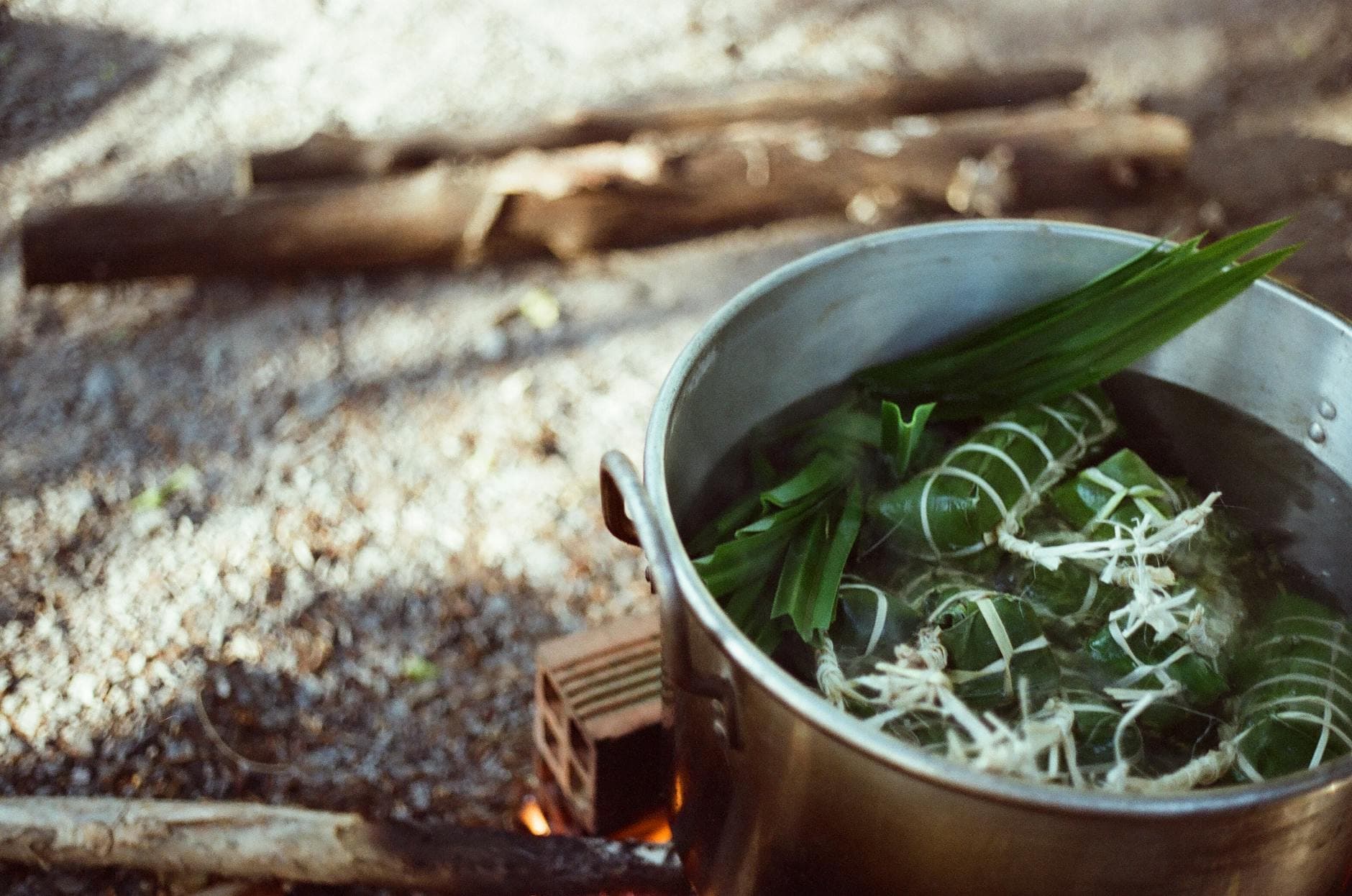
Illustrative photo, not our spa. Diabetes foot guidance says to wash at-risk feet in water below 37°C and not to soak them.
Our advice is no, and it is advice against our own menu. The reason is in the NHS symptom list: sensory neuropathy can mean "less ability to feel pain or changes in temperature, particularly in your feet". For people with diabetes whose feet are at risk of ulcers, a group that includes anyone who has lost protective sensation, the International Working Group on the Diabetic Foot (IWGDF) lists what they should be taught: "Wash feet daily (with water temperature always below 37°C)", "Do not use any kind of heater or a hot-water bottle to warm feet", and "Do not use chemical agents or plasters to remove corns and calluses; see the appropriate healthcare professional for these problems". Its prevention guideline adds that "people should avoid soaking their feet in a bath". Diabetes UK says the same in plainer words: "Always check the temperature with your wrist or elbow before you put your feet in. Avoid soaking your feet as this just makes the skin more likely to get damaged", and "Don't use blades on your corns or tough skin as they could damage it." In Vietnam, a doctor in the endocrinology department of Bệnh viện Đa khoa Tâm Anh goes further (page updated 21 June 2025): "Người bệnh tiểu đường không nên ngâm chân, kể cả ngâm chân với nước nóng, nước lạnh, nước muối và ngâm thảo dược" (people with diabetes should not soak their feet, whether in hot water, cold water, salt water or herbs), because someone with nerve damage "không thể cảm nhận nhiệt độ nước và có thể bị bỏng mà không nhận biết được" (cannot sense the water's temperature and can be burned without knowing it).
Now set that 37°C beside a hot stone massage. The American Massage Therapy Association's guide for therapists says the stones are heated in water "between 110–130 F", which is 43 to 54°C; that is the water they are heated in, not a temperature at the skin, which the article does not give. It says that when stones are laid in place over a sheet or towel the heat takes "3 to 4 minutes" to come through before a client "can accurately discern if the stones are too hot", and its list of "Contraindications & Considerations" includes "Diabetes" and "Neuropathy" (Mary Nelson, Massage Therapy Journal, 1 September 2010). Sức khỏe & Đời sống, the Vietnamese Ministry of Health's newspaper, gives the reason: people with diabetes "có thể mất cảm giác ở tay và bàn chân khiến họ không cảm thấy đau rát nếu có tổn thương, ví dụ như bị bỏng do đá quá nóng" (may lose feeling in the hands and feet, so that they do not feel the pain of an injury such as a burn from stones that are too hot; ThS. Nguyễn Mai Hương, 18 July 2019). It happens. A 1999 report in the Singapore Medical Journal described five patients with diabetes who used "hot therapy to treat their peripheral neuropathy. This resulted in burns and secondary infections"; all needed surgery to clean the wounds, and none needed an amputation (Thng and colleagues). In July 2025 Bệnh viện Tâm Anh reported a 67-year-old woman, diabetic for 23 years, whose numb, tingling feet were warmed with a hand-held device like a hair dryer and then covered with hot stones ("sau đó đắp thêm đá nóng"). She felt neither heat nor pain, the soles of her feet burned, and she lost four toes.
In fairness, warm water is not ruled out for everyone with neuropathy. In the Korean hospital trial above, a foot bath did better than foot massage for people with neuropathy after chemotherapy, and the Chinese trials combined foot baths with massage; the abstracts we read do not give the water temperatures, and the Korean baths were given to patients in hospital. The danger the diabetes sources describe is narrower: heat that the person cannot feel and nobody has measured. What follows is our reading of what that means on our menu, not a rule from any of these sources. Four single treatments on our menu use heat: the Himalaya hot stone massage, the Vietnamese herbal massage with its "warm compresses", the bamboo massage with its "warmed bamboo", and the herbal steam room. The packages contain some of the same items: Package 3 the herbal or the hot stone massage, and Packages 1 and 2 and the Nghê Special the steam room; the Nghê Special also has 30 minutes of the Special reflexology for foot. The jacuzzi, as our couple spa page says, is filled to order, hot or cold, and you tell us which when you book or arrive; the menu does not state a temperature for the hot fill, and either way it is 30 or 45 minutes with your feet under water. The Special foot treatment includes a "herbal foot soak", a "nail & cuticle trim" and a "heel scrape", and the Luxury Gel polish includes a "Herbal foot soak" and a "scraping massage". Soaking is what the diabetes foot guidance above advises against, and Diabetes UK warns against blades on tough skin; the menu does not say what tool the heel scrape or the scraping massage uses. On nails, Diabetes UK says that "cutting your skin by mistake can lead to other problems like ulcers or infections. And you might not even notice you've done it", and that "If you've lost some feeling in your feet or you're worried about things like ingrown toenails, see a foot specialist." Our pedicures cut the nails as well ("Cut + polish"). The menu does not state a temperature for any of the heated treatments or the foot soaks, and it does not say what a therapist does differently for a guest with numb feet, so we will not describe a procedure we cannot point to. If you have diabetes, neuropathy, or numb feet or hands, our advice is to leave out the heated treatments, the soaks and the scrape, and to tell us when you book. Our hot stone massage page gives the published stone temperatures and says plainly that we have not measured our own.
Can massage make neuropathy worse?
The sources name three ways it can do harm when feeling is altered: pressure on an area that cannot report it, touch on nerves that over-report, and heat (previous section). We found no report of a massage making an existing polyneuropathy itself worse, though in the Korean hospital trial quality of life fell in the group given foot massage. Ruth Werner's pathology textbook for massage therapists states the first risk: neuropathy "contraindicates specific massage when it involves numbness that could interfere with a client's ability to give accurate feedback" (p. 156; we read "specific" as focused work on one spot, as opposed to general massage), because "Numbness and reduced sensation can interfere with a client's ability to know when pressure is sufficient" (p. 157). The second is the oversensitive kind: some clients "may experience that any touch is irritating, so massage may have to be adjusted or even delayed" (p. 157). She adds that "Undiagnosed pain, tingling, or numbness needs to be evaluated by a primary care provider before massage can be known to be safe" (p. 157). The sources disagree about pressure. A protocol in the American Massage Therapy Association's Massage Today (Rita Woods, 17 January 2012) sets out "to gradually increase pressure so that eventually you are working tissue", in its words, "to the bone", while conceding that this "can be painful for the client, so care must be taken to work to the client's tolerance in each session"; the article cites no trial. The Thai trial pressed to the edge of discomfort, but in people screened to have no ulcer or deformity, and the 2022 chemotherapy trial raised the pressure "per patient tolerance". These are not the same patients. Tolerance is a usable guide when you feel too much and a poor one when you feel too little, and Werner's rule is written for the second group. Our reading follows hers: where feeling is reduced, keep the pressure gentle. Separately from neuropathy, massage can injure a nerve directly. Case reports describe a 21-year-old woman whose plantar nerve was injured by foot massage and whose symptoms were much relieved after 2 months of treatment (Jiang and colleagues, 2020), a 58-year-old woman whose radial nerve was injured by a single deep tissue massage and had almost fully recovered after 6 months (Hsu and colleagues, 2017), and a 61-year-old man whose median nerve was injured after two sessions (Suh and colleagues, 2022). A review that collected 40 reports of harm of all kinds after massage, 138 adverse events between 2003 and 2013, concluded that massage therapies "are not totally devoid of risks. But the incidence of such events is low" (Yin and colleagues, 2014). One more point for people with diabetes: Werner notes that massage "has been seen to drop blood sugar" (p. 404). Our page on massage with diabetes, high blood pressure or varicose veins covers eating first and bringing sugar.
When is numbness or tingling not a spa matter?
See a doctor, not a massage therapist, if any of these apply. The quoted wording is the NHS's. 999 is the UK emergency number; in Vietnam, call 115 for an ambulance.
Planning a trip around this? See dates at our quiet riverside hotel on the Thu Bồn. Check availability →
Numbness, tingling or pain in the feet that no doctor has looked at. The NHS: "It's important to see a GP if you experience the early symptoms of peripheral neuropathy", which include "pain, tingling or loss of sensation in the feet" and "loss of balance or weakness".
Pins and needles that do not go away. See a GP if "you constantly have pins and needles" or "it keeps coming back".
Sudden weakness or numbness on one side. The NHS lists "weakness or numbness down 1 side of your body" among the signs of a stroke, along with a drooping face and slurred speech: "Call 999 now".
Tingling that turns into weakness within days or weeks. In Guillain-Barré syndrome "You might feel tingling, numbness or pins and needles in your feet and hands first. This is usually followed by muscle weakness". The NHS: "It's serious and needs urgent treatment in hospital."
Numbness around the genitals or bottom, trouble peeing or controlling your bowels, or "weakness or numbness in both legs that's severe or getting worse". The NHS says to go to A&E or call 999: these "could be symptoms of a serious back problem that needs to be treated in hospital as soon as possible".
With diabetes: a blister, a cut or an ulcer on a foot, or a toe or foot changing colour. The NHS says to see a GP about "a cut or ulcer on your foot that's not getting better", to see a GP or diabetes nurse if "you have blisters or cracked skin on your feet", and to check your feet every day for "swelling or changes in skin colour". A body part "turning a different colour, such as dark red, purple or black" is a symptom of gangrene, and for suspected gangrene the NHS says "Call 999 or go to A&E immediately". Do not have that foot massaged; the Thai trial did not admit anyone with a foot ulcer.
Illustrative photo. New numbness, a wound that is not healing or a change of colour in a foot belongs with a doctor first.
What our spa menu offers for neuropathy, and what it does not
On our menu
Price
The menu's own words
With reduced feeling in mind (our reading)
Relaxing full-body massage with oil
450,000₫ (60 min), 600,000₫ (90 min)
"slow, flowing oil massage — medium pressure, head to toe"
The menu's words mention no heat and no tools. Medium is the menu's word: choose Gentle on the form. The nearest we have to the Swedish and classical massage in the trials
Foot massage
450,000₫ (60 min), 600,000₫ (90 min)
"unhurried pressure work from toes to calves"
The menu's words mention no heat. It works the area that is most often numb: choose Gentle, and say if you cannot feel the pressure
Special reflexology for foot
520,000₫ (60 min), 700,000₫ (90 min)
"pressure points on the soles"
Point pressure on the soles, the focused work Werner's rule argues against where feeling is reduced: with numb soles, choose the foot massage at Gentle instead. The trials gave courses of 6 weeks to 6 months, not one session
Special foot treatment
650,000₫ (90 min)
"20 min massage & herbal foot soak, nail & cuticle trim, heel scrape & foot moisturising"
A soak and a heel scrape, which the diabetes foot guidance is cautious about, and a nail trim that Diabetes UK says to take to a foot specialist if you have lost some feeling. With diabetes or numb feet, choose another treatment
Himalaya hot stone full-body massage
520,000₫ (60 min), 700,000₫ (90 min)
"Warm Himalayan stones glide over tight muscles"
Heat, and the menu states no temperature. Leave it out
Vietnamese herbal full-body massage
520,000₫ (60 min), 700,000₫ (90 min)
"warm compresses of lemongrass, ginger and local herbs"
Heat, pressed onto the skin. Leave it out
Vietnam Impression bamboo massage
570,000₫ (60 min), 770,000₫ (90 min)
"Smooth warmed bamboo rolled deep into muscle — firmer than hands, especially good for legs and back"
Heat and firm pressure together. Leave it out
Thai traditional massage (with or without oil)
570,000₫ (60 min), 770,000₫ (90 min)
"assisted, yoga-like movements"
Stretches; the menu's words mention no heat. It is not the Thai foot massage of the 2015 trial. Say if your balance is affected
Herbal steam room, listed as "Sauna"
300,000₫ for 20 min alone, 250,000₫ each for two
"lemongrass and local herbs in hot steam"
Heat on the whole body. Leave it out with diabetes, neuropathy, or numb feet or hands
Jacuzzi, booked and priced on its own
400,000₫ for 30 min alone, 300,000₫ each for two
"Includes drinks & fruit cuts"
Filled to order, hot or cold, as our couple spa page says; the menu states no temperature for the hot fill. Either way it is a long soak, which the diabetes foot guidance advises against for at-risk feet
Prices are per person, VAT is included and there is no service charge; treatments starting from 19:00 carry a 20% evening surcharge, so a 450,000₫ hour becomes 540,000₫. At the 26,000₫ rate we use across the site, the oil massage or the foot massage is about US$17 for 60 minutes and US$23 for 90. Prices are from our live spa menu, read on 23 November 2026, and the quoted words are the menu's descriptions, not findings. We are a hotel spa: there is no doctor or physiotherapist on the premises, and nothing on the menu is a medical treatment or a treatment for neuropathy. We do not offer TENS, vibration plates, infrared, tuina, acupuncture or medical massage, and we do not sell or review foot-massager machines, so this page does not cover them. On the consultation form, which the online booking leads straight to, the health ticks are Recent operation or injury, Arthritis, Menstruating, Pregnant, Heart condition and Skin condition. None of them covers diabetes, neuropathy, numbness, blood thinners or chemotherapy, so write yours in the "Anything else" box. You choose the pressure, Gentle, Medium, Strong or Very strong, and on the body map you tap an area once to focus and twice to avoid; Feet and Legs are two of its ten zones. The pressure you choose is where the therapist starts, not a contract: say less, more or not there at any point, and you can ask the therapist to skip an area, add covering or stop. With numbness that has a limit, because you cannot report what you cannot feel, which is why we suggest Gentle from the start. The menu does not say whether the heat can be left out of a heated treatment, whether the soak, the trim or the scrape can be left out of the Special foot treatment, or what a therapist checks before working on feet with reduced feeling, so tell us when you book and ask. We have male and female therapists; ask at booking. What a foot massage here includes is on foot massage in Hội An, and if a massage has ever hurt you, read should a massage hurt?.
What nobody has measured
Whether massage repairs a nerve. No trial we found counted nerve fibres. The conduction readings come from trials with no sham comparison, and the one imaging report we found is a single 63-year-old man who had nerve massage, nerve mobilisation and electrical stimulation together over 3 weeks (Manu and colleagues, 2022).
Massage on its own against a convincing sham in diabetic neuropathy. The only look-alike comparison we found was the 2026 feasibility trial of a package in 36 people, and its result was "uncertain".
A single massage against anything. The one study of a single session that we found, 23 patients at a US cancer centre, compared scores before and after with no comparison group (Yang and colleagues, 2025).
Anything long-term. The massage courses ran 2 to 12 weeks; the reflexology trial that ran 6 months was open label.
Hot stones, herbal compresses, warmed bamboo or herbal steam for neuropathy. We found no trial of any of them.
Neuropathy with no known cause. The trials were in diabetes and after chemotherapy, plus one pilot of Chinese massage in 20 people with HIV (Ge and colleagues, 2023). We found none in idiopathic neuropathy.
How often heat or pressure injures spa guests with reduced feeling. The trials screened people before admitting them, and we found no count of burns or pressure injuries outside trials, only case reports.
Questions people ask before booking
What is the best massage for neuropathy?
No type has been shown to be best, because no trial we found compared one type of massage with another. The trials used Thai foot massage, aromatherapy massage, and classical or Swedish massage of the feet, hands and lower legs. The one trial we found that compared places rather than types found leg massage no better than head, neck and shoulder massage. What we take from Werner's rule and the diabetic-foot guidance is the condition: you need to be able to feel and report the pressure, and where you cannot, it should stay gentle and without heat. On our menu that points to the relaxing oil massage or the foot massage, at Gentle.
How long should you massage your feet for neuropathy?
The trials in people who already had neuropathy used 20 to 30 minutes a session, two to four times a week, for 2 to 6 weeks; no trial we found tested what is best. In the one trial we found that compared schedules, three sessions a week for 4 weeks did better than two a week for 6, the same 12 sessions. For self-massage at home, the only trial we found is the one of self-reflexology with aroma oil in 63 women, described above. If you rub your own feet, look at them as well: Diabetes UK advises checking them every day, because "If you've lost any feeling in your feet, you need to be especially careful as you won't know if you've hurt yourself." A holiday allows one or two sessions, which no trial we found has tested against a comparison group, so expect comfort for a while at most.
Is a pinched nerve the same as neuropathy?
Not the kind this page is about. A pinched or trapped nerve is one nerve under pressure at one place. The NHS calls carpal tunnel syndrome "The most common type of mononeuropathy", in which the median nerve "becomes compressed" at the wrist, and says sciatica "happens when the sciatic nerve, which runs from your lower back to your feet, is irritated or compressed". Polyneuropathy affects many nerves at once and usually starts in the feet. The massage evidence is different for each, so they have their own pages: massage for carpal tunnel and massage for sciatica. Legs that will not keep still at night are a third thing, covered on massage for restless legs.
How to book
If you have neuropathy, diabetes or numb feet, write it in the "Anything else" box of the consultation form, and tap Feet twice on the body map if you would rather they were left alone. Nghê Prana Riverside Hotel & Spa, Hẻm 384 Nguyễn Tri Phương, Cẩm Nam, Hội An, on the Thu Bồn, 3.2 km from the Old Town. The spa is open from 9:00 to 21:00 every day and takes visitors as well as hotel guests. Book on the online form or by phone or WhatsApp on +84 896 687 961; an hour's notice is enough. Coming as two? The couple spa page shows the private room for two. Free pickup to the spa from anywhere within 5 km of us in a straight line, which takes in the Old Town, hotel guest or not: send your location to +84 896 687 961 on WhatsApp or Zalo and we reply within 15 minutes (9:00–21:00).
How we checked: on 23 November 2026 we read the full texts of Chatchawan 2015 (Medical Science Monitor Basic Research), Lopez 2022 (Scientific Reports), Dalal 2014 (Evidence-Based Complementary and Alternative Medicine), Hohenschurz-Schmidt 2026 (Pain Reports), Chen 2026 (Supportive Care in Cancer), Klaus 2024 (BMC Complementary Medicine and Therapies), Guo 2026 (Pain Research and Management) and the American Diabetes Association's 2017 position statement on diabetic neuropathy (Pop-Busui, Diabetes Care); the abstracts of Gok Metin 2017 (Journal of Nursing Scholarship), Izgu 2019, Kurt 2018 and Noh 2019 (European Journal of Oncology Nursing), Sarısoy 2020 (Holistic Nursing Practice), Park 2015 (Cancer Nursing), Yang 2025 (Integrative Cancer Therapies), Yan 2025 (American Journal of Translational Research), Fu 2020 (Diabetes/Metabolism Research and Reviews), Manu 2022 (Physiotherapy Theory and Practice), Ge 2023 and Suh 2022 (Frontiers in Neurology), Thng 1999 (Singapore Medical Journal), Jiang 2020 (Medicine), Hsu 2017 (PM&R) and Yin 2014 (Evidence-Based Complementary and Alternative Medicine), and of three guidelines whose full texts we could not open: Price 2022 and Bril 2011 (Neurology) and Loprinzi 2020 (Journal of Clinical Oncology); the IWGDF 2023 prevention guideline and practical guidelines; the NHS pages on peripheral neuropathy (overview, symptoms, causes, diagnosis, treatment and complications, all reviewed 10 October 2022), pins and needles (4 January 2024), stroke symptoms (12 September 2024), sciatica (3 December 2024), Guillain-Barré syndrome (12 August 2024), complications of type 2 diabetes (10 February 2025) and gangrene (26 March 2026); the NINDS page on peripheral neuropathy (13 March 2026); Diabetes UK's page on looking after your feet (22 November 2024); the Foundation for Peripheral Neuropathy's massage page; two American Massage Therapy Association articles (Nelson 2010 and Woods 2012); Bệnh viện Đa khoa Tâm Anh's pages of 21 June and 23 July 2025; Sức khỏe & Đời sống (18 July 2019); and Ruth Werner's A Massage Therapist's Guide to Pathology, 5th edition, pp. 155–157 and 404. We could not open the ADA's 2026 Standards of Care chapter on neuropathy and foot care. We also read our live spa menu. We are a hotel spa, not a clinic; nothing here is medical advice.
Can you have hot stones or a foot soak with numb feet?
Our advice is no, and it is advice against our own menu. The reason is in the NHS symptom list: sensory neuropathy can mean "less ability to feel pain or changes in temperature, particularly in your feet". For people with diabetes whose feet are at risk of ulcers, a group that includes anyone who has lost protective sensation, the International Working Group on the Diabetic Foot (IWGDF) lists what they should be taught: "Wash feet daily (with water temperature always below 37°C)", "Do not use any kind of heater or a hot-water bottle to warm feet", and "Do not use chemical agents or plasters to remove corns and calluses; see the appropriate healthcare professional for these problems". Its prevention guideline adds that "people should avoid soaking their feet in a bath". Diabetes UK says the same in plainer words: "Always check the temperature with your wrist or elbow before you put your feet in. Avoid soaking your feet as this just makes the skin more likely to get damaged", and "Don't use blades on your corns or tough skin as they could damage it." In Vietnam, a doctor in the endocrinology department of Bệnh viện Đa khoa Tâm Anh goes further (page updated 21 June 2025): "Người bệnh tiểu đường không nên ngâm chân, kể cả ngâm chân với nước nóng, nước lạnh, nước muối và ngâm thảo dược" (people with diabetes should not soak their feet, whether in hot water, cold water, salt water or herbs), because someone with nerve damage "không thể cảm nhận nhiệt độ nước và có thể bị bỏng mà không nhận biết được" (cannot sense the water's temperature and can be burned without knowing it).
Can you fix nerve damage with massage?
Not on the evidence we found. No trial we found showed damaged nerves regrowing, and none counted nerve fibres before and after. What some studies did measure is how well nerves carry a signal, and three kinds of study report better readings. In the prevention trial of 40 women on paclitaxel, at week 12 the "Sensory action potential amplitude of the median nerve was significantly higher and the tibial nerve latency was significantly shorter" in the massage group (Izgu and colleagues, 2019). In a reflexology trial of 58 people with diabetic neuropathy, slow nerve conduction was found in 21 of 29 people before and 7 of 29 at the end of a 6-month follow-up, against 20 and then 21 of 29 on medicines alone (Dalal and colleagues, 2014). And two reviews of Chinese trials in diabetic neuropathy, one of tuina in 24 trials with 1,989 participants (Yan and colleagues, 2025) and one of traditional Chinese medicine foot baths with acupoint massage in 31 trials with 3,284 (Fu and colleagues, 2020), report faster conduction in some nerves. In the Thai trial, a touch test of the sole with a fine filament also improved more with massage, measured 2 to 3 days after the last session. Neither of the two nerve-conduction trials used a sham comparison, and each of these results has a catch. A touch test is not a count of nerves. The paclitaxel trial was about preventing damage, not reversing it. The reflexology trial was "open label", and its reflexology group also brought HbA1c, the long-term blood sugar marker, down from 9.7% to 6.4%, against 9.4% to 8.6% in the comparison group, so better blood sugar may explain the nerves: the NHS says that keeping diabetes well controlled "may help improve neuropathy, or at least stop it getting worse". The tuina review found no significant difference for the tibial and median nerves and asks for "large-scale, high-quality RCTs"; the foot-bath review says that "due to the low methodological quality" better trials are needed. Tuina is a Chinese medical massage and is not what we do. What can let nerves recover is treating the cause. NINDS: "Sometimes, when the underlying cause of the neuropathy is corrected, it can resolve on its own as nerves recover and regrow." The NHS is more guarded: some cases "may improve with time if the underlying cause is treated, whereas in some people the damage may be permanent".
What is the best massage for neuropathy?
No type has been shown to be best, because no trial we found compared one type of massage with another. The trials used Thai foot massage, aromatherapy massage, and classical or Swedish massage of the feet, hands and lower legs. The one trial we found that compared places rather than types found leg massage no better than head, neck and shoulder massage. What we take from Werner's rule and the diabetic-foot guidance is the condition: you need to be able to feel and report the pressure, and where you cannot, it should stay gentle and without heat. On our menu that points to the relaxing oil massage or the foot massage, at Gentle.
How long should you massage your feet for neuropathy?
The trials in people who already had neuropathy used 20 to 30 minutes a session, two to four times a week, for 2 to 6 weeks; no trial we found tested what is best. In the one trial we found that compared schedules, three sessions a week for 4 weeks did better than two a week for 6, the same 12 sessions. For self-massage at home, the only trial we found is the one of self-reflexology with aroma oil in 63 women, described above. If you rub your own feet, look at them as well: Diabetes UK advises checking them every day, because "If you've lost any feeling in your feet, you need to be especially careful as you won't know if you've hurt yourself." A holiday allows one or two sessions, which no trial we found has tested against a comparison group, so expect comfort for a while at most.
Is a pinched nerve the same as neuropathy?
Not the kind this page is about. A pinched or trapped nerve is one nerve under pressure at one place. The NHS calls carpal tunnel syndrome "The most common type of mononeuropathy", in which the median nerve "becomes compressed" at the wrist, and says sciatica "happens when the sciatic nerve, which runs from your lower back to your feet, is irritated or compressed". Polyneuropathy affects many nerves at once and usually starts in the feet. The massage evidence is different for each, so they have their own pages: massage for carpal tunnel and massage for sciatica. Legs that will not keep still at night are a third thing, covered on massage for restless legs.
References & Sources
Chatchawan U, Eungpinichpong W, Plandee P, Yamauchi J (2015). Effects of Thai foot massage on balance performance in diabetic patients with peripheral neuropathy: a randomized parallel-controlled trial (full text read 23 November 2026). 21:68-75. Medical Science Monitor Basic Research. View source
Gok Metin Z, Arikan Donmez A, Izgu N, Ozdemir L, Arslan IE (2017). Aromatherapy Massage for Neuropathic Pain and Quality of Life in Diabetic Patients (abstract read 23 November 2026). 49(4):379-388. Journal of Nursing Scholarship. View source
Hohenschurz-Schmidt D, Scott W, Schmid AB, Cro S, Bright P, Draper-Rodi J, et al. (2026). A multimodal manual therapy, exercise, and psychological intervention for painful diabetic neuropathy: the NeuOst feasibility randomised controlled trial (full text read 23 November 2026). 11(5):e1498. Pain Reports. View source
Izgu N, Metin ZG, Karadas C, Ozdemir L, Çetin N, Demirci U (2019). Prevention of chemotherapy-induced peripheral neuropathy with classical massage in breast cancer patients receiving paclitaxel: An assessor-blinded randomized controlled trial (abstract read 23 November 2026). 40:36-43. European Journal of Oncology Nursing. View source
Lopez G, Eng C, Overman M, Ramirez D, Liu W, Beinhorn C, et al. (2022). A randomized pilot study of oncology massage to treat chemotherapy-induced peripheral neuropathy (full text read 23 November 2026). 12(1):19023. Scientific Reports. View source
Sarısoy P, Ovayolu O (2020). The Effect of Foot Massage on Peripheral Neuropathy-Related Pain and Sleep Quality in Patients With Non-Hodgkin's Lymphoma (abstract read 23 November 2026). 34(6):345-355. Holistic Nursing Practice. View source
Park R, Park C (2015). Comparison of Foot Bathing and Foot Massage in Chemotherapy-Induced Peripheral Neuropathy (abstract read 23 November 2026). 38(3):239-247. Cancer Nursing. View source
Chen YX, He WY, Zhou Y, Yao BL, Zhang XL, Ye Q, Xu M (2026). Effectiveness of manual interventions on overall symptoms, pain and quality of life in patients with chemotherapy-induced peripheral neuropathy: a systematic review and meta-analysis (full text read 23 November 2026). 34(4):288. Supportive Care in Cancer. View source
Yang M, Shao C, Shao C, Saint K, Gupta M, Caputo R, et al. (2025). A Retrospective Cohort Study on the Preliminary Efficacy of Massage Therapy for Chemotherapy-Induced Peripheral Neuropathy Among Cancer Patients (abstract read 23 November 2026). 24:15347354251323258. Integrative Cancer Therapies. View source
Dalal K, Maran VB, Pandey RM, Tripathi M (2014). Determination of efficacy of reflexology in managing patients with diabetic neuropathy: a randomized controlled clinical trial (full text read 23 November 2026). 2014:843036. Evidence-Based Complementary and Alternative Medicine. View source
Kurt S, Can G (2018). Reflexology in the management of chemotherapy induced peripheral neuropathy: A pilot randomized controlled trial (abstract read 23 November 2026). 32:12-19. European Journal of Oncology Nursing. View source
Noh GO, Park KS (2019). Effects of aroma self-foot reflexology on peripheral neuropathy, peripheral skin temperature, anxiety, and depression in gynaecologic cancer patients undergoing chemotherapy: A randomised controlled trial (abstract read 23 November 2026). 42:82-89. European Journal of Oncology Nursing. View source
Klaus M, Kutschan S, Männle H, Hübner J, Dörfler J (2024). Reflexology in oncological treatment - a systematic review (full text read 23 November 2026). 24(1):32. BMC Complementary Medicine and Therapies. View source
Yan HX, Guan HY, Sun JB, Zhang SB, Zhu HY, Wang FY, Wu XQ, Song BL (2025). Therapeutic effect of Chinese Tuina on diabetic peripheral neuropathy: systematic review and meta-analysis (abstract read 23 November 2026). 17(1):499-511. American Journal of Translational Research. View source
Fu Q, Yang H, Zhang L, Liu Y, Li X, Dai M, et al. (2020). Traditional Chinese medicine foot bath combined with acupoint massage for the treatment of diabetic peripheral neuropathy: A systematic review and meta-analysis of 31 RCTs (abstract read 23 November 2026). 36(2):e3218. Diabetes/Metabolism Research and Reviews. View source
Guo Y, Zhong Y, Chia XY, Wang X, Xiao B (2026). Manual Massage Therapy for Neuropathic Pain: Clinical Evidence and Mechanistic Insights (full text read 23 November 2026). 2026(1):e4403173. Pain Research and Management. View source
Manu G, Amit M, Asir John S (2022). Effect of massage, passive neural mobilization and transcutaneous electrical nerve stimulation on magnetic resonance diffusion tensor imaging (MR-DTI) of the tibial nerve in a patient with type 2 diabetes mellitus induced neuropathy: a case report (abstract read 23 November 2026). 38(13):3273-3282. Physiotherapy Theory and Practice. View source
Ge S, Dune L, Liu M, Fu G, Ma H, Hu J, Lin X, Li J (2023). Feasibility of therapeutic Chinese massage (tui na) for peripheral neuropathy among people with human immunodeficiency virus: findings of a pilot randomized controlled trial (abstract read 23 November 2026). 14:1148150. Frontiers in Neurology. View source
NHS (2022). Peripheral neuropathy: overview (page last reviewed 10 October 2022; read 23 November 2026). NHS website. View source
NHS (2022). Peripheral neuropathy: symptoms (page last reviewed 10 October 2022; read 23 November 2026). NHS website. View source
NHS (2022). Peripheral neuropathy: causes (page last reviewed 10 October 2022; read 23 November 2026). NHS website. View source
NHS (2022). Peripheral neuropathy: diagnosis (page last reviewed 10 October 2022; read 23 November 2026). NHS website. View source
NHS (2022). Peripheral neuropathy: treatment (page last reviewed 10 October 2022; read 23 November 2026). NHS website. View source
NHS (2022). Peripheral neuropathy: complications (page last reviewed 10 October 2022; read 23 November 2026). NHS website. View source
National Institute of Neurological Disorders and Stroke (NINDS) (2026). Peripheral Neuropathy (last reviewed 13 March 2026; read 23 November 2026). National Institutes of Health. View source
Price R, Smith D, Franklin G, Gronseth G, Pignone M, David WS, et al. (2022). Oral and Topical Treatment of Painful Diabetic Polyneuropathy: Practice Guideline Update Summary: Report of the AAN Guideline Subcommittee (abstract read 23 November 2026; the journal's site refused our request for the full text). 98(1):31-43. Neurology. View source
Bril V, England J, Franklin GM, Backonja M, Cohen J, Del Toro D, et al. (2011). Evidence-based guideline: Treatment of painful diabetic neuropathy: report of the American Academy of Neurology, the American Association of Neuromuscular and Electrodiagnostic Medicine, and the American Academy of Physical Medicine and Rehabilitation (retired guideline; abstract read 23 November 2026). 76(20):1758-1765. Neurology. View source
Pop-Busui R, Boulton AJ, Feldman EL, Bril V, Freeman R, Malik RA, Sosenko JM, Ziegler D (2017). Diabetic Neuropathy: A Position Statement by the American Diabetes Association (full text read 23 November 2026). 40(1):136-154. Diabetes Care. View source
Loprinzi CL, Lacchetti C, Bleeker J, Cavaletti G, Chauhan C, Hertz DL, et al. (2020). Prevention and Management of Chemotherapy-Induced Peripheral Neuropathy in Survivors of Adult Cancers: ASCO Guideline Update (abstract read 23 November 2026; the journal's site refused our request for the full text). 38(28):3325-3348. Journal of Clinical Oncology. View source
Bus SA, Sacco ICN, Monteiro-Soares M, Raspovic A, Paton J, Rasmussen A, Lavery LA, van Netten JJ (2023). Guidelines on the prevention of foot ulcers in persons with diabetes, IWGDF 2023 update (PDF read 23 November 2026; also Diabetes/Metabolism Research and Reviews 2024;40(3):e3651). International Working Group on the Diabetic Foot (IWGDF). View source
Schaper NC, van Netten JJ, Apelqvist J, Bus SA, Fitridge R, Game F, Monteiro-Soares M, Senneville E, on behalf of the IWGDF Editorial Board (2023). Practical guidelines on the prevention and management of diabetes-related foot disease, IWGDF 2023 update: Table 1 and Appendix 3 (PDF read 23 November 2026). International Working Group on the Diabetic Foot (IWGDF). View source
Diabetes UK (2024). How to look after your feet (content last reviewed 22 November 2024; read 23 November 2026). Diabetes UK. View source
BS.CKI Nguyễn Phúc Minh Trân, khoa Nội tiết – Đái tháo đường, Bệnh viện Đa khoa Tâm Anh TP.HCM (2025). Người bị tiểu đường có được ngâm chân không? (cập nhật 21-06-2025; read 23 November 2026). Bệnh viện Đa khoa Tâm Anh. View source
Bệnh viện Đa khoa Tâm Anh (2025). Sấy nóng, người phụ nữ phải cắt cụt 4 ngón chân (23-07-2025; read 23 November 2026). Bệnh viện Đa khoa Tâm Anh. View source
Thng P, Lim RM, Low BY (1999). Thermal burns in diabetic feet (abstract read 23 November 2026). 40(5):362-364. Singapore Medical Journal. View source
Nelson M (2010). (Don't) Feel the Burn: Hot Stone Massage (1 September 2010; read 23 November 2026). Massage Therapy Journal (American Massage Therapy Association). View source
ThS. Nguyễn Mai Hương (2019). Massage trị liệu bằng đá nóng: Lợi ích và những cảnh báo (18-07-2019; read 23 November 2026). Báo Sức khỏe & Đời sống. View source
Woods R (2012). A Massage Protocol for Peripheral Neuropathy (17 January 2012; read 23 November 2026). Massage Today (American Massage Therapy Association). View source
The Foundation for Peripheral Neuropathy (2025). Massage for Neuropathy (page modified 24 January 2025; read 23 November 2026). The Foundation for Peripheral Neuropathy. View source
Werner R (2012). A Massage Therapist's Guide to Pathology, 5th ed., pp. 155–157 (peripheral neuropathy) and p. 404 (diabetes mellitus). Lippincott Williams & Wilkins.
Jiang Z, Zhang H, Yu T, Du Y, Qian Z, Chang F (2020). Musculoskeletal ultrasonography combined with electromyography in the diagnosis of massage-inducted lateral plantar nerve injury: A case report (abstract read 23 November 2026). 99(28):e21130. Medicine (Baltimore). View source
Hsu PC, Chiu JW, Chou CL, Wang JC (2017). Acute Radial Neuropathy at the Spiral Groove Following Massage: A Case Presentation (abstract read 23 November 2026). 9(10):1042-1046. PM&R. View source
Suh MR, Song JH, Park Y, Lee SH, Ahn J (2022). Case report: Traumatic median neuropathy in the distal forearm after massage therapy (abstract read 23 November 2026). 13:959919. Frontiers in Neurology. View source
Yin P, Gao N, Wu J, Litscher G, Xu S (2014). Adverse events of massage therapy in pain-related conditions: a systematic review (abstract read 23 November 2026). 2014:480956. Evidence-Based Complementary and Alternative Medicine. View source
NHS (2024). Pins and needles (page last reviewed 4 January 2024; read 23 November 2026). NHS website. View source
NHS (2024). Stroke: symptoms (page last reviewed 12 September 2024; read 23 November 2026). NHS website. View source
NHS (2024). Guillain-Barré syndrome (page last reviewed 12 August 2024; read 23 November 2026). NHS website. View source
NHS (2024). Sciatica (page last reviewed 3 December 2024; read 23 November 2026). NHS website. View source
NHS (2025). Type 2 diabetes: complications (page last reviewed 10 February 2025; read 23 November 2026). NHS website. View source
NHS (2026). Gangrene (page last reviewed 26 March 2026; read 23 November 2026). NHS website. View source
Every room at Nghê Prana is designed around the science of sleep. Blackout curtains, nightly aromatherapy turndown, and riverside quiet — experience what real rest feels like.
Riverside hotel rooms on the Thu Bồn, ten minutes by bicycle from the Ancient Town. Whether it's one night between Hue and Da Nang or a full week of doing nothing — we kept your room quiet.
Free cancellation · Direct from the family who built the hotel



 WhatsApp
 Zalo