Quán Thế Âm Festival 2027 at the Marble Mountains (Lễ hội Quán Thế Âm, Ngũ Hành Sơn): Dates, Rituals & How to See It from Hội An
When is the Quán Thế Âm Festival in 2027? The festival is fixed to the 19th of the second lunar month at the Marble Mountains (Ngũ Hành Sơn) in Đà Nẵng, so 2027 is expected around 24–26 March. Here is the lunar logic, the three-day ceremony structure, heritage status, and how to reach it from the quiet south bank of the Thu Bồn in Hội An.
Each spring, on the 19th day of the second lunar month, a quiet limestone hill on the edge of Đà Nẵng fills with incense smoke, saffron robes, and the low chant of sutras. This is the Quán Thế Âm Festival (Lễ hội Quán Thế Âm), the largest Buddhist festival in central Vietnam, held at the foot of the Marble Mountains (Ngũ Hành Sơn) around the Quan Âm pagoda and the cave shrine of Động Quan Âm. It honours Quán Thế Âm — Avalokiteśvara, the bodhisattva of compassion, known across Vietnam as Quan Âm, the goddess of mercy.
If you are staying in Hội An, the festival is close enough to fold into a single morning: roughly 30 to 40 minutes north by road. This guide synthesises Vietnamese-language reporting from the Đà Nẵng city tourism portal (Danang Fantasticity), VietnamPlus, Thể thao & Văn hóa, and the heritage record of the Cục Di sản Văn hóa to answer the question English-language pages still struggle with: when exactly is the Quán Thế Âm Festival in 2027, and how do you see it from Hội An?
When is the Quán Thế Âm Festival in 2027?
The festival does not move to a fixed Gregorian date. It is anchored to the 19th day of the second lunar month — the traditional observance day of Quán Thế Âm (lễ vía Đức Bồ Tát Quán Thế Âm) — with a program that opens two days earlier, so the full event spans roughly the 17th to the 19th of the second lunar month. As of this writing, Đà Nẵng's official 2027 program has not yet been published; the city typically confirms its three-day schedule only a month or two ahead. We will not invent a 'verified' 2027 date. What we can do honestly is calculate from the lunar calendar: Tết (Lunar New Year) in 2027 falls on 6 February 2027, which places the 19th of the second lunar month — and therefore the festival's main day — in late March 2027.
Lunar date
Estimated 2027 Gregorian
Status
17th, 2nd lunar month (program opens)
~24 March 2027
Estimate — to be confirmed
19th, 2nd lunar month (main ceremony, lễ vía)
~26 March 2027
Estimate — to be confirmed
Program close
~26–27 March 2027
Estimate — to be confirmed
Treat these as an estimate, not a booking guarantee. For reference, the 2026 festival ran 4–7 April 2026 (the 17th–20th of the second lunar month). The moment Đà Nẵng Tourism publishes the official 2027 dates, we will update this page with the confirmed three-day schedule. If you are planning travel around it, build in a day of flexibility on either side until the program is announced.
What is the Quán Thế Âm Festival, and what is its heritage status?
The festival began in 1960, when a statue of Quán Thế Âm was inaugurated at the Marble Mountains. It lapsed for decades, was revived in 1991, and grew steadily into the largest organised Buddhist festival in the region. In 2000 it was listed by the national tourism authority among Vietnam's fifteen major festivals, and in 2021 the Ministry of Culture, Sports and Tourism inscribed it as a National Intangible Cultural Heritage (Di sản văn hóa phi vật thể quốc gia).
Its meaning is both devotional and civic. Vietnamese coverage describes the festival as embodying "sự giao hòa bền chặt giữa đạo và đời" ("the enduring harmony between faith and everyday life"), carrying the Buddhist values of "từ bi, bác ái" ("compassion and loving-kindness"). It draws Buddhist clergy, pilgrims, and lay visitors from across Vietnam and abroad — a religious observance first, and a cultural gathering second. The setting is part of the meaning: the Marble Mountains (Ngũ Hành Sơn) are five limestone-and-marble outcrops named for the five elements — metal, wood, water, fire, earth — and among their caves sits Động Quan Âm, a grotto whose natural stalactite forms are venerated as an image of the bodhisattva herself, which is why this hill, and not another, became the festival's home.
What happens across the three days?
The program braids together two strands the Vietnamese name themselves: the lễ (the sacred Buddhist rites) and the hội (the cultural and folk festivities). The religious rites are the heart of it.
The main observance and procession. At 7:00 AM on the 19th of the second lunar month, the central ceremony honouring Quán Thế Âm takes place at the Quan Âm pagoda — sutra-opening rites, prayers for national peace and good harvests (cầu quốc thái dân an), and offerings before the altar; in 2026 it was broadcast live on Đà Nẵng television. A flower-bedecked carriage bearing the image of Quán Thế Âm is then carried in procession (lễ rước) from the pagoda toward the water, accompanied by monks, nuns, and lay devotees. Related observances include a memorial to Princess Huyền Trân and, on the Cổ Cò River, traditional boat races that re-enact her historical procession.
The lantern floating (hoa đăng). On the evening of the rites, the closing Buddhist ritual gives thanks to the mountains, waters, and guardian spirits, after which devotees release hoa đăng — candles set in lotus-shaped lanterns — onto the river, a prayer that the light of wisdom and compassion endures. It is the festival's most photographed and most moving moment. Around the rites runs a broad cultural program (hội): bài chòi folk-song exchanges, traditional games, stone-carving demonstrations by the artisans of the Non Nước marble village, calligraphy, and exhibitions of photography and painting. In 2026 the city added a peace walk with hundreds of international delegates and digitised the entire 40-plus-event program on an online map; expect a comparable scale in 2027 once the schedule is confirmed.
How do you get to the Marble Mountains from Hội An?
The Marble Mountains sit on the coastal road between Hội An and central Đà Nẵng, which makes the festival an easy outing rather than an expedition. From Hội An's Ancient Town it is roughly 18–20 km, or about 30 to 40 minutes by car along the Đà Nẵng–Hội An coastal route past An Bàng and Non Nước beaches.
Your options: a private car or taxi (the simplest for a half-day round trip, and the most comfortable if you plan to be out before dawn for the morning rite); a Grab car booked through the app; or a motorbike for confident riders, since the coastal road is flat and direct. On the main festival day the area around Ngũ Hành Sơn is busy and parking fills early, so leave Hội An with time to spare and aim to arrive ahead of the 7:00 AM ceremony. A note on respect: this is a living Buddhist religious festival, not a staged tourist show — dress modestly with shoulders and knees covered, keep your voice low inside the pagoda and caves, ask before photographing monks or worshippers up close, and step back to let devotees lead the procession and the hoa đăng release.
Planning a trip around this? See dates at our quiet riverside hotel on the Thu Bồn. Check availability →
Where to stay near the Quán Thế Âm Festival
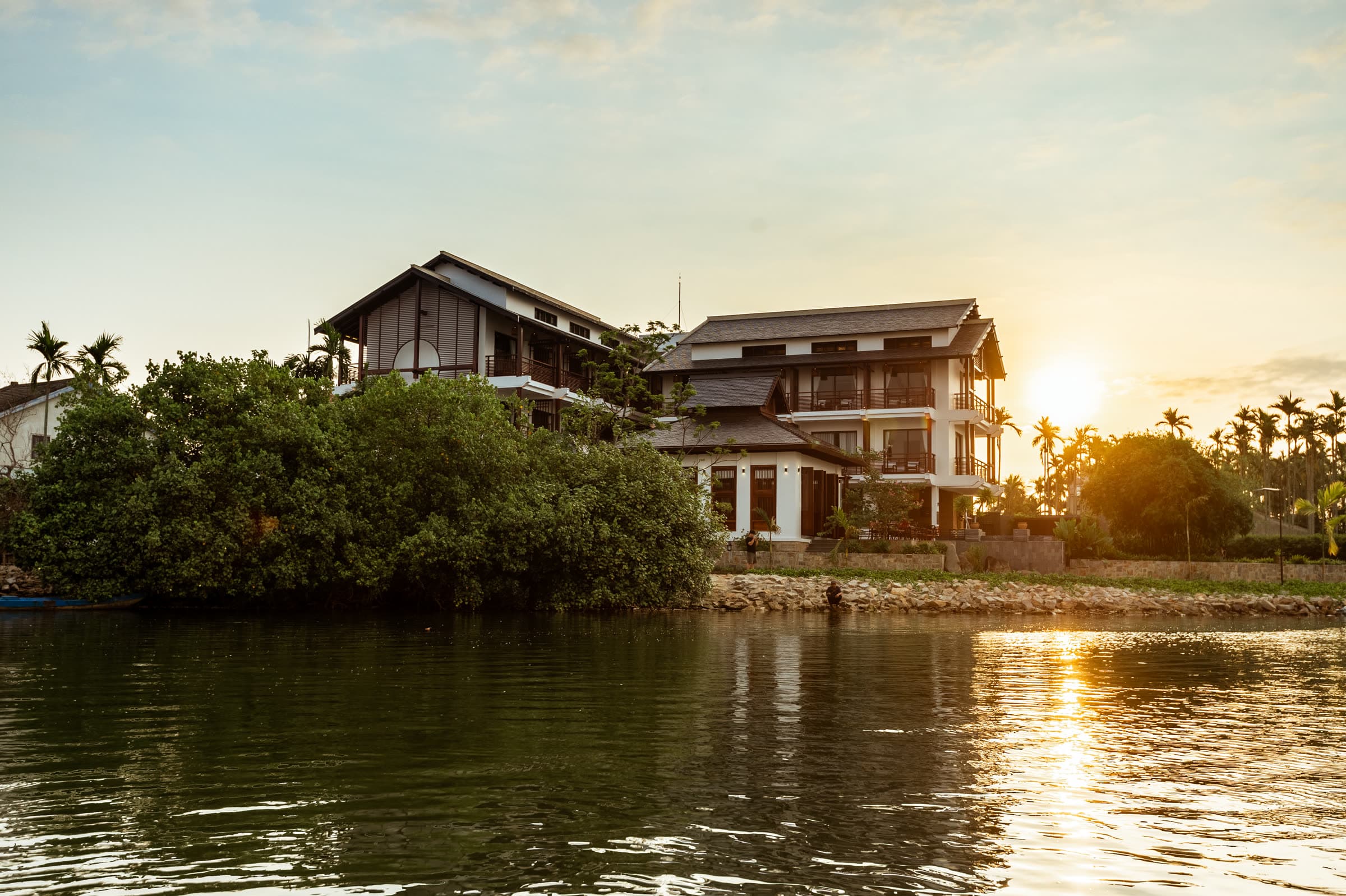
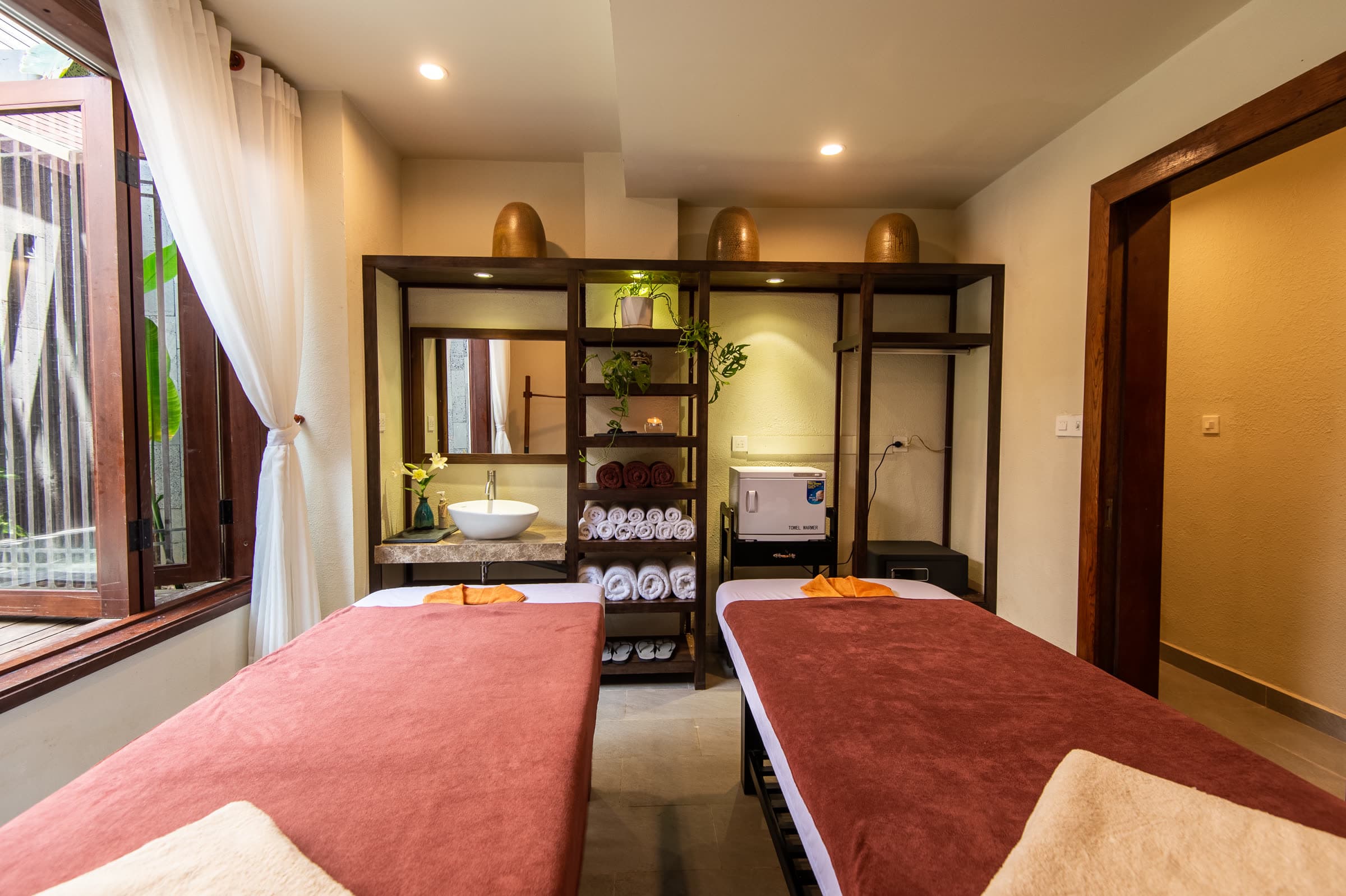
We are Nghe Prana, a riverside hotel and spa on the quiet south bank of the Thu Bồn in Hội An — 23 rooms, a pool, complimentary bicycles, and welcome tea, set away from the late-night noise so you actually sleep. The Ancient Town is about 10 minutes by bicycle, and the Marble Mountains are an easy 30–40 minute run up the coast, which makes us a calm base for an early festival morning followed by an afternoon back by the river. After a pre-dawn start at Ngũ Hành Sơn, the day softens nicely at home: a turn in the pool, a slow lunch at our farm-to-table restaurant The Corn, and an unhurried treatment in our couple's spa with private jacuzzi. If you would rather build the whole trip around rest, our wellness page lays out the spa menu. The festival feeds the spirit; the riverside is where you let the day settle.
Frequently Asked Questions
When is the Quán Thế Âm Festival in 2027? The official 2027 program has not yet been published. The festival is fixed to the 19th day of the second lunar month, and because Tết 2027 falls on 6 February 2027, the main day is expected around 26 March 2027, with the program opening about two days earlier (roughly 24–26 March). Treat this as an estimate until Đà Nẵng Tourism confirms the dates.
Where is the Quán Thế Âm Festival held? At the Marble Mountains (Ngũ Hành Sơn) in Đà Nẵng, around the Quan Âm pagoda and the Động Quan Âm cave shrine, roughly 18–20 km north of Hội An's Ancient Town.
Is the Quán Thế Âm Festival a recognised heritage event? Yes. It was inscribed as a National Intangible Cultural Heritage by Vietnam's Ministry of Culture, Sports and Tourism in 2021, and was earlier listed among the country's fifteen major festivals in 2000.
What is the hoa đăng lantern ceremony?Hoa đăng are candles set inside lotus-shaped lanterns. On the evening of the rites, devotees release them onto the Cổ Cò River as a prayer that the light of wisdom and compassion endures. It is the festival's most photographed moment.
Can I visit the festival on a day trip from Hội An? Yes. The Marble Mountains are about 30–40 minutes by car, Grab, or motorbike along the coastal road. For the 7:00 AM main ceremony, leave Hội An early, as the area and its parking fill quickly on the main day. The festival rites are a public religious event and free to attend; the Ngũ Hành Sơn scenic complex has a separate standard admission for the caves and viewpoints.
What should I wear and how should I behave? Dress modestly with shoulders and knees covered, keep quiet inside the pagoda and caves, ask permission before close-up photographs of monks or worshippers, and give devotees space during the procession and lantern release.
*This article synthesises Vietnamese-language reporting and the national heritage record: the Đà Nẵng city tourism portal (Danang Fantasticity), VietnamPlus, Thể thao & Văn hóa, Giác Ngộ Online, and the inscription record of the Cục Di sản Văn hóa. The 2027 dates given here are an estimate calculated from the lunar calendar pending Đà Nẵng Tourism's official program, which we will publish here as soon as it is confirmed. For festival timing across the region, see our Vietnamese festival calendar, the Hội An Lantern Festival 2026 calendar, and the Hội An Lantern Festival 2027 calendar.*
Danang Fantasticity (Cổng thông tin du lịch Đà Nẵng) (2026). Lễ hội Quán Thế Âm, Ngũ Hành Sơn, thành phố Đà Nẵng năm 2026. Danang Fantasticity. View source
Cục Di sản Văn hóa (2021). Lễ hội Quán Thế Âm, Ngũ Hành Sơn (Di sản văn hóa phi vật thể quốc gia). Cục Di sản Văn hóa (dsvh.gov.vn). View source
VietnamPlus (2026). Lễ hội Quán Thế Âm Ngũ Hành Sơn: Kết nối di sản với phát triển du lịch bền vững. VietnamPlus (Thông tấn xã Việt Nam). View source
Thể thao & Văn hóa (2026). Lễ hội Quán Thế Âm, Ngũ Hành Sơn: Kết nối di sản với phát triển du lịch bền vững. Thể thao & Văn hóa (TTXVN). View source
Giác Ngộ Online (2026). Đà Nẵng: Khai mạc Lễ hội Quán Thế Âm Ngũ Hành Sơn năm 2026. Giác Ngộ Online (Báo Giác Ngộ). View source
Every room at Nghê Prana is designed around the science of sleep. Blackout curtains, nightly aromatherapy turndown, and riverside quiet — experience what real rest feels like.
Riverside hotel rooms on the Thu Bồn, ten minutes by bicycle from the Ancient Town. Whether it's one night between Hue and Da Nang or a full week of doing nothing — we kept your room quiet.
Free cancellation · Direct from the family who built the hotel


 WhatsApp
 Zalo
Zalo