Tết Đoan Ngọ Explained: Vietnam's Mid-Year Festival, the Rượu Nếp Tradition, and How It's Marked in Central Vietnam
On the 5th day of the 5th lunar month — Friday 19 June in 2026 — Vietnamese families wake to fermented sticky rice eaten before breakfast, bowls of sour summer fruit, and a noon offering to drive out the year's "pests." This is Tết Đoan Ngọ, the mid-year cleansing festival, and it looks nothing like the dragon-boat races the name suggests abroad. Here is what the day means, the rượu nếp ritual at its centre, and the distinctly central-Vietnam version of it you'll find around Hội An.
Twice a year the Vietnamese calendar pauses for a Tết that is not the Lunar New Year. One is the Mid-Autumn Festival in the eighth month; the other is Tết Đoan Ngọ, on the 5th day of the 5th lunar month — Friday, 19 June in 2026. It is the mid-year festival, and its plainest name says what it is for: Tết diệt sâu bọ, the "festival to kill the pests." Where Chinese tradition fills this date with dragon-boat races, the Vietnamese day is quiet, domestic and edible — built around fermented sticky rice eaten before you have fully woken up, and the season's most sharply sour fruit.
If you arrived here after searching for a "dragon boat festival," start with our pillar guide, Dragon Boat Festival in Vietnam 2026 — what it actually is, which untangles the China-versus-Vietnam mix-up and confirms the date. This post is the deeper look at the festival itself: what it means, the rượu nếp ritual at its centre, and the central-Vietnam version you find around Hội An and the Thu Bồn.
What Is Tết Đoan Ngọ?
Tết Đoan Ngọ marks the height of summer, when heat and damp were thought to breed disease and crop pests. Đoan Ngọ means "the start of the Ngọ hour" — noon — and the day's central rite is timed to that midday window, roughly 11:00 to 13:00, when the sun is at its strongest. The idea is cleansing: a mid-year reset of the body and the fields, expelling the "sâu bọ" (insects, pests, and by extension the bad humours believed to accumulate inside a person) before the worst of the season sets in.
The most-told origin story explains the "pest-killing" name. After a harvest was ravaged by insects, an elder called Đôi Truân appeared and taught the farmers to set out offerings of sour fruit and fermented rice on the morning of the 5th and to perform simple exercises facing the sun; the pests fell away, the crops were saved, and the villagers kept the rite. Whether or not you read it as history, the legend encodes the day's logic — that you eat sharp, fermented, "purging" foods at a fixed hour to drive out what harms you.
What Is the Rượu Nếp Tradition?
The signature food is cơm rượu — known as rượu nếp in much of the north — fermented glutinous rice, sweet and lightly alcoholic from a few days under yeast. Custom says to eat it first thing in the morning, on an empty stomach, so that its warmth and faint alcohol "intoxicate" the pests living in the body and flush them out. It is less a meal than a ritual mouthful: a small bowl of soft, winey rice grains, often followed immediately by sour and astringent fruit — lychee, plum, early-season mango — chosen precisely because their sharpness was thought to finish the job the rice started.
Around it sit the other Đoan Ngọ foods. Bánh tro (also bánh ú tro or bánh gio) are small pyramid-shaped sticky-rice cakes soaked in ash water until the grain turns translucent and jelly-like, eaten cool with sugar or molasses — cooling food for a hot day. The combination is deliberate: ferment, acid, and cooling starch, a folk pharmacology of the season more than a feast.
How Is Tết Đoan Ngọ Marked in Central Vietnam and Hội An?
Central Vietnam gives the day its own accent. Here the cơm rượu is commonly pressed into firm little squares or balls rather than served loose, with a stronger, more pungent ferment than the soft northern version. The table broadens, too: central families often add thịt vịt (duck), eaten as a "cooling" meat well suited to the summer heat, and chè kê — a sweet soup of millet, often paired with thin bánh tráng — which is a particular central-region marker of the day. In Hội An, the Old Town markets fill from early morning with cơm rượu, bánh ú tro, duck, and the first lychees and plums of the season, and the buying is done before the noon offering.
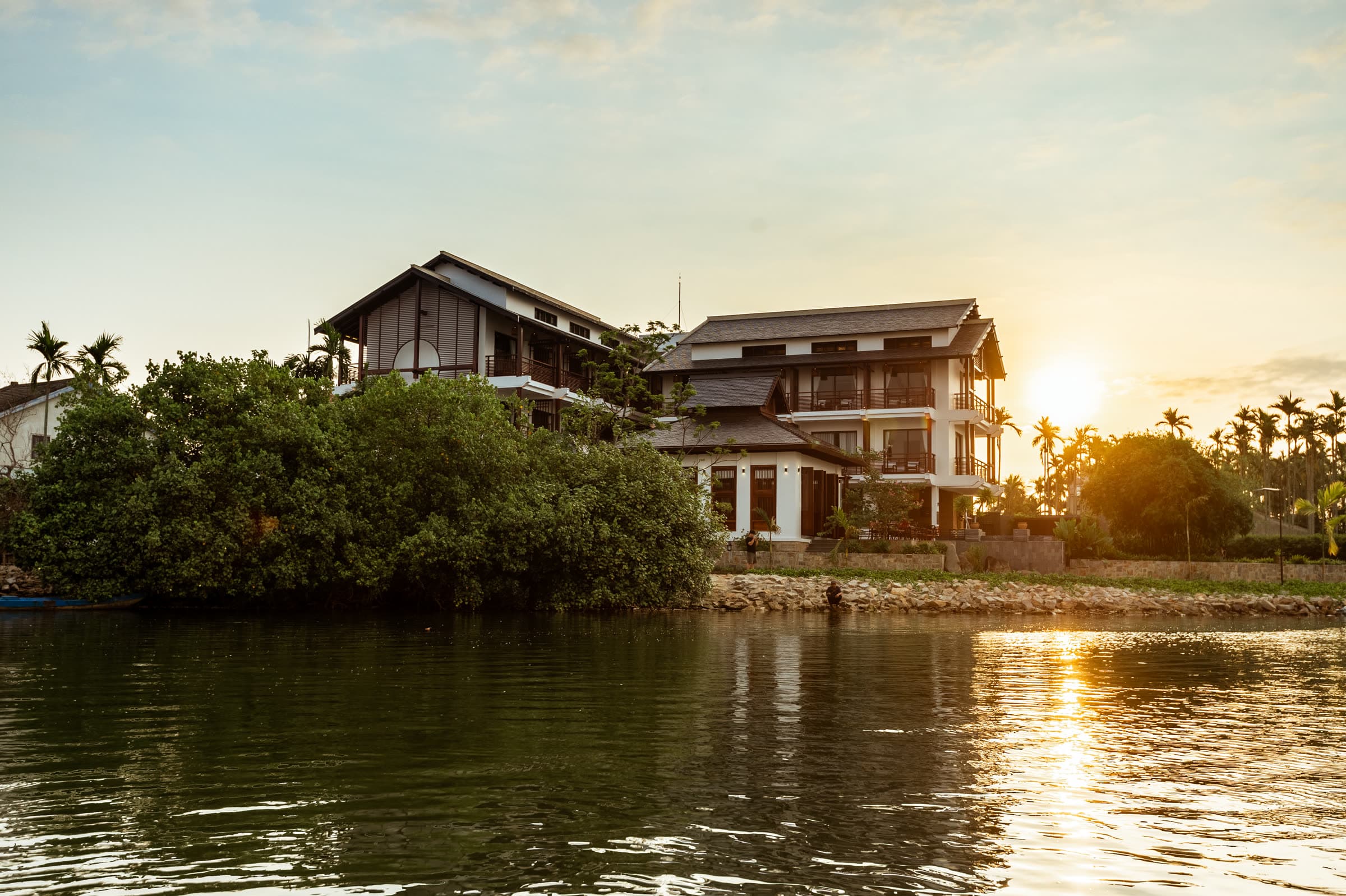
As a riverside house on the Thu Bồn, what we notice is how unspectacular and how genuine the day is. There is no parade to photograph and no race on the river. There is a market in the cool early hours, the smell of ash cakes and fermented rice, families carrying duck and fruit home, and then a quiet noon. For a guest, the way to experience it is to lean into that: be at the market early, taste the cơm rượu and a square of bánh ú tro, and let the rest of the day be slow and warm. It is the festival in its true register.
Tết Đoan Ngọ and the Rest of the Vietnamese Festival Year
Tết Đoan Ngọ is one beat in a full year of Vietnamese festivals, many of them more visible to travellers — the lantern evenings, Mid-Autumn, the river-goddess and whale-worship rites of the central coast. If you are planning around the calendar, our 12-month Vietnamese festival calendar places Đoan Ngọ in context, and our Bà Thu Bồn river-goddess festival guide covers the major river festival of our own stretch of the Thu Bồn. Knowing where Đoan Ngọ sits — a quiet, food-led day rather than a spectacle — is the thing most English itineraries get wrong.
Planning a trip around this? See dates at our quiet riverside hotel on the Thu Bồn. Check availability →
Frequently Asked Questions
What is Tết Đoan Ngọ?
Tết Đoan Ngọ is Vietnam's mid-year festival on the 5th day of the 5th lunar month — Friday, 19 June 2026. Also called Tết diệt sâu bọ ("the festival to kill the pests"), it is a domestic cleansing day centred on fermented sticky rice and sour seasonal fruit, with a noon offering to ancestors.
Why do Vietnamese people eat rượu nếp on Tết Đoan Ngọ?
Cơm rượu / rượu nếp — fermented glutinous rice — is eaten first thing in the morning because tradition holds that its sweetness and light alcohol "intoxicate" and drive out the pests believed to live in the body, cleansing it for the second half of the year.
What foods are eaten on Tết Đoan Ngọ?
Cơm rượu / rượu nếp (fermented sticky rice), sour seasonal fruit such as lychee and plum, and bánh tro / bánh ú tro (ash-water sticky-rice cakes). In central Vietnam, duck (thịt vịt) and millet sweet soup (chè kê) are also common.
Is Tết Đoan Ngọ a public holiday in Vietnam?
No. It is a traditional festival widely observed at home and in markets, but it is not an official public holiday, so offices, shops and businesses operate normally.
How is Tết Đoan Ngọ different in central Vietnam?
Central Vietnam presses cơm rượu into firm squares or balls with a stronger ferment, and adds duck (thịt vịt) and millet sweet soup (chè kê) to the day — regional markers you will find in Hội An's markets that differ from the softer northern version.
Does Tết Đoan Ngọ involve dragon boats?
No. Despite sharing its date with China's Dragon Boat Festival, the Vietnamese day has no dragon-boat racing. It is a food-centred home festival; boat racing in Vietnam happens separately, mostly around National Day on 2 September.
This guide synthesises Vietnamese-language coverage of Tết Đoan Ngọ — the verified 2026 date, the Đôi Truân "pest-killing" origin, and the central-Vietnam customs (pressed cơm rượu, thịt vịt, chè kê, bánh ú tro) drawn from VietnamNet, the Vietnamese reference encyclopaedia and Vietnamese food press — for an English readership. The hotel-side contribution is first-hand observation of how the day looks in Hội An's markets, written from a riverside vantage on the Thu Bồn.
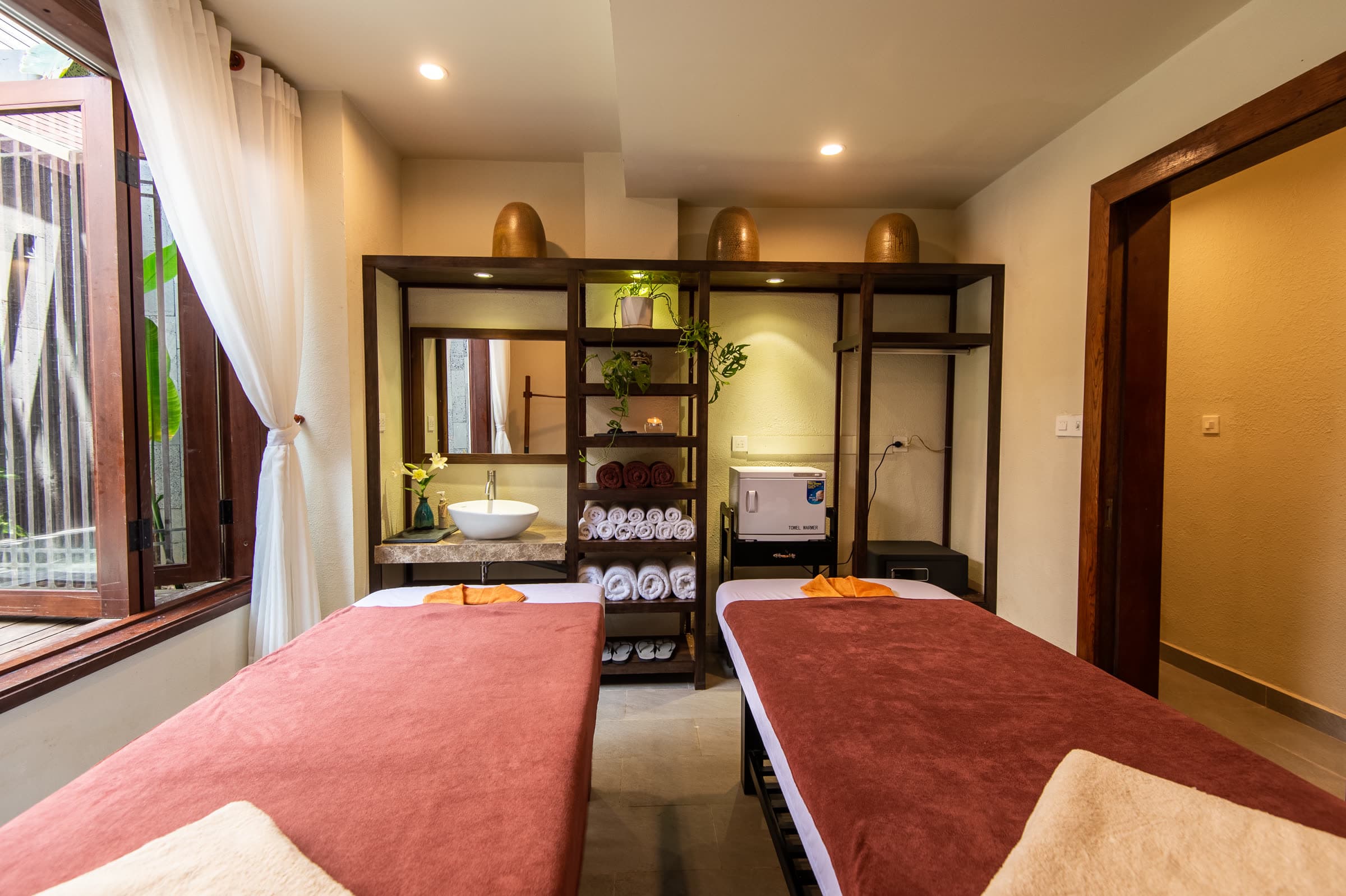
Every room at Nghê Prana is designed around the science of sleep. Blackout curtains, nightly aromatherapy turndown, and riverside quiet — experience what real rest feels like.
Riverside hotel rooms on the Thu Bồn, ten minutes by bicycle from the Ancient Town. Whether it's one night between Hue and Da Nang or a full week of doing nothing — we kept your room quiet.
Free cancellation · Direct from the family who built the hotel


 WhatsApp
 Zalo
Zalo