Vu Lan Festival Hội An 2026: Vietnam's Day of Filial Gratitude (Rằm tháng Bảy)
Westerners misread the seventh lunar month as the Chinese "Hungry Ghost Festival." In Vietnam its heart is Lễ Vu Lan báo hiếu — the Buddhist day of honouring and repaying the debt to one's parents, on Rằm tháng Bảy (Thursday 27 August 2026). This guide, synthesised from Vietnamese Buddhist and heritage sources, explains the Mục Kiền Liên legend, the pinned-rose custom (bông hồng cài áo), the honest difference from the Hungry Ghost Festival, and how Vu Lan is lived in Hội An — pagoda services, vegetarian food, and floating lanterns on the Thu Bồn.
Every year in the seventh lunar month, foreign visitors to Vietnam see incense smoke thicken outside the pagodas, paper offerings burning on the pavements, and small candle-lanterns drifting down the river after dark — and reach for the label they know: the Chinese "Hungry Ghost Festival." That reading is not wrong so much as it misses the point. In Vietnam the emotional centre of this month is not fear of wandering ghosts; it is Lễ Vu Lan báo hiếu — the Buddhist festival of honouring and repaying the debt we owe our parents, living and dead. In Hội An, where the Thu Bồn river carries floating lanterns past the Old Town on this same night, it is one of the most quietly moving times of the year. This guide, synthesised from Vietnamese Buddhist and heritage sources, tells the story English travel writing almost never does.
TL;DR — Lễ Vu Lan (Vu Lan báo hiếu) falls on Rằm tháng Bảy — the 15th day of the 7th lunar month, which in 2026 is Thursday, 27 August 2026. It is Vietnam's Buddhist day of filial gratitude, rooted in the legend of the monk Mục Kiền Liên (Maudgalyāyana) saving his mother from suffering. People wear a pinned rose — bông hồng cài áo, red if their mother is living, white if she has passed — visit pagodas, eat vegetarian (ăn chay), make offerings to ancestors and to wandering souls, release birds and fish (phóng sinh), and float candle-lanterns (thả hoa đăng) on the river for the departed. In Hội An you can experience all of this within a short ride of the quiet Cẩm Nam riverside.
When is Vu Lan in 2026?
Vu Lan is a fixed lunar date: it always falls on Rằm tháng Bảy, the full-moon 15th day of the seventh lunar month. It does not drift within the lunar calendar, though its Gregorian date shifts each year. In 2026 the conversion is settled and can be stated with confidence: Vu Lan falls on Thursday, 27 August 2026. The eve — the 14th of the lunar month, which is also Hội An's monthly lantern night — falls on Wednesday, 26 August 2026.
Occasion
Lunar date
Gregorian 2026
Eve / Hội An lantern night
14 tháng Bảy
Wednesday 26 August 2026
Lễ Vu Lan (Rằm tháng Bảy)
15 tháng Bảy
Thursday 27 August 2026
A note on the wider month: Vietnamese tradition treats the whole seventh lunar month as tháng cô hồn (the "month of wandering souls"), and observances build across it. Vu Lan on the 15th is its spiritual peak — the day devotion turns from appeasing wandering spirits to honouring one's own parents and ancestors.
What is Vu Lan, really? Báo hiếu and the legend of Mục Kiền Liên
The Vietnamese name says it plainly: Vu Lan báo hiếu. Vu Lan is the Vietnamese rendering of the Sanskrit Ullambana; báo hiếu means "to repay filial debt." The festival is, above all, a day to acknowledge and repay the immense debt of gratitude a child owes to their parents — a Confucian value carried inside a Buddhist observance.
Its origin is the story of Mục Kiền Liên (Maudgalyāyana), one of the Buddha's chief disciples. In the legend, Mục Kiền Liên uses his spiritual power to search the realms of rebirth for his late mother and finds her suffering as a hungry ghost, unable to eat. The Buddha tells him that no single person can free her; instead, on the full moon of the seventh month — when the monastic community completes its rains-retreat — he should make offerings to the assembled monks and dedicate the merit to her. He does, and his mother is released. From that act comes the festival: a day when merit made and offerings given are dedicated to one's parents, in this life and past ones.
A woman prays amid incense smoke at a Vietnamese Buddhist temple — the quiet devotion at the heart of Lễ Vu Lan. (Illustrative; photographed in Vietnam, not at a Hội An pagoda.) · Một người phụ nữ khấn nguyện trong làn khói hương tại một ngôi chùa Việt Nam — lòng thành kính của mùa Vu Lan.
The rose you wear: bông hồng cài áo
The most visible Vu Lan custom is also the most tender. At pagoda ceremonies, volunteers pin a rose to each visitor's shirt: a red rose if your mother is still living, a white rose if she has passed away. To wear white is to be reminded, gently and publicly, of a loss; to wear red is to be reminded how fortunate you still are. Many people quietly weep as the flower is pinned.
The custom was popularised by the Zen master Thiền sư Thích Nhất Hạnh, whose 1962 essay "Bông hồng cài áo" ("A Rose for Your Pocket") gave it its enduring form in Vietnam. As he wrote of the flower and the mother behind it:
"Nếu anh còn mẹ, anh sẽ được cài một bông hoa màu hồng trên áo… Nếu anh mất mẹ, anh sẽ được cài trên áo một bông hoa trắng."
"If you still have your mother, you will wear a red rose on your shirt… If you have lost your mother, you will wear a white rose." — Thích Nhất Hạnh, Bông hồng cài áo (1962)
A white rose. In the custom of bông hồng cài áo, a white rose is pinned on those whose mother has died, a red rose on those whose mother still lives. · Một bông hồng trắng — trong lễ bông hồng cài áo, hoa trắng dành cho người đã mất mẹ.
Vu Lan vs the Hungry Ghost Festival: the honest difference
Both observances share the same full-moon date and the same Buddhist roots, and in Vietnam they genuinely overlap — the same household may both honour its ancestors and set out an offering for wandering souls. But the emphasis differs, and that difference is the story worth telling.
The Chinese-influenced Hungry Ghost Festival centres on the spirits of the dead who have no descendants to care for them: the cô hồn who roam during the open gates of the seventh month. The Vietnamese cúng cô hồn / cúng chúng sinh — offerings of rice, salt, popped rice and small money left out for these wandering souls — belongs to that stream. Vu Lan báo hiếu, by contrast, points inward and upward: toward your own parents and ancestors, and toward the merit you can make on their behalf. In Vietnam the day is remembered less for its ghosts than for its gratitude. Conflating the two flattens exactly what makes the Vietnamese observance distinctive.
How is Vu Lan observed in Hội An?
Hội An keeps Vu Lan in a way that suits the town: devout but unshowy, and inseparable from the river. Here is what the day looks like on the ground.
Pagoda ceremonies. Hội An's Buddhist pagodas hold Vu Lan services — chanting, the bông hồng cài áo rose-pinning, and merit dedicated to parents and ancestors. The town's historic temples include Chùa Chúc Thánh (the ancestral temple of the Chúc Thánh Zen lineage, founded in the late 17th century), Chùa Pháp Bảo, and Chùa Vạn Đức. Service times are set locally each year; ask at the pagoda gate or your host the day before.
Monks in a prayer ceremony at a Vietnamese temple — the form a Vu Lan pagoda service takes. (Illustrative; photographed in Vietnam, not at a named Hội An pagoda.) · Chư tăng trong một khóa lễ tại chùa ở Việt Nam — hình dung một khóa lễ Vu Lan.
Vegetarian food (ăn chay). On Rằm tháng Bảy many people eat only vegetarian food as an act of compassion and merit. Hội An's cơm chay eateries and market stalls turn out the day's dishes — braised tofu, mushroom and vegetable soups, lotus-seed sweets — and even non-Buddhists often go meat-free for the day.
Floating lanterns on the river (thả hoa đăng). Because Vu Lan's eve is also Hội An's lantern night, the Thu Bồn and the Hoài river fill with drifting candle-lanterns. On Vu Lan the gesture carries a specific meaning: each hoa đăng released on the water is a prayer and a light sent to the departed. It is the same beautiful ritual visitors know from the lantern festival, given a deeper reason.
Planning a trip around this? See dates at our quiet riverside hotel on the Thu Bồn. Check availability →
Floating candle-lanterns (hoa đăng) set on the water — on Vu Lan, each is released as a light for the departed. (Illustrative; not photographed on the Thu Bồn.) · Thả hoa đăng trên mặt nước — dịp Vu Lan, mỗi ngọn đăng là một lời cầu cho người đã khuất.
Phóng sinh (releasing life). In the days around Vu Lan you will see people buying caged birds or bowls of fish and releasing them — phóng sinh, the act of freeing captive creatures to accrue merit and compassion. Along the Thu Bồn, small fish are often released back into the river.
How to experience Vu Lan respectfully as a visitor
Vu Lan is a religious observance, not a spectacle staged for tourists — which is exactly why it rewards a respectful visitor. A few notes:
Dress modestly at pagodas (shoulders and knees covered), keep your voice low during chanting, and ask before photographing people at prayer or the moment a rose is pinned. If a volunteer offers to pin a rose on you, accept it gently — wearing a red or white rose is a way of honouring your own mother, and visitors are warmly included. If you eat out, going vegetarian for the day is an easy, welcomed gesture. And if you float a hoa đăng on the river, take a moment to release it for someone rather than only for the photograph — that is the whole point of the night.
Where to stay: the quiet river side of Vu Lan
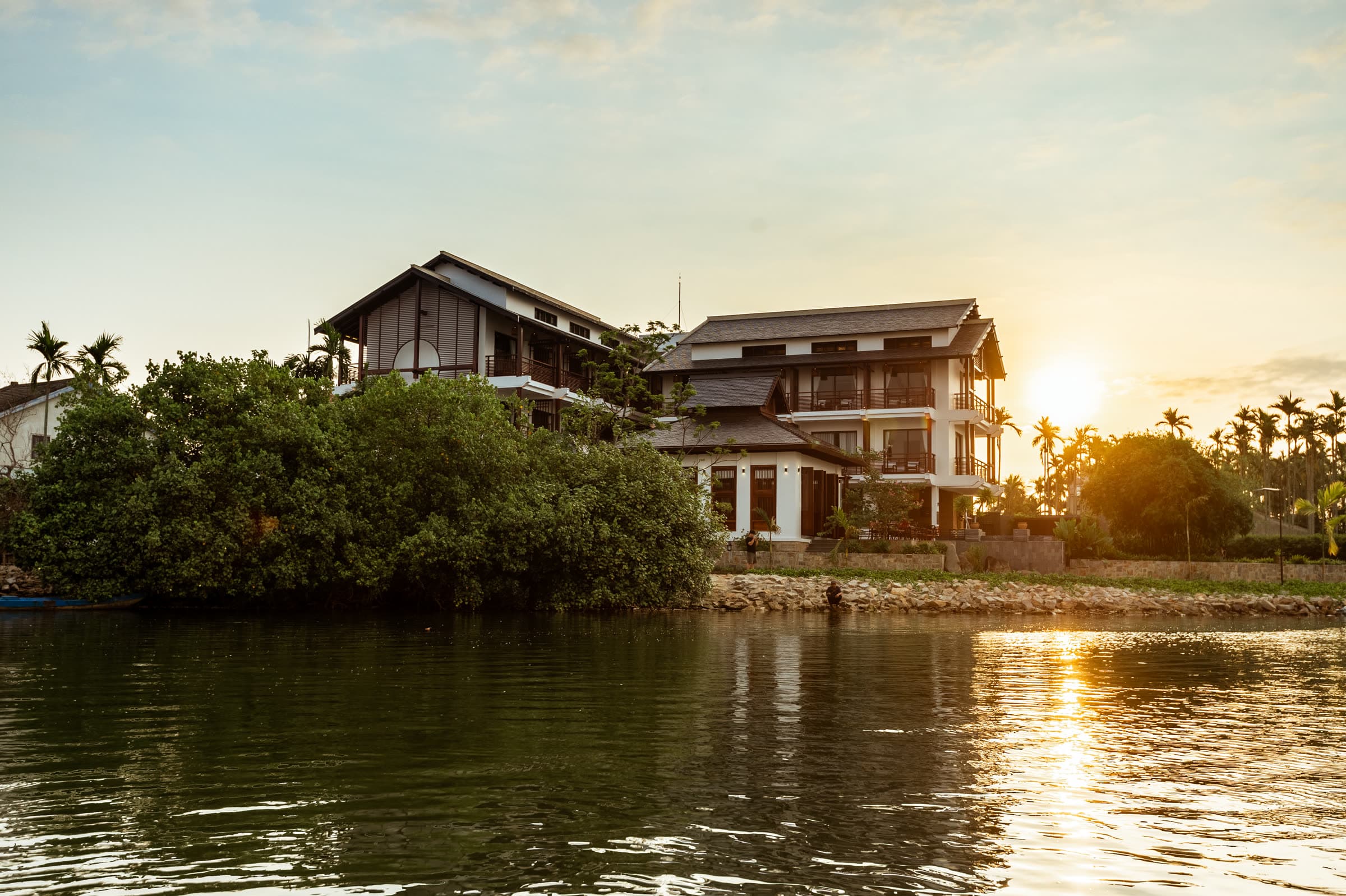
Vu Lan in Hội An is best felt from the water's edge, a little apart from the crush of the pedestrian Old Town. Nghê Prana is a riverside hotel on the Thu Bồn, on the calm Cẩm Nam side of Hội An — close enough that the lantern-lit river and the Old Town pagodas are a short ride or cycle away, quiet enough that you come back to still water and birdsong rather than to the centre of the crowd. It is an easy base for a night that is meant to be reflective. See our rooms for the riverside layout, and our Hội An Lantern Festival guide for how the monthly lantern night — including Vu Lan's eve — actually works.
Frequently Asked Questions
When is Vu Lan in 2026?
Lễ Vu Lan (Vu Lan báo hiếu) falls on Rằm tháng Bảy — the 15th day of the 7th lunar month — which in 2026 is Thursday, 27 August 2026. The eve, the 14th of the lunar month and Hội An's monthly lantern night, is Wednesday, 26 August 2026. The date is fixed to the lunar calendar, so it is knowable well in advance.
What is the Vu Lan festival?
It is Vietnam's Buddhist festival of filial gratitude — Vu Lan báo hiếu, "repaying the debt to one's parents." Rooted in the legend of the monk Mục Kiền Liên (Maudgalyāyana) saving his mother from suffering, it is a day to honour and make merit for one's parents and ancestors, living and deceased.
What does the rose mean at Vu Lan?
It is the custom of bông hồng cài áo: a rose is pinned to your shirt at pagoda ceremonies — red if your mother is still living, white if she has passed away. The custom was popularised by the Zen master Thích Nhất Hạnh in his 1962 essay Bông hồng cài áo.
Is Vu Lan the same as the Hungry Ghost Festival?
They share the same full-moon date and Buddhist roots and overlap in practice, but the emphasis differs. The Hungry Ghost Festival centres on offerings to wandering souls (cúng cô hồn); Vu Lan báo hiếu centres on honouring and repaying the debt to one's own parents and ancestors. In Vietnam the day is remembered chiefly for gratitude, not ghosts.
What do people eat on Vu Lan?
Many people eat vegetarian (ăn chay) on Rằm tháng Bảy as an act of compassion and merit — braised tofu, mushroom and vegetable dishes, vegetarian soups and lotus-seed sweets. In Hội An, cơm chay eateries and market stalls prepare the day's vegetarian food.
Can visitors attend a Vu Lan ceremony at a pagoda in Hội An?
Yes. Hội An's Buddhist pagodas — such as Chùa Chúc Thánh, Chùa Pháp Bảo and Chùa Vạn Đức — hold Vu Lan services, and respectful visitors are welcome. Dress modestly, keep quiet during chanting, ask before photographing people at prayer, and accept a pinned rose if it is offered. Confirm the exact service time at the pagoda or with your host the day before.
This article synthesises Vietnamese-language coverage of Lễ Vu Lan báo hiếu from the Giáo hội Phật giáo Việt Nam / Báo Giác Ngộ, Báo Nhân Dân, Báo Quảng Nam, the Hội An heritage-conservation centre and vietnam.vn, cross-checked against the fixed lunar anchor for 2026 (Rằm tháng Bảy = 15 tháng Bảy, placing Vu Lan on Thursday 27 August 2026). The hotel-side contribution is the verified lunar-to-Gregorian conversion and the first-hand account of how the seventh-month lantern night and pagoda observance are lived from the Cẩm Nam riverside on the Thu Bồn.
Lễ Vu Lan (Vu Lan báo hiếu) falls on Rằm tháng Bảy — the 15th day of the 7th lunar month — which in 2026 is Thursday, 27 August 2026. The eve, the 14th of the lunar month and Hội An's monthly lantern night, is Wednesday, 26 August 2026. The date is fixed to the lunar calendar, so it is knowable well in advance.
What is the Vu Lan festival?
It is Vietnam's Buddhist festival of filial gratitude — Vu Lan báo hiếu, "repaying the debt to one's parents." Rooted in the legend of the monk Mục Kiền Liên (Maudgalyāyana) saving his mother from suffering, it is a day to honour and make merit for one's parents and ancestors, living and deceased.
What does the rose mean at Vu Lan?
It is the custom of bông hồng cài áo: a rose is pinned to your shirt at pagoda ceremonies — red if your mother is still living, white if she has passed away. The custom was popularised by the Zen master Thích Nhất Hạnh in his 1962 essay Bông hồng cài áo.
Is Vu Lan the same as the Hungry Ghost Festival?
They share the same full-moon date and Buddhist roots and overlap in practice, but the emphasis differs. The Hungry Ghost Festival centres on offerings to wandering souls (cúng cô hồn); Vu Lan báo hiếu centres on honouring and repaying the debt to one's own parents and ancestors. In Vietnam the day is remembered chiefly for gratitude, not ghosts.
What do people eat on Vu Lan?
Many people eat vegetarian (ăn chay) on Rằm tháng Bảy as an act of compassion and merit — braised tofu, mushroom and vegetable dishes, vegetarian soups and lotus-seed sweets. In Hội An, cơm chay eateries and market stalls prepare the day's vegetarian food.
Can visitors attend a Vu Lan ceremony at a pagoda in Hội An?
Yes. Hội An's Buddhist pagodas — such as Chùa Chúc Thánh, Chùa Pháp Bảo and Chùa Vạn Đức — hold Vu Lan services, and respectful visitors are welcome. Dress modestly, keep quiet during chanting, ask before photographing people at prayer, and accept a pinned rose if it is offered. Confirm the exact service time at the pagoda or with your host the day before.
References & Sources
Giáo hội Phật giáo Việt Nam (2024). Vu Lan báo hiếu — nguồn gốc và ý nghĩa mùa báo hiếu. phatgiao.org.vn. View source
Báo Giác Ngộ (2023). Sự tích Bồ tát Mục Kiền Liên và lễ Vu Lan báo hiếu. giacngo.vn. View source
Thích Nhất Hạnh (1962). Bông hồng cài áo. Lá Bối.
Báo Nhân Dân (2024). Lễ Vu Lan báo hiếu — nét đẹp văn hóa hiếu đạo của người Việt. nhandan.vn. View source
Báo Quảng Nam (2024). Mùa Vu Lan báo hiếu ở Hội An và các chùa xứ Quảng. baoquangnam.vn. View source
Trung tâm Quản lý Bảo tồn Di sản Văn hóa Hội An (2023). Đêm rằm phố cổ và tục thả hoa đăng trên sông Hoài. hoianheritage.net. View source
vietnam.vn (2026). Lễ Vu Lan 2026 vào ngày nào dương lịch? Rằm tháng Bảy 27/8/2026. vietnam.vn. View source
Báo Đà Nẵng (2024). Vu Lan báo hiếu — mùa của lòng biết ơn. baodanang.vn. View source
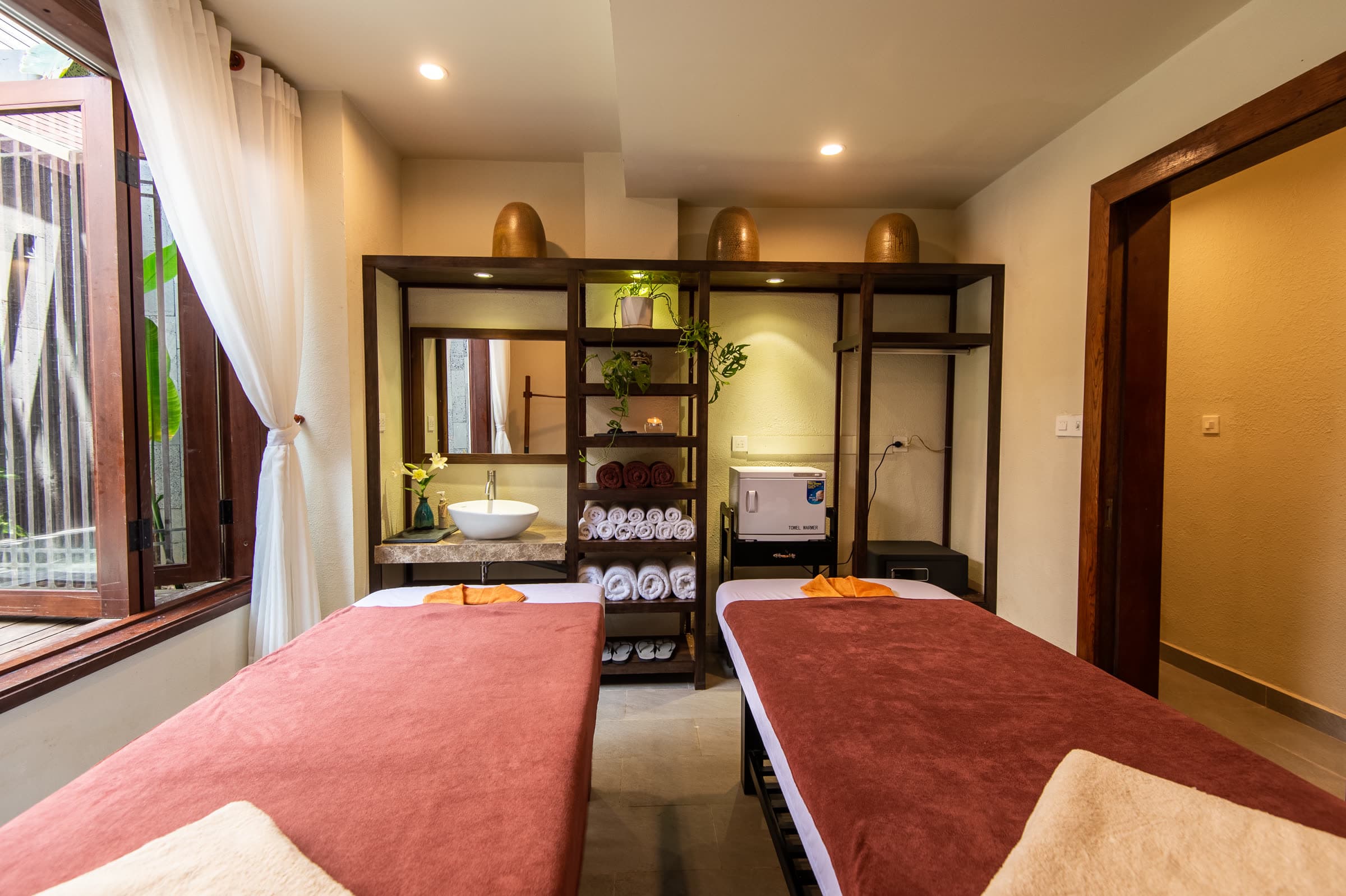
Every room at Nghê Prana is designed around the science of sleep. Blackout curtains, nightly aromatherapy turndown, and riverside quiet — experience what real rest feels like.
Riverside hotel rooms on the Thu Bồn, ten minutes by bicycle from the Ancient Town. Whether it's one night between Hue and Da Nang or a full week of doing nothing — we kept your room quiet.
Free cancellation · Direct from the family who built the hotel


 WhatsApp
 Zalo
Zalo