
travel
호이안 랜턴 나이트 로맨틱: 커플을 위한 보름달 축제 가이드 (Đêm Rằm Phố Cổ)
호이안의 랜턴 나이트를 둘만의 온전한 로맨틱 하루로 바꾸는 법 — 강가에서 느긋하게 보내는 아침, 오후의 커플 스파, Thu Bồn 강 위로 지는 노을, 함께 촛불 등불 하나를 강물에 띄우기, 그리고 조용한 팜 투 테이블 저녁 식사. 검증된 2026년과 2027년 축제 날짜와 함께.
Jul 1, 20269 minRead Article

해마다 4월이면 땀끼 인근 흐엉짜 마을의 스어 나무가 약 2주간 황금빛으로 핍니다. 이 나무가 실제로 무엇인지(배롱나무도, 자단도 아닙니다), 아홉 그루의 베트남 유산수, 2026년 축제 날짜, 솔직한 개화 시기, 그리고 호이안에서 보러 가는 법.
사실 확인 · 다음 점검
해마다 4월이면 약 2주 동안 흐엉짜 마을의 스어 나무들이 잎을 모두 떨구고 한꺼번에 꽃을 피워, 땀끼 외곽의 몇몇 거리를 통째로 황금빛으로 바꿉니다. 그러고 나서 꽃잎이 떨어지면 그 거리가 발밑에서 한 번 더 황금빛이 됩니다. 그중 아홉 그루는 베트남 유산수로 보호받고 있습니다. 2017년부터는 이 개화를 중심으로 한 축제도 열립니다. 그리고 이곳을 다룬 영어권 페이지는 거의 예외 없이 나무를 잘못 짚습니다.
요약 — 흐엉짜의 스어 시즌은 대략 4월 초에서 중순까지, 약 2주간 이어지며 날씨에 좌우됩니다. 꽃은 축제 일정을 기다려 주지 않습니다. 2026년 축제 "Sắc sưa Hương Trà – Đà Nẵng"은 2026년 4월 24~26일에 25개가 넘는 프로그램으로 열렸습니다. 2027년 날짜는 아직 공개되지 않았고, 보통 2월이나 3월에 나옵니다. 흐엉짜는 호이안에서 남쪽으로 약 55km, 차로 한 시간 남짓 거리입니다. 이곳의 스어 아홉 그루는 2024년 4월 5일에 Cây Di sản Việt Nam(베트남 유산수)으로 인정받았습니다.
이것은 깐깐한 각주 이상의 문제입니다. 이곳에 관해 영어권에서 가장 자주 반복되는 오류이기 때문입니다.
땀끼 개화를 다룬 여러 영어 페이지는 베트남어 기사를 기계 번역한 것이고, sưa를 crape myrtle(배롱나무)로 옮깁니다. 배롱나무는 Lagerstroemia 속이고 베트남어로는 bằng lăng이며, 중부 베트남에서는 여름에 보라색으로 핍니다. 이 나무도 아니고 이 계절도 아닙니다.
두 번째 오류는 더 미묘해서, 비교적 잘 아는 글에도 등장합니다. 베트남에서 sưa는 한 종만 가리키지 않습니다. 북부의 sưa đỏ는 Dalbergia tonkinensis로, 한 그루만 도난당해도 기사가 나는 값비싼 자단입니다. 그 꽃은 흰색입니다.
흐엉짜를 황금빛으로 물들이는 나무는 둘 중 어느 쪽도 아닙니다. *Pterocarpus indicus* Willd.이며, 베트남어로 giáng hương ấn, 현지에서는 노란 스어라는 뜻의 sưa vàng이라 부릅니다. 콩과(Fabaceae)에 속하고, 꽃은 옅은 향이 나는 선명한 노란색입니다. 땀끼의 노란 꽃이 Dalbergia tonkinensis라고 적은 페이지가 있다면, 서로 다른 두 나무를 뒤섞은 것입니다.

2024년 4월 5일, 흐엉짜의 오래된 스어 아홉 그루가 베트남 자연환경보호협회로부터 Cây Di sản Việt Nam(베트남 유산수)으로 공식 인정받았습니다. 이 인정에 관한 베트남 보도는 나무의 수령을 대략 100~150년으로 전합니다.
일부 글에서는 "200년이 넘는다"는 표현이 반복됩니다. 2024년 인정 절차에 가까운 자료들은 이를 뒷받침하지 않습니다. 저희는 인정 문서와 당시 베트남 언론이 제시한 수치를 따랐습니다.
Cây Di sản 제도는 그 자체로 이해할 가치가 있습니다. 오래되었거나 문화적으로 의미 있는 개별 나무에 공식 보호 지위를 부여하는 국가 등록제이며, 불법 벌목 문제가 실재하는 나라에서 이는 형식적인 제스처가 아닙니다. 흐엉짜의 숲은 그 목록에서 가장 사진이 잘 나오는 항목 중 하나입니다.
2025년까지 이 행사는 꽝남성 땀끼시의 행사였고, 영어권 색인은 여전히 그렇게 설명합니다. 그런 형태로는 더 이상 존재하지 않는 성(省)을 두고 말입니다.
2025년 꽝남성은 다낭시에 통합되었습니다. 땀끼의 행정구역이 재편되면서 이 마을은 현재 다낭시 흐엉짜방(坊)에 속합니다. 축제 이름도 그에 맞춰 바뀌었습니다. 지금은 공식적으로 "Sắc sưa Hương Trà – Đà Nẵng"이며, 시가 프로그램을 발표할 때 쓰는 이름도 이것입니다.
실용적으로는 이렇습니다. 베트남어로 검색할 때 Tam Kỳ mùa hoa sưa가 아니라 lễ hội Sắc sưa Hương Trà로 찾고, 옛 영어 페이지들이 아직 가리키는 꽝남성 사이트가 아니라 danang.gov.vn을 확인하십시오.
어떤 영어 페이지도 알려 주지 않는 부분이자, 여행의 성패를 가르는 부분입니다.
축제는 주말이 정해진 시의 프로그램입니다. 개화는 날씨에만 응답하는 생물학적 사건입니다. 평년에는 둘이 겹칩니다. 하지만 늘 맞아떨어지지는 않으며, 여러분이 온 이유는 꽃입니다.
중부 베트남의 스어는 보통 4월 초에서 중순에 피고, 처음 벌어질 때부터 마지막 꽃잎이 질 때까지 약 2주를 갑니다. 덥고 건조한 시기가 이어지면 개화가 앞당겨지고, 4월 초가 궂고 비가 잦으면 뒤로 밀리거나 듬성듬성해집니다. 2026년 축제는 4월 24~26일에 열렸는데, 이는 통상적인 개화의 끝자락입니다. 그 주말에 온 일부 방문객은 머리 위의 꽃 지붕이 아니라 바닥의 꽃 카펫을 보았다는 뜻입니다.
약속이 아니라 솔직한 판단 기준입니다.
꽃을 원하신다면 4월 둘째 주를 노리고, 급하게 며칠 일정을 옮길 각오를 하십시오. 며칠 전부터 현지에 물어보십시오. 흐엉짜의 베트남어 페이스북 페이지들이 개화 사진을 거의 실시간으로 올리는데, 공개된 어떤 예보보다 훨씬 나은 신호입니다.
축제를 원하신다면 프로그램이 있는 주말에 가시고 꽃은 덤으로 여기십시오. 바이쪼이 민요, 배 경주, 나무 아래의 2인용 자전거, 아오자이 공연, 트레일 러닝, 먹거리 장터가 있습니다. 연출된 행사가 아니라 진짜 지역 축제입니다.
둘 다 원하신다면 둘이 겹치는 해와 약간의 운이 필요합니다. 그렇지 않다고 말하는 사람은 무언가를 팔고 있는 겁니다.
2026년 행사는 4월 24~26일 흐엉짜 생태 마을에서 열렸고, 시가 발표한 프로그램은 25개가 넘었습니다. 최근 몇 해 반복된 요소로는 꽃 위를 나는 열기구, 가로수 길의 2인용 자전거, 트레일 러닝, 바이쪼이 민요, 땀끼강에서의 배 경주, 아오자이 공연, 야시장이 있습니다.
2027년: 집필 시점에 날짜가 발표되지 않았습니다. 최근 흐름으로 보면 4월 말 주말을 두고 2027년 2월이나 3월에 공개될 것입니다. 발표되면 이 페이지를 갱신하겠습니다.
이 일정으로 여행을 계획 중이신가요? 투본 강가의 조용한 리버사이드 호텔 예약 가능 날짜를 확인하세요. 예약 가능 여부 확인 →
흐엉짜는 호이안에서 남쪽으로 약 55km 떨어져 있습니다. 내륙 길과 해안 길 중 어느 쪽을 타느냐에 따라 차로 한 시간에서 한 시간 십오 분 정도입니다.
자동차. 가장 간단한 선택이며, 개화 시기를 쫓으면서 하루를 유연하게 두고 싶다면 이 편이 낫습니다. 프런트에서 차량을 준비해 드릴 수 있고, 남쪽으로 내려가는 길은 운전하기 쉽습니다. 편도가 아니라 돌아올 시간까지 정해 두십시오. 흐엉짜는 교통 요지가 아니라 마을이기 때문입니다.
오토바이. 운전에 자신 있는 분께는 현실적이고, 해안 도로가 정말 기분 좋습니다. 땀끼에서 내륙으로 꺾기 전까지 대부분 바다를 끼고 달립니다.
자전거. 체력이 좋은 분만. 4월 더위에 편도 55km는 만만치 않은 하루이고, 그늘 없는 구간이 깁니다. 종이 위에서는 매력적이지만 실제로는 고됩니다.
4월은 중부 베트남 달력에서 가성비가 가장 좋은 보름이고, 스어 개화는 동시에 벌어지는 세 가지 중 하나일 뿐입니다.
참섬(꿀라오짬)이 다시 열립니다. 겨울 너울이 잦아들고 바다가 잔잔해지면서 섬으로 가는 배편이 본격적으로 재개되고, 4월은 그곳 물이 가장 맑은 달에 속합니다. 참섬 당일치기 안내를 보십시오.
꽌 테 엄 축제가 같은 시기에 호이안과 다낭 사이 오행산에서 열립니다. 북쪽으로 가는 길목에 있는 큰 불교 축제입니다.
날씨가 바뀝니다. 4월은 6월의 본격적인 더위 이전, 호이안의 건조하고 밝은 시기에 놓여 있습니다. 달별로 읽고 싶으시면 호이안 방문 적기 안내를 보십시오.
셋을 엮으면 한 주가 아주 강해집니다. 맑은 날엔 섬, 하루는 남쪽으로 내려가 꽃, 그리고 공항 가는 길에 오행산.
일찍 가십시오. 꽃에 드는 빛은 아홉 시 전이 가장 좋고, 마을 길도 그때가 한적합니다. 축제 주말의 늦은 오전이면 이미 붐빕니다.
사람이 사는 마을입니다. 나무들은 평범한 주택가 길가, 남의 집 앞에 서 있습니다. 나무를 찍되 남의 대문 안쪽을 찍지는 마십시오.
현금을 챙기십시오. 마을 노점과 축제 장터는 현금으로 돌아갑니다.
입장권이 필요한 것은 없습니다. 개화는 무료이고 공개되어 있습니다. 축제 프로그램도 입장은 무료이며, 개별 활동은 유료일 수 있습니다.
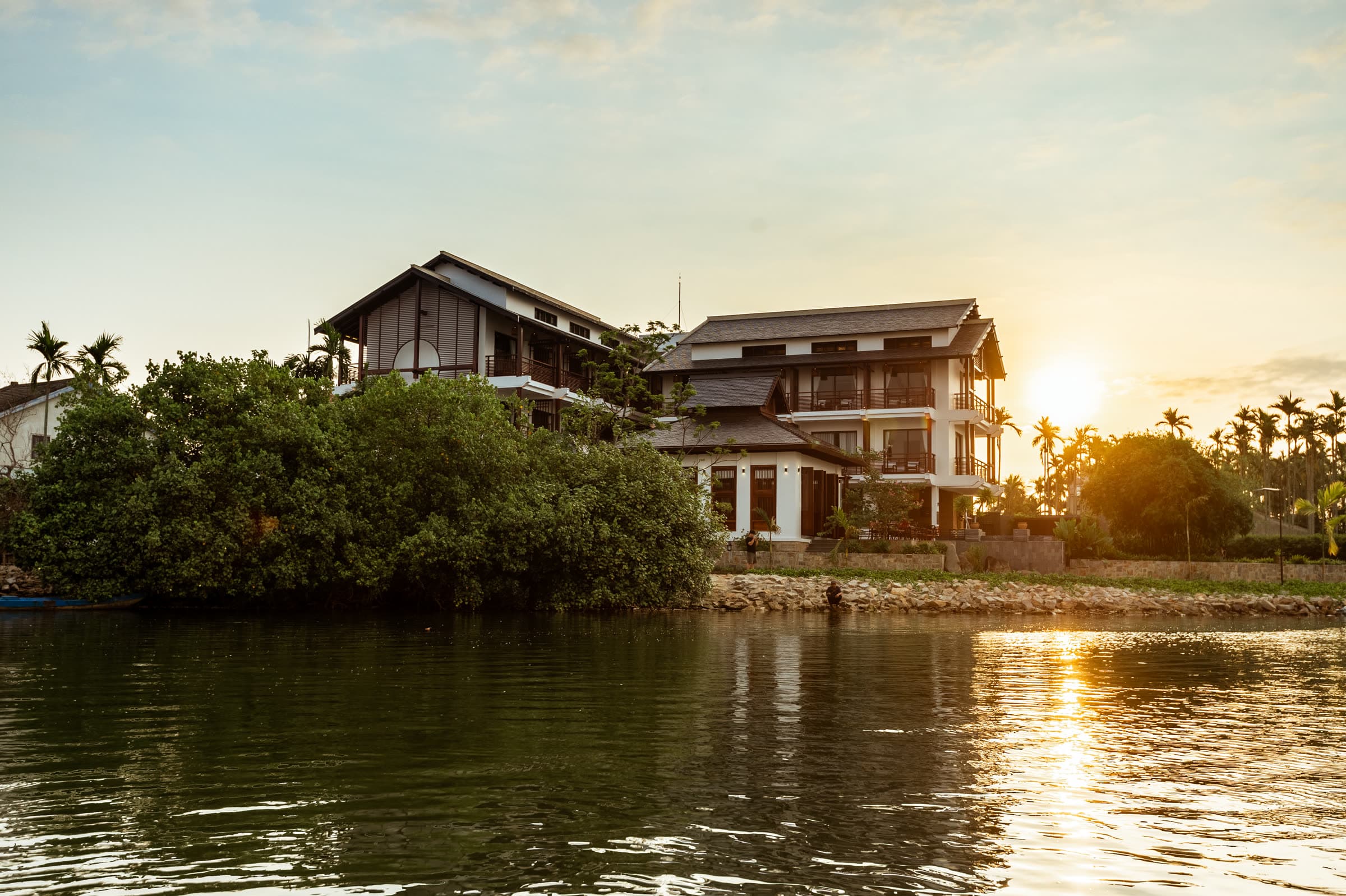
저희는 투본강가에 있는 호이안의 강변 호텔이고, 그 나무들에서 북쪽으로 한 시간 거리입니다. 흐엉짜로 가는 투어를 운영하지 않으며, 이곳이 저희 문 앞이라고 꾸미지도 않습니다. 저희가 할 수 있는 일은 차량을 마련해 드리고, 전주에 꽃이 실제로 피었는지 솔직히 알려 드리고, 가장 먼저 소식을 전하는 베트남어 출처를 짚어 드리는 것입니다.
4월 숙박을 계획하시면서 개화를 넣고 싶으시다면 예약하실 때 말씀해 주십시오. 저희가 대신 지켜보겠습니다.
Continue at Nghê Prana
Ready to Sleep Better?
Every room at Nghê Prana is designed around the science of sleep. Blackout curtains, nightly aromatherapy turndown, and riverside quiet — experience what real rest feels like.
View Our Rooms당신의 머무름은 지금 시작됩니다
강변 객실, 올드타운까지 자전거로 10분. 후에–다낭 이동 중 하룻밤이든, 일주일간 아무것도 안 하는 일정이든 — 당신의 방은 고요합니다.
무료 취소 · 호텔을 직접 짓고 운영하는 가족에게 바로 예약
웹사이트에서 직접 예약하면 15% 할인
 WhatsApp
 Zalo
Zalo