Hội An floods most years between late October and early December, when the northeast monsoon meets typhoon-driven rain in the Thu Bồn watershed. Old Town streets near Bạch Đằng — the riverside promenade — are the first to take water; properties on higher ground in Cẩm Châu, Cẩm Hà, and the upper terraces of Cẩm Nam often stay dry through events that submerge the heritage core. The flood is not an accident in Hội An. It is a 600-year geographic feature the town has adapted to, and modern hotels are part of that adaptation.
This is a planning guide, not an alarm. Hội An is one of the most flood-experienced small cities in Asia, and the local response — relocating guests upstairs, sampans replacing scooters on Bạch Đằng, kitchens improvising — works.
When the river rises — the seasonal window
The flood season runs from mid-October through early December, peaking in late October and November. The Thu Bồn River regularly overflows when its water level passes roughly 3.5 metres at the Câu Lâu gauge upstream. The record event of 2025 came on 30 October, when the Thu Bồn at the Câu Lâu gauge peaked at 5.62 metres at 02:00 — exceeding the historic 1964 flood level (5.48 metres) by about 0.14 metres (National Centre for Hydro-Meteorological Forecasting, reported by VnExpress International). A second wave re-submerged the Old Town around 16–19 November, when water in central Hội An reached about 2.2 metres on 18 November. Earlier reference floods in living memory include 1999, 2007, 2017 (Typhoon Damrey), and 2020 (Typhoon Molave).
Most floods last 1–3 days. The 2025 event was unusual in that three separate inundations hit within a month — a sequence driven by sustained monsoon rain combined with hydropower discharges from upstream dams on the Thu Bồn.
How to read elevation in Hội An
The Old Town heritage core sits on the lowest ground in central Hội An — the historic merchant quarter was built right on the river because that is where the trade was. Bạch Đằng Street, fronting the river, takes water first. In the November 2025 event Bạch Đằng was under 1.5 metres, with inner Old Town streets seeing 0.8–1.0 metres (VnExpress International). The 600-year-old houses are built for this: every shophouse has an upper-floor hatch, and families have moved valuables upstairs every monsoon for generations.
North and east of the heritage core — Cẩm Châu, Cẩm Hà, Tân An, and the inland sections of Cẩm Pô — sit several metres higher and rarely take water at all. The Cẩm Nam island sits on a low alluvial bank, but the inland portions of the island — the rice-paddy interior away from the river edge — stay dry in most years. Properties on the riverside lanes of Cẩm Nam (along the Thu Bồn frontage) flood with the Old Town; properties set back into the paddy interior often do not.
Cẩm Thanh and the route towards An Bàng beach are mixed. The Cẩm Thanh nipa-palm zone is tidal estuary and floods every year. An Bàng beach itself is high enough to stay dry but the road from Old Town to the beach passes through low-lying paddy that closes in the worst events.
A three-tier honest map
Red tier — heritage core, Bạch Đằng, lower Trần Phú, An Hội island. These are the streets you came to see, and the streets that flood first. Hotels here in November have one job: move guests to upper floors and keep them safe and fed. Most do this competently. If you want to be in the Old Town in November, accept the flood is part of the experience and pick a property with two-storey rooms.
Orange tier — riverside Cẩm Nam, lower Cẩm Châu, Cẩm Kim river edges, parts of An Hội. These zones flood in the bigger events but stay dry in average years. Cross-reference with the property's own flood-history disclosures and TripAdvisor reviews from past Novembers — the actual flood patterns are visible if you sort reviews by date. For the riverside category in general, see what "riverside" actually means at Hội An hotels.
Green tier — interior Cẩm Châu, Cẩm Hà, Cẩm Pô, An Bàng beach (above the dunes), interior Cẩm Nam paddy, the higher-ground properties along Lý Thường Kiệt and Đỗ Đăng Tuyển. These properties stay operational through normal flood events. The Old Town may be 1.0 metre under water; you are dry, eating breakfast, and watching the Thu Bồn from a balcony.
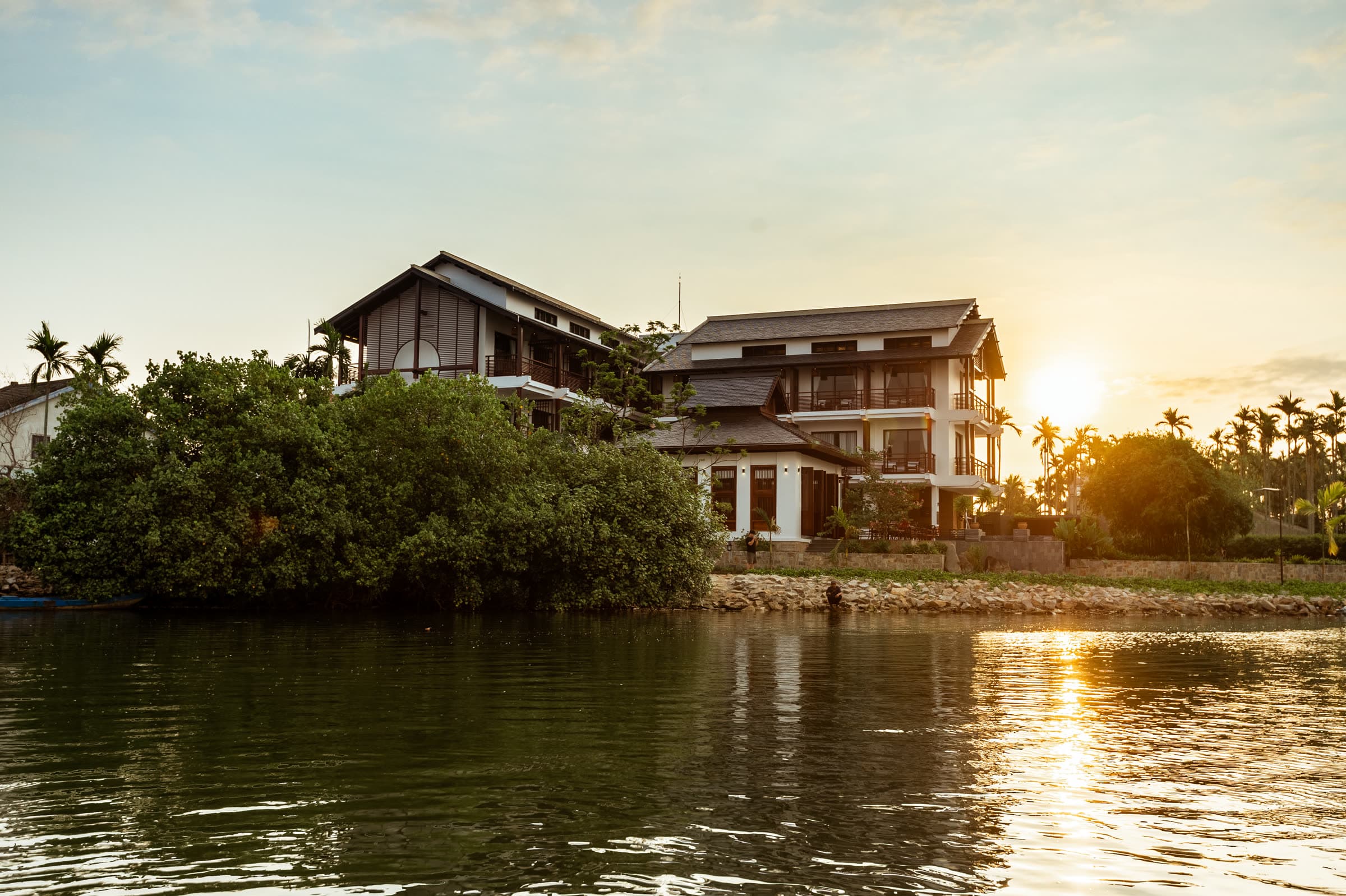
Planning a trip around this? See dates at our quiet riverside hotel on the Thu Bồn. Check availability →
What hotels actually do when the river rises
The local response is well-rehearsed. Hotels begin moving rugs and electronics upstairs 24–48 hours before forecast peak. Ground-floor rooms are vacated; guests are reassigned to upper floors at no charge. Restaurants relocate to second-floor terraces. Sampans replace scooters along Bạch Đằng during peak — locals run a polite informal taxi service from corner to corner. Kitchens improvise with cold breakfast and bottled water until power and water are confirmed.
Booking flexibility is the genuine differentiator. Most independent Hội An hotels will rebook stays affected by named typhoons without penalty if you contact them directly — see our booking direct vs Booking.com guide for why a direct line matters most in flood season.
What the heritage houses know
The upper-floor hatches in the 18th-century shophouses are not a curiosity. They are an architectural commitment: when the river rises, the family lives upstairs for two or three days, hauls furniture up through the hatch, and waits the water out. Modern hotels in the heritage core inherited this logic. Old Town reopens for foot traffic within hours of water receding; full restoration takes 3–10 days depending on event severity (VnExpress International photo essay, November 2025).
This is the cultural texture worth holding: floods are an event, not a catastrophe. Hội An has lived on this floodplain for six centuries. The town reorganises around the water and continues. The 2025 flood was the worst in a generation; the lanterns were back up within ten days.
How to plan a November stay
Three practical moves. First: pick green-tier elevation if you have the choice — Cẩm Châu interior, An Bàng, the higher ground in Cẩm Nam. Second: book directly so you have a phone or Zalo line to the hotel during the event, not an OTA call centre. Third: build flexibility into your itinerary — leave a buffer day before and after, and treat the lantern-walk as a maybe rather than a must.
For the broader river context, our Thu Bồn River pillar page holds the geography. For the riverside-hotel category specifically, see Hội An riverside hotel. The flood is part of the river. Booking against November is also an option — the rest of the year, the same geography is just a beautiful estuary.
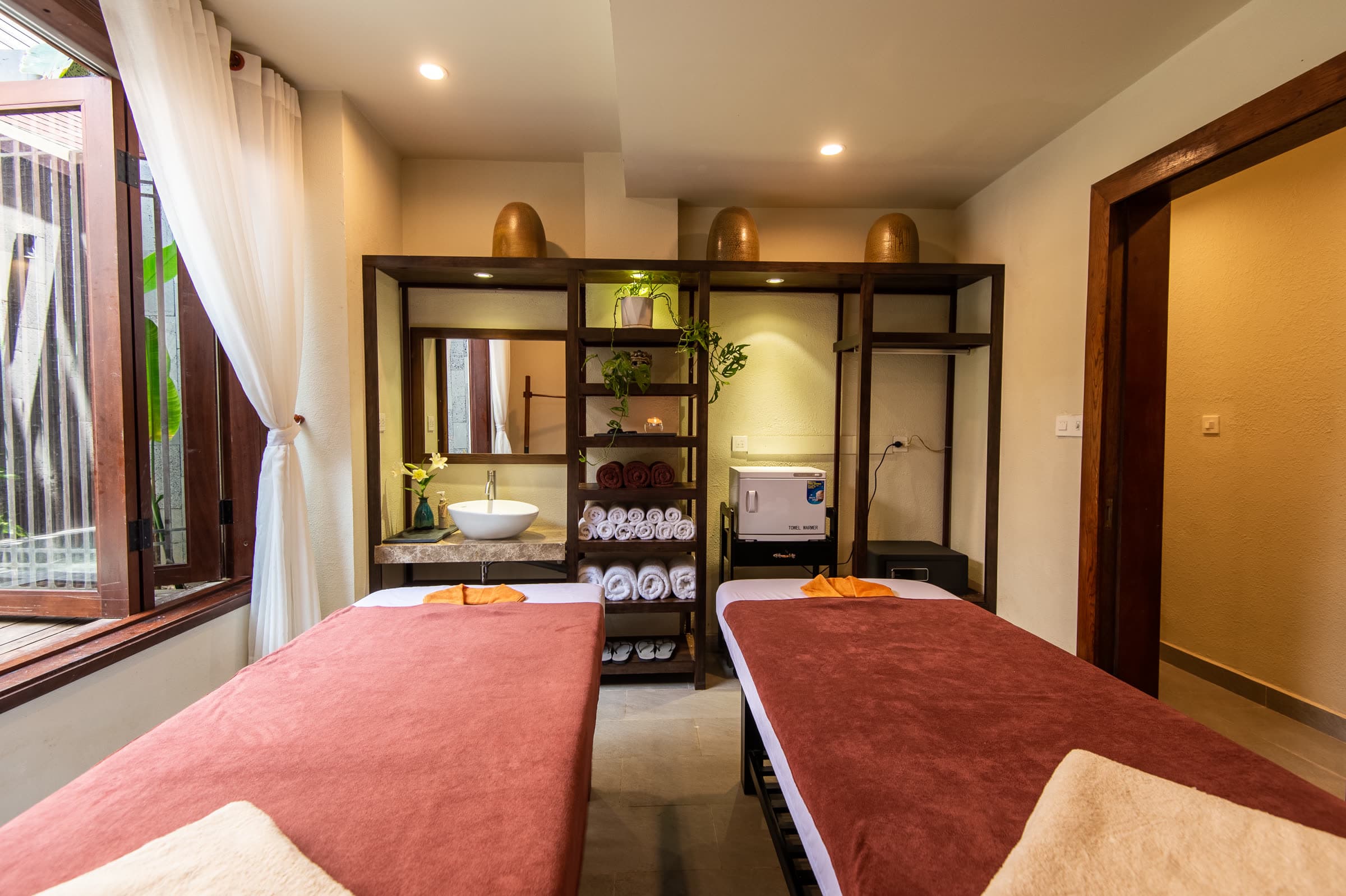
Every room at Nghê Prana is designed around the science of sleep. Blackout curtains, nightly aromatherapy turndown, and riverside quiet — experience what real rest feels like.
Riverside hotel rooms on the Thu Bồn, ten minutes by bicycle from the Ancient Town. Whether it's one night between Hue and Da Nang or a full week of doing nothing — we kept your room quiet.
Free cancellation · Direct from the family who built the hotel


 WhatsApp
 Zalo
Zalo