Phật Đản (Vesak) 2027 in Hội An: Thursday 20 May — and the Lantern Night the Evening Before
Phật Đản, the Vietnamese observance of Vesak, falls on Thursday 20 May 2027 — the full moon of the fourth lunar month. Hội An's monthly lantern night lands the evening before, Wednesday 19 May. The date, how it is derived, and what actually happens at the pagodas.
Phật Đản 2027 — Vietnam's observance of Vesak, the Buddha's birthday — falls on Thursday 20 May 2027. It is the full moon of the fourth lunar month, rằm tháng Tư, in the lunar year Đinh Mùi. It is not a public holiday: offices, banks and schools run normally, and nothing in Hội An closes.
The detail most calendars miss is the night before. Hội An's lantern night falls on the 14th of every lunar month, the eve of the full moon — which in May 2027 means Wednesday 19 May. So the lantern night and Phật Đản land on consecutive evenings, a Wednesday and a Thursday, and you can have both without moving hotels.
The dates, and how they are derived
What
Lunar date
2027 date
Fourth lunar month opens; Buddhist flags go up at the pagodas
mùng 1 tháng Tư
Thursday 6 May 2027
Vesak week (Tuần lễ Phật Đản) opens
mùng 8 tháng Tư
Thursday 13 May 2027
Hội An lantern night
14 tháng Tư
Wednesday 19 May 2027
Phật Đản / rằm tháng Tư
15 tháng Tư
Thursday 20 May 2027
For comparison — Phật Đản 2026
15 tháng Tư
Sunday 31 May 2026
We check these three ways rather than copying a calendar. First, against Vietnamese almanacs: ngaydep.com and penci.vn both list Lễ Phật Đản 2027 as 20/5/2027. Second, by counting forward from mùng 1 Tết 2027, which is Saturday 6 February 2027: the first three lunar months run 30, 29 and 30 days, so the fourth month opens on 6 May and its fifteenth day is 20 May. Third, against the sky: the astronomical full moon of May 2027 is at 10:59 UTC on 20 May, which is 17:59 in Vietnam, on the same day. As a final sanity check, 31 May 2026 to 20 May 2027 is 354 days — exactly twelve lunar months, as it should be in a year with no leap month. Checked 29 August 2026.
From mùng 1 tháng Tư the five-colour Buddhist flag goes up on pagoda gates across Hội An and Đà Nẵng.
Which Vesak: three calendars, one day in 2027
"Vesak 2027" means different days in different places, and it is worth knowing which one you are looking at. In Vietnam and the Mahayana world, Phật Đản is fixed on lunar 15/4. The United Nations' International Day of Vesak is tied to the full moon of May. Theravada countries such as Sri Lanka keep their own lunar reckoning of the same full moon. The three usually drift a day or two apart; in 2027 they coincide, because the May full moon falls on 20 May in every time zone east of the Atlantic. If you are planning around "Vesak 2027" from abroad, 20 May is the day.
One thing 20 May 2027 is not: the large diplomatic gathering known as the UN Day of Vesak conference, which moves between host countries and is scheduled separately (Vietnam hosted it in Ho Chi Minh City in May 2025; China in Wuxi in May 2026). That event is not what happens in Hội An. The lived observance here is the lunar one, at the pagodas.
What Phật Đản actually is
Phật Đản marks the birth of Siddhartha Gautama, the historical Buddha. In the Vietnamese tradition the day is counted as the start of the Buddhist year, so 2027 is Phật lịch 2571. Older northern Vietnamese custom placed the birthday on lunar 8/4, and some pagodas still open their observances on that day; the unified date of 15/4 follows the 1950 decision of the World Fellowship of Buddhists in Colombo, which is why the Vietnamese Vesak week runs from the 8th to the 15th of the month.
It is a religious day, not a street festival. The visible rituals are tắm Phật — pouring scented water over a small statue of the infant Buddha, one ladle per person — the raising of the Buddhist flag, chanting in the main hall, vegetarian meals shared with anyone who turns up, and, at some pagodas, hoa đăng lanterns floated on water on the eve.
Tắm Phật: one ladle of scented water each, poured over the infant Buddha. The gesture is the same across the Buddhist world.
Planning a trip around this? See dates at our quiet riverside hotel on the Thu Bồn. Check availability →
What happens in Hội An
Most of Hội An's historic pagodas belong to one lineage, Lâm Tế Chúc Thánh, founded in the town in the late seventeenth century by the monk Minh Hải at Chùa Chúc Thánh. That is why the day feels practised rather than performed here: families return to the same pagoda their grandparents attended. The four pagodas where the day actually happens are Chùa Chúc Thánh and Chùa Phước Lâm in Cẩm Phô, Chùa Pháp Bảo on Hai Bà Trưng, and Chùa Vạn Đức in Cẩm Hà.
Expect the main Đại lễ Phật Đản ceremony mid-morning on Thursday 20 May, with tắm Phật available to laypeople and visitors afterwards, and a chay meal. Some pagodas hold their lantern-floating and overnight chanting on the eve, Wednesday 19 May — the same evening the Old Town switches off its electric lights for the monthly lantern night. The two are different things: the lantern night is a civic heritage event run by the city since 1998; hoa đăng on Vesak eve is a religious act. They happen a few hundred metres apart on the same evening, and it is entirely possible to walk from one to the other.
Practicalities
Not a public holiday. Phật Đản is not on Vietnam's statutory list under the 2019 Labour Code (Article 112). Nothing closes; there is no travel surge and no holiday pricing.
Restaurants shift vegetarian. Many kitchens run a chay menu on the day, and observant families eat chay for the whole Vesak week. Quán chay signs multiply around the pagodas.
Dress for a working temple. Covered shoulders and knees; shoes off at the main hall; phone on silent. Photograph courtyards and gates, not people at prayer, and never facing the central altar.
Offerings. The wooden hòm công đức near the altar is the right place. No one will ask you for money, and no amount is expected.
Weather. Mid-May is the dry season on the central coast: hot, bright mornings. The pagoda ceremonies are early for a reason.
If you are staying with us
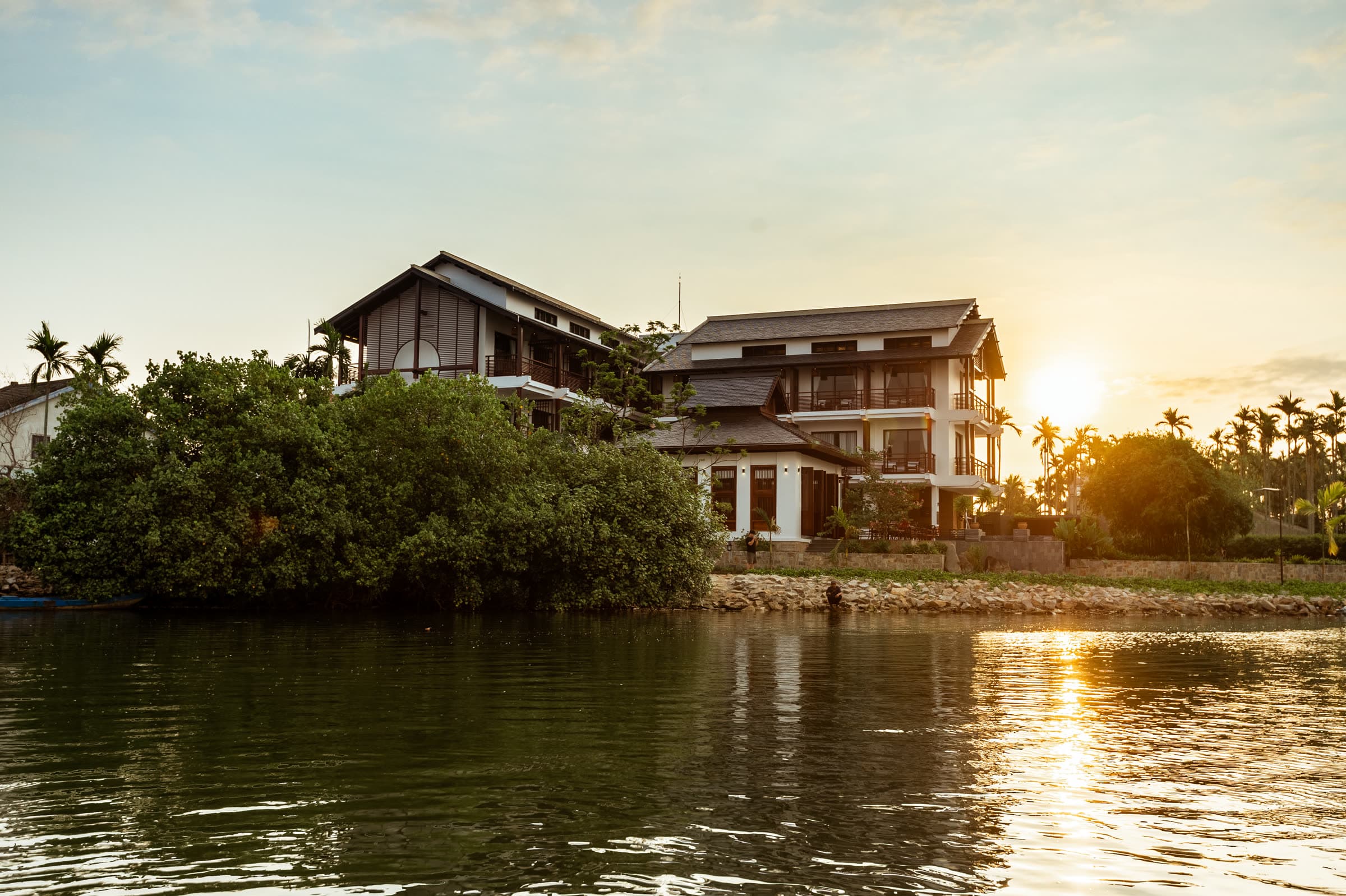
Nghê Prana is on the Thu Bồn in Cẩm Nam, about ten minutes by bicycle from the Old Town, so both evenings are within easy reach and you are not sleeping inside the noise of either. Reception can tell you which pagoda is holding the fuller ceremony that year, and the kitchen runs a chay menu on request.
Phật Đản 2026 is Sunday 31 May 2026, if you are reading this before then — our Phật Đản 2026 guide covers that year, the four pagodas and the lineage behind them in more depth. Every 2027 lantern night is listed in our Hội An Lantern Festival 2027 calendar.
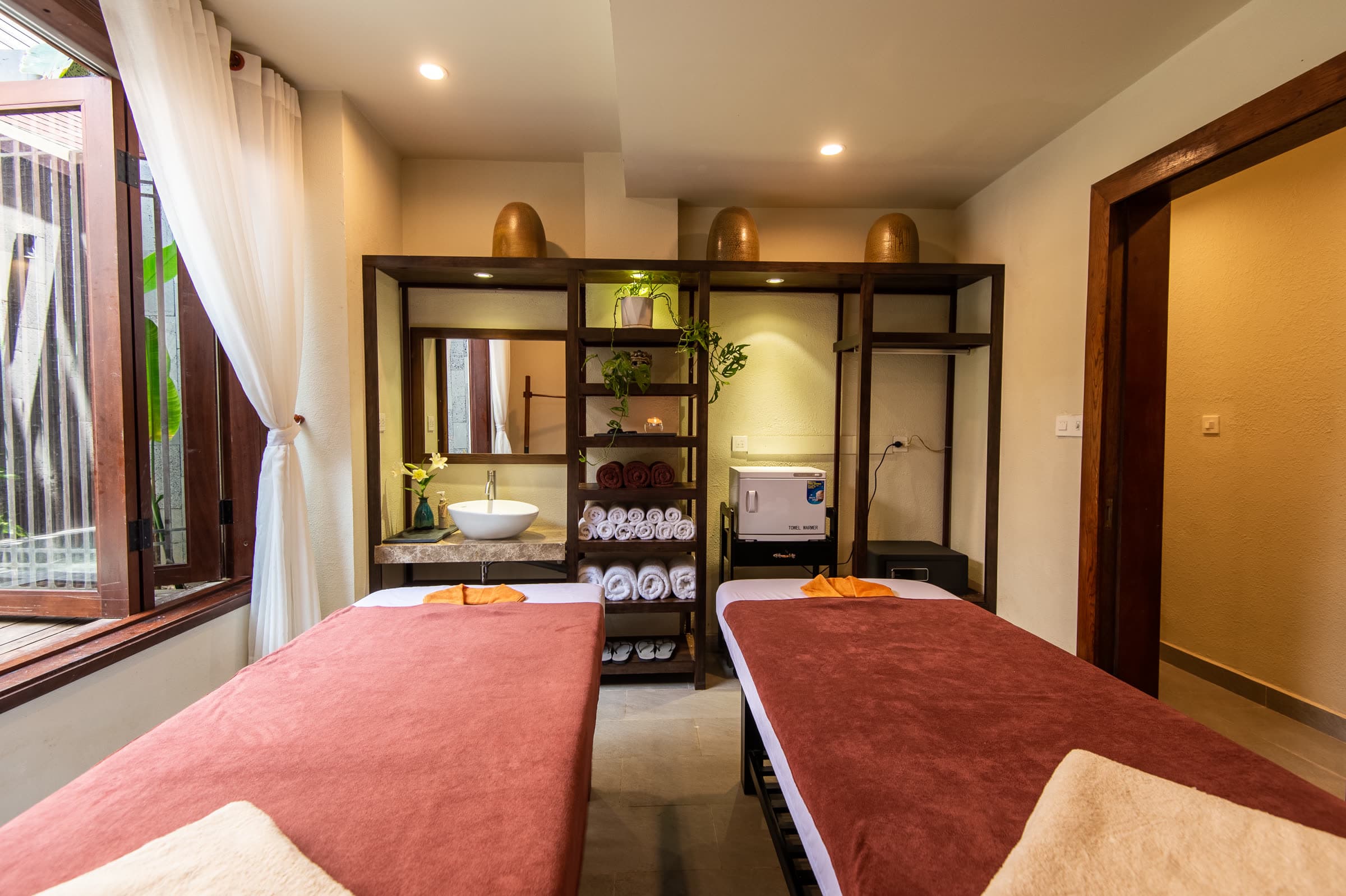
Every room at Nghê Prana is designed around the science of sleep. Blackout curtains, nightly aromatherapy turndown, and riverside quiet — experience what real rest feels like.
Riverside hotel rooms on the Thu Bồn, ten minutes by bicycle from the Ancient Town. Whether it's one night between Hue and Da Nang or a full week of doing nothing — we kept your room quiet.
Free cancellation · Direct from the family who built the hotel


 WhatsApp
 Zalo
Zalo