Phật Đản (Vesak) 2026 — the Buddhist celebration of the Buddha''s birth, enlightenment, and passing — peaks in Hội An on Sunday, 31 May 2026, the full moon of lunar month four. Observances run softly through the first half of the lunar month, with the largest pagoda ceremonies on the eve and morning of the 31st.
The 2026 observance is shaped by a specific directive — Thông bạch số 87/TB-HĐTS — issued by the Hội đồng Trị sự of the Giáo hội Phật giáo Việt Nam, instructing every tự viện in the country to mark Phật đản from lunar 1/4 to 15/4 (17–31 May 2026) and to couple it with the 45-year anniversary of the Sangha (Báo VietnamPlus, Giác Ngộ Online). For Hội An, that directive lands inside one specific lineage: thiền phái Lâm Tế Chúc Thánh, founded in the late 17th century by Tổ Minh Hải — Đắc Trí Pháp Bảo, a Phước Kiến monk who took the precepts at Linh Mụ before building Chùa Chúc Thánh — the tổ đình from which Buddhism radiated through Đàng Trong (Trung tâm Quản lý Bảo tồn Di sản Văn hóa Hội An; Phật giáo Quảng Nam). See the References below for the full set.
This is not a tourist festival. It is a major Vietnamese Buddhist holy day, observed quietly across the country and intensely at Hội An''s historic pagodas — most of which trace back to a single Zen lineage that took root here three and a half centuries ago. Visitors are welcome. The right posture is to observe, not to perform.
Below: the 2026 dates, the four pagodas in Hội An where the day actually happens, what you''ll see, and how to participate as a respectful guest. We also explain why Phật Đản is not the famous lantern festival (a frequent confusion), and how Phật Đản 2027 falls for travellers planning ahead.
When Phật Đản 2026 Falls
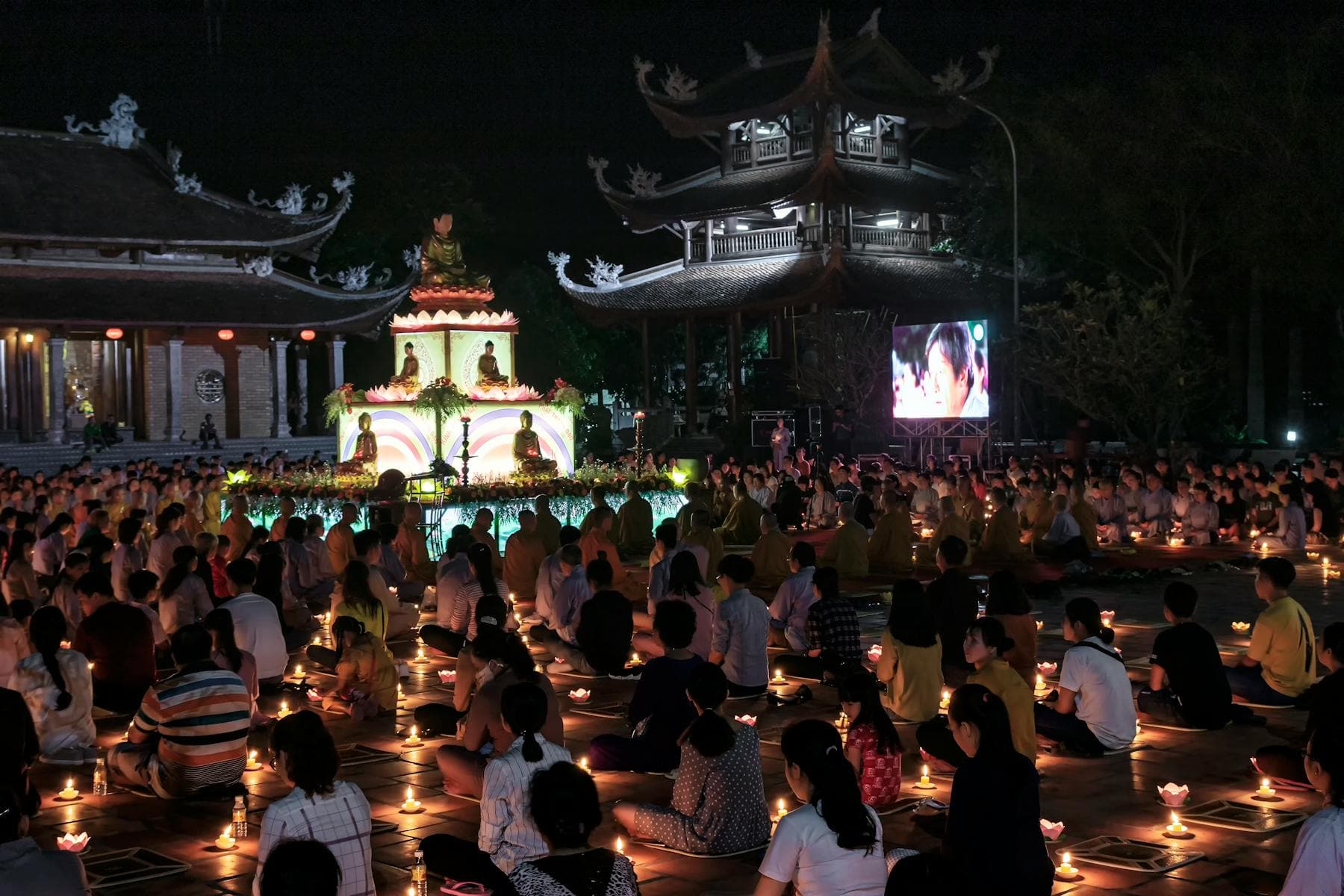
Photo: Quang Nguyen Vinh / Pexels
Vietnamese Buddhists follow the lunar calendar. Phật Đản is observed on lunar 15/4 — the full moon of the fourth lunar month. In 2026, that maps to Sunday, 31 May.
The full observance window runs longer than the single peak day:
Sunday 17 May 2026 (lunar 1/4) — official start of Phật Đản month. Pagodas raise Buddhist flags. Quiet preparation begins.
Sunday 24 May 2026 (lunar 8/4) — some communities (and many Northeast Asian traditions) observe the Buddha''s birth on this day. In Vietnam it''s a soft observance day before the main event.
Saturday 30 May 2026 — eve of the full moon. Candle-lantern processions, tắm Phật (bathing of the infant Buddha statue), and overnight chanting at most Quảng Nam pagodas.
Sunday 31 May 2026 (lunar 15/4) — peak. The main Đại lễ Phật Đản ceremony, usually mid-morning. Vegetarian meals served. Vietnamese Buddhist Sangha sermons.
One scheduling note for international readers: the United Nations Day of Vesak observance at UN Headquarters falls on 1 May 2026 — a separate diplomatic event, not the Vietnamese religious date. Don''t plan your trip around it. The lived observance in Hội An is the lunar one: 31 May.
Looking ahead: Phật Đản 2027
For travellers already planning next year, Phật Đản 2027 falls on Thursday, 20 May 2027 (lunar 15/4 in the lunar year of Đinh Mùi). The pattern shifts roughly 11 days earlier each Gregorian year.
Hội An''s Buddhist Lineage — Why It Matters Here
Most Hội An pagodas belong to a single Zen school: Lâm Tế Chúc Thánh (Linji-Chúc Thánh), founded in Hội An itself in 1696 by Master Minh Hải, a Chinese monk who arrived during the Ming-Qing transition. His pagoda — Chùa Chúc Thánh — is the lineage temple of an entire branch of Vietnamese Zen Buddhism that spread south from Hội An through Quảng Nam, Bình Định, and into the Mekong Delta.
That history is why Phật Đản here feels less performative than at tourist-heavy destinations. The lay community is practising, not display. Many families return to the same pagoda their grandparents attended.
Four Pagodas in Hội An for Phật Đản 2026
Illustration: Nghe Prana editorial
Chùa Chúc Thánh — the lineage temple
One of the oldest and most important Buddhist temples in Hội An (founded circa 1697 by Master Minh Hải Pháp Bảo, late 17th century) and the root of the Lâm Tế Chúc Thánh Zen school. About 2 km north-west of Old Town, set among rice fields. The grounds include grave towers of past masters and a marble Quan Âm (Avalokiteśvara) statue.
On Phật Đản: the most important ceremony in the region. Expect overnight chanting on the 30th, the main Đại lễ on the morning of the 31st, tắm Phật (gently pouring scented water over a small standing-Buddha-as-infant statue), and a public vegetarian meal. Arrive early — by 7:30 am — and stand quietly at the back.
Chùa Phước Lâm — the meditation pagoda
Founded mid-18th century by a disciple of the Chúc Thánh school. A short walk from Chùa Chúc Thánh, with a small lake in front and a sand dune behind. Phước Lâm is the quieter sister — many practitioners come here precisely because it is less crowded.
On Phật Đản: evening candle lantern ritual on the 30th is especially beautiful. The grounds are small; the atmosphere is contemplative rather than ceremonial.
Chùa Pháp Bảo — the in-town pagoda
Inside Hội An proper, the most accessible Buddhist temple for visitors staying in or near Old Town. Active lay community, regular Sunday services in normal times, and a substantial Phật Đản programme that''s easy to reach on foot.
On Phật Đản: lay-led chanting in the evening of the 30th, flag-raising and Đại lễ on the 31st. Good first pagoda for visitors who feel uncertain about etiquette — there''s usually English-speaking help.
Chùa Vạn Đức — countryside, family-scale
Out toward Cẩm Hà, a Lâm Tế Chúc Thánh temple with a rural, family-network feel. Smaller scale, deeper countryside, fewer outside visitors.
On Phật Đản: the most intimate of the four. If you want to witness Phật Đản as it''s lived by a single Hội An hamlet rather than at scale, this is the one.
Note on Chùa Hải Tạng: Hải Tạng is on Cù Lao Chàm island — a 30-minute ferry from Cửa Đại. It''s a beautiful pagoda, but the ferry schedule on a holy day is unpredictable. Day-trip there for the pagoda itself, but don''t plan your Phật Đản observance around it.
What You''ll See — and Why
Buddhist flags. Five horizontal stripes (blue, yellow, red, white, orange) plus a vertical sixth. You''ll see them on every pagoda and at many family homes through the month.
Lễ tắm Phật (bathing the Buddha). A small standing statue of the infant Buddha is placed in a basin. Practitioners ladle scented water over it three times — symbolic purification, the same gesture across Mahāyāna Asia.
Candle lanterns. Small floating lotus-shaped paper lanterns, lit and released on water at dusk. Different from the Hoa đăng of the monthly Lantern Festival (more on that in a moment) — Phật Đản lanterns carry prayers, not decorative wishes.
Planning a trip around this? See dates at our quiet riverside hotel on the Thu Bồn. Check availability →
Vegetarian observance (ăn chay). Many Vietnamese eat vegetarian on lunar 1, 14, and 15 of every month, and especially on Phật Đản. Local restaurants visibly expand their cơm chay menus around this date.
Chanting (tụng kinh). Often the Heart Sutra, the Amitābha Sutra, and the Lễ Phật Đản Khoa — a Vesak-specific liturgical text. Sermons are in Vietnamese.
How to Visit Respectfully
Photo: Quang Nguyen Vinh / Pexels
Hội An''s pagodas are working religious sites first, photography backdrops never. A few simple rules cover almost everything:
Cover shoulders and knees. Bring a light scarf if you''re uncertain.
Remove shoes before entering halls. There''s usually a rack or designated step.
Don''t photograph during ceremonies. Outside ceremony times, ask first — most monks will say yes; the answer matters more than the photo.
Don''t point feet at altars or monks. If you sit on the floor, tuck legs to one side.
A small donation is welcome, not required. A folded 20,000-50,000 VND note in the offering box is normal.
If offered vegetarian food, accept a small portion. Refusing the meal is the one thing that reads as rude. Eat a little, smile, cảm ơn.
Phật Đản Is Not the Lantern Festival
This trips up almost every first-time visitor. Two different traditions:
Hội An Lantern Festival — lunar 14 of every month, a town-wide cultural celebration, lights along the Old Town, floating wish lanterns on the Thu Bồn River. May 2026 lantern night falls on Saturday 30 May. It''s lovely, secular, and crowded.
Phật Đản — lunar 15/4, the religious observance, focused inside pagodas, quiet outside them.
The two happen back-to-back this year. If you''re here for the weekend of 30-31 May 2026 you can experience both — but they''re different events with different etiquette. The lantern festival photographs well; Phật Đản doesn''t want to be photographed at all.
Phật Đản is observed inwardly. The pagodas are busy in their own way; the rest of Hội An is unusually still. The light on the Thu Bồn River that weekend is some of the best of the year — late dry-season clarity before the first June squalls.
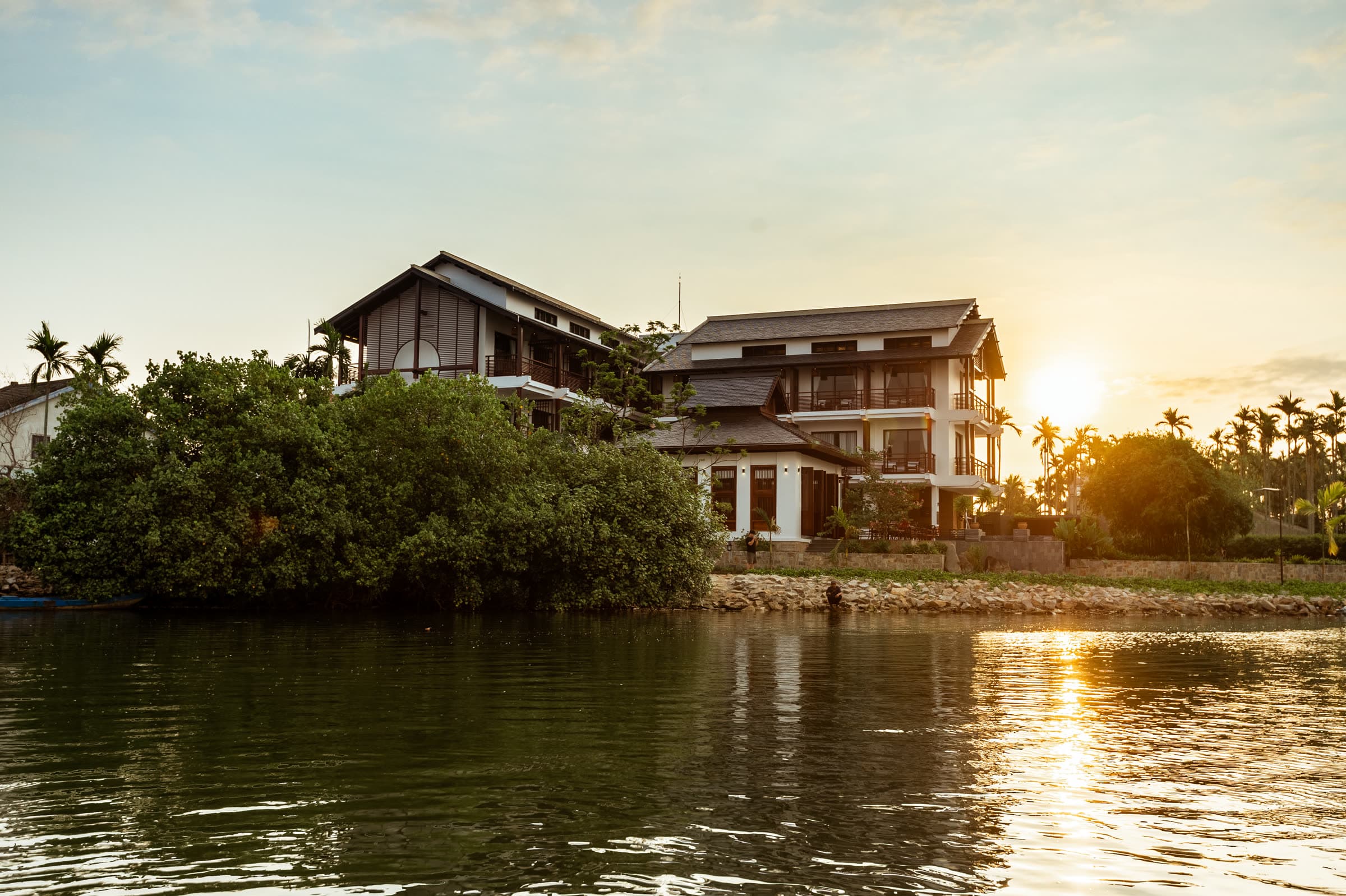
Nghê Prana sits on the south bank in Cẩm Nam, about a 12-minute cycle from Chùa Pháp Bảo and 15 minutes by motorbike from Chùa Chúc Thánh. We''re a riverside hotel, not a town-centre one — the trade is a slightly longer ride to the pagodas in exchange for evenings on the quiet south bank, where you can hear chanting drift over the water if the wind is right.
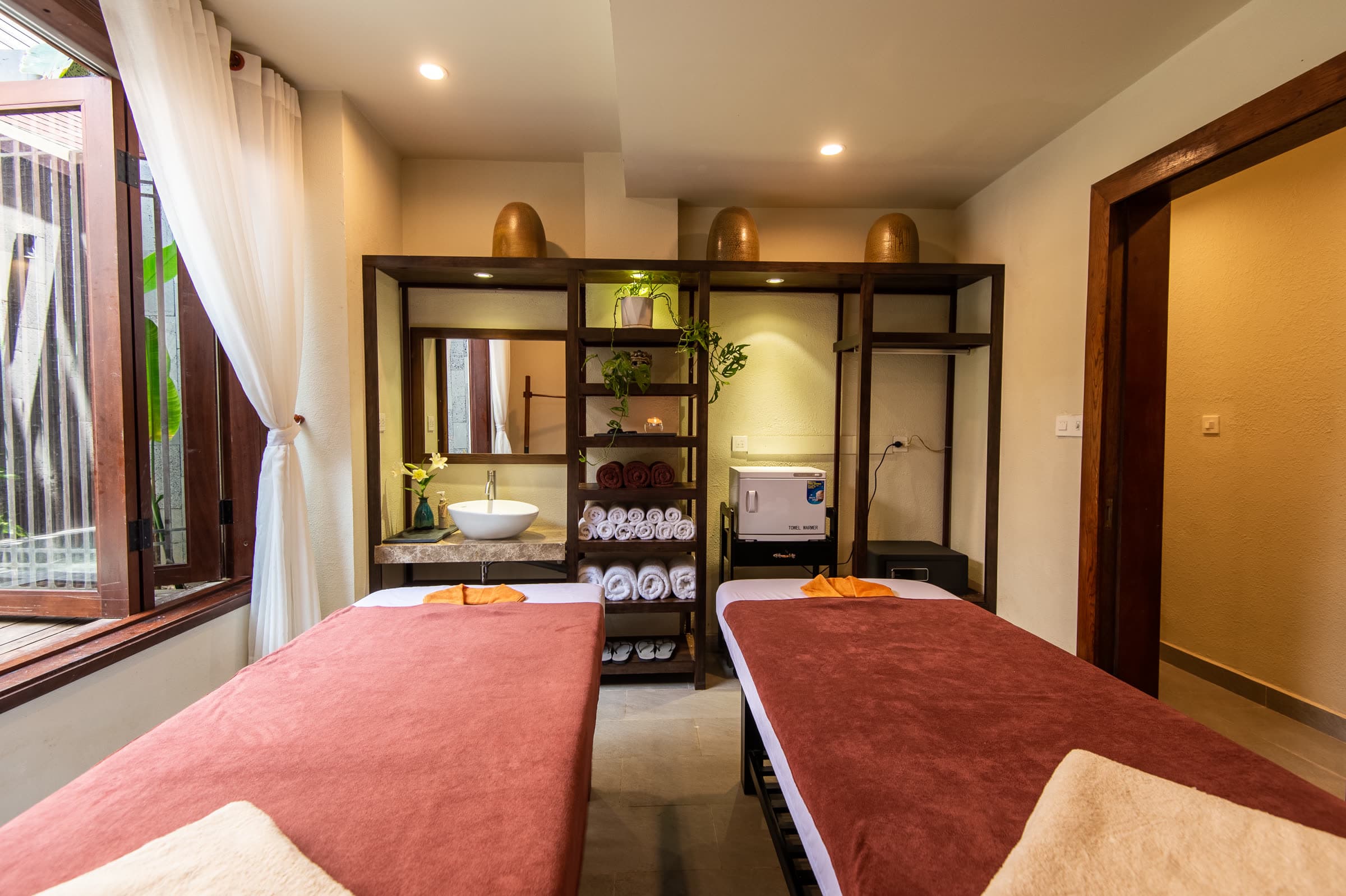
Guests staying for Phật Đản 2026 often combine pagoda visits with our wellness programme — herbal bath rituals and Vietnamese tea sessions that mirror the contemplative tone of the holy day. The restaurant runs a small cơm chay (vegetarian) menu around 30-31 May for guests observing the day.
For practical questions — transfers from Đà Nẵng airport, room categories, what''s on offer that weekend — see our FAQ or write directly. We''ll arrange a quiet motorbike ride to whichever pagoda fits your schedule.
Phật Đản is the rare holy day where the most useful thing a hotel can do for you is get out of your way. Cycle out at dawn, sit at the back, light a candle if you want, eat the vegetarian meal someone offers you, and come home before the heat. That''s the day.
About this article. This article translates and synthesizes the 2026 Vesak directive of the Giáo hội Phật giáo Việt Nam (Thông bạch 87/TB-HĐTS), the Hội An Heritage Conservation Centre's monograph on Chùa Chúc Thánh, the Phật giáo Quảng Nam diocese's writings on the Chúc Thánh lineage founder Minh Hải, and Phạm Phước Tịnh's bulletin on Chùa Pháp Bảo. The hotel-side primary contribution is the lunar-to-Gregorian Vesak window, the four-pagoda visitor map, and respectful-visit etiquette compiled from local observance.
Trung ương Giáo hội Phật giáo Việt Nam (2026). Thông bạch số 87/TB-HĐTS hướng dẫn tổ chức Đại lễ Phật đản Phật lịch 2570 — Dương lịch 2026 (Bính Ngọ). Giác Ngộ Online (cơ quan ngôn luận của GHPGVN). View source
TTXVN / Báo VietnamPlus (2026). Hướng dẫn tổ chức Đại lễ Phật đản 2026, Phật lịch 2570. Báo điện tử VietnamPlus (Thông tấn xã Việt Nam). View source
Trung tâm Quản lý Bảo tồn Di sản Văn hóa Hội An (2020). Chùa Chúc Thánh Hội An (Quảng Nam). hoianheritage.net — Chuyên đề nghiên cứu trao đổi. View source
Ban Trị sự Giáo hội Phật giáo Việt Nam tỉnh Quảng Nam (2023). Sơ tổ Minh Hải Đắc Trí Pháp Bảo của dòng thiền Lâm Tế Chúc Thánh. Phật giáo Quảng Nam (phatgiaoquangnam.com). View source
Phạm Phước Tịnh (2018). Vài thông tin về chùa Pháp Bảo ở Hội An. Bản tin Di sản Văn hóa Hội An — Trung tâm QLBT Di sản. View source
Báo Thế giới & Việt Nam (Bộ Ngoại giao) (2026). Đại lễ Phật đản năm 2026: Giáo hội yêu cầu các tự viện chăm lo người yếu thế. Báo Quốc tế. View source
Every room at Nghê Prana is designed around the science of sleep. Blackout curtains, nightly aromatherapy turndown, and riverside quiet — experience what real rest feels like.
Riverside hotel rooms on the Thu Bồn, ten minutes by bicycle from the Ancient Town. Whether it's one night between Hue and Da Nang or a full week of doing nothing — we kept your room quiet.
Free cancellation · Direct from the family who built the hotel


 WhatsApp
 Zalo
Zalo