Lễ Vu Lan 2026 in Hội An (Vietnam's Filial-Piety Festival): The Date, the Rose-Pinning Ritual & How It's Observed on the Thu Bồn
Lễ Vu Lan — Vietnam's Buddhist festival of filial piety, báo hiếu — falls on the full moon of the seventh lunar month, which is Thursday, 27 August 2026. This is the honest, source-checked guide to what the day means, the bông hồng cài áo rose-pinning ritual (red rose for a living mother, white for one who has passed), the floating-candle hoa đăng releases, and how the day is observed at Hội An's old pagodas and along the Thu Bồn — written from a riverside hotel a few minutes from the Old Town.
Of all the days in the Vietnamese lunar year, Lễ Vu Lan is the one most quietly felt and least understood by visitors. It is the Buddhist festival of báo hiếu — filial piety, the repaying of a debt to one's parents and ancestors — and it falls on the full moon of the seventh lunar month, Rằm tháng 7. In 2026 that full moon lands on Thursday, 27 August. It is not a parade and it is not a public holiday; it is a day of pagoda visits, incense, vegetarian meals, a rose pinned to the chest, and small paper lanterns set adrift on the water after dark.
This guide is the source-checked version that does not yet exist cleanly in English. We write it as a riverside hotel on the Thu Bồn, a few minutes from Hội An's Old Town, where guests in late August ask what all the lotus and incense at the pagodas is for — and where the same full moon that lights Vu Lan also brings the Old Town's monthly lantern evening. Below: the verified 2026 date, what the day actually means, the bông hồng cài áo rose ritual at its heart, and where and how it is observed in and around Hội An.
When Is Lễ Vu Lan in 2026?
Lễ Vu Lan 2026 falls on Thursday, 27 August 2026 — the 15th day (the full moon, Rằm) of the seventh month in the Vietnamese lunar calendar. The observance is not confined to the single day: across central Vietnam, pagoda programmes and family rituals cluster through the first half of the seventh lunar month, with many temples holding their main ceremonies on the weekend nearest the full moon. The seventh lunar month is also known in Vietnamese folk belief as tháng cô hồn — the "month of wandering souls" — and Rằm tháng 7 doubles as Tết Trung Nguyên, the day souls are believed to be released, which is why offerings and prayers for the deceased are so central to it.
What
Calendar date
2026 Gregorian date
Note
Lễ Vu Lan / Rằm tháng 7
15th day, 7th lunar month
Thursday, 27 August 2026
The full moon; main Vu Lan ceremonies
Seventh lunar month (tháng cô hồn)
Whole 7th lunar month
Roughly mid-Aug to mid-Sep 2026
"Month of wandering souls"; cumulative observance
Hội An lantern evening (Đêm Rằm Phố Cổ)
14th day, each lunar month
Falls in the same lunar-month window
The Old Town's monthly lights-off night — see our calendar
Because the date is fixed to the lunar calendar, it drifts against the Gregorian one each year; in 2026 it falls on a Thursday in late August, near the end of central Vietnam's dry season. It is not an official public holiday in Vietnam, so offices, shops and markets run normally — the festival lives in the pagodas and at home, not in a day off work.
What Is Lễ Vu Lan, and What Does Báo Hiếu Mean?
Vu Lan is the Vietnamese form of the Buddhist Ullambana observance, and its meaning is carried in two words: báo hiếu, "to repay filial debt." The festival's root story is that of Mục Kiền Liên (Maudgalyāyana), a disciple of the Buddha who, with his spiritual sight, found his late mother suffering as a hungry ghost. Unable to free her alone, he was taught by the Buddha to make offerings to the monastic community at the end of the rains retreat, on the full moon of the seventh month; the collective merit released his mother. From that account the seventh-month full moon became the day to honour parents living and dead — to repay, symbolically, a debt understood in Vietnamese culture as never fully repayable.
In practice that makes Vu Lan the most emotionally charged day of the Buddhist year in Vietnam. Where the Mid-Autumn Festival is for children and Tết is for the family's new year, Vu Lan is the day turned toward parents and ancestors. People go to the pagoda, pray for the deceased (cầu siêu), eat vegetarian, and perform acts of merit. Even Vietnamese who are not practising Buddhists tend to mark it, because its message — gratitude to one's mother and father — sits at the centre of Vietnamese family life rather than at the edge of religion.
What Is the Bông Hồng Cài Áo (Rose-Pinning) Ritual?
The single most recognisable Vu Lan ritual is bông hồng cài áo — "the rose pinned to the shirt." At the pagoda, a small rose is pinned to each visitor's chest, and the colour tells a quiet story about that person's parents:
• A red rose means your mother is still living — a reminder, on this day, to cherish her while you can.
• A white rose is worn by those whose mother has passed — a way of holding her memory in public.
• A yellow rose is worn by monastics, who have renounced family ties to serve all beings.
The custom is younger than it feels: it was introduced by the Vietnamese Zen master Thích Nhất Hạnh, whose 1962 essay Bông hồng cài áo gave the ritual its name and its rose, drawing on a gesture he had encountered in Japan. It spread through Vietnamese pagodas and is now inseparable from Vu Lan. As the heritage office at Đà Nẵng's Ngũ Hành Sơn (Marble Mountains) describes it, the rite is "to remember and show gratitude to mothers who have passed away, and at the same time to honour mothers who are still living." For many visitors it is the moment the day's meaning lands — a stranger pins a flower to your chest, and the colour says whether your mother is alive.
How Is Vu Lan Observed in Hội An?
Hội An keeps Vu Lan in its older, quieter register, in the town's working pagodas rather than as a tourist event. Chùa Pháp Bảo, at 7 Hai Bà Trưng on the edge of the Old Town, is the most central and the easiest for visitors to look in on; Chùa Viên Giác in Cẩm Phô — a pagoda relocated here in 1841 and listed as a national historical monument in 1992 — and Chùa Long Tuyền out toward Thanh Hà are among the other Lâm Tế Chúc Thánh-lineage temples that hold seventh-month ceremonies. Through the first half of the seventh lunar month these temples fill with lotus, incense, chanting and cầu siêu prayers for the dead, the bông hồng cài áo is offered to those who come, and many families eat vegetarian (ăn chay) for the day or longer.
After dark the festival moves to the water. Releasing hoa đăng — small floating candle-lanterns — to carry prayers for departed parents and ancestors is one of the gentlest and most photographed Vu Lan rituals in central Vietnam, and on the rivers and ponds near the pagodas you will see candles set adrift on the seventh-month evenings. On the Thu Bồn and the Hoài, the floating-candle gesture overlaps with the Old Town's own nightly lantern-on-the-water tradition, so the line between a Vu Lan hoa đăng and a wish-lantern blurs pleasantly on these nights.
What About the Vu Lan Festival at Ngũ Hành Sơn near Đà Nẵng?
If you want Vu Lan at full scale within easy reach of Hội An, the largest organised observance in the region is the Lễ hội Vu Lan báo hiếu Ngũ Hành Sơn at the Marble Mountains, roughly halfway between Hội An and Đà Nẵng city. The city has been developing it into a signature cultural-tourism event: the 2025 edition ran across three days at the end of August (28–30 August 2025), built around prayer ceremonies, a traditional alms round, calligraphy, a tea-ceremony space, vegetarian cuisine, evening performances on the theme of "nation, dharma and filial piety," and the bông hồng cài áo pinned to visitors. The 2026 dates had not been published at the time of writing; expect a similar three-day window around the seventh-month full moon (27 August 2026). It is the most accessible way to experience the festival's communal side without leaving the Đà Nẵng–Hội An area.
How to Experience Vu Lan from a Riverside Base in Hội An
Planning a trip around this? See dates at our quiet riverside hotel on the Thu Bồn. Check availability →
Vu Lan rewards a slow, respectful approach rather than a checklist. The way we suggest it to guests: in the days around 27 August, look in on a working pagoda such as Chùa Pháp Bảo in the cool of the morning, when the chanting and incense are at their fullest; if a rose is offered, accept it and wear it for the day. Eat vegetarian at least once — Hội An's cơm chay is genuinely good, and the seventh month is when the town's vegetarian kitchens are busiest. Then let the evening be the river: a hoa đăng candle set on the Thu Bồn or the Hoài, and a slow walk by the water. Because Vu Lan is a day about parents, the most fitting way to spend it is unhurried.
From a riverside base, the timing is unusually kind. The seventh-month full moon that anchors Vu Lan also falls inside the lunar-month window of Hội An's monthly lantern evening, Đêm Rằm Phố Cổ, when the Old Town goes lantern-lit and motor-free — so a single late-August stay can hold both the quiet, inward day of Vu Lan and the river's brightest night. The exact lantern dates are in our Hội An Lantern Festival 2026 calendar, and Vu Lan's place in the wider year is mapped in our 12-month Vietnamese festival calendar. For the other major Buddhist day in Hội An, see our guide to Phật Đản (Vesak) in Hội An.
Frequently Asked Questions
When is Lễ Vu Lan in 2026?
Lễ Vu Lan 2026 falls on Thursday, 27 August 2026 — the full moon (15th day) of the seventh lunar month, known as Rằm tháng 7. It is not a public holiday in Vietnam; the observance happens at pagodas and at home rather than as a day off work.
What is Lễ Vu Lan?
Lễ Vu Lan is Vietnam's Buddhist festival of filial piety (báo hiếu), held on the seventh-month full moon. Based on the story of Mục Kiền Liên (Maudgalyāyana) freeing his late mother through offerings to the monastic community, it is the day Vietnamese people honour their parents and ancestors, living and dead.
What is the bông hồng cài áo rose ritual?
At the pagoda, a rose is pinned to each visitor's chest: a red rose if your mother is still alive, a white rose if she has passed, and a yellow rose for monastics. The custom was introduced by Zen master Thích Nhất Hạnh in his 1962 essay "Bông hồng cài áo" and is now central to Vu Lan.
Where is Vu Lan observed in Hội An?
At the town's working Buddhist pagodas — most centrally Chùa Pháp Bảo at 7 Hai Bà Trưng, and also Chùa Viên Giác in Cẩm Phô and Chùa Long Tuyền toward Thanh Hà — through the first half of the seventh lunar month, with chanting, incense, prayers for the dead (cầu siêu), the rose ritual, and floating-candle (hoa đăng) releases on the water after dark.
Is Vu Lan the same as the Hungry Ghost Festival?
They share the same date — the seventh-month full moon — and overlap in meaning. The seventh lunar month is tháng cô hồn, the "month of wandering souls," and Rằm tháng 7 is Tết Trung Nguyên, when souls are believed released. Vu Lan is the Buddhist filial-piety face of the same period, focused on honouring parents and ancestors rather than appeasing wandering spirits.
Do people eat anything special on Vu Lan?
Many Vietnamese eat vegetarian (ăn chay) on Vu Lan as an act of merit and compassion, and seventh-month vegetarian eating is widespread. In Hội An the town's cơm chay (vegetarian) kitchens are at their busiest around the full moon.
Can visitors take part respectfully?
Yes. Visiting a pagoda quietly, dressing modestly (covered shoulders and knees), accepting and wearing a pinned rose, and floating a hoa đăng candle are all welcome ways to take part. It is a solemn, family-centred day, so it is best approached calmly and without intruding on people at prayer.
Staying for Vu Lan
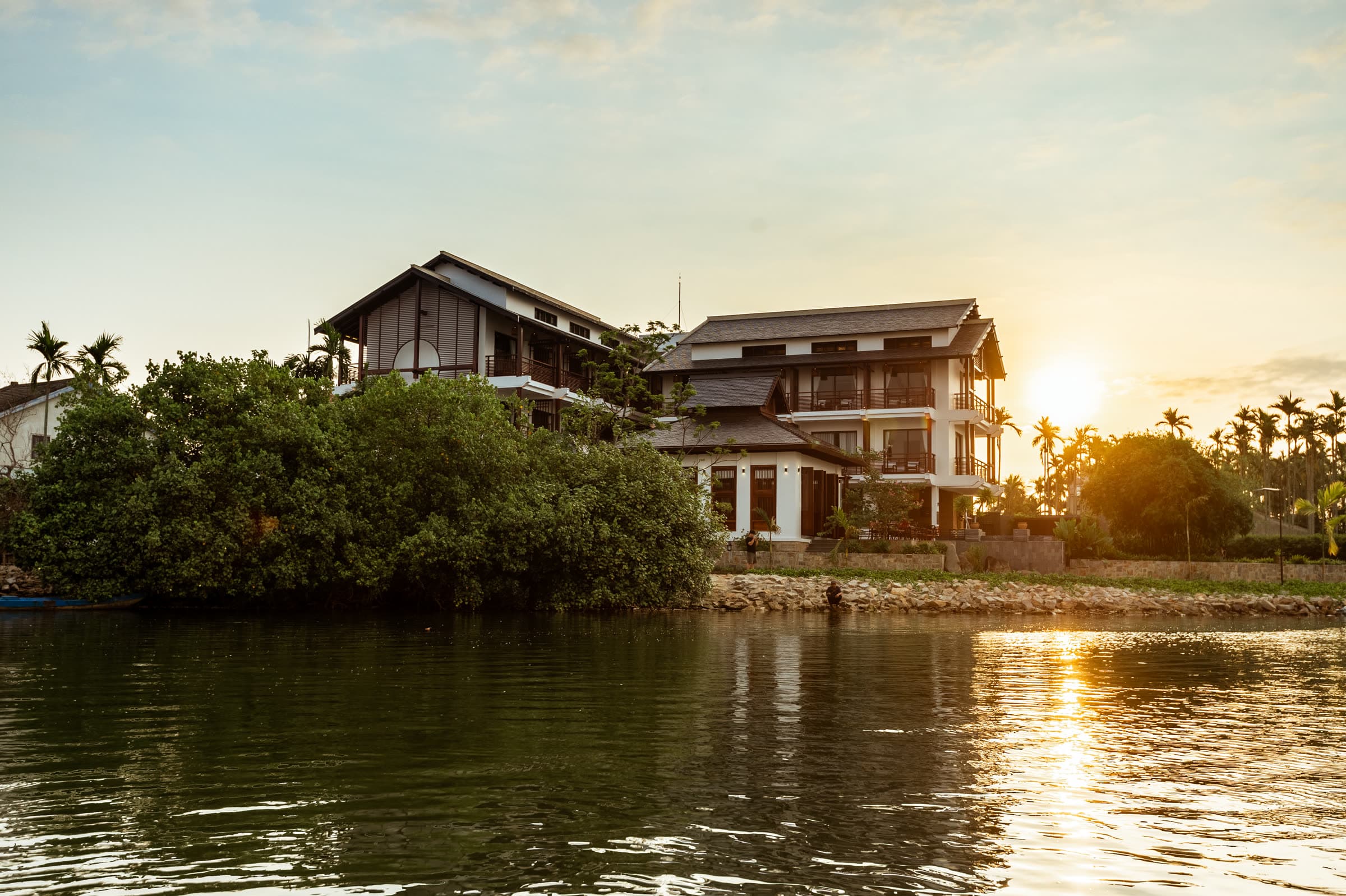
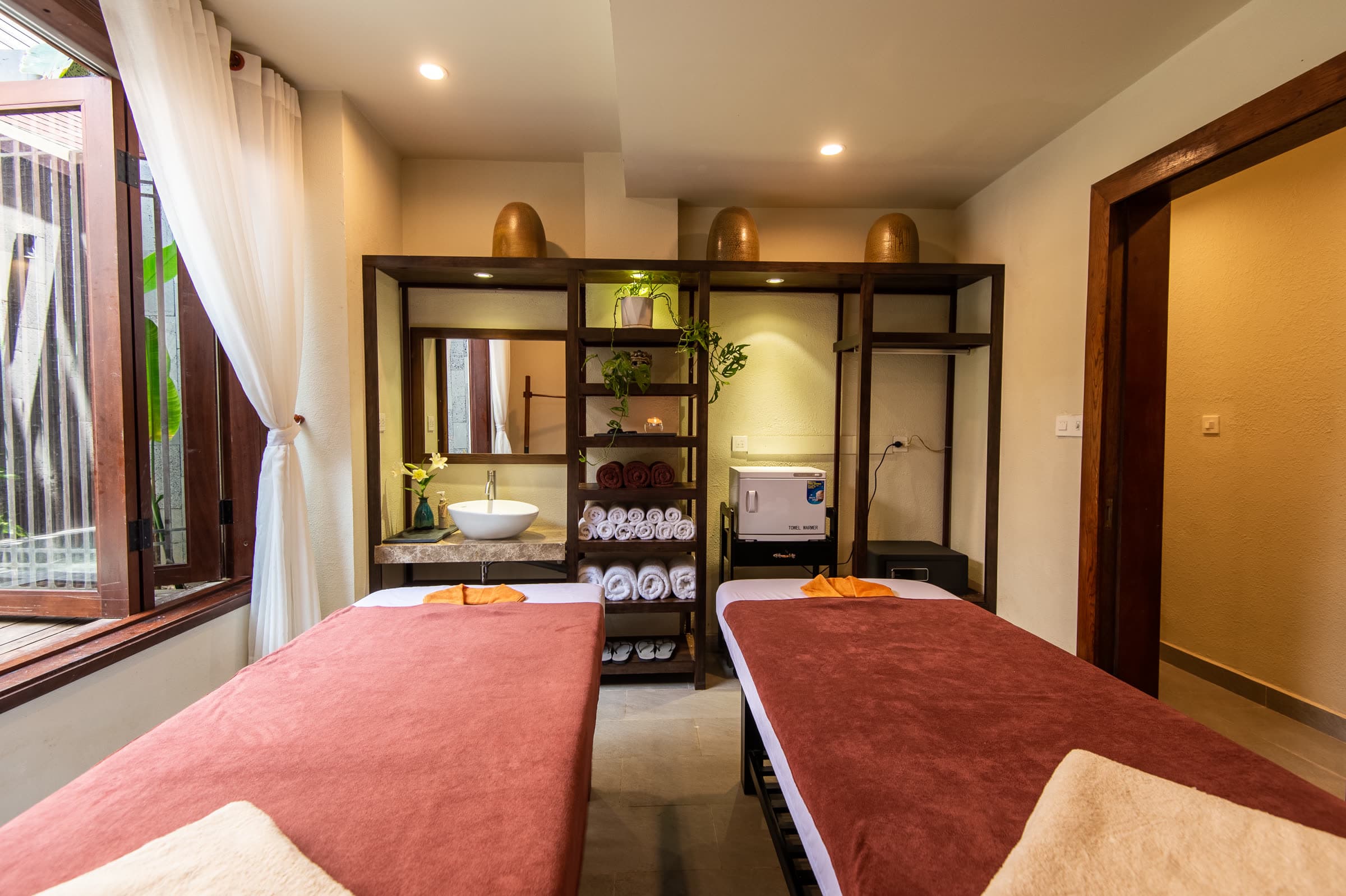
The hoa đăng release runs on the Thu Bồn, and we sit on the south bank of it — a 23-room riverside hotel ten minutes by bicycle from the Old Town. If you are here for the seventh month, the spa is a reasonable way to spend the afternoon before the pagodas fill up.
This guide synthesises Vietnamese-language coverage of Lễ Vu Lan — the verified 2026 date and the báo hiếu / Mục Kiền Liên tradition from VinWonders and Vietnamese reference sources, the meaning of the bông hồng cài áo rose colours and its 1962 origin with Thích Nhất Hạnh from the Ngũ Hành Sơn heritage office, and the Lễ hội Vu Lan báo hiếu Ngũ Hành Sơn programme from the Đà Nẵng city portal and Da Nang Fantasticity — for an English readership. The hotel-side contribution is first-hand knowledge of which Hội An pagodas observe the seventh month and how Vu Lan's hoa đăng overlaps with the Old Town's lantern evenings, written from a riverside vantage on the Thu Bồn.
Thư Viện Pháp Luật (2026). Lễ Vu Lan 2026 vào ngày nào dương lịch? Rằm tháng 7 âm lịch có phải ngày lễ lớn của Việt Nam không?. thuvienphapluat.vn. View source
VinWonders (2026). Lễ Vu Lan ngày mấy Âm lịch? Lễ Vu Lan 2026 là ngày nào Dương lịch?. VinWonders Wonderpedia. View source
Ban Quản Lý Di tích Danh thắng Ngũ Hành Sơn (2024). Ý nghĩa Bông hồng cài áo. nguhanhson.org. View source
Cổng thông tin du lịch thành phố Đà Nẵng (2025). Lễ hội Vu Lan báo hiếu - Ngũ Hành Sơn năm 2025 diễn ra từ ngày 28 đến 30-8-2025. Da Nang Fantasticity. View source
Cổng thông tin điện tử thành phố Đà Nẵng (2025). Khai mạc lễ hội Vu Lan báo hiếu Ngũ Hành Sơn năm 2025. danang.gov.vn. View source
Đào Ngọc Thạch (2025). Vu Lan 2025: Các chùa làm lễ bông hồng cài áo, thả hoa đăng ngày nào?. Thanh Niên. View source
Every room at Nghê Prana is designed around the science of sleep. Blackout curtains, nightly aromatherapy turndown, and riverside quiet — experience what real rest feels like.
Riverside hotel rooms on the Thu Bồn, ten minutes by bicycle from the Ancient Town. Whether it's one night between Hue and Da Nang or a full week of doing nothing — we kept your room quiet.
Free cancellation · Direct from the family who built the hotel


 WhatsApp
 Zalo
Zalo