The Honest Hoi An Cooking Class Guide: How to Pick One That Actually Teaches You Something
Hoi An has more than a hundred cooking classes on offer. Most are forty-person operations with pre-prepped ingredients and a fluorescent demo hall. The ten or fifteen that genuinely teach you to cook Vietnamese food are worth knowing about. Here is how to tell which is which.
Hoi An is, by some measure, the cooking-class capital of Southeast Asia. The town's central position in Vietnamese culinary tradition — the home of cao lầu, mì Quảng, white-rose dumpling, and bánh mì Phượng — combined with its tourist density has produced an industry of more than a hundred operators offering "Vietnamese cooking class" experiences at any given time. The format ranges from a serious half-day at a small home kitchen with eight students and a working chef to a forty-person tourist hall where pre-prepped ingredients are assembled in a five-minute demo. The price range is similarly wide — from 350,000 VND for the basic group experience to 2.5 million VND for a private one-on-one. Picking well makes the difference between a memory you will cook from for years and a half-day you will forget by the time you reach the airport.
What separates a real class from a tourist demo
Five questions, asked before booking, will tell you almost everything you need to know.
1. How many students per class? Eight is the upper limit for actual instruction. At eight, every student gets to chop, stir, and taste. At twelve, half the class watches. At twenty or more, you are at a demo, not a class. The honest operators answer this without hesitation.
2. Do you shop together at the market, or are ingredients pre-prepped? A genuine class begins at the market — Trà Quế herb village or Hội An Central Market — where the instructor walks you through identifying galangal versus ginger, knife-pointed lemongrass versus the fibrous backyard kind, the difference between bánh tráng tươi (fresh rice paper) and bánh tráng khô (dried). The market visit is the part most students remember a year later. If the operator skips it or compresses it into "fifteen minutes for a photo," you are paying for a demo with extra steps.
3. Where is the kitchen? Categories: a working family home in a village outside the Old Town (best); a riverside garden setup with a single instructor (good); a dedicated tourist facility with multiple rooms running concurrent classes (the demo format). The first two have a soul; the third is a production line.
4. What dishes do we make? A serious class makes three to five dishes from start to finish. A demo class assembles a bowl of spring rolls and calls it complete. The classic three-dish menu — fresh spring rolls, bánh xèo (the turmeric crepe), and a bowl of phở or cao lầu — covers the foundational techniques (rolling, batter, broth) and is what most reputable operators teach.
5. Will the chef cook with you, or watch from a distance? Working chefs lead from inside the kitchen — sleeves up, demonstrating wrist angle on a knife, correcting your fish-sauce-to-sugar ratio in real time. Demo operators talk through a microphone from the front of a hall.
The five-question test takes about three minutes and filters out roughly ninety percent of the operators in town. The remaining ten percent are the ones worth your time.
The classes worth booking
Red Bridge Cooking School — the longest-running and most decorated of the formal schools, set on a riverside garden a short boat ride from the Old Town. The format is structured (eight students, five courses, market visit included), the chef instruction is genuinely detailed, and the recipes are sound. The trade-off: it is the most heavily marketed of the serious operators and books out a week ahead in high season.
Sabirama (Tra Que village) — a working herb farm at Trà Quế where the cooking class is preceded by a two-hour farming demonstration (you plant, water, and harvest your own coriander). The teaching is unhurried, the ingredients are picked thirty seconds before they hit the pan, and the herb-identification element is the clearest of any operator we have sent guests to.
Morning Glory Cooking School — run by chef Trinh Diem Vy out of the same family that operates Morning Glory restaurant. The class is in the Old Town itself (so the market visit is brief but the food is excellent), the instruction is technically rigorous, and the bánh xèo segment in particular is the best demonstration of the dish we have seen.
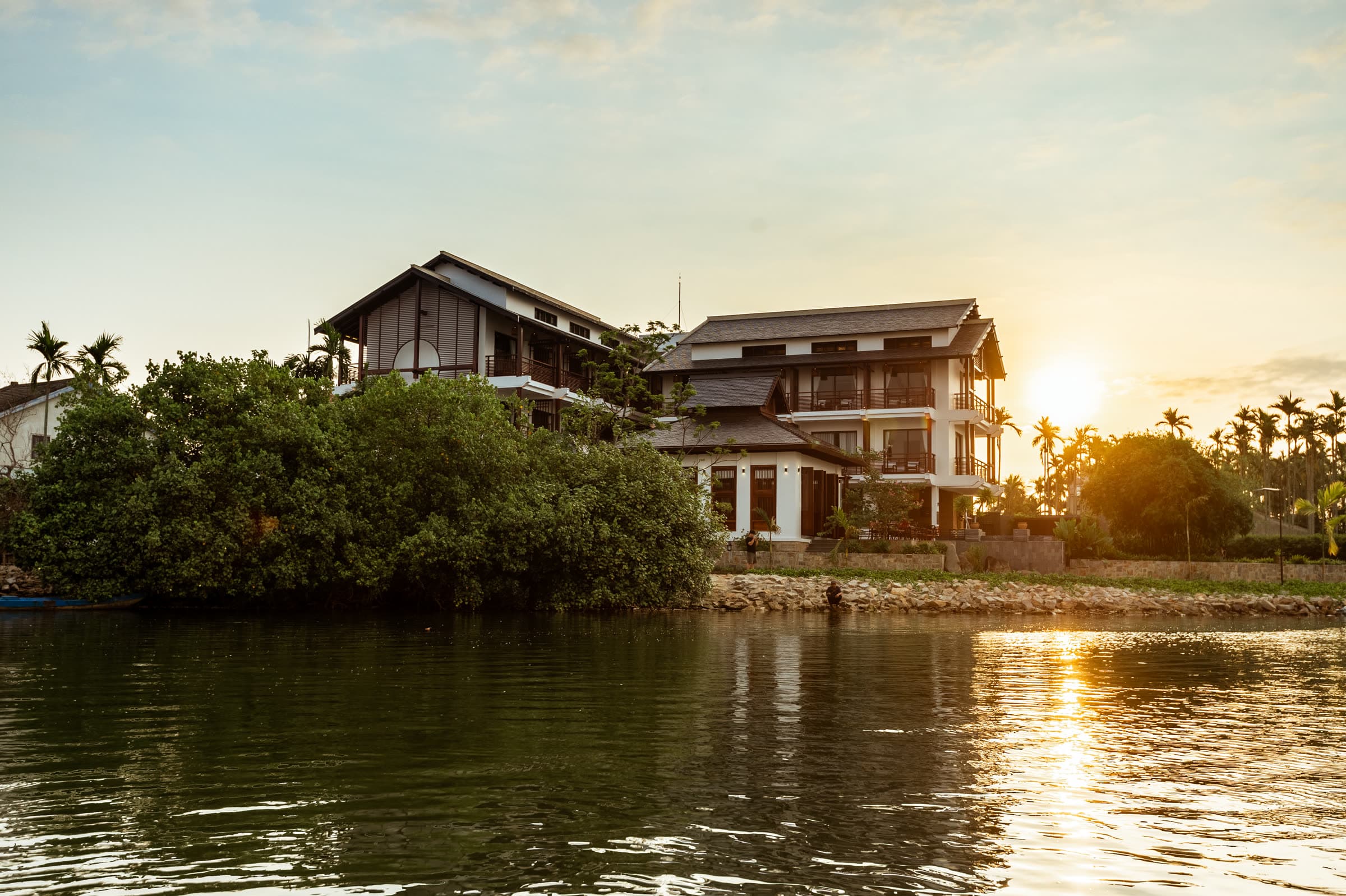
Planning a trip around this? See dates at our quiet riverside hotel on the Thu Bồn. Check availability →
Local home kitchens via Airbnb Experiences — a small but growing number of Hoi An grandmothers (the ones whose neighbours nominated them) host classes for two to four people in their actual kitchens. The booking is a little more variable, but when it works, this is the most authentic format on offer in the town. Expect to get adopted; expect to leave with a recipe written in pencil.
Classes to skip
Anything advertised on a cyclo driver's flyer. Anything that arrives at your hotel desk via an unsolicited recommendation from a "friendly local who knows the best place." Anything where the price seems much lower than the average — the cooking class economy in Hoi An is mature and a 200,000 VND class is almost always running on the demo model with subsidised ingredients. Anything that uses pre-mixed sauces (a fluorescent-orange satay paste in a squeeze bottle is a clear tell). Anything that does not visit a market before cooking.
What you should leave being able to cook
The reasonable expectation from a half-day class is that you can, on the plane home, identify and source the ingredients you need, mix the basic Vietnamese sauces (nước chấm, the dipping sauce; tương đen, the thick savoury sauce; mắm tôm, the fermented shrimp paste), roll a fresh spring roll without splitting it, and produce a serviceable phở broth using the bone-and-spice ratio you were taught. If you cannot do those four things, the class taught you nothing useful. If you can, you have inherited something that will keep working for you for years.
From a Hoi An riverside hotel base
Most of the recommended classes are 10–25 minutes from Cẩm Nam by bicycle, scooter, or shuttle. Red Bridge runs its own boat shuttle from a meeting point in the Old Town. Sabirama is a 15-minute bicycle ride from our gates. Morning Glory is in the Old Town itself — a 10-minute ride. The half-day classes typically run 09:00–13:30, leaving the rest of the day open for spa, swim, and the river. We arrange bookings at no markup — and we will tell you which to skip if the operator you are considering is not on the working list.
Cooking class is one of the experiences travellers remember from Hoi An long after the lantern photos blur. Pick the ones that put a knife in your hand and an instructor at your shoulder, and the half-day pays back for years.
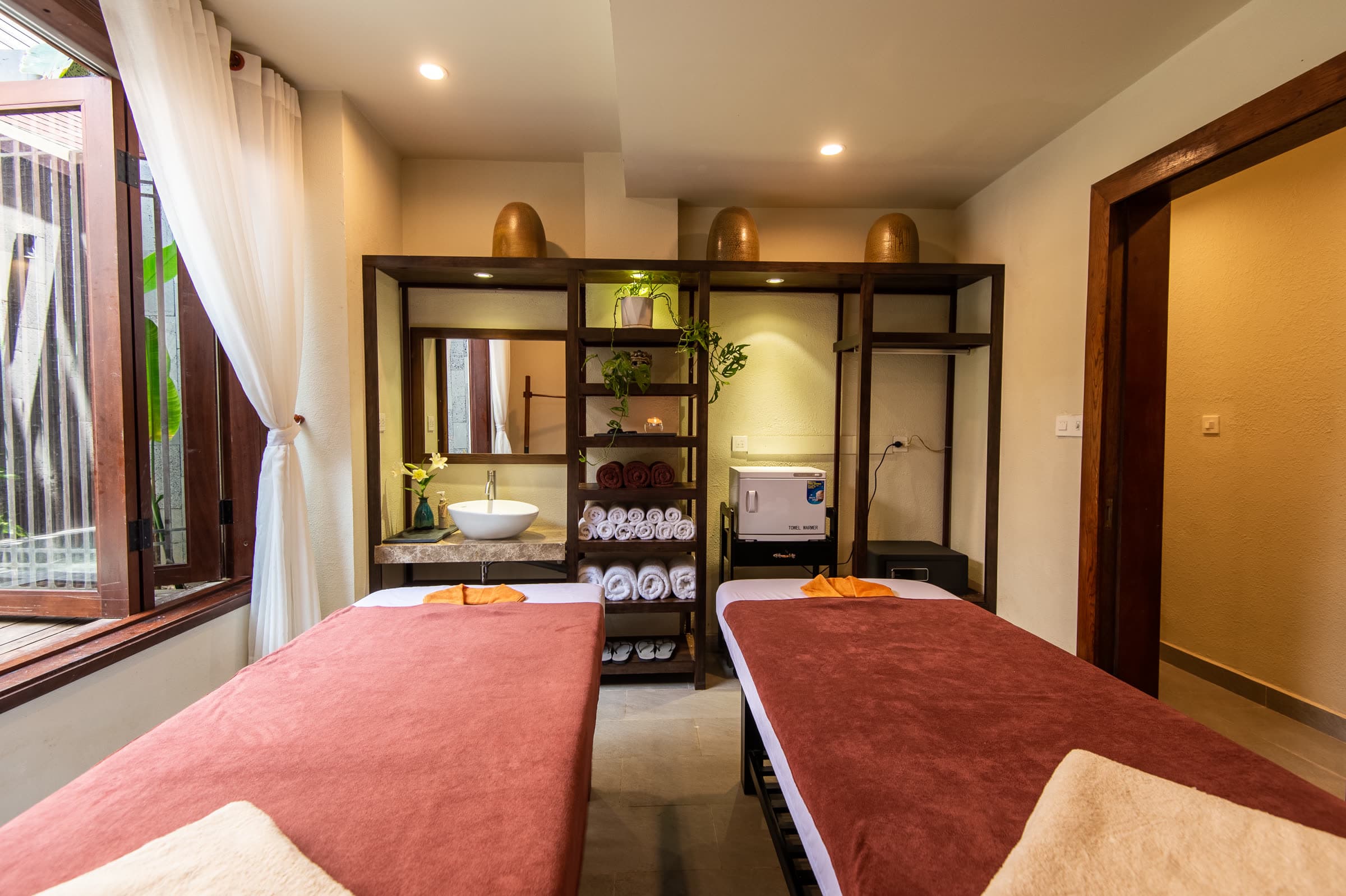
Every room at Nghê Prana is designed around the science of sleep. Blackout curtains, nightly aromatherapy turndown, and riverside quiet — experience what real rest feels like.
Riverside hotel rooms on the Thu Bồn, ten minutes by bicycle from the Ancient Town. Whether it's one night between Hue and Da Nang or a full week of doing nothing — we kept your room quiet.
Free cancellation · Direct from the family who built the hotel

 WhatsApp
 Zalo
Zalo