Kate Festival 2026 (Lễ Hội Katê): The Cham People's Biggest Festival, and Its Link to Mỹ Sơn near Hội An
Katê is the most important festival of Vietnam's Cham people — three days of temple-tower rituals, costume processions, Ginăng drums and Saranai horns, held each year on the first day of the seventh Cham month (usually late September to early October; 2026 expected around early October). It happens at the Cham towers of Ninh Thuận and Khánh Hòa, far to the south — but its roots are the same Champa civilisation that built Mỹ Sơn near Hội An. This guide explains Katê, flags the approximate 2026 date honestly, and ties it to the Cham heritage on our own doorstep.
Katê — Lễ hội Katê — is the most important festival of the Cham people, the inheritors of the old kingdom of Champa that once ruled the central Vietnamese coast. For three days each autumn the red-brick Cham temple-towers of the south fill with costume processions, offerings, the deep pulse of the Ginăng drum and the cry of the Saranai horn, as Cham communities honour their deified kings and ancestors. It is sometimes loosely called the "Cham New Year," and it is one of the fifteen largest festivals in Vietnam.
Katê is held far to the south of Hội An, at the Cham towers of Ninh Thuận and Khánh Hòa — so this is not an event you attend on a day trip from the Thu Bồn. We write about it anyway, and from Hội An deliberately, because Katê honours the same Champa civilisation that built Mỹ Sơn, the tower-sanctuary an hour from our door. To understand the silent brick towers of Mỹ Sơn is to understand what Katê keeps alive. Below: what Katê is, an honest note on the 2026 date, the rituals across its three days, and the thread that ties it back to the Cham heritage on Hội An's own doorstep.
When Is the Kate Festival in 2026?
Katê opens on the first day of the seventh month of the Cham calendar (Chăm lịch), which falls each year in late September or early October of the Gregorian calendar and runs for three days. The Cham lunisolar calendar does not map cleanly onto fixed Western dates, and the precise 2026 Gregorian dates had not been published by Cham religious authorities or provincial culture departments at the time of writing.
So we flag this honestly: the 2026 date is approximate. Based on the timing in recent years, Katê 2026 is expected around early October 2026, but treat that as an estimate, not a confirmed date. If you intend to travel for it, confirm the exact dates closer to the time with the Ninh Thuận provincial culture department or local Cham community announcements, which publish the schedule each year a few weeks ahead. We would rather give you an honest "around early October, confirm later" than invent a precise day.
Where Does Katê Take Place?
Katê centres on three of the great surviving Cham tower-complexes, each dedicated to a deified figure:
• Po Klong Garai — the iconic tower group on Trầu Hill in Ninh Thuận, dedicated to King Po Klong Garai, the festival's most famous focal point.
• Po Rome — the tower in Ninh Thuận honouring King Po Rome.
• Po Nagar — the tower dedicated to the mother-goddess Po Nagar (Yang Pô Inư Nagar), today in Khánh Hòa.
From the towers the festival flows down into the Cham villages of Ninh Thuận — places such as Hữu Đức, Mỹ Nghiệp and the surrounding communities of Ninh Phước — where the celebration becomes domestic: family offerings, music, dance and feasting. All of this lies several hundred kilometres south of Hội An, in what was the southern heartland of Champa, which is why Katê is best understood from here as a window onto Cham culture rather than as a local event.
What Happens During the Three Days of Katê?
Katê is built around a sequence of formal rites performed by Cham priests, the most distinctive of which unfold at the towers. Vietnamese cultural sources describe the core ceremonies as:
• Lễ rước y trang — the procession that carries the sacred costumes and regalia of the deity up to the tower, often handed over by the Raglai people, who by tradition safeguard them through the year.
• Lễ mở cửa tháp — the opening of the tower door, admitting the priests to the sanctuary.
• Lễ tắm tượng thần — the ritual bathing of the deity's statue or mukhalinga.
• Lễ mặc y phục — the robing of the statue in the costumes just brought in procession, followed by the great tower offering (đại lễ cúng tháp).
Around these rites the towers come alive with the Ginăng and Baranâng drums and the Saranai horn — the unmistakable sound of Cham ceremony — and with dancers in traditional dress. One Vietnamese account captures the feeling well: the drums beat "như nhịp tim cộng đồng" ("like the heartbeat of the community"). After the temple rituals, the festival moves to the villages for three days of music, dance and family gathering. Katê was recognised by Vietnam's Ministry of Culture, Sports and Tourism as a national intangible cultural heritage (Decision 2459/QĐ-BVHTTDL, 20 June 2017).
How Is Katê Connected to Mỹ Sơn and Hội An?
Here is the thread that makes Katê matter from Hội An. The towers of Po Klong Garai and Po Nagar, the priests, the offerings, the very form of the brick sanctuary — all belong to the religious world of Champa, the Hindu-influenced civilisation that flourished along this coast for more than a thousand years. The greatest temple-city of that civilisation is Mỹ Sơn, an hour southwest of Hội An: a valley of brick towers built between roughly the 4th and 13th centuries as the spiritual centre of the Champa kingdoms, and today a UNESCO World Heritage Site.
Mỹ Sơn is silent now — its towers are ruins and there is no living Cham community worshipping there. Katê is what those rites looked like when the towers were alive, still performed today by the Cham of the south at the towers that survived as working temples. Standing in Mỹ Sơn and then learning what Katê is gives each its full weight: the ruins explain the festival's antiquity, and the festival animates the ruins. The same connection runs deeper into Hội An's pre-history, back to the Sa Huỳnh culture from which the Cham world emerged. We unpack the brick sanctuaries in our Mỹ Sơn Sanctuary guide, and the deep Cham–Sa Huỳnh story in Sa Huỳnh and Champa near Hội An.
How to Engage with Cham Heritage from Hội An
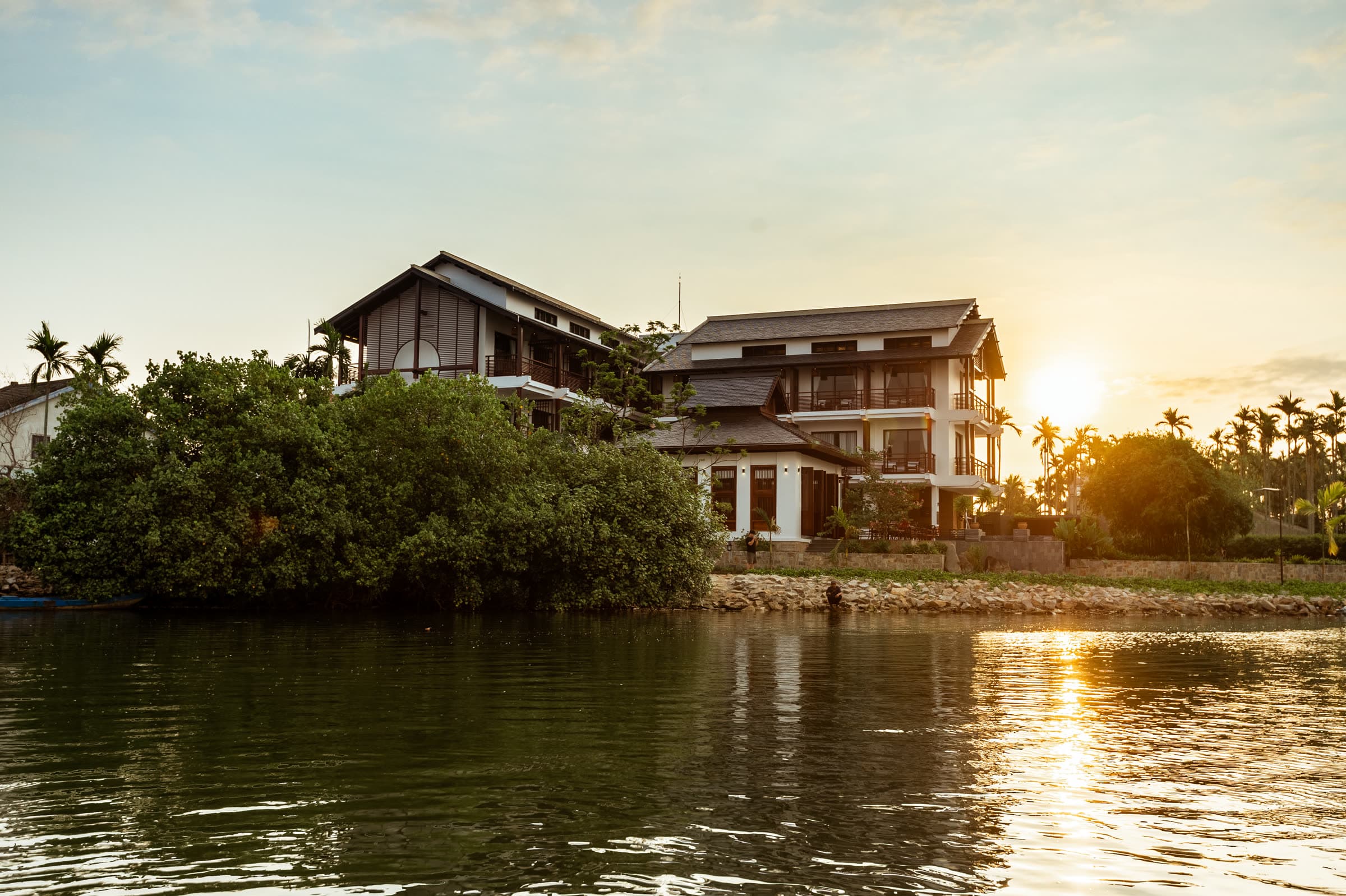
Planning a trip around this? See dates at our quiet riverside hotel on the Thu Bồn. Check availability →
If Katê itself is out of reach on a Hội An trip — and for most visitors it is, given the distance and the unfixed dates — the rewarding move is to engage with Champa where you actually are. A half-day at Mỹ Sơn, ideally early before the heat and the tour buses, is the single best way to stand inside the world Katê serves; the Cham sculpture collections in regional museums add the carved faces and dancing figures that the festival still dresses and honours. From a riverside base on the Thu Bồn, Mỹ Sơn is a comfortable morning out, and it reframes the whole region: Hội An's later Vietnamese and Japanese-Chinese trading town sits on top of a far older Cham and Sa Huỳnh landscape. Katê, performed a long way south, is the living end of that same long story.
When is the Kate Festival in 2026?
Katê opens on the first day of the seventh Cham-calendar month, which falls in late September or early October. The precise 2026 Gregorian dates had not been published at the time of writing; Katê 2026 is expected around early October, but this is approximate — confirm with Ninh Thuận provincial culture authorities closer to the date.
What is the Kate Festival?
Katê (Lễ hội Katê) is the most important festival of Vietnam's Cham people, a three-day observance honouring their deified kings, ancestors and the mother-goddess Po Nagar. It centres on rituals at the Cham temple-towers and then moves into Cham villages, and was recognised as a national intangible cultural heritage in 2020.
Where is the Kate Festival held?
At the Cham tower-complexes of the south: principally Po Klong Garai and Po Rome in Ninh Thuận and Po Nagar in Khánh Hòa, then in the surrounding Cham villages of Ninh Phước (Hữu Đức, Mỹ Nghiệp and others). It is several hundred kilometres south of Hội An.
Can I see the Kate Festival from Hội An?
Not as a day trip — it takes place far to the south. From Hội An, the meaningful connection to Cham culture is Mỹ Sơn, the Champa tower-sanctuary an hour away, which belongs to the same civilisation that Katê keeps alive.
How is Katê connected to Mỹ Sơn?
Both belong to Champa, the civilisation that built brick temple-towers along this coast for over a thousand years. Mỹ Sơn was its greatest temple-city and is now a silent UNESCO ruin; Katê is the living version of those tower rituals, still performed by the Cham of the south at towers that survived as working temples.
What are the main rituals of Katê?
The procession of the deity's sacred costumes (lễ rước y trang), the opening of the tower (lễ mở cửa tháp), the ritual bathing of the statue (lễ tắm tượng thần), and the robing of the statue and great tower offering (lễ mặc y phục, đại lễ cúng tháp) — accompanied by Ginăng drums, the Saranai horn, and traditional Cham dance.
Is Katê a Cham New Year?
It is sometimes described that way in English, but more precisely it is the Cham community's great festival of remembrance — honouring deities, kings and ancestors and praying for good weather and harvests — held annually at the start of the seventh Cham month.
This guide synthesises Vietnamese-language coverage of Lễ hội Katê — the timing on the first day of the seventh Cham month and the festival's structure (lễ rước y trang, mở cửa tháp, tắm tượng thần, mặc y phục), tower locations (Po Klong Garai, Po Rome, Po Nagar) and 2020 national-heritage recognition from the Ministry of Culture portal, VietnamNet's dân tộc desk and provincial culture sources — for an English readership, with the 2026 date deliberately left approximate because it had not been officially published. The hotel-side contribution is the connection drawn between Katê and the Champa heritage of Mỹ Sơn within reach of Hội An, written from a riverside vantage on the Thu Bồn.
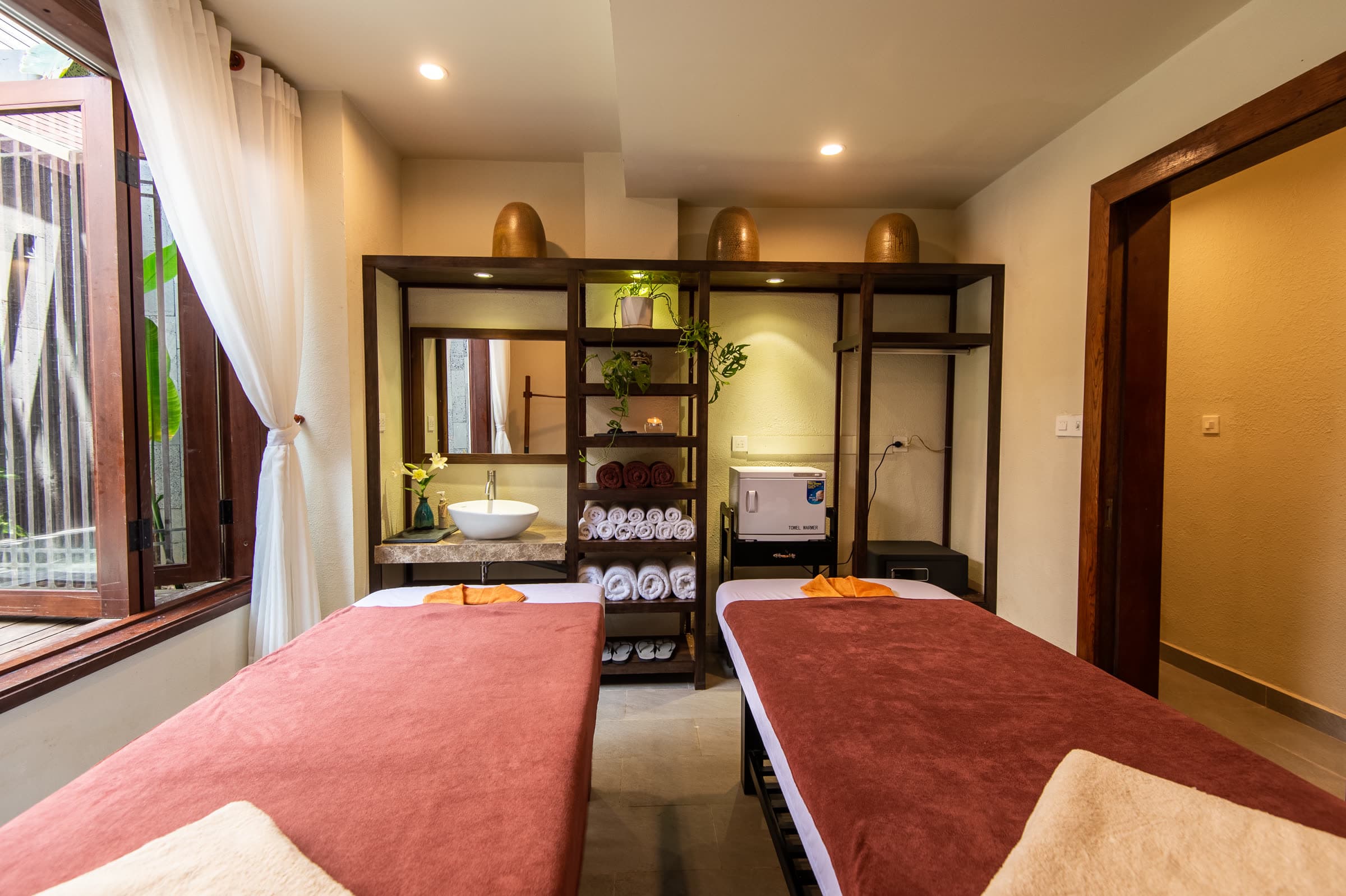
Every room at Nghê Prana is designed around the science of sleep. Blackout curtains, nightly aromatherapy turndown, and riverside quiet — experience what real rest feels like.
Riverside hotel rooms on the Thu Bồn, ten minutes by bicycle from the Ancient Town. Whether it's one night between Hue and Da Nang or a full week of doing nothing — we kept your room quiet.
Free cancellation · Direct from the family who built the hotel


 WhatsApp
 Zalo
Zalo