Vietnamese Hospitality Through Vietnamese Eyes — Why Hotel Service Here Feels Different
Vietnamese hospitality is shaped by extended-family ownership, the guest-as-relative norm, and the cultural concept of mến khách. A local-eyes explainer.
Hospitality in Vietnam feels different from hospitality elsewhere because it grew out of a different idea of what a guest is. In the Western hotel tradition, a guest is a customer — someone you serve excellently in exchange for money. In the Vietnamese tradition, a guest is closer to a temporarily-adopted relative — someone you receive into the rhythm of the family, with a different set of obligations and a different texture of warmth on both sides. Once you can read it on its own terms, the experience opens up.
This post explains the cultural architecture: who owns Vietnamese hotels and why that matters, what mến khách actually means, why the small family-run hotel can feel deeper than a five-star international chain, and how to receive Vietnamese hospitality so it lands the way it's meant to.
Who owns the hotel
Most Vietnamese hotels — and the overwhelming majority of small and mid-sized properties — are family businesses. Often three generations live and work on the same plot: grandparents on the ground floor, the owner-operator generation running reception, the younger generation managing the booking calendar and the social media. The cook is an aunt. The driver is a cousin. The maintenance person is the owner's brother. The receptionist who checks you in tonight will be the same one who waves you off when you leave.
This structure has consequences guests can feel:
Continuity of relationship. No corporate transfers, no quarterly turnover. The person you say hello to today will still be there next year if you come back.
Personal stake in your stay. A complaint at a chain hotel triggers a workflow. A complaint at a Vietnamese family hotel hits the owner's dinner table. The response is faster and more personal because it is more personal.
Decisions get made in real time. No "let me check with my manager." The manager is the owner is the host. Late check-out, an extra tea tray, a different room — these are decided on the spot.
The Vietnamese term for guest house is nhà nghỉ — literally "rest house." The frame is domestic before it is commercial. You are arriving at someone's house, not at a service-industry transaction.
Mến khách — the cultural concept underneath
Vietnamese has more than one word for hospitality. Hiếu khách and mến khách both translate as "hospitable" but carry slightly different texture. Hiếu khách is a virtue — a household quality of being-good-to-guests. Mến khách leans warmer; mến connotes affection, a soft fondness. To say a household is mến khách is to say guests are not endured but enjoyed.
That distinction matters because it changes the feeling of the encounter. The receptionist who pours your welcome tea is not performing a service script; the cultural script is that she is happy you are here, in something like the way a host is happy when a niece visits. The smile is not customer-service-trained; it is structurally pleased-to-meet-you.
Western luxury hospitality has its own word for this: graciousness. The Vietnamese version is plainer and warmer. There is less ceremony and more daily kindness. The tea is whatever the family is brewing. The fruit is whatever is in season at the market this week. The check-in conversation drifts naturally to where you're from, what you do, whether your flight was tiring. None of this is upsell. It is the family asking after a guest.
Ăn cơm gia đình — the family-meal frame
One of the deepest Vietnamese expressions of hospitality is ăn cơm gia đình — eating a family meal together. In Vietnamese village culture, sharing rice with someone is a small act of inclusion. The phrase ăn cơm chưa? — "have you eaten yet?" — functions almost as a greeting; it is how affection is expressed.
You will see traces of this everywhere in Vietnamese hospitality. Breakfast at a small hotel is often whatever the family cooks for itself plus a guest variation. The owner may sit briefly at your table. If you mention you've never tried a particular dish, a small portion of it appears at the next meal. None of this is a "personal touch" engineered for reviews. It is the natural extension of ăn cơm gia đình outside the family.
Why a small family-run hotel can feel deeper than a five-star chain
A large international hotel in Vietnam delivers a recognisable global product: predictable amenities, English-speaking staff, branded service standards. There is real value in that for some travellers, on some trips. But the texture of Vietnamese hospitality lives more in the small family hotel than in the chain.
The structural reason: hospitality is built into the form of a small family hotel. The form of a chain hotel imports it from a manual.
Concretely, what guests notice in family-run Vietnamese stays:
Tea on arrival, made on the spot. Not from a buffet urn. From the kettle the family just used.
Fruit at the right ripeness because someone went to the market this morning, not because a vendor delivers a standard order weekly
A room that smells like a home rather than a brand — the cleaning products, the laundry detergent, the wood, all unforced
Genuine interest in the journey — where you've been in Vietnam, where you're going next — not because there's a CRM field to fill, but because the host is curious
None of this is a value judgement on the chain hotel. It is a different product. A traveller looking for hospitality as cultural experience will find more of it in the small house than in the big lobby.
How to receive Vietnamese hospitality well
The cultural translation goes both ways. A few small adjustments make the experience land deeper:
Sit for the welcome tea. Even if you arrived tired and just want the room. Five minutes at the lobby table, two cups of tea, a few questions about your trip. This is the moment that opens the rest of the stay.
Planning a trip around this? See dates at our quiet riverside hotel on the Thu Bồn. Check availability →
Eat what is offered, at least once. Decline politely if you genuinely can't, but the cultural default is to receive food as the gesture it is.
Use a few Vietnamese words.Cảm ơn (thank you), xin chào (hello), xin lỗi (excuse me/sorry). Pronunciation imperfect is fine — the gesture is what registers.
Address people by relational title where you can.Anh for an older brother / man your age, chị for an older sister / woman your age, cô for an aunt-aged woman, bác for an uncle-aged person. Vietnamese is structurally a kinship language; using kin titles slots you in as someone who is seen the right way.
Don't apologise for asking. A guest in Vietnamese hospitality is meant to ask. The question lets the host be a host. Asking for nothing is a small failure of receiving.
Tip differently. Tipping in Vietnam is generous but not American-percentages. A round-up at restaurants, a small note for housekeeping, a thank-you envelope at check-out for staff who looked after you well. The amount matters less than the gesture being clearly for them, not for the institution.
Tea in the lobby that is made the moment you sit down — not waiting in a thermos
Breakfast that runs on what is actually fresh at Cẩm Nam market that morning
A short list of recommendations for tailors, cooking classes, river boats — the operators we use ourselves
A team that recognises returning guests and remembers what they liked last time
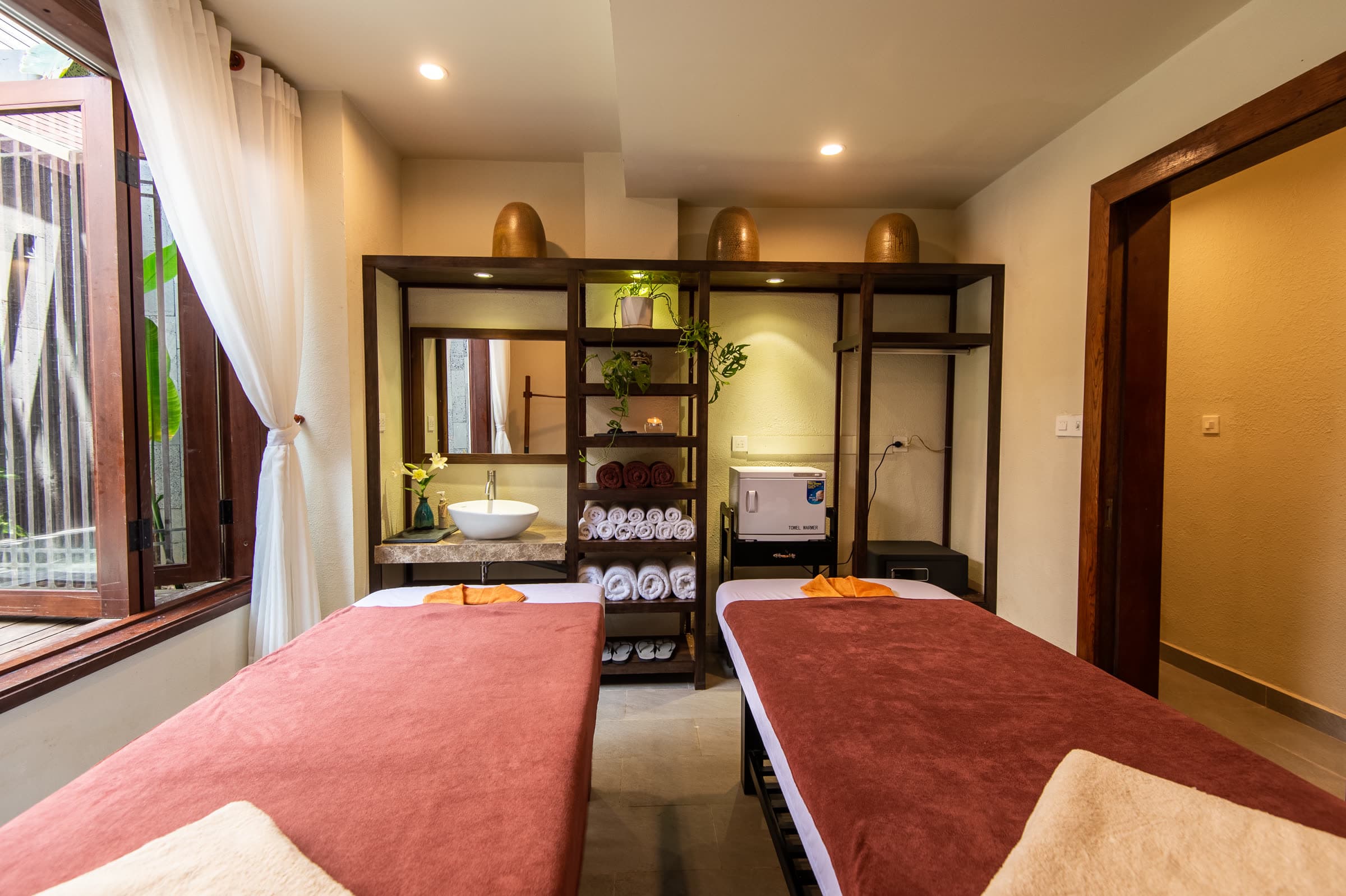
A wellness practice that runs on Vietnamese herbal traditions — herbal bath, lemongrass steam, traditional massage — rather than imported spa formulas
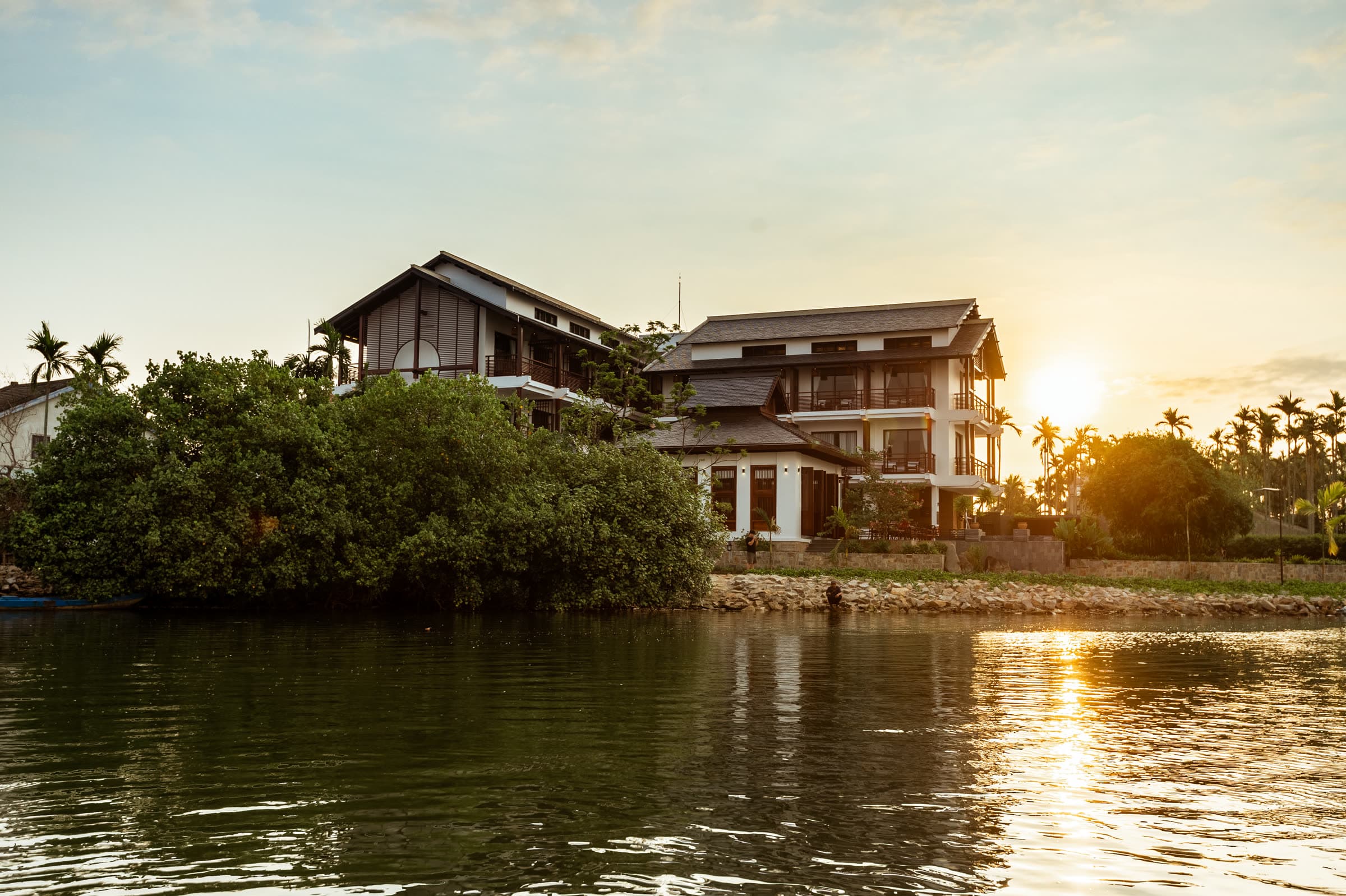
Quiet, because the location is structurally quiet — the river, the rice paddies, no nightlife on this bank
The point isn't that we are unique. Many small Vietnamese family hotels run this way. The point is that this is the Vietnamese hospitality form. If you stay at a place built around it, you experience the cultural texture directly.
A different idea of what a guest is
The Vietnamese way of receiving guests is built on the assumption that hosting is a small joy, not a service to be perfected. The host is happy you came. The guest is being absorbed into the family's day for a brief, gentle stretch. The transaction layer — keys, payment, breakfast hours — is real but secondary. What sits underneath is older and warmer.
Travellers who come to Vietnam for the food and the landscape sometimes find that the thing they remember longest is the texture of how they were received. That texture is mến khách — fondness for guests — and it lives in countless small Vietnamese houses, hotels, and homestays from Sa Pa to the Mekong. It is one of the country's deepest exports, and it is unforced.
Sit for the tea. Stay for the conversation. Come back next year.
Every room at Nghê Prana is designed around the science of sleep. Blackout curtains, nightly aromatherapy turndown, and riverside quiet — experience what real rest feels like.
Riverside hotel rooms on the Thu Bồn, ten minutes by bicycle from the Ancient Town. Whether it's one night between Hue and Da Nang or a full week of doing nothing — we kept your room quiet.
Free cancellation · Direct from the family who built the hotel

 WhatsApp
 Zalo
Zalo