Use Booking.com when you want one-click cancellation, a familiar interface, and no hotel relationship. Book direct when you want flexibility on the edges — late checkout, room upgrade, partial refund inside a non-refundable window, flood-season rebooking — and when the hotel is independent enough that your message reaches a decision-maker on Zalo or WhatsApp within a few hours. For Hội An's mostly family-run market, the second case is more common than first-time visitors expect.
Neither channel is exploitative. They are different distribution models with different trade-offs. Below is the honest version of when each wins, with the 2025 commission and rate-parity facts that drive the math.
What Booking.com actually charges hotels
Booking.com's standard commission for independent hotels runs roughly 15–25%, varying by country and property type, with chain hotels paying closer to 10–15% (industry sources including Guesty, SiteMinder, Preno, 2025 data). Booking's "Preferred Partner" programme, which lifts a property up the search ranking, adds approximately 3% on top. The average across global hotels is reported around 15%.
That commission is paid by the hotel, not by you. But it has to come from somewhere. Independent hotels typically price their OTA inventory to absorb the commission while staying competitive — which means the rate you see on Booking.com is, after the commission flows back, what the hotel needs to make the room work. A direct rate at the same price gives the hotel back that 15–20% margin, which is why direct guests often see soft perks (upgrades, late checkout, breakfast) rather than headline discounts.
Rate parity is shifting — what changed in 2024–2025
For most of OTA history, "rate parity" clauses prevented hotels from publicly offering a lower rate on their own website than on Booking.com. That changed. Booking.com removed price-parity clauses from its contracts effective 1 July 2024 (Booking partner communications), and a September 2024 EU Court of Justice judgment found Booking's parity clauses to violate EU competition law (Hotel-Online; Legal Dive coverage).
The practical effect: a Hội An hotel can now legally publish a lower direct rate. Many are starting to. The structural caveat is that Booking.com's algorithm still favours rate-parity listings in its filters and "Top Picks" placement — so hotels often keep the public price equal and offer the direct discount as a soft perk (upgrade, free breakfast, free airport pickup, late checkout) rather than as a number that breaks parity in the search ranking.
When Booking.com is genuinely the better choice
First trip to Vietnam. You do not yet know the property, the neighbourhood, or the local norms. Booking.com's 24-hour cancellation window on most listings is real and easy to use, the dispute process is structured, and the customer-service English is reliable. The 15–20% efficiency cost is fair payment for the safety net.
Multi-stop itinerary. When you are stitching seven hotels across Hanoi, Hội An, Đà Lạt, and Phú Quốc, the consolidated dashboard genuinely saves time. Direct-booking each one is more friction than the savings recover.
Same-day or next-day stays. OTAs are faster than email, and small Hội An hotels do not always staff a 24-hour reservations desk. Booking.com is usually the right tool for last-minute.
You want a specific cancellation structure. Booking's free-cancellation listings have a clear deadline (typically 24–48 hours before check-in, stated in the confirmation). For risk-averse plans, the standardisation has value.
When booking direct is the better choice
Planning a trip around this? See dates at our quiet riverside hotel on the Thu Bồn. Check availability →
Flood season (October–December). A direct line to the hotel is genuinely useful when typhoons reroute trips. Most independent Hội An hotels will rebook stays affected by named typhoons without penalty if you message them on Zalo or WhatsApp. Through an OTA, the same flexibility goes through a multi-day claims process. See our Hội An flood-zone hotel map for the seasonal context.
Long stays (5+ nights). A 7-or-10-night booking is a meaningful slot for an independent hotel and worth a soft perk: late checkout, complimentary airport pickup, a room upgrade if available, or breakfast included where it is not standard. Ask. The answer is often yes.
Special requests. Twin beds, a quiet-side room, an early check-in, a specific dietary need, a ground-floor room for mobility, an extra bed for a child — these requests reach a real person faster on direct. The OTA messaging system relays the request, but the hotel reads it once. A direct email or Zalo message turns into a small dialogue.
You are the kind of guest who returns. Direct relationships compound. The second time you stay you are a name, not a confirmation number. For Hội An's family-network economy this is meaningful — see our broader take in what riverside actually means at Hội An hotels.
How to ask a Hội An hotel for a direct rate
The polite version, in English or basic Vietnamese, addressed to the property's WhatsApp or Zalo number from their website: "Hello — I am considering [room type] for [dates], [number of guests]. Would you have any direct-booking options or perks if I book through your website?" Most independent properties answer within 4–12 hours. The reply will often include a free breakfast or an upgrade rather than a price drop, for the parity-algorithm reasons above. Either is real value.
Vietnam-specific texture: small family hotels in Hội An overwhelmingly use Zalo (the dominant Vietnamese messaging app) and WhatsApp for guest communication. Email is slower. A Zalo line is essentially a 24-hour chat with the front desk for the duration of your stay — useful for restaurant reservations, scooter rental, tailor recommendations through the family network, and (in October–November) flood updates.
Match the channel to the trip
There is no universal right answer. A first-time three-night stay through Booking.com is sensible. A two-week stay across Tết, where you need a real relationship with the hotel because half the country is closed, is much better direct. A November booking with a typhoon in the forecast is direct, every time.
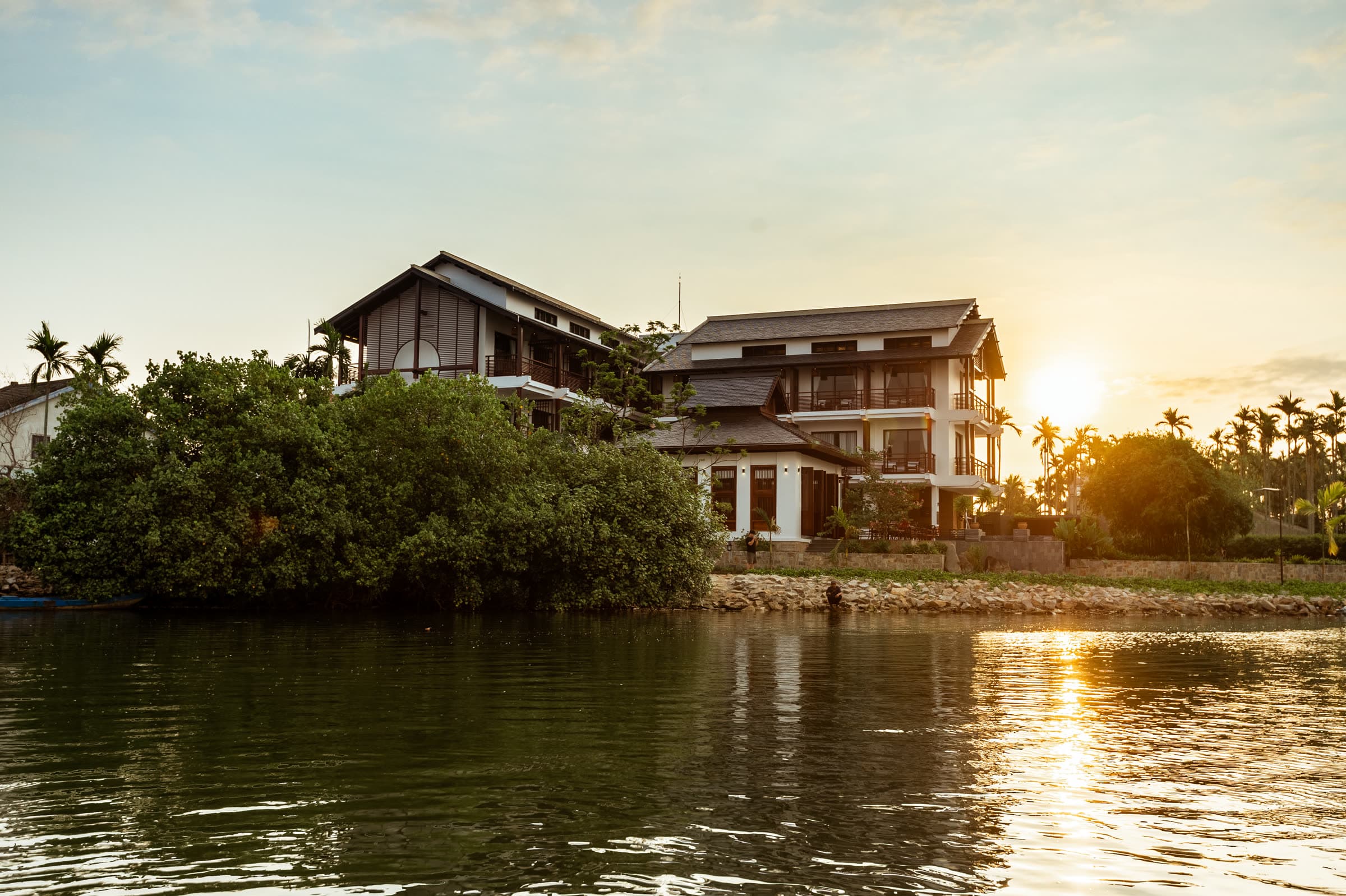
For our own riverside rooms in Cẩm Nam, the direct line saves both us and the guest the OTA commission, which we return as breakfast included and a late checkout when the day allows. For the broader category, see Hội An riverside hotel. The choice between direct and OTA is not moral. It is logistical. Pick the one that fits the trip.
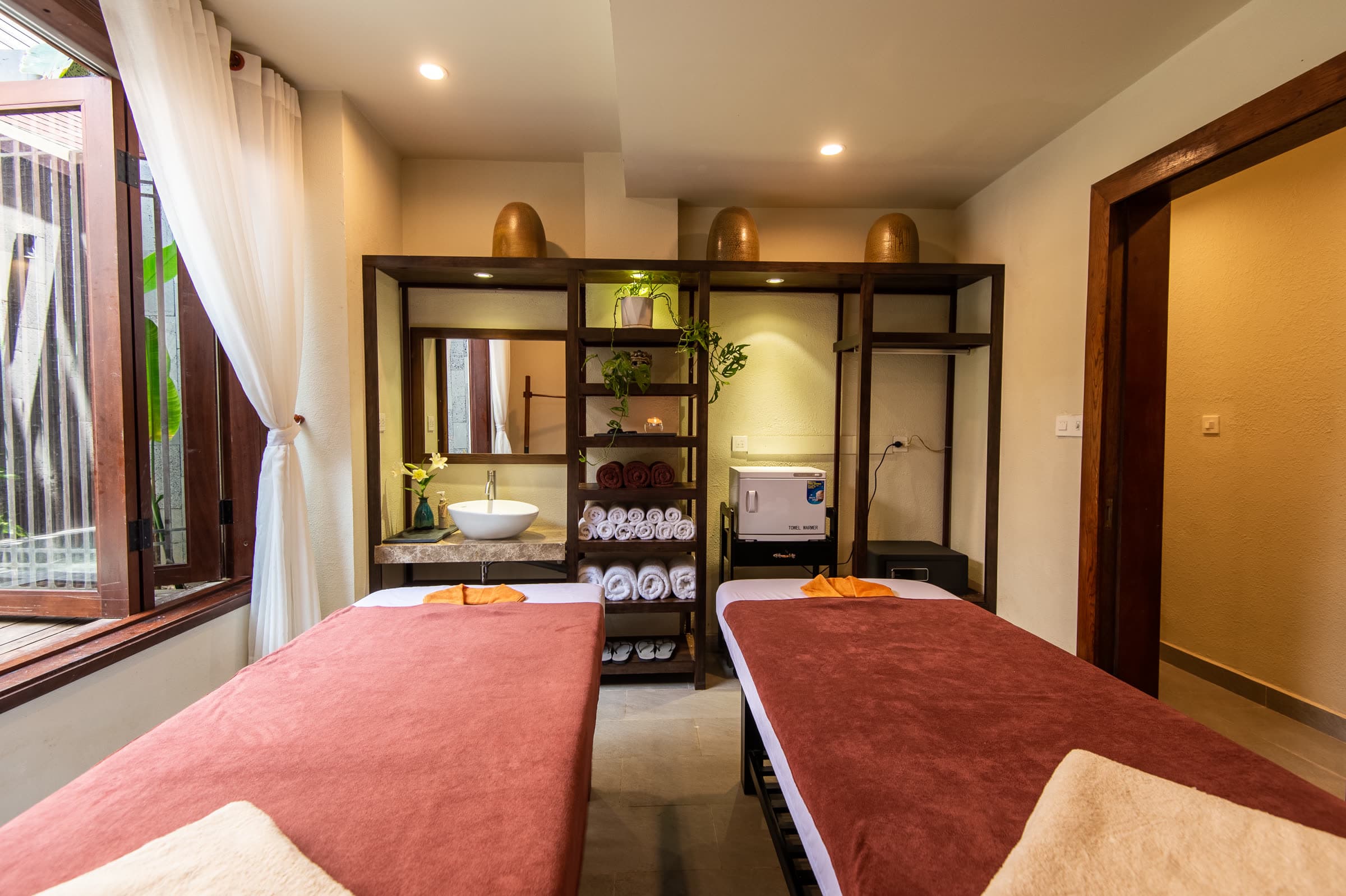
Every room at Nghê Prana is designed around the science of sleep. Blackout curtains, nightly aromatherapy turndown, and riverside quiet — experience what real rest feels like.
Riverside hotel rooms on the Thu Bồn, ten minutes by bicycle from the Ancient Town. Whether it's one night between Hue and Da Nang or a full week of doing nothing — we kept your room quiet.
Free cancellation · Direct from the family who built the hotel


 WhatsApp
 Zalo
Zalo